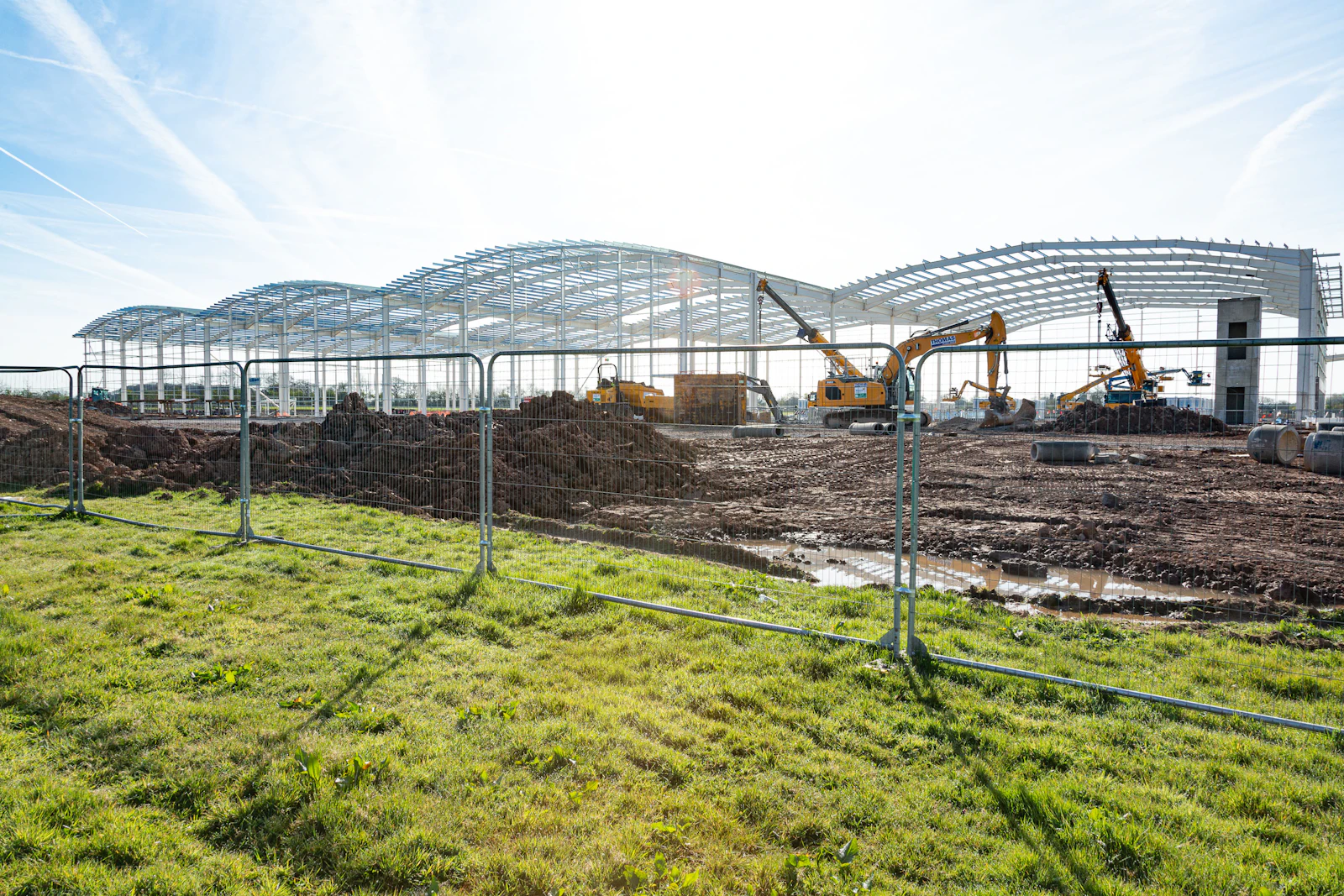
Excavator Rental Rates New York 2026
For 2026 planning in New York (NYC-area), excavator equipment hire typically budgets in three bands: (1) micro/mini excavators (roughly 4,000–9,000 lb class) at about $250–$375/day, $750–$1,100/week, and $2,250–$3,200/4-week; (2) compact excavators (roughly 9,000–19,000 lb class) at about $400–$700/day, $1,050–$1,650/week, and $2,650–$4,300/4-week; and (3) mid-size excavators (roughly 28,000–50,000 lb class) at about $750–$1,200/day, $1,800–$2,600/week, and $4,800–$7,200/4-week, before delivery, damage waiver, attachments, and NYC logistics. National rental houses and local fleet providers serving the five boroughs (including branches of major chains and regional dealers) may quote lower “book” rates but apply higher transport, waiting time, and access-related charges on dense stormwater retention system sites.
| Vendor |
Daily Rate |
Weekly Rate |
Review Score |
Website |
| United Rentals |
$399 |
$1 138 |
9 |
Visit |
| Sunbelt Rentals |
$233 |
$622 |
8 |
Visit |
| Herc Rentals |
$493 |
$1 267 |
9 |
Visit |
| EquipmentShare |
$383 |
$1 010 |
6 |
Visit |
| BigRentz |
$416 |
$1 278 |
10 |
Visit |
NYC Excavator Equipment Hire Cost Ranges by Size and Configuration
The most defensible way to estimate excavator hire cost in New York is to size the machine to the stormwater retention scope (trench width, depth, spoil handling, access, and whether you need reduced tail swing). The rate bands below assume “bare equipment hire” (no operator), typical NYC day/week/month time definitions (often 8/40/160 hours), and normal wear and tear excluded from damage claims if documented at delivery and return.
Micro and Mini Excavators (Approx. 1–4 Ton)
- 2026 NYC planning range: $250–$375/day; $750–$1,100/week; $2,250–$3,200/4-week.
- When they win on stormwater retention work: tight courtyards, behind-building infiltration galleries, narrow sidewalk sheds, basement-adjacent retention tanks where swing clearance is the constraint.
- Reference point (NY market example): published mini excavator rates in New York list $250/day, $750/week, and $2,250/month for a ~4,000 lb class unit; $300/day, $900/week, $2,700/month for a larger mini with cab.
Compact Excavators (Approx. 9,000–19,000 lb)
- 2026 NYC planning range: $400–$700/day; $1,050–$1,650/week; $2,650–$4,300/4-week.
- Where they typically land on retention jobs: trenching for manifolds and header lines, excavation for shallow retention basins or chamber systems, and working around existing utilities where production matters but access is still constrained.
- Reference points (NY statewide contract baseline for 9,000–19,000 lb class): $406–$541/day, $1,061–$1,375/week, and $2,680–$3,513/month depending on weight band and cab/ROPS.
Mid-Size Excavators (Approx. 28,000–50,000 lb)
- 2026 NYC planning range: $750–$1,200/day; $1,800–$2,600/week; $4,800–$7,200/4-week.
- Why stormwater retention scopes step up to mid-size: deeper basins, heavy spoil handling, sustained trenching where cycle time dominates, and working in denser soils or mixed fill where breakout force improves schedule certainty.
- Reference points (NY statewide contract baseline): 28,000–38,000 lb standard reach at $753/day, $1,814/week, $4,796/month; 39,000–42,000 lb at $921/day, $2,268/week, $5,873/month; 43,000–49,999 lb at $969/day, $2,343/week, $6,117/month.
Large Excavators (50,000 lb and Up)
- 2026 NYC planning range: $1,250–$2,100/day; $3,000–$5,200/week; $7,600–$12,500/4-week (often mobilization-driven in NYC).
- Reference points (NY statewide contract baseline): 50,000–59,999 lb standard reach at $1,277/day and reduced tail at $1,342/day; 60,000–69,999 lb at $1,521/day; 70,000–80,000 lb at $1,775/day.
How Stormwater Retention System Scope Changes Excavator Hire Cost in New York
Stormwater retention system work in New York tends to penalize the wrong excavator selection more than “open cut” earthwork, because access limitations and utility congestion can erase the productivity advantage of a larger machine. These scope elements are the biggest drivers of actual equipment hire cost:
- Access and swing clearance: If you need reduced tail swing to keep the counterweight inside the work zone, budget a premium. A reduced-tail 28,000–38,000 lb excavator can price higher than standard reach in published rate baselines.
- Trench profile and material handling: Chamber systems and manifolds often require repeated bucket changes (trench bucket vs grading bucket). Even “small” adders matter across weeks.
- Compaction and backfill control: Some retention details require controlled low-strength material or strict lifts; if you’re using a compaction wheel attachment to keep the excavation crew moving, treat it as a meaningful cost line, not a throw-in.
- Breaking and obstructions: NYC mixed fill, old slabs, and boulders can turn a clean dig into a hammer job. If you expect intermittent breaking, budgeting a breaker attachment day rate early is usually cheaper than converting to a larger excavator mid-stream.
Attachment hire adders you should explicitly carry (either as quoted add-ons or as allowances if you’re budgeting before RFQ):
- Trenching bucket (mini-ex <19,000 lb): budget around $22/day, $55/week, $152/month as a reference baseline.
- Hydraulic thumb (excavator attachment): budget around $81/day, $211/week, $385/month as a reference baseline; some catalogs also show a higher hydraulic thumb line (plan higher if you need a heavier-duty thumb for handling riprap or precast).
- Breaker attachment (excavator/backhoe class): a published baseline for a heavy breaker class shows $428/day, $1,212/week, $2,485/month; in NYC practice, confirm hose/quick-coupler compatibility to avoid a “field swap” charge.
- Compaction wheel (28,000–39,000 lb class): a published baseline shows $255/day, $644/week, $1,472/month.
- Ground protection mats (4x8 class): budget around $22/day, $43/week, $65/month as a reference line if your staging is over pavers, vaults, or you’re crossing sidewalks.
Hidden-Fee Breakdown for Excavator Hire in NYC
New York excavator equipment hire rarely blows the budget because the base day rate was wrong; it blows the budget because the jobsite logistics create extra billable events. Carry these as explicit allowances (and convert them into negotiated caps where possible):
- Delivery and pickup (NYC logistics allowance): $450–$950 each way for compact equipment; $850–$1,650 each way for mid-size and larger (lowboy plus permits/escorts if required). If your site cannot accept a tractor-trailer, budget an extra $150–$350 for transload or a smaller delivery vehicle.
- Waiting time / failed delivery: $125–$195 per hour after the first 30–60 minutes on site; a “failed delivery” or “return trip” minimum of $250–$500 is common to carry as a risk allowance in NYC.
- Damage waiver (DW): carry 10%–15% of base rental as an allowance unless your MSA states otherwise. If you decline DW, confirm your GL/contractor’s equipment policy covers rented equipment and attachments.
- Cleaning fee: $175–$450 for standard washout; $450–$950 if the unit returns with concrete, excessive clay, or if the undercarriage requires heavy cleaning (common when working in wet retention excavations).
- Fuel / refuel charge: carry $6–$9 per gallon as an allowance if returned below the “full” mark; for larger excavators, also carry a $25–$75 DEF top-off/handling allowance where applicable.
- Weekend and holiday billing rules: confirm whether Saturday counts as a full bill day, half day, or is bundled (some providers offer a Friday-to-Monday “one day” special, but do not assume it on commercial accounts). Carry a 0.5-day weekend exposure allowance if off-rent timing is uncertain.
- Off-rent cutoffs: carry the risk that calling off-rent after the local cutoff (often mid-afternoon) adds an extra day. Carry $300–$900 contingency depending on excavator class.
- Overtime meter charges: if your agreement defines a day as 8 engine hours, carry an overtime adder of 1/8 to 1/4 of the daily rate per excess hour as a planning allowance, plus a dispatcher/after-hours fee of $75–$200 if you need a late swap.
New York-Specific Logistics That Move the Price
- Manhattan and Downtown Brooklyn staging constraints: limited laydown and curb access often forces narrower delivery windows (for example 7:00–9:00 a.m.). If your crew misses the window, the hire cost impact is usually “waiting time” plus potential next-day redelivery.
- Queens and the Bronx haul distances: many yards are outside the immediate work area; treat the first 10–20 miles as “normal” and carry a mileage premium beyond that if your rental agreement bills distance.
- Staten Island and outer-borough mobilization: if the provider’s fleet is not local to the borough, carry a higher one-time mobilization (often an extra $200–$600) rather than underestimating and getting surprised at dispatch.
Budget Worksheet (Excavator Equipment Hire)
Use the following line items as a no-table budgeting artifact for a rental coordinator estimating excavator hire cost in New York for a stormwater retention system:
- Base excavator hire: ____ days at $____/day, or ____ weeks at $____/week, or 4-week cap at $____.
- Attachments (select): trenching bucket ($22/day ref), grading bucket allowance ($35–$85/day), hydraulic thumb ($81/day ref), breaker ($428/day ref), compaction wheel ($255/day ref).
- Ground protection: mats at $22/day ref; quantity ____; duration ____.
- Delivery and pickup: $____ each way (allow $450–$950 each way compact; $850–$1,650 each way mid-size+).
- Waiting time contingency: ____ hours at $150/hour (allow $125–$195/hour).
- Damage waiver allowance: ____% of base (carry 10%–15%).
- Cleaning allowance: $250 standard; add $600 if wet clay/concrete risk is high.
- Refuel/DEF allowance: $250 compact; $450 mid-size; plus per-gallon refuel exposure at $6–$9/gal.
- Weekend/off-rent exposure: 0.5–1.0 extra day at the daily rate if your demobilization is schedule-driven.
- Contingency (NYC logistics): 5%–10% of the total hire budget for access, redelivery, or swap-outs.
Example: Stormwater Retention System Excavation in Queens (3-Week Field Window)
Example: A site in Queens needs excavation for an infiltration chamber field and manifold trenching. Access is through a 10-foot gate with a tight swing clearance near the property line, so you choose a compact excavator in the 14,000–19,000 lb class with cab, plus a thumb for handling riprap and precast end sections. The GC provides a 7:00–9:00 a.m. delivery window and requires photo documentation at both delivery and return.
- Base hire selection: 14,000–19,000 lb compact excavator (cab). Reference weekly baseline $1,375/week; monthly baseline $3,513 (4-week).
- Billing strategy: request a “4-week cap” so three weeks do not bill as 3 × weekly = $4,125; carry an estimate of $3,500–$4,200 for the base machine depending on whether the provider honors a cap and whether NYC logistics premiums apply.
- Thumb attachment: use a reference baseline of $81/day or $211/week; for three weeks, carry $450–$750 depending on how it is billed (daily vs weekly).
- Trenching bucket add-on: if not included, carry $55/week reference; allowance $150–$250 for the term.
- Delivery and pickup: NYC allowance $650 each way (total $1,300) due to constrained window and potential waiting time exposure.
- Waiting time contingency: carry 2 hours at $150/hour = $300 if the site is not ready at the curb.
- Damage waiver: carry 12% of base hire (example: 12% of $3,900 = $468).
- Cleaning and refuel closeout: carry $350 combined (washout plus refuel exposure) given wet excavation conditions typical of retention work.
Planning total (equipment hire only): A realistic Queens budget for the 3-week window is commonly $6,500–$8,200 once you include attachments, delivery, DW, and closeout allowances. The control point is not the daily rate; it is whether you avoid (a) redelivery and (b) extra bill days from off-rent timing.
Rental Order Checklist
Use this checklist to keep New York excavator equipment hire costs aligned with the PO and to reduce back-end charges:
- PO and billing: confirm customer account, tax status, charge code, and whether attachments bill separately.
- Site delivery requirements: exact address, borough, contact, gate width, overhead clearance, curb lane availability, and delivery window (include a “no later than” time).
- Machine spec lock: operating weight band, tail swing requirement (reduced tail if needed), cab vs canopy, bucket pin size, auxiliary hydraulics flow, quick coupler type.
- Attachment compatibility: thumb/breaker plumbing, coupler style, and bucket sizes; request the attachment serial numbers on the ticket where possible.
- Condition documentation: photos of tracks, cylinder rods, undercarriage, and bucket teeth at delivery and return; record hour meter and fuel level.
- Off-rent rules: confirm cutoff time for next-day billing and whether weekends count as bill days; schedule pickup before the cutoff.
- Return condition: fuel expectation, mud/concrete removal expectations, and whether the provider requires undercarriage cleaning before pickup.
- Swap-out plan: escalation path for breakdowns and whether downtime is credited from the time you report the issue.
Rate Strategy: Keeping NYC Excavator Hire on Weekly and 4-Week Caps
For stormwater retention system schedules in New York, the practical goal is to avoid “stranded days” where you pay a daily rate because the site is not ready, or you pay an extra day because pickup missed the cutoff. Build your internal rental plan around these controls:
- Convert early: if you expect the excavator on site more than 3 working days, request a weekly rate up front and ask the provider to apply a 4-week cap automatically.
- Off-rent discipline: plan for excavation finish plus one closeout day for cleaning, photos, and demob. When you miss pickup timing in NYC, a single extra bill day can equal $400–$1,200 depending on machine class.
- Split-term planning: if your stormwater retention scope has a gap (inspection hold, chamber delivery lead time), it can be cheaper to off-rent and re-rent than to hold the machine idle. Carry a remobilization allowance of $650–$1,300 (two-way transport) and compare it to idle days.
Attachments and Site Accessories That Commonly Get Missed in Stormwater Retention Excavator Hire
Retention systems often require more than “excavator plus bucket.” The following equipment hire items frequently appear mid-job and should be budgeted up front so the PM is not forced into an expensive last-minute dispatch:
- Hydraulic thumb: useful for handling riprap, inlet structures, and staging precast. Reference baseline $81/day, $211/week, $385/month.
- Breaker attachment: even light breaking can protect schedule when encountering old sidewalk slabs, uncharted concrete, or cobble. Reference baseline $428/day, $1,212/week, $2,485/month.
- Compaction wheel: helps keep backfill production moving where trench boxes or limited compaction access exist. Reference baseline $255/day, $644/week, $1,472/month.
- Trenching buckets: if your provider charges per bucket, carry at least one trenching bucket line (reference $22/day, $55/week, $152/month for <19,000 lb class).
- Ground protection mats: common in NYC to protect sidewalks, pavers, and to satisfy owner requirements. Reference baseline $22/day, $43/week, $65/month.
Insurance, Damage Waiver, and Documentation That Protect the Equipment Hire Budget
On New York retention sites, excavator damage claims most often arise from undercarriage wear, track damage from rebar or demolition debris, or cylinder rod damage from poor housekeeping. To protect your equipment hire cost:
- Use a consistent photo set: at minimum, 12 photos per machine at delivery and 12 at return (both sides, tracks, rollers, sprockets, bucket linkage, auxiliary lines, and hour meter).
- Carry DW as a budget line: unless your risk team confirms coverage, carry 10%–15% of base rental as an allowance for damage waiver so you’re not forced into a change order late.
- Define cleaning responsibility: put in writing whether the site will pressure-wash prior to pickup. If you cannot wash on site due to runoff restrictions, carry a $450–$950 heavy-clean exposure allowance for wet clay or concrete contamination.
- Confirm “normal wear” vs billable damage: have the dispatcher note existing track wear and bucket tooth condition on the delivery ticket to avoid end-of-rent disputes.
Rent Versus Own: When Excavator Equipment Hire Is the Better Stormwater Choice
Even contractors with internal fleets frequently rent excavators for stormwater retention system work in NYC because the risk is not only utilization, but configuration and logistics. Equipment hire is usually the lower-risk choice when:
- Project-by-project configuration varies: reduced tail swing, specialty buckets, breaker readiness, or a specific weight class to satisfy slab/load constraints.
- Mobilization is irregular: if your retention scopes come in bursts, you may avoid carrying idle ownership costs by renting for the exact 2–6 week window.
- Downtime risk matters: rental agreements typically provide swap-out options; for schedule-critical retention tie-ins, that can be more valuable than marginally lower ownership cost.
As a quick internal check, if your expected utilization is under 60–70% of working weeks, equipment hire often remains cost-competitive once you factor maintenance, transport, and storage in New York.
Closeout: Off-Rent Timing and Return Condition Rules That Change Real Cost
Closeout discipline is where New York excavator hire budgets are won or lost. Use these operational controls:
- Schedule pickup before the cutoff: plan pickup request by early afternoon the day before you want off-rent, so you do not get billed an extra day.
- Confirm “off-rent” versus “picked up” language: some contracts stop billing when off-rent is called; others stop when the machine is physically picked up. Carry an extra-day exposure allowance of $400–$1,200 depending on the class you’re renting.
- Fuel and cleanliness sign-off: take final hour meter and fuel photos at pickup; if you cannot be present, require the driver to text confirmation before leaving the site.
- Attachments accounted for: ensure every bucket and attachment is on the return ticket; a missing trench bucket or thumb can trigger replacement charges that dwarf a week of hire.
If you want to tighten this estimate for your specific New York stormwater retention system scope, the two inputs that most improve pricing accuracy are (1) required operating weight class and (2) delivery constraints (street access, delivery window, and whether a lowboy can stage legally).