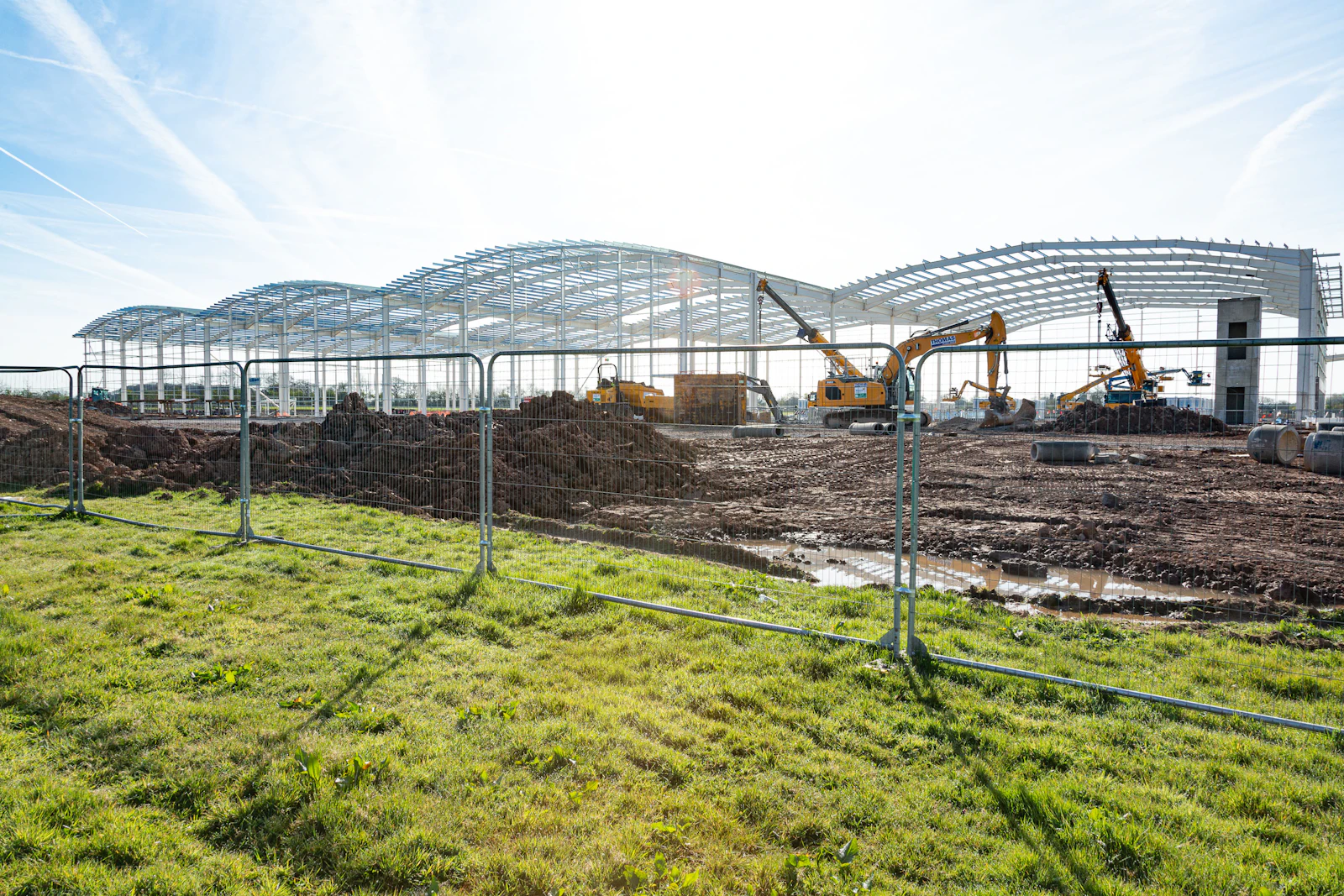
For Omaha stormwater retention system work in 2026, budget excavator equipment hire using class-based planning ranges (assuming a standard 8-hour shift, Tier 4 diesel, and “week”/“4-week” billing structures). Typical planning allowances are: 2–3.5 ton mini excavators at $280–$450/day, $700–$1,250/week, and $1,800–$3,200/4-weeks; 5–6 ton minis at $350–$600/day, $950–$1,650/week, and $2,300–$4,600/4-weeks; 14–16 ton steel-track excavators at $550–$950/day, $1,450–$2,650/week, and $3,000–$7,200/4-weeks; and 25 ton+ at $750–$1,350/day, $2,000–$3,800/week, and $5,200–$10,500/4-weeks. Omaha quotes typically land within (or slightly above) published online/rate-sheet examples once delivery, damage waiver, attachments, and fuel/cleaning are included—whether you’re hiring through national fleets (e.g., Sunbelt Rentals, United Rentals, Herc Rentals) or the local Cat dealer network (NMC Cat Rental).
| Vendor |
Daily Rate |
Weekly Rate |
Review Score |
Website |
| United Rentals |
$305 |
$840 |
9 |
Visit |
| Sunbelt Rentals |
$233 |
$622 |
8 |
Visit |
| Herc Rentals |
$191 |
$732 |
8 |
Visit |
Excavator Rental Rates Omaha 2026
The fastest way to get an excavator hire budget that holds up in procurement review is to tie your numbers to operational needs (retention basin cut/fill volumes, trench production rates, spoil management, and dewatering plan) and then select the smallest excavator class that still hits your schedule. Published reference rate sheets help calibrate the shape of pricing (day/week/month relationships) even if your Omaha account pricing differs by fleet availability, credit terms, and season.
Reference pricing anchors you can use for 2026 planning: one published online catalog example shows a 7,500 lb mini excavator at $320/day, $880/week, and $1,965/4-weeks (taxes/optional fees excluded). Another published fee schedule example lists (by minimum class) 2-ton mini at $249/day, $630/week, $1,504/month; 3.5-ton mini at $323/day, $728/week, $1,742/month; 5–6 ton mini at $382/day, $1,006/week, $2,290/month; 14-ton steel-track at $562/day, $1,516/week, $2,987/month; and 25-ton steel-track at $739/day, $2,035/week, $5,268/month.
How to convert those anchors into Omaha stormwater retention budgeting:
- Use the published day/week/month amounts above as a floor reference, then add local delivery, attachments, damage waiver, and return-condition risk (mud/concrete, wet clay, silt-laden undercarriage).
- For retention work, expect upward pressure when you require steel tracks, long stick, low-ground-pressure pads, or tilt/rotating couplers for basin slopes and outlet structures.
- Seasonality matters in Omaha: spring rain and freeze-thaw shoulder seasons can compress fleets and increase transport complexity (soft subgrades and rut mitigation often require heavier class or mats).
What Drives Excavator Hire Costs for Stormwater Retention Work in Omaha?
Stormwater retention system scopes usually combine (1) bulk excavation for a basin/pond, (2) tighter excavation around structures (inlets/outlets, headwalls, manholes), and (3) trenching/backfill for storm pipe runs. That mix pushes excavator equipment hire costs in a few predictable ways:
- Dig depth + reach requirement: If you’re cutting a basin with 3:1 slopes and a defined bottom elevation, you may need a larger class or longer stick to avoid constant repositioning—raising the daily hire cost but reducing days on rent.
- Spoil handling plan: If spoils must be stockpiled away from the excavation (or loaded out continuously), you’ll either need an excavator sized to keep up with trucks or pair the excavator hire with a loader/skid/ADT (which changes the “true” cost per cubic yard).
- Wet conditions and dewatering: Working in saturated subgrades often means more undercarriage cleaning, higher track wear, and stricter off-rent return conditions—cost drivers that don’t show up in the base rate.
- Protection of finished surfaces: Near existing pavements, curb, or path work, you may need rubber tracks or matting. Rubber-track minis can be cheaper to deliver, but may not have breakout for clay lenses common in the region.
Typical Shift, Meter Hours, And Overtime Charges
Most excavator hire is priced around a standard shift (commonly 8 hours on the meter). What frequently surprises coordinators is that “one day” can be both time-based (24-hour possession) and meter-based (8 hours of use). A published Nebraska rental rate sheet example states a day rental is 8 hours on meter, and going over can trigger $20–$30 per hour charges. In retention work (where you may run longer to hit a dewatering window or concrete placement cutoff), overtime is one of the most common overages.
Budgeting guidance for Omaha stormwater schedules:
- If your production plan requires 10-hour days for 4 days, budget 8 overtime hours (2 hours/day × 4) at an overtime allowance (either an hourly add-on or a fraction of the daily rate, depending on your rental agreement).
- If you’re working around rain events, set a contingency for “idle possession” days—many contracts bill calendar days even if the machine doesn’t move, unless you properly off-rent.
Attachments And Accessories That Change The Hire Price
For stormwater retention systems, attachments are not optional “nice-to-haves”—they are often the difference between meeting slope tolerances and burning extra weeks of equipment hire. Build your estimate with explicit line items (and confirm compatibility: pin size, coupler type, auxiliary hydraulics):
- Hydraulic thumb: typically $60–$140/day (commonly required for riprap placement, debris handling, and structure work).
- Hydraulic quick coupler: typically $45–$110/day (often worth it if you’ll swap trench/cleanup/grading buckets daily).
- Trenching bucket set (e.g., 12"/18"/24"): typically $25–$65/day each (many yards will package, but don’t assume).
- Cleanup/ditching bucket (wide): typically $40–$95/day for slope trimming and finishing the basin bottom.
- Grading/tilt bucket: typically $120–$260/day for consistent slope work and tie-ins to structures.
- Hydraulic breaker: published examples can run $150/day on smaller fleets, but can be higher depending on class and tool steel; confirm whether tool bits are billed separately and what constitutes “normal wear.”
- Ground protection mats: often $15–$30/day per 4x8 mat (especially relevant when access crosses soft shoulders or finished paving).
Delivery, Mobilization, And Off-Rent Rules In The Omaha Metro
Delivery is where Omaha excavator equipment hire costs can swing from “in budget” to “why is this invoice 25% higher.” For smaller minis, some regional rate sheets show delivery/pickup billed as mileage (example: $1.00 per mile for delivery and pickup on a Nebraska rate sheet). In Omaha, many rental coordinators still see either (a) a flat mobilization within a metro radius or (b) a loaded-mile charge for larger excavators requiring a lowboy.
- Typical Omaha planning allowances (use as estimating placeholders until quoted): $175–$275 each way for mini excavators; $350–$650 each way for 14–16 ton; $500–$1,050 each way for 25 ton+ depending on trailer, permits, and jobsite access.
- Minimum transport charges: commonly a 2-hour minimum or a $250–$450 minimum even on short hauls.
- Cutoff times that matter: same-day dispatch often requires a late-morning order time; “off-rent” frequently requires notice by mid-afternoon to stop next-day billing (confirm your contract language).
- Weekend/holiday billing: some agreements bill Saturday at a fraction of daily; others bill full day if the yard is open. Align your off-rent call with the yard’s actual operating hours to avoid paying for non-productive days.
Hidden-Fee Breakdown For Excavator Equipment Hire
Base rates are only part of the excavator rental cost for stormwater retention. The line items below are the most common “hidden fees” that show up on invoices and should be carried as explicit allowances in your Omaha estimate:
- Damage waiver / rental protection: commonly 10%–15% of the base rental (and it may exclude theft, submersion, or certain attachment damage).
- Fuel / refuel: if returned below full, many vendors bill pump price plus handling; carry an allowance of $4.25–$7.25/gal plus a $25–$45 service fee for small-to-mid equipment, higher for larger class.
- Cleaning: published examples show a $25 cleanup charge on smaller fleet rate sheets; on retention work (mud, silt, clay), budgeting $75–$250 per event is safer, especially if you need pressure washing before return.
- Undercarriage wear and “excessive dirt” clauses: expect scrutiny if the machine is returned with compacted clay in rollers/idlers.
- Environmental / shop / admin fees: often 3%–8% or a flat $10–$25 per invoice (varies by contract).
- Loss/damage deposits: for non-credit rentals, deposits often fall in the $500–$2,500 range depending on excavator class and attachments.
Example: Omaha Stormwater Retention Basin Cut And Outlet Structure
Scenario (constraints): You’re building a stormwater retention basin with an outlet structure on the west side of Omaha. Access is through a residential collector street with a 7:00 AM–5:00 PM delivery window, no overnight street parking for lowboys, and the site has wet clay after a 0.6" rain event. Production goal is to cut and shape 1,900 CY over 12 working days, plus trench/outlet detail work. You choose a 14–16 ton excavator for bulk and detail, with a tilt bucket for slopes.
- Excavator hire (14-ton class): budget $3,900–$6,200 for a 4-week term (planning range aligned to published monthly structures, with local availability risk).
- Tilt bucket: $120–$260/day × 12 days → $1,440–$3,120
- Quick coupler: $45–$110/day × 12 days → $540–$1,320
- Delivery/pickup: $450 each way → $900 (placeholder until quoted)
- Damage waiver: 12% of base monthly (example) → $468–$744
- OT meter hours: 6 overtime hours at $20–$30/hr → $120–$180 (if your agreement is meter-based OT).
- Cleaning/undercarriage wash at return: allowance $150
Estimator takeaway: On retention basins, the excavator’s “monthly rate” is rarely your final cost. In this example, attachments + delivery + waiver can add $3,400–$6,000 on top of the base equipment hire, and overtime/return condition adds another $200–$400 if unmanaged.
Budget Worksheet
- Base excavator equipment hire (select class): 2–3.5 ton mini / 5–6 ton mini / 14–16 ton / 25 ton+ (carry day/week/4-week range)
- Delivery & pickup: allowance $900 (mid excavator) or quote-based; add after-hours surcharge allowance $150 if needed
- Damage waiver: allowance 12% of base hire
- Attachments: thumb $100/day, coupler $75/day, trench bucket $45/day, cleanup bucket $65/day, tilt bucket $190/day
- Ground protection: mats 20 units × $22/day × 5 days = allowance $2,200
- Fuel/refuel risk: allowance $250 (mini) / $650 (mid) / $1,250 (large) depending on expected return level
- Cleaning/pressure wash: allowance $150 (stormwater mud conditions)
- Overtime meter hours: allowance 10 hours × $30/hr = $300
- Invoice fees/taxes: allowance 6% of subtotal (confirm local taxability and contract fees)
Rental Order Checklist
- PO details: equipment class, serial tracking requirement, agreed rates (day/week/4-week), damage waiver acceptance, and any negotiated “cap” on waiver
- Delivery requirements: jobsite address, contact name/phone, delivery window (e.g., 7:00 AM–5:00 PM), gate code, lowboy access notes, and ground conditions (soft subgrade, laydown area)
- Attachments list: thumb, coupler, bucket sizes, tilt bucket, breaker (if needed), and confirmation of auxiliary hydraulics
- Pre-use documentation: photos of undercarriage, bucket teeth, hydraulic leaks, hour meter at delivery; note any existing damage on the delivery ticket
- Operating rules: meter-hour limit per day, overtime billing method, weekend billing rules, and refuel expectations (return full / return at delivery level)
- Off-rent process: required notice method (call/email/app), cutoff time, and who authorizes pickup
- Return condition: wash standard, cab cleaning, removal of job decals/tape, and “no debris in tracks” expectation
Notes For Stormwater Retention System Excavation In Omaha
Omaha retention work often involves wet clay and quick-changing weather. Plan for (1) a higher likelihood of undercarriage cleaning at return, (2) matting if you’re crossing soft shoulders or newly seeded areas, and (3) schedule buffers to avoid paying weekend/holiday possession days. Where basin elevations must be tight, a tilt bucket or grading bucket can reduce total hire days enough to pay for itself—especially when the alternative is extending equipment hire into a second billing week.
If you’re sourcing through the local Cat dealer network in Omaha, NMC Cat Rental is a known regional option for excavator fleet support (availability, service response, and compatible attachments).
Choosing The Right Excavator Class To Control Total Equipment Hire Cost
For stormwater retention systems, “cheaper per day” is not always “cheaper overall.” Your total excavator equipment hire cost is driven by production per hour and how many billed days you carry the machine—plus attachments and transport. Use these decision rules to keep Omaha rental costs predictable:
- 2–3.5 ton minis: best for tight access, shallow trenching, and structure tie-ins. They can be cost-effective when delivery is easy and you’re minimizing surface disturbance. A published rate example for a 7,500 lb class mini shows $320/day, $880/week, $1,965/4-weeks.
- 5–6 ton minis: often the sweet spot for smaller retention facilities because they can load trucks and cut moderate basins while still fitting most urban access constraints. One published example shows a 12,000 lb mini excavator at $515/day, $770/weekend, $1,545/week, and $4,635/month (use as a market calibration, not an Omaha guarantee).
- 14–16 ton steel-track excavators: frequently the correct class for basin excavation where you must hit grades and handle wet soils. Published fee schedule examples show $562/day, $1,516/week, $2,987/month for a minimum 14-ton class (contract-specific).
- 25 ton+: best for large basins, heavy rock/riprap, and high truck loading demands, but transport and access can dominate the cost. Published fee schedule examples show $739/day, $2,035/week, $5,268/month for a minimum 25-ton class.
How To Prevent Billing Leakage: Off-Rent Timing, Weekends, And Partial Periods
Two process controls reduce most invoice disputes:
- Define off-rent in writing: Your PO should specify that billing stops at the time/date you provide off-rent notice (subject to your agreement), not when the yard physically picks up.
- Align delivery/pickup to billing periods: If your job will finish mid-week, it may still be cheaper to keep the excavator until the end of a billing week—or it may be cheaper to off-rent immediately. Don’t assume; compute both options before you commit.
Also confirm whether your rental day is: (a) 24-hour possession, (b) calendar day, or (c) 8 hours on meter. A published Nebraska rate sheet example explicitly states day rental is 8 hours on meter and overages can be $20–$30 per hour.
Insurance, Damage Waiver, And Jobsite Risk That Impacts Hire Cost
Stormwater retention work has elevated risk exposures (water, soft subgrades, slope work, debris). Managing these items reduces the “soft costs” that get capitalized into equipment hire over time:
- Damage waiver vs. your insurance: If you decline the waiver, confirm your policy covers rented mobile equipment and operator negligence scenarios. If you accept it, confirm exclusions (water ingestion, theft, improper transport, attachment wear).
- Wet-work exclusion checks: If the excavator will work in standing water, verify whether the contract treats that as misuse.
- Site controls: Track-out prevention (rock pad), matting, and designated washdown can prevent cleaning fees and undercarriage claims.
Negotiation Levers That Actually Move Excavator Equipment Hire Costs
- Term commitment: Ask for a blended 4-week rate if your schedule is weather-sensitive (common for retention excavation). Even a 5%–10% discount can be worth more than negotiating delivery.
- Bundle attachments: Rather than paying separate day rates, negotiate a “stormwater package” (thumb + coupler + two buckets) with a fixed weekly add-on.
- Transport coordination: If you have multiple machines mobilizing to the same area, ask for shared lowboy pricing or backhaul credits.
When Hiring An Excavator With Operator Is The Better Cost Model
If your retention work is short-duration, high-complexity (structure tie-in, live utility daylighting, tight slope tolerance), renting an excavator without an operator can create cost overrun risk via slow production and overtime. As a 2026 planning range in Omaha, “excavator with operator” is often budgeted at $125–$195/hour with a 4-hour or 8-hour minimum, plus mobilization. This can be a better total-cost outcome when you’d otherwise extend equipment hire into additional billed weeks.
Closeout Controls: Return Condition Documentation
To protect your final invoice on excavator equipment hire, treat return like a closeout package:
- Photo set at off-rent: all four sides, undercarriage close-ups, bucket/teeth, cab condition, and hour meter.
- Fuel level confirmation: photo gauge at pickup/off-rent time to reduce refuel disputes.
- Cleaning verification: document that tracks/rollers are cleared of clay and debris. (Stormwater sites in Omaha’s wet seasons are a common trigger for cleaning/undercarriage charges.)
If you want, share (a) basin size/depth, (b) planned haul-off vs. stockpile, (c) access constraints (gate width/weight limits), and (d) expected rental duration in working days, and I can translate that into a class recommendation and a tighter Omaha excavator hire budget with contingency allowances.