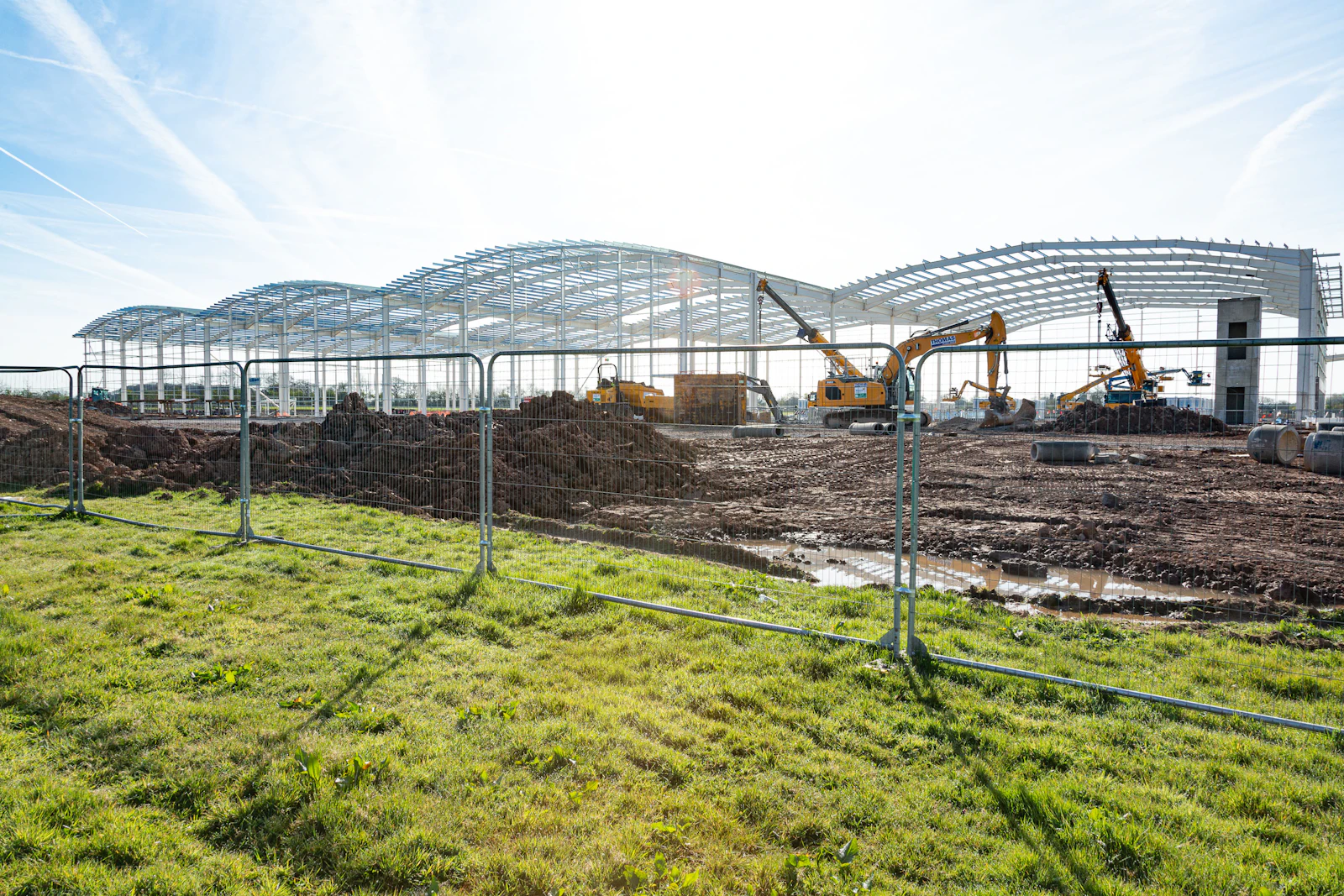
For 2026 planning in Phoenix, AZ, excavator equipment hire typically pencils out in three time-bands: $350–$950/day, $1,300–$3,200/week, and $3,400–$8,200 per 28-day month for bare machine rental, with the spread driven primarily by operating weight class, hydraulic optioning (aux flow, thumb, coupler), and logistics to a stormwater retention system site (delivery radius, access, and off-rent timing). Phoenix coordinators commonly source from national networks (for example, United Rentals, Sunbelt Rentals, and Herc Rentals) as well as regional heavy equipment houses; published market guides show Phoenix averages in the mid-$700/day range, while some contract/municipal price sheets can present lower “program” rates for specific classes.
| Vendor |
Daily Rate |
Weekly Rate |
Review Score |
Website |
| United Rentals |
$650 |
$2 600 |
9 |
Visit |
| Sunbelt Rentals |
$625 |
$2 500 |
9 |
Visit |
| Herc Rentals |
$600 |
$2 400 |
8 |
Visit |
| Empire Cat (The Cat Rental Store) |
$700 |
$2 800 |
9 |
Visit |
| EquipmentShare Rentals |
$575 |
$2 300 |
8 |
Visit |
Excavator Rental Rates Phoenix 2026
Assumptions for the ranges below: (1) rates are for bare excavator hire (no operator), (2) a “week” is commonly treated as 5 days at 8 hours/day, and (3) a “month” is commonly treated as a 28-day / 4-week rental period; confirm the exact definitions on your quote before issuing a PO.
Compact/mini excavator hire (approx. 2–4 metric ton class): plan $350–$550/day, $1,250–$1,850/week, and $3,000–$4,400/28-day month when you need tight tail-swing, truck-and-trailer transport, and lower ground pressure around inlets/headwalls. (Stormwater retention scope note: minis are often cost-effective for inlet structures, underdrain tie-ins, and utility conflicts, but not for bulk cut/fill.)
Mid-size excavator hire (approx. 5–10 metric ton class): plan $475–$725/day, $1,700–$2,600/week, and $4,200–$6,200/28-day month. This class is a common “retention workhorse” when you’re balancing productivity with limited laydown and need to stay under stricter access constraints on commercial sites.
Full-size excavator hire (approx. 12–20 metric ton class): plan $600–$900/day, $2,100–$3,000/week, and $5,200–$7,400/28-day month for mass excavation, basin shaping, and exporting spoil. As a reality check, one published equipment price sheet lists a 30–34K lb hydraulic excavator at roughly $622/day, $1,596/week, and $3,367.75/4-week in a program context; your Phoenix “street” quote may run higher based on availability, seasonality, and damage waiver/fees.
Large excavator hire (approx. 22–30+ metric ton class): plan $850–$1,300/day, $3,000–$4,500/week, and $7,500–$10,500/28-day month when production is the schedule driver (deep cuts, high export volumes, or hard caliche requiring bigger breakout force). In Phoenix, this class can be constrained during peak civil seasons—build schedule float for dispatch and don’t assume same-week availability.
What Drives Excavator Equipment Hire Costs on Phoenix Stormwater Retention Sites?
1) Time-band rules (and how you can accidentally pay “more days”): Many rental programs define a week as 5x8 and a month as 28 days; they may not prorate in the way project teams expect. If you “return mid-week,” some contracts still bill the full week band, and if you miss an off-rent cutoff you may buy an extra day. Treat off-rent timing as a cost item, not an admin detail.
2) Extra hours / second shift: If your retention system excavation runs long days (heat-driven early starts, night work, or concrete crew sequencing), confirm how overtime is billed. One major lessor publishes a rule of thumb where additional shift hours can be charged at 1/8 of the daily rate per hour (daily rentals), 1/40 of the weekly rate per hour (weekly rentals), or 1/160 of the 4-week rate per hour (4-week rentals). Translating that to estimating: a $760/day excavator can add about $95/hour if you blow past the included shift.
3) Phoenix-specific operating constraints that change total hire cost:
- Heat and idle time: extreme summer conditions commonly increase idle (AC, cool-downs, watering for dust), which can push you into overtime or extra days even when “production” looks fine on paper.
- Dust control and cleanup: retention basin cut often means dry, dusty spoils; budget for water truck coordination and end-of-rental cleanup if the machine returns with heavy dust/mud packed in the undercarriage (many vendors treat this as a billable cleaning event).
- Caliche/hard material risk: if you hit hard layers, you may need a larger class excavator or a breaker attachment mid-rental—both are usually more expensive than simply carrying the right iron up front.
Attachments, Options, And Adders You Should Carry in the Hire Budget
For stormwater retention system work, attachments are often where the real rental delta shows up. Coordinators should price the excavator as a system (machine + buckets + hydraulic tools + compliance items), not as a single line item.
- Bucket package allowance: add $25–$60/day per extra bucket beyond “standard,” or $100–$220/week. Common stormwater set: 24" trenching + 48–60" grading/cleanup.
- Hydraulic thumb: add $90–$160/day (or $300–$600/week) for placing riprap, handling precast, or moving debris.
- Quick coupler: add $60–$110/day when you need rapid bucket changes and want to reduce labor idle.
- Hydraulic breaker (hammer): add $250–$450/day plus $35–$75/day for a tool/point wear allowance (often billed if returned excessively worn).
- Grade control / machine control kit: add $250–$600/day when basin slopes and elevations are tight and survey calls are frequent (verify whether base rate includes the receiver/mast/cables).
- Auxiliary hydraulics (high-flow) and plumbing: if not standard on the unit class, budget $40–$90/day for configured machine optioning when using compactors or specialty heads.
Hidden-Fee Breakdown (Common Excavator Hire Cost Traps)
Below are the cost elements that most frequently cause Phoenix excavator hire budgets to miss—especially on stormwater retention scopes where delivery windows, dust, and sequencing drive indirect days.
- Delivery / pick-up: published schedules can include a base fee such as $120 each way plus $3.25 per loaded mile (example structure). Even when your vendor uses a different schedule, this illustrates why a “cheap day rate” can become expensive across multiple mobilizations.
- Minimum transport charges: carry a $250–$450 each-way minimum for lowboy moves on heavier classes (confirm by quote; varies by weight and distance).
- Wait time / access failure: if a driver can’t get in (no escort, gate locked, soft shoulder, or inadequate turning radius), carry $95–$140/hour standby plus a potential $250–$400 re-delivery fee.
- Fuel / refuel surcharge: plan $6.50–$9.00 per gallon vendor refuel pricing (or a premium above pump price) if you return below the contract “full” level. (This is a frequent closeout surprise when crews demob fast.)
- Cleaning: carry $175–$500 for wash/undercarriage cleaning when the unit returns with packed material; add $75–$150 if stormwater spoils are sticky or tracked through asphalt patch areas.
- Damage waiver: many programs price damage waiver as a percentage of time charges—carry 10%–18%. Example: if a 4-week rental time charge is $5,800, a 14% damage waiver adds about $812.
- Environmental / admin fees: carry $5–$25/day as a placeholder for common fixed fees (varies by vendor/program).
- Weekend/holiday billing rules: some suppliers run “5-day week” logic; others bill calendar days. If you accept Friday delivery but don’t start until Monday, you can accidentally buy 2 additional days. Get the billing calendar in writing.
Estimating Notes Specific to Stormwater Retention System Excavation
Stormwater retention system packages tend to mix bulk excavation with precision work around structures, pipes, and finish grades. That mix makes excavator hire cost sensitive to downtime (waiting on formwork, inspection, or export trucks) and re-handling (stockpile moves, backfill sequencing). Two practical estimating moves in Phoenix:
- Split the rental by phase: price a larger excavator for a short “bulk cut/export” window and a smaller unit for longer “structures and detail” duration. Even if mobilization is duplicated, you can save money versus holding one large unit for the entire job.
- Carry a breaker contingency when caliche risk is unknown: either include a 1–3 day hammer allowance at $250–$450/day, or pre-negotiate an on-call swap rate to avoid emergency pricing.
Example: Phoenix Retention Basin Dig With Real-World Rental Constraints
Scenario: A commercial retention basin cut requiring a 20-ton class excavator for production, followed by two weeks of detail work around inlet/outlet structures. Access is through a tight delivery window due to adjacent tenant traffic.
- Machine: 12–20T excavator at $780/day on a weekly band of $2,750/week (planning numbers within the Phoenix market range).
- Duration: 2 production weeks + 2 detail weeks.
- Attachments: hydraulic thumb $130/day (needed for riprap and structure handling) + extra grading bucket $45/day.
- Delivery constraints: delivery/pick-up only between 9:00–11:00 AM; missing the window triggers a next-day reattempt (carry $250 re-delivery allowance).
- Overtime risk: if crews push a 10-hour day for 3 days, that’s 2 extra hours/day. At an overtime rule of 1/8 daily per extra hour, the implied add is about $97.50/hour (based on $780/day), or $585 for 6 extra hours.
- Closeout risk: if off-rent is called after cutoff and the unit sits an extra billable day, that’s another $780 (plus damage waiver percent).
Coordinator takeaway: on stormwater retention systems, your largest controllable excavator hire costs are often dispatch timing, attachment selection, and shift hours—not the base day rate.
How to Write the PO So Excavator Hire Costs Don’t Creep
For Phoenix stormwater retention system scopes, the PO language is your primary control on “surprise” cost. If your vendor uses a standard week/month definition (5x8 week, 28-day month), reference it explicitly and attach the quote.
- Define included hours: state “8 hours/day included” (or your shift) and require pre-approval for overtime billing.
- Lock delivery charges: include “not-to-exceed” delivery/pick-up with mileage method specified (flat vs per-mile). A published example structure is $120 each way + $3.25/loaded mile; use this as a benchmark to sanity-check your quote.
- Specify billing start/stop: identify when time starts (delivery time vs next business day) and when off-rent stops (call-in time and required documentation).
- Document return condition expectations: require “returned full of fuel and broom-clean” (or equivalent) and request a written cleaning/refuel schedule to avoid end-of-rental markups.
Budget Worksheet (Excavator Equipment Hire)
- Base excavator hire (production phase): 2 weeks @ $2,300–$3,000/week allowance (select class based on basin volume and export plan).
- Base excavator hire (detail phase): 2 weeks @ $1,600–$2,400/week allowance (consider downsizing class to reduce idle cost).
- Delivery and pick-up: $500–$1,200 total allowance (includes at least 2 moves; add mileage if outside normal radius).
- Damage waiver: 10%–18% of time charges allowance (confirm if required or optional).
- Fuel return exposure: $250–$650 allowance (if vendor refuels at $6.50–$9.00/gal and you risk returning 30–70 gallons short).
- Cleaning exposure: $175–$500 allowance (dust-packed undercarriage, mud after monsoon events, or tracked material from basin floor).
- Attachment package:
- Extra bucket(s): $100–$220/week
- Hydraulic thumb: $300–$600/week
- Quick coupler: $200–$450/week
- Breaker contingency: $250–$450/day for 1–3 days (caliche risk)
- Standby / access failure contingency: $250–$900 allowance (missed delivery window + re-delivery + driver wait time at $95–$140/hr).
- Overtime/second shift contingency: carry 6–12 hours at an implied rate of roughly 1/8 daily per hour for daily-band overages (validate against your vendor’s terms).
Rental Order Checklist (For Excavator Hire Closeout Discipline)
- PO and quote match: equipment class/weight, included buckets, auxiliary hydraulics, thumb/coupler, and any machine control optioning listed by serial (or at least class).
- Insurance: COI on file (GL + auto as required), and confirm whether damage waiver is elected or declined in writing.
- Delivery requirements: jobsite address pin, contact name/phone, gate/lock instructions, delivery window cutoff time, and on-site spotter requirement for lowboy unload.
- Condition documentation: delivery photos (tracks, glass, panels, bucket teeth, hour meter), and return photos (same angles). Capture any existing damage at delivery to avoid back-charges.
- Off-rent rules: identify who is authorized to call off-rent, the vendor’s required notice method (email/portal/phone), and cutoff times to avoid an extra billable day.
- Fuel/DEF plan: confirm diesel/DEF responsibilities and return-full requirement; schedule refuel before demob to avoid vendor refuel pricing.
- Return readiness: machine staged for pickup, attachments gathered, buckets labeled, and access clear for the transport truck (avoid wait time at $95–$140/hr allowance).
2026 Phoenix Hire Market Notes (What to Expect When You Request Quotes)
Market guides that aggregate rental quotes continue to show Phoenix excavator pricing broadly aligned with major metro averages, with weekly/monthly bands producing meaningful per-day savings compared to paying day rates across long durations. For budgeting, assume that (a) availability tightens during peak civil seasons, (b) attachments are increasingly the constraint (thumbs/couplers/breakers), and (c) transport is the fastest-moving cost input—especially when your retention basin is outside the vendor’s “standard” delivery radius.
If you want a tighter budget number: reply with your target excavator class (operating weight or bucket size), estimated duration by phase (bulk vs detail), and approximate delivery distance from central Phoenix (miles). I can convert this into a not-to-exceed equipment hire allowance with explicit contingencies (delivery, overtime, cleaning, damage waiver) tailored to a stormwater retention system schedule.