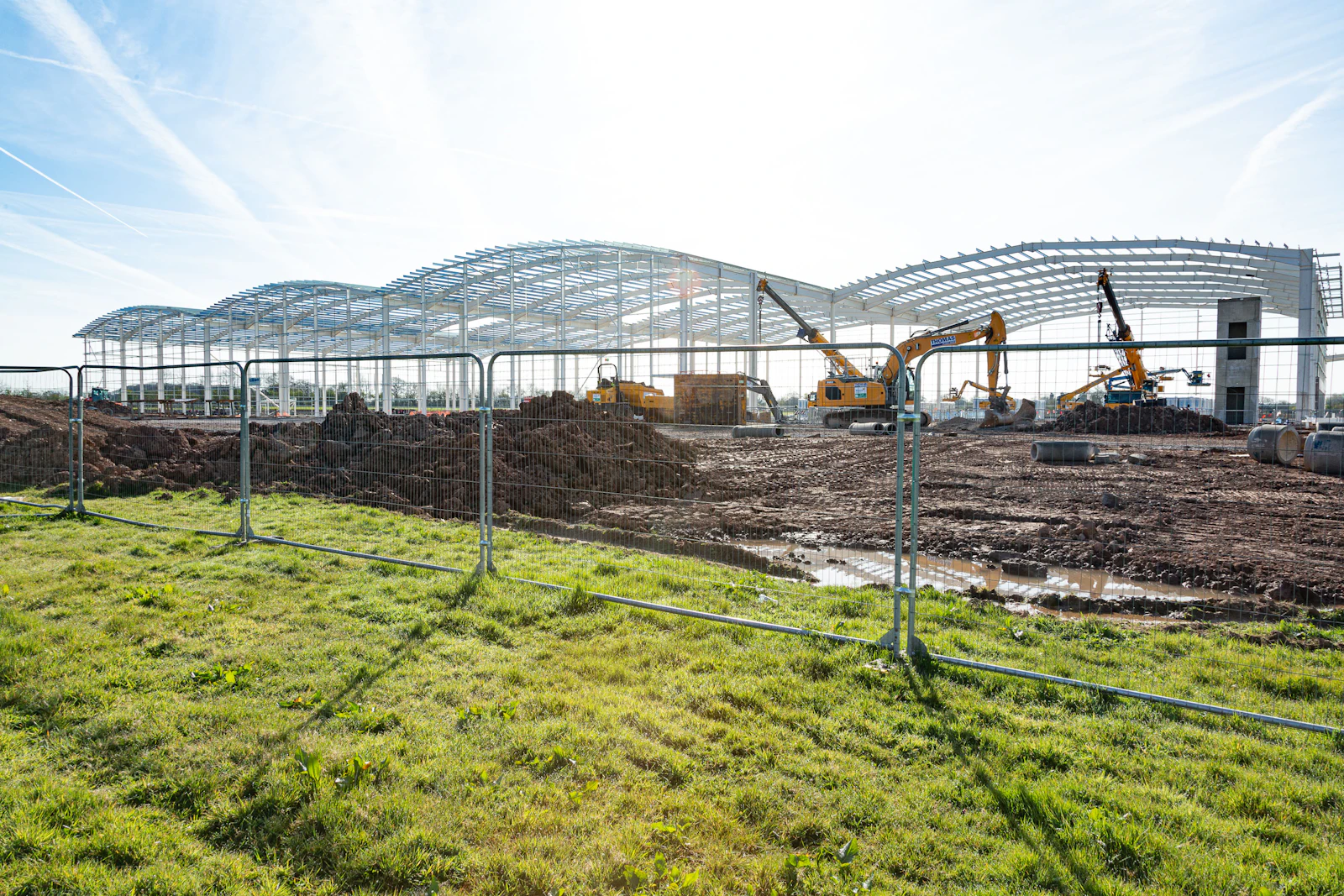
Excavator Rental Rates San Antonio 2026
For 2026 planning in San Antonio, excavator equipment hire costs typically pencil out in three tiers: compact/mini excavators (roughly 3,500–7,500 lb class) often budget at about $200–$350/day, $580–$1,250/week, and $1,300–$3,300/4-weeks; mid-size excavators (roughly 25,000–50,000 lb class) commonly budget at $620–$900/day, $1,600–$2,950/week, and $3,400–$8,600/4-weeks; and larger production machines can run materially higher depending on weight class and hydraulics. These ranges assume standard “one-shift” usage (most national lessors define that as 8 hours/day, 40 hours/week, 160 hours per 4 weeks) and exclude delivery, fuel, and protection plans. In San Antonio, most stormwater retention system scopes are served by the national yards (for availability and service response) plus independents for tight schedules and delivery flexibility; your final hire cost will swing on machine size, attachment package, delivery radius, and the off-rent rules in the rental contract.
| Vendor |
Daily Rate |
Weekly Rate |
Review Score |
Website |
| United Rentals |
$1 000 |
$3 000 |
8 |
Visit |
| Sunbelt Rentals |
$975 |
$2 925 |
9 |
Visit |
| Herc Rentals |
$1 025 |
$3 075 |
8 |
Visit |
| HOLT CAT (The Cat Rental Store) |
$1 050 |
$3 150 |
9 |
Visit |
| EquipmentShare Rentals |
$995 |
$2 985 |
8 |
Visit |
Typical published rental benchmarks supporting these planning bands include Sunbelt’s published schedule showing mini excavator day rates around $218.50–$232.75/day (3,500–7,500 lb class) and hydraulic excavator pricing such as $622.25/day (25,000–35,000 lb class) and $631.75/day (45,000–50,000 lb class), with corresponding weekly and monthly bands.
How Excavator Size And Configuration Change Hire Cost
On stormwater retention system work in San Antonio, “excavator” can mean anything from a 1–2 ton mini for inlet/outlet trenching to a 20–30 ton track excavator for basin cut, spoil management, and rock placement. For estimating, it helps to bracket by operating weight and reach rather than brand/model name.
- Mini excavator (around 3,500–7,500 lb class): Often used for trenching under utilities, tight access around existing curbs, and detail excavation around headwalls/structures. A published schedule shows day rates around $218.50–$232.75 with weekly around $584.25–$622.25 and monthly around $1,296.75–$1,344.25 (rate schedules vary by market and account).
- “E35 class” compact excavator (about 7,700–8,200 lb): Often a sweet spot for retention piping, small manholes/boxes, and selective excavation in caliche without going to a full-size machine. One published rate sheet shows an E35 at $295/day, $1,250/week, $3,225/month (4-week).
- Mid-size excavator (roughly 25,000–50,000 lb class): Typical for pond grading, outlet structure excavation, and moving larger pipe bedding volumes. A published schedule shows $622.25/day for the 25,000–35,000 lb class and $631.75/day for the 45,000–50,000 lb class, with weekly and monthly schedules stepping up accordingly.
- 20–30 ton class (roughly 34,000–73,000 lb): This is where productivity for basin cuts and riprap placement starts to outweigh delivery and minimum-charge friction. One published rate sheet shows examples such as $650/day, $2,200/week, $5,600/month (DX140/E145 class) up to $1,000/day, $3,400/week, $10,500/month (DX300 class), and higher for ~84,000 lb class.
2026 assumption note: if you’re using published 2024–2025 schedules to budget 2026 excavator hire costs, it’s prudent to carry a 3%–8% uplift allowance for fleet costs, trucking, and utilization spikes during peak civil season, then “true up” with quotes once dates and delivery ZIPs are set.
Hidden-Fee Breakdown For Excavator Equipment Hire
Base excavator hire rates rarely represent the full cash-out on stormwater retention system work. The largest gaps usually come from delivery/mobilization, protection plans, fuel/cleaning, and shift overages (hour meter).
- Delivery and pickup: Published schedules can be either flat-with-mileage or zone-based. For example, one published schedule shows delivery at $120 each way + $3.25 per loaded mile.
- Local San Antonio delivery zoning (example): a local San Antonio yard publishes each-way delivery bands like $75 (0–15 miles), $125 (16–30 miles), and $175 (31–50 miles). Use this as a reality check when you’re negotiating delivery radius and “free delivery” language on 4-week terms.
- One-shift usage included: many national rental contracts define the included utilization as 8 hours/day, 40 hours/week, 160 hours/4 weeks; plan for “over hours” if you’re pushing schedule or running double shifts to beat a weather window.
- Damage waiver / protection plan: commonly a percentage of the rental charge; one rental FAQ example shows a 7% damage waiver fee (your account terms may differ).
- Fuel and cleaning back-charges: if the excavator returns short-fueled or caked in clay, you can get hit with service rates (example policies show $5.00/gal refueling and a $250 cleaning fee threshold for excessive contamination). (g
Estimator tip: for stormwater retention system excavation, build a “return-condition” line item even if your superintendent swears the machine will be cleaned—San Antonio’s caliche fines and wet clay after storms can turn a quick rinse into a half-day pressure wash if the undercarriage is packed.
San Antonio Stormwater Retention System Considerations That Affect Rental Cost
San Antonio is not just “another earthwork market.” A few practical jobsite realities change excavator hire costs on retention/detention scopes:
- Soils and wear: caliche/limestone and construction rock increase tooth and bucket wear; if your rental agreement includes wear charges on certain attachments, confirm what’s considered “normal wear” versus billable damage before you start ripping. (Some published rate sheets explicitly note that wear charges may apply to some items.)
- Heat and idle policy: summer heat drives more idle time (A/C, cooldown, dust suppression staging). If you’re budgeting strictly by hour-meter entitlement, add overage allowance or plan tighter shift control.
- Access and delivery windows: many commercial sites restrict lowboy deliveries to early windows (e.g., before 7:00 AM) or after-hours to avoid traffic. If the rental house misses the window, you can lose a day of production while still paying daily minimums—put delivery cutoffs in your PO notes.
- Stormwater sequencing: basin excavation often ties to rainfall events; if you anticipate a stop-start schedule, a weekly rate can be more expensive than a 4-week rate plus early off-rent adjustments depending on contract language. Confirm how partial weeks and “rerates” are handled.
Attachments And Add-Ons That Commonly Move The Price
Stormwater retention system work rarely rents “excavator only.” Buckets, thumbs, and hydraulic tools can change both price and productivity—often worth it if it reduces handwork and rehandling.
- Hydraulic thumb (mid-size excavator): a published schedule shows a hydraulic thumb add-on for a 45,000 lb class excavator at $22.80/day, $45.60/week, $137.75/month.
- Hydraulic hammer (mini excavator class): a published schedule shows a mini-excavator hammer in the $251.75/day, $636.50/week, $1,448.75/month range.
- Extra buckets on an E35-class machine: one published listing shows additional bucket options at $50/day, $125/week, $400/month (beyond the included bucket), which is useful when you need both trenching and cleanup buckets on the same retention scope.
- Brush cutter / mowing head: if your retention basin includes clearing and you’re trying to avoid a separate mower mobilization, one published listing shows a brushcutter at $200/day, $600/week, $1,800/month for a compact excavator class.
Operational note: attachments also change delivery class (weight, deck space). If your lowboy is already maxed with the excavator, a second trip for buckets/hammer can double mobilization cost. Bundle attachments onto the same delivery where feasible.
Budget Worksheet
Use this field-style budget worksheet to estimate excavator equipment hire costs for a San Antonio stormwater retention system. Adjust quantities to your schedule and the machine class you’re planning to run.
- Excavator base hire: 1 unit × 15 working days (allow $650–$975/day for 34k–60k lb class planning, or $200–$350/day for mini/compact class) depending on basin volume and reach requirements.
- Delivery + pickup: allow $240 round-trip minimum (example: $120 each way) + mileage allowance (example: $3.25/loaded mile) or local zone pricing (example: $150–$350 round-trip within 0–50 miles).
- Damage waiver / protection plan: allow 7%–15% of base rental (example policies show 7%).
- Fuel and fluids: allow $150–$450/week for compact class and $500–$1,200/week for mid-size class (project-specific; depends on digging conditions, travel, and idle time).
- Cleaning and return condition: allowance $0–$250 per return (example cleaning fee threshold $250). (g
- Refueling back-charge risk: allowance $0–$150; example policy shows $5/gal if short-fueled. (g
- Attachments: trench bucket(s) at $50/day each; thumb at $22.80/day; hammer at $251.75/day (only if needed for caliche/rock).
- Over-hours allowance: plan for potential hour-meter overages beyond 8 hours/day entitlement on schedule-critical pours/backfill windows.
Example: 3-Week Stormwater Retention Basin Cut With Real Constraints
Scenario: A commercial site inside Loop 1604 requires a new retention basin with outlet structure excavation, 18"–24" piping tie-ins, and riprap placement. Access is tight (single gate), and deliveries are restricted to 6:00–7:00 AM only. The excavator must be off-rented before the concrete sub’s formwork mobilization on Day 16.
- Machine: 34k–52k lb track excavator (enough reach for basin slopes and structure excavation). Planning rate: $650–$900/day or $2,200–$2,950/week depending on class and account.
- Term: 3 weeks. Budget as 3 × weekly, then compare against a 4-week rate if you anticipate rain delays (some contracts rerate favorably; some don’t—confirm before booking).
- Delivery: round-trip allowance $240 + mileage using the published $120 each way + $3.25/loaded mile benchmark; add a $150 “missed window” contingency if the site refuses entry and you have to reschedule trucking.
- Attachment package: hydraulic thumb add-on (budget $22.80/day) for riprap and precast handling; trench bucket add-on (budget $50/day) for piping tie-ins.
- Protection plan: carry 7% as a placeholder if your contract uses a percent-based damage waiver.
- Return condition: allocate up to $250 cleaning exposure if clay packs the undercarriage after a storm, plus refuel exposure at $5/gal if returned short-fueled. (g
What makes this realistic: the delivery window constraint can be more expensive than the rate delta between two excavator classes. If the trucking has to roll twice because the gate wasn’t opened, your “cheap day rate” becomes irrelevant.
Rental Order Checklist
Use this checklist to avoid the most common cost overruns on excavator equipment hire for stormwater retention systems in San Antonio.
- PO scope language: include excavator class/weight range, bucket package (sizes), thumb requirement, and whether a coupler is required.
- Delivery and pickup: confirm address, gate code, contact name, and delivery window; state “delivery attempt charges” must be pre-approved.
- Billing rules: confirm one-shift entitlement (8/40/160) and how over-hours are billed; confirm weekend/holiday billing policy.
- Off-rent procedure: document the cutoff time to request off-rent (same-day vs next-day) and whether billing stops on request or on physical pickup (get it in writing).
- Fuel/cleaning expectations: specify “return full” and “clean enough for inspection,” and require photos at delivery and at pickup/return (undercarriage included).
- Damage documentation: walkaround photos, hour meter at delivery, and immediate notice process for any hydraulic leaks or track damage.
How To Reduce Excavator Hire Cost Without Cutting Production
For stormwater retention system scopes, the cheapest excavator hire is rarely the lowest day rate—it’s the machine/attachment package that eliminates rehandling and keeps trucking, pipe crews, and structure crews moving. These are practical levers that rental coordinators and estimators can control.
- Right-size the machine for the critical path: if the basin cut is on the critical path, a 20–30 ton excavator at $875–$1,000/day may be cheaper in total cost than a smaller unit that extends duration and triggers extra weeks.
- Bundle attachments to avoid a second mobilization: even “small” adders (e.g., $22.80/day thumb or $50/day trench bucket) are usually less expensive than an extra trucking trip or a day of handwork.
- Use weekly vs 4-week strategically: published schedules frequently show a steep discount between weekly and 4-week pricing (for example, a 25k–35k lb class schedule shows $1,596/week versus $3,367.75/4-weeks). If you’re anywhere near 2.5–3.0 weeks, ask for a 4-week structure with an agreed early off-rent rerate.
Off-Rent Rules, Weekend Billing, And Shift Overage
Most excavator rental contracts are written around a one-shift assumption, and that’s where cost creep hides on civil work. If the project team runs long days to beat a forecast, you can run over hour-meter entitlements and end up with a blended rate higher than your bid carried.
- Hour-meter entitlement baseline: plan around 8 hours/day, 40 hours/week, 160 hours per 4 weeks unless your contract states otherwise.
- Double shift risk: if you foresee dewatering delays and then a “push,” pre-negotiate over-hours pricing in the PO notes so it’s not handled as an exception invoice later.
- Weekend strategy: for San Antonio sites with strict weekday traffic control, confirm whether Saturday work triggers any special billing or whether you can receive Friday delivery and Monday pickup as a single-day minimum (policies vary by lessor and branch).
Delivery Logistics In San Antonio That Change The Real Hire Cost
Delivery is a real cost driver on excavator equipment hire in the San Antonio market because many retention sites are inside active commercial corridors and the easiest lowboy access is time-restricted.
- Benchmark delivery pricing: one published schedule shows $120 each way + $3.25 per loaded mile, which is a useful planning allowance when you don’t yet know which branch will fulfill the machine.
- Local zone delivery reality check: a local San Antonio provider publishes each-way delivery bands of $75 (0–15 mi), $125 (16–30 mi), $175 (31–50 mi). If your quoted delivery is far above these bands for a short-haul move, ask whether it’s a dedicated truck charge, after-hours premium, or a second-trip issue.
- Site readiness: if the lowboy can’t get to the drop point due to soft subgrade, you can pay for a “dry run” and then still pay the daily minimum while you stabilize access. Treat this as a planning contingency on greenfield sites after heavy rain.
Return-Condition Controls That Prevent Surprise Charges
Return-condition disputes are one of the most preventable sources of excavator hire overruns—especially on stormwater retention systems where the work is literally mud management.
- Fuel policy: if you don’t return full, you may be charged a service refuel rate (example policy: $5.00/gal). Build “fuel at off-rent” into the closeout checklist for the foreman. (g
- Cleaning threshold: if you return it with clay packed into the track frame or with concrete splatter from nearby pours, you can trigger cleaning charges (example policy: $250). Require end-of-shift pressure washing on wet days rather than trying to clean all at once. (g
- Wear-charge exposure: some published rate sheets flag that wear charges may apply to certain items; confirm whether bucket teeth, cutting edges, and hydraulic tool chisels are treated as consumables on your contract.
2026 Planning Notes For Excavator Equipment Hire On Stormwater Retention Work
For 2026 bids in San Antonio, excavator hire costs are best handled with (1) a realistic base-rate band by class, (2) explicit delivery and protection-plan allowances, and (3) a clearly written off-rent and hour-meter policy in the rental PO. When you do that, quotes from national providers (with deeper fleets and field service) and strong local independents become directly comparable on total cost rather than just the daily number.
If you want, share (a) basin volume or cut/fill estimate, (b) haul distance or on-site spoil plan, and (c) the tightest access dimension at the drop point, and I can help you choose the excavator size class and attachment package that minimizes total equipment hire cost for a San Antonio stormwater retention system schedule.