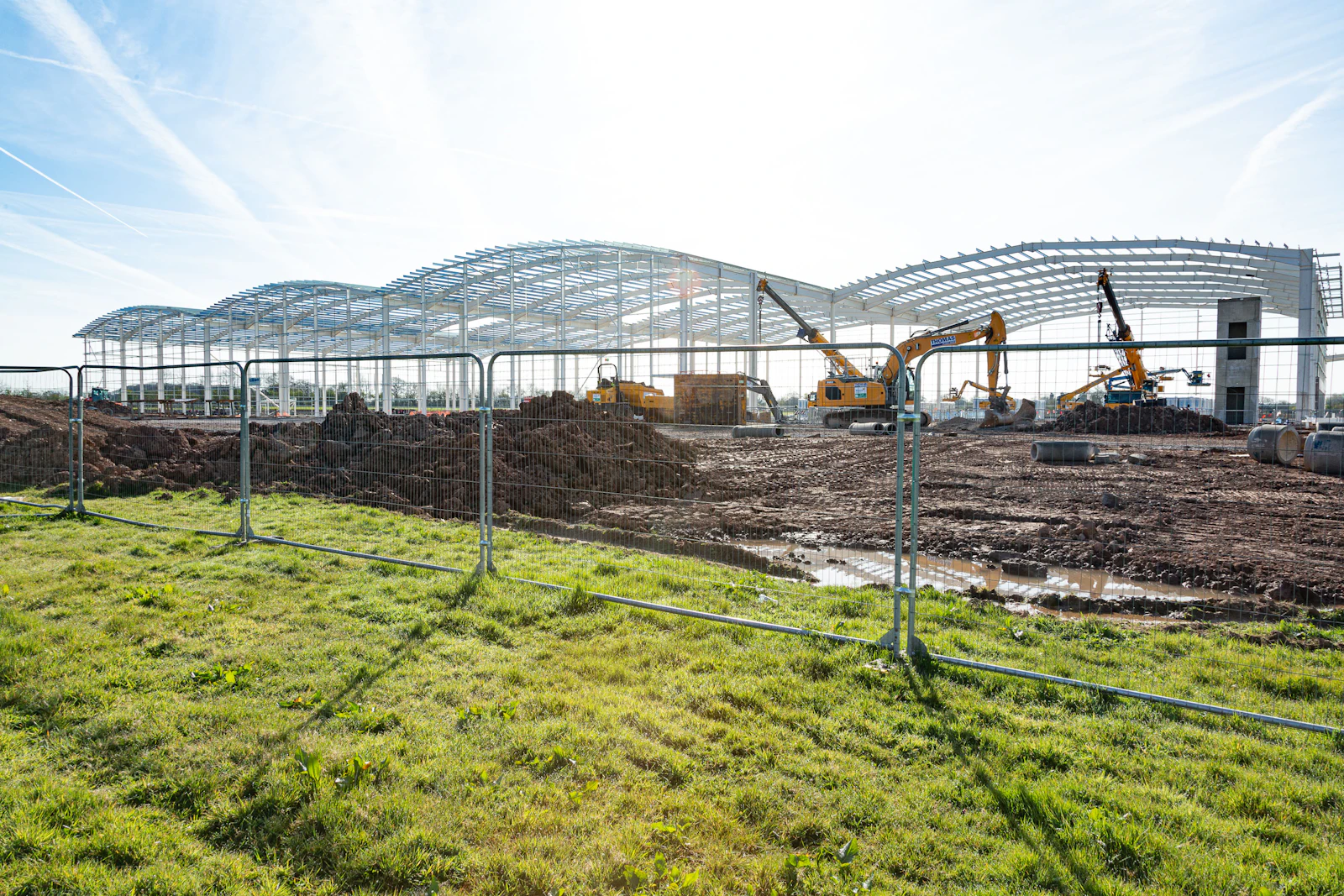
Excavator Rental Rates San Diego 2026
For San Diego excavator equipment hire supporting a stormwater retention system scope (detention basins, underground retention vaults/chambers, bioswale grading, storm drain tie-ins), 2026 planning ranges typically land in four buckets: micro/mini (1.5–3 ton) at roughly $260–$450/day, $740–$1,300/week, and $1,750–$3,200 per 4-week month; compact/mid-size (7–10 ton) at about $500–$900/day, $1,700–$3,000/week, and $4,800–$8,000 per 4-week month; 11–25 ton at about $550–$1,250/day, $2,400–$3,800/week, and $7,200–$12,000 per 4-week month; and 40,000–45,000 lb class (when you need reach/depth for deeper structures) at about $1,000–$1,600/day, $3,400–$5,500/week, and $7,500–$14,000 per 4-week month, before transport and add-ons. In practice, you’ll see these rates quoted by the national yards (United Rentals, Sunbelt Rentals, Herc Rentals, and CAT Rental Store) and multiple independents; what moves the total is delivery logistics, attachments, off-rent rules, and return condition more than the sticker rate.
| Vendor |
Daily Rate |
Weekly Rate |
Review Score |
Website |
| United Rentals |
$1 261 |
$3 148 |
9 |
Visit |
| Sunbelt Rentals |
$900 |
$3 090 |
9 |
Visit |
| Herc Rentals |
$1 277 |
$3 004 |
8 |
Visit |
Assumptions used for the planning ranges above: bare equipment (no operator), one standard bucket included, 8-hour meter/day convention, 40 hours/week, and a 28-day (4-week) billing month. National benchmark ranges and common add-ons (delivery, waiver) are consistent with 2026 market summaries.
How To Budget Excavator Hire by Size for Stormwater Retention System Work
Retention work in San Diego frequently needs more than “a mini.” The cost target depends on whether you’re doing shallow basin shaping, deep utility trenching, or setting large precast/HDPE retention structures. Use the categories below to get your first-pass excavator hire cost estimate aligned to real production needs.
- 1.5–2 ton mini excavator (tight access, curb returns, small inlets): San Diego marketplace postings commonly show around $262–$314/day, $746–$771/week, and about $1,769–$1,935 per 4 weeks depending on supplier and availability.
- 3,000–6,000 lb class (typical backyard access / small BMP retrofits): published yard pricing examples show around $235/day, $705/week, and $2,000/month at the low end for small ROPS units; larger units in the 10,000–13,000 lb range show $365–$420/day, $1,050–$1,260/week, and $2,700–$3,000/month.
- ~8–10 ton “big mini” / compact excavator (retention basin excavation, chamber installs, moderate production): a published 9-ton example is $705/day, $2,100/week, and $4,850 per 4 weeks (note the explicit 4-week billing).
- ~8 ton class on San Diego marketplace networks: examples list around $533/day, $1,732/week, and $4,850 per 4 weeks (availability-driven).
- 12–25 ton class (deep cuts, faster loading, larger retention basins): Southern California heavy-equipment rate sheets show “mid/full size” pricing examples such as $600/day, $2,400/week, and $7,200/month for a ~24-ton class machine, and $700/day, $2,800/week, and $8,400/month for a larger class. Treat these as base machine rates before San Diego transport and job constraints.
- 25,000–45,000 lb class (production earthwork / deep retention structures): published rate sheets show examples such as $850/day, $2,500/week, $5,500/month for ~25k class and $1,050/day, $3,500/week, $7,500/month for 40k–45k class.
What Drives Excavator Equipment Hire Cost in San Diego?
San Diego pricing for excavator equipment hire is usually “reasonable on paper” and then moves quickly once the rental coordinator adds the real-world constraints common to retention scopes (traffic control, dewatering standby, and strict erosion-control requirements). Budget the following cost drivers explicitly:
- Billing structure (day/week/4-week): many contractors get caught by the difference between a calendar month and a 28-day billing month. If you’re carrying the machine over a weekend plus a Monday pickup, you can unintentionally convert a weekly plan into “week + day(s)” charges.
- Delivery radius and lowboy requirements: national guidance commonly budgets $150–$600 each way for delivery/pickup depending on size and distance, and larger classes can exceed that. For planning, carry $250–$450 each way for a 7–10 ton unit moved within metro San Diego and $450–$900 each way for 20+ ton class moves (longer distance, escorts, or special routing can push higher).
- Damage waiver and environmental fees: a typical damage waiver shows up around 10%–15% of the base rental on many contracts. Add an environmental / shop / admin fee allowance of 2%–5% unless your master agreement explicitly removes it.
- Metered hours and overtime: “1 day” frequently means 8 metered hours. If the foreman runs 10–12 hours to beat a rain window, expect overtime billing (often a fraction of the day rate per excess hour) or a second-day trigger, depending on contract language.
- CARB / Tier requirements and restricted job sites: municipal or federally funded retention scopes can require Tier 4 Final or verified emissions controls. Newer compliant machines tend to price higher and book out earlier during peak grading season.
- Ground conditions that force add-ons: if the retention system footprint includes wet sands, imported fill, or uncompacted subgrade, you may need track mats, a compaction wheel, or a second machine (skid steer/CTL) for material management—each adding daily and transport costs.
Attachments and Accessories That Change the Excavator Hire Price
Retention construction is attachment-driven: trenching buckets for pipe connections, cleanup/grading buckets for basin bottoms, thumbs for riprap and headwall set, and breakers for cobble/caprock. Your “excavator rate” is only the start.
- Compaction wheel (common for trench backfill densification and bedding work): example published pricing shows $100/day, $400/week, and $1,200/month.
- Hydraulic breaker (rock, demolition, old concrete inlet removals): example published pricing shows $550/day, $2,200/week, and $6,600/month for a “5,000 lb breaker,” and $685/day, $2,740/week, and $8,280/month for a “7,000 lb breaker.”
- Hydraulic hammers by smaller energy class: published attachment rate sheets show examples such as $300/day for a 500 lb hammer and $650/day for a 2k–3k hammer. If your retention work includes light demo of concrete collars or small headwalls, these smaller hammers can be a better cost/production match than a large breaker.
- Tilt bucket / tilt grading head: published examples show around $200/day for an 8k–10k tilt grade head and $325/day for “above 20k” tilt grade. These can materially reduce hand-finish labor on basin subgrades and swale shaping when specs require consistent slopes.
- Tiltrotator packages: rate sheets show examples such as a 25k excavator with a tiltrotator at $1,250/day, $3,750/week, and $9,000/month. This is not always necessary for retention work, but it can pay when you’re grading in constrained urban corridors where repositioning is slow or traffic control is expensive.
Coordinator note: confirm whether attachments are billed on the same schedule as the base machine (day/week/4-week) and whether they remain billable during weather delays when the excavator stays on site.
Hidden-Fee Breakdown
Use this checklist when you’re validating quotes for excavator equipment hire costs in San Diego. These are the line items that routinely explain why “$700/day” turns into a much higher invoice.
- Delivery and pickup: common planning is $250–$450 each way for compact excavators moved within metro San Diego; if you are sourcing from outside the county, carry $4–$7 per mile and/or a minimum mobilization. One published mini excavator program lists delivery as $100 + $4 per mile including pickup.
- Minimum rental term: many contracts are 1-day minimum even if the machine is used for only a few hours.
- Fuel/return condition: standard expectation is “full out / full back.” For planning, carry a $75–$200 refuel service fee if returned short, plus fuel at marked-up yard rates.
- Cleaning: if the unit comes back with wet clay, concrete splatter, or hydroseed residue, budget a cleaning line item of $150–$400 (and $250–$600 for heavy undercarriage/track cleaning) depending on severity.
- Damage waiver: if you take it, it’s frequently 10%–15% of the base rental. If you decline, confirm your inland marine coverage includes rented equipment and attachments.
- After-hours / tight delivery windows: for downtown/UTC deliveries with lane control, budget a $150–$300 after-hours coordination premium (yard-dependent) plus standby if the truck is forced to wait.
- Standby / waiting time: if your site isn’t ready at the scheduled time, lowboy standby frequently bills in 30–60 minute increments; carry $95–$150/hour as a conservative allowance for wait time on constrained sites.
- Taxes and fees: confirm what’s taxable and whether the yard adds a rental surcharge, admin fee, or environmental fee (often 2%–5% as a planning placeholder).
Operated (Wet) Hire vs Bare (Dry) Hire for Retention Scopes
Retention scopes in San Diego often bring a decision point: do you rent the excavator bare and staff your own operator, or do you bring an operated unit (especially for deep utility connections where production risk is high)?
- Operated mini excavator / skid steer: an example of published San Diego County operated pricing lists $145/hour for a mini excavator or skid steer, with a 4-hour minimum.
- Operated 19k–57k lb excavators: the same operated price list shows examples like $185/hour (19k), $210/hour (33k), $230/hour (52k), and $250/hour (57k), and notes an 8-hour minimum for excavators.
- Overtime and weekend premiums: the same operated list adds $50/hour for Saturday/PM and for exceeding 8 hours, and $100/hour for Sunday/holidays and for exceeding 12 hours.
For budgeting: operated hire can be cost-effective when (a) your schedule risk is high, (b) you need an operator who can cut to grade in one pass, or (c) you’re working under traffic control windows where a slow operator costs more than the higher hourly rate.
Example: Stormwater Retention Basin Cut and Subgrade Trim in San Diego
Scenario: You are building a small retention basin and connecting overflow piping on a site with limited laydown (think UTC/Mira Mesa), and the GC needs excavation complete before a concrete crew mobilizes. Planned production requires a compact excavator with good reach and a compaction option for trench backfill.
- Base machine: budget a 9–10 ton class at $705/day (or $2,100/week) as a realistic planning anchor for the “big mini” category.
- Duration: 8 working days (likely billed as 2 weeks under most rate structures, not 8 individual days).
- Attachment plan: add a compaction wheel at $100/day if you’re densifying trench lifts without a dedicated trench roller.
- Transport: carry $350 delivery + $350 pickup for in-county movement (adjust if your source yard is outside the county or if you require a tight delivery window).
- Damage waiver: carry 12% of base rental as a budgeting allowance (confirm your actual program).
- Cleaning/return condition: carry a contingency of $250 if the machine is returned with wet material in the undercarriage after a dewatering event.
Operational constraints that change the invoice: if your site can only accept deliveries between 7:00–9:00 AM, you may need to pay for dedicated trucking; if you don’t call the yard to off-rent until late afternoon, you can lose a day due to next-day pickup scheduling; and if the machine sits on rent over a weekend while you wait on inspection, you often pay the weekend unless your contract includes a weekend concession.
Budget Worksheet (Use This for Excavator Equipment Hire Planning)
Use the line items below as a field-ready budgeting artifact for San Diego excavator equipment hire costs on stormwater retention system packages. Adjust to your company’s rate agreements and insurance posture.
- Excavator base hire (dry): ___ days / ___ weeks / ___ 4-week periods at your selected class rate (e.g., 7–10 ton class).
- Standard bucket allowance: confirm “1 bucket included” and note size (e.g., 24 in trenching vs 36 in). If an extra bucket is needed, carry $50–$125/day allowance.
- Grading/tilt head allowance: carry $200–$325/day when finish grade tolerances are tight and hand labor is expensive.
- Compaction wheel allowance: carry $100/day or $400/week if you are compacting trench lifts without separate equipment.
- Breaker allowance (only if needed): carry $550/day to $685/day depending on breaker class and host machine; include hoses/couplers confirmation.
- Delivery and pickup (two-way): allowance $700–$1,200 total for metro moves (more if sourced outside the county, or if escort/special routing is required). National guidance commonly budgets $150–$600 each way depending on distance and machine size.
- Damage waiver: allowance 10%–15% of base rental if you elect it.
- Environmental/admin fees: allowance 2%–5% of rental subtotal.
- Fuel: allowance $75–$200/week for small minis (light duty) and $250–$600/week for larger compact excavators depending on run time; confirm “full back” policy and whether dyed diesel is allowed on your site.
- Return-condition contingency: cleaning allowance $150–$400 plus track/undercarriage deep clean $250–$600 if working wet or in sticky soils.
- Standby / waiting time: allowance $150 for a likely 1-hour truck wait event (tight sites, poor coordination, gate access delays).
- Documentation allowance: $0–$150 internal admin time for pre/post inspection photos, hour meter capture, and off-rent email confirmations (this prevents disputes).
Rental Order Checklist (PO, Delivery, Return, and Closeout)
- PO and contract: confirm rate schedule (day/week/4-week), included hours per day (commonly 8 hours), and whether weekends are billed when the machine remains on site.
- Insurance: provide COI (general + auto + inland marine if required). Decide in advance: damage waiver yes/no.
- Delivery planning: provide site address, contact, gate codes, and a delivery window. Confirm if you must accept delivery before a yard cutoff (often early afternoon) to avoid a next-day charge.
- Access and ground bearing: confirm lowboy access, turning radius, overhead clearances, and whether you need street plates/track mats. If your stormwater retention system work is inside a finished site, document curb/protection requirements.
- Attachments: specify bucket widths, coupler type, thumb requirement, breaker package (hoses/bit), and any compaction accessory.
- Pre-inspection at drop: photo/video of panels, boom, quick coupler, bucket ears, track condition, and hour meter at delivery.
- Operating rules: confirm refuel expectations (“return full”), greasing responsibility, daily walk-around requirements, and spill kit requirements for stormwater compliance.
- Off-rent procedure: define who is authorized to off-rent and the required notice method (email/portal/phone). Capture the exact off-rent timestamp in writing.
- Return-condition documentation: photo the undercarriage and bucket before pickup; note any existing damage on the contract to avoid back-charges.
Off-Rent, Weekend Billing, and Return Rules That Change Total Excavator Hire Cost
For stormwater retention system work, schedule float is rarely free. These are the operational rules that most often move the final cost:
- Weekend carry: if inspection delays force the excavator to sit on rent Saturday/Sunday, you may pay for those days unless your master agreement includes a weekend concession. Budget at least 1–2 extra days of exposure for municipal inspection-driven scopes.
- Off-rent cutoff: many yards require off-rent notice before a cutoff (commonly midday). If you off-rent at 3:30 PM, the unit may remain billable until next-day pickup scheduling.
- Metered-hour overages: if a “day” includes 8 hours, then running 10 hours can trigger overage billing. Use a foreman log so you can validate the meter at return.
- Fuel return standard: return full, with the correct fuel type. If your retention system work includes idle time for dewatering, you can burn more fuel than expected without moving much material—budget accordingly.
San Diego-Specific Considerations for Stormwater Retention System Excavator Hire
- Traffic and delivery windows: I-5/I-805 congestion and dense submarkets (Downtown, Mission Valley, UTC) increase the probability of paid truck standby. Mitigation: request the earliest delivery slot and confirm a live unload plan.
- Coastal exposure and washdown expectations: for coastal sites, salt air and fine sand can accelerate wear and increase cleaning expectations at return. Plan a 30–45 minute end-of-shift rinse/clean protocol to reduce back-charges.
- Stormwater compliance and track-out control: retention jobs are scrutinized for BMP compliance. Budget for track-out prevention (labor + materials) because it reduces the risk of cleaning fees and helps keep the excavator productive rather than doing rework.
Ways to Reduce Excavator Equipment Hire Cost Without Increasing Risk
- Right-size the machine: moving from a 3–4 ton to an 8–10 ton class can cut total days, even if the day rate is higher. Use production targets tied to cubic yards and haul truck cycle time.
- Bundle attachments intentionally: if you will need a breaker “just in case,” schedule it for the specific days you expect rock/demo rather than carrying it for the full rental term (breaker day rates can be $550–$685/day).
- Minimize transport events: every move is money. If you have two retention locations in the same tract, keep the excavator on rent and reposition internally when possible rather than off-rent/re-rent.
- Document condition: a 5-minute photo set at delivery and pickup can prevent a $300–$1,500 dispute from becoming a cost you can’t recover downstream.
Frequently Asked Questions About Excavator Hire Cost for Retention Work
Is a 4-week rate the same as a calendar month? Usually not. Many providers bill a “month” as 4 weeks (28 days), which matters when a job runs 30–35 days.
Do I need a damage waiver if I have insurance? Not always. If you have inland marine coverage that specifically includes rented equipment and attachments, you may decline; otherwise, a common waiver budget is 10%–15% of base rental.
Should I consider operated hire? If schedule risk is high, operated hire can be predictable—published San Diego County examples show operated excavators with 8-hour minimums and weekend premiums (e.g., +$50/hour Saturday and +$100/hour Sunday/holidays).