

Excavator Rental Rates in San Francisco (Daily/Weekly) — 2026 Costs

Price source: Costs shown are derived from our proprietary U.S. construction cost database (updated continuously from contractor/bid/pricing inputs and normalization rules).
Profile image of author
Eva Steinmetzer-Shaw
Head of Marketing

Excavator Rental Rates San Francisco 2026

For 2026 planning in San Francisco, excavator equipment hire budgets typically land in these ranges (bare machine, before logistics and waivers): micro/mini (1–2 ton) about $325–$550/day, $975–$1,650/week, or $2,500–$4,200 per 4-week; mini (3–5 ton) about $450–$750/day, $1,350–$2,250/week, or $3,800–$6,500 per 4-week; midi (8–10 ton) about $650–$1,050/day, $2,000–$3,200/week, or $5,500–$9,000 per 4-week; and full-size (20–24 ton) about $1,350–$2,250/day, $4,100–$6,800/week, or $11,000–$18,000 per 4-week. These ranges assume Tier 4 diesel (or equivalent compliance), single-shift usage, and typical Bay Area availability; San Francisco access constraints and delivery windows can move the all-in invoice materially. Most contractors will source through a mix of national rental houses and regional CAT/dealer rental fleets depending on spec, lead time, and support expectations.

Vendor Daily Rate Weekly Rate Review Score Website
United Rentals $525 $1 575 7 Visit
Sunbelt Rentals $500 $1 500 10 Visit
Herc Rentals $515 $1 545 7 Visit
Peterson Cat Rentals (The Cat Rental Store) $540 $1 620 9 Visit
The Home Depot Rental $475 $1 425 9 Visit

San Francisco Excavator Hire Cost By Size Class (What You Should Budget)

When coordinators ask for “excavator rental” in San Francisco, the cost outcome is driven less by the word excavator and more by operating weight + tail swing + transport method + included hours. Use the size-class ranges below to build an equipment hire cost baseline, then add the San Francisco-specific logistics and risk items in later sections.

Micro And Mini Excavators (1–2 Ton): Tight-Access, Indoor-Friendly Packages

Micro/mini units are common on tenant improvement, underpinning, backyard access, and utility tie-ins where a trailer or smaller transport footprint is a cost advantage. A Bay Area published example for a 1.5-ton mini excavator shows $325/day, $975/week, and $2,500 per four-week. Treat that as a real-world floor for a comparable tight-access machine in the region, then apply job-specific adders (delivery constraints, mats, attachments, and waiver/insurance).

2026 planning range (San Francisco): $325–$550/day, $975–$1,650/week, $2,500–$4,200/4-week. These are appropriate for “excavator equipment hire costs San Francisco” estimates where the scope is trenching, light demolition, or small footing work and the machine can be hauled without lowboy complexity.

Mini Excavators (3–5 Ton): The Default For Utility Trenching And Small Foundations

National rental data and published rate sheets commonly place mini excavators in the low-to-mid hundreds per day, with meaningful step-down at weekly and monthly terms. For context, an industry dataset reports mini excavators in the $150–$400/day band nationally (varying by tonnage), while many contractor-oriented rate sheets show day-to-week-to-month ladders such as $350–$400/day, $1,050–$1,200/week, and $2,400–$2,600/month for an ~8,000 lb class machine. San Francisco often prices above the national midpoint once delivery, compliance, and utilization constraints are included.

2026 planning range (San Francisco): $450–$750/day, $1,350–$2,250/week, $3,800–$6,500/4-week. Use the top half of the range when you need: (1) a zero-tail-swing configuration, (2) a thumb/quick coupler, (3) certified lift points or specialty buckets, or (4) guaranteed swap-out support.

Midi Excavators (8–10 Ton): Higher Output, Higher Haul Cost

Midi excavators reduce cycle time for trenching, shallow shoring work, and heavier demo, but they usually shift you into more expensive mobilization and stricter delivery coordination (especially in San Francisco’s constrained staging environment). 2026 planning range (San Francisco): $650–$1,050/day, $2,000–$3,200/week, $5,500–$9,000/4-week. Budget the upper end when a lowboy or dedicated hauler is required or when you need specialty attachments (breaker, compaction wheel, tilt bucket).

Full-Size Excavators (20–24 Ton): Production Machines With Material Haul Implications

Full-size excavator equipment hire costs are often underestimated because the excavator isn’t the only cost center: you typically trigger separate trucking (lowboy), potential permits, and downstream trucking for spoils. As a reference point, one large dataset reports an overall excavator rental average of $719/day, $2,021/week, and $5,108/month across all size classes, with a wide total range up to $5,000/day for large machines.

2026 planning range (San Francisco): $1,350–$2,250/day, $4,100–$6,800/week, $11,000–$18,000/4-week. If you’re budgeting for night work or multiple shifts, do not assume the base weekly/monthly rate covers those hours; treat overtime as a proportional add (see “Term and Off-Rent Rules”).

What Drives Excavator Equipment Hire Costs In San Francisco?

San Francisco is a high-friction rental environment operationally, and that friction shows up as real dollars on the invoice. The largest cost drivers in excavator hire pricing are:

  • Site access and delivery plan: downtown delivery windows, narrow streets, limited laydown, and staged mobilizations commonly require scheduled arrival times and may introduce truck waiting time.
  • Transport footprint: the moment you move from “pickup/trailer” to “lowboy,” your mobilization line item can rival several rental days.
  • Compliance and spec: Tier 4 Final diesel (or electrified options) and documented maintenance/inspection expectations are more standard in the Bay Area; “cheapest available” machines may not be acceptable on regulated or sensitive sites.
  • Utilization assumptions: many rental agreements base weekly pricing on ~single-shift usage, commonly expressed as 40 hours/week and 176 hours per 28-day month equivalents; additional hours can be billed proportionally.
  • Attachments and ground protection: thumbs, breakers, specialty buckets, and track mats are frequent adders in dense urban excavations.
  • Risk allocation: damage waiver vs. customer-provided insurance, deductibles, and documentation requirements materially affect all-in cost and admin time. A published example of a rental protection plan structure shows a 15% damage waiver fee and a deductible described as 10% FMV or $1,000 (terms vary by provider and contract).

Hidden-Fee Breakdown For Excavator Rental Quotes

To control excavator equipment hire costs in San Francisco, treat the base rate as only one component. The following cost items commonly move the invoice:

  • Delivery and pickup: contract price lists and public schedules commonly show structures like a flat charge ($160.69 each way) plus a per-mile component ($4.19 per loaded mile). Your local Bay Area vendor may quote differently, but the planning lesson holds: mobilization is usually two charges (out + back) and mileage can be material.
  • Urban delivery hours and recovery fees: many rental fleets restrict pickup/delivery to weekday business hours; one published policy shows 8:00 a.m.–5:00 p.m., Monday–Friday and notes a recovery fee minimum of $225 if equipment must be recovered. In San Francisco, similar policies can interact with street closure plans and after-hours work.
  • After-hours or scheduled-time delivery: budget an allowance of $150–$300 for “must hit a window” dispatch or after-hours handling when your project requires a specific drop time (planning allowance; confirm in quote).
  • Damage waiver / rental protection: commonly priced as a percentage of rental. A published example shows 15% of gross rental cost and deductible language that can be 10% FMV or $1,000.
  • Environmental or property-tax recovery charges: some rental companies publish environmental fees as either flat or percentage-based; one published schedule shows an environmental fee that can be $25 per rental under $1,000 and 2.5% of the full rental charge over $1,000. Budget 1%–3% as an allowance unless your MSA fixes it.
  • Fuel/refuel and fluids: many contracts require return “full of fuel.” A published estimate notes $5–$8 per gallon plus a refueling service fee of $50–$100 if returned short (diesel and fee structures vary).
  • Cleaning: budget $150–$400 for heavy clay/mud cleanup or concrete slurry contamination when the excavator returns requiring wash-bay labor (planning allowance; confirm by vendor policy). Pair this with jobsite controls (track-out prevention, wash-down plan) so you don’t buy cleaning twice (once on-site, once at the yard).
  • Traffic/admin charges: some rental terms include admin fees tied to automated traffic violations; one set of rental terms describes a flat administrative fee of $20 in addition to the violation amount (this can matter in dense camera-enforced zones and bridge approaches).

Budget Worksheet (2026 Planning Allowances)

Use this bullet worksheet to build an “all-in” excavator equipment hire cost number for San Francisco without waiting on a perfect quote. Adjust quantities and swap in your quoted rates once received.

  • Base excavator rental (mini 3–5 ton): allowance $1,350–$2,250/week (choose term based on schedule certainty).
  • Delivery + pickup: allowance $350–$900 each way (higher for lowboy, tight streets, timed delivery, or weekend coordination).
  • Mileage/tolls/parking pass-through: allowance $75–$250 (bridge tolls, deadhead, curb management fees; confirm what’s pass-through vs. included).
  • Damage waiver / rental protection: allowance 10%–15% of rental charges (or provide COI to remove).
  • Environmental fee: allowance 2.5% of rental (or $25 flat on small rentals, depending on vendor).
  • Fuel and refuel risk: allowance $150–$450 (includes potential $50–$100 service fee exposure plus gallons).
  • Cleaning/undercarriage wear: allowance $150–$400 plus a contingency for abrasive conditions (rock/demo). (Planning allowance; your contract may specify wear limits.)
  • Ground protection: allowance $200–$800 (track mats, plywood, curb/ramp protection; quantify based on route and building rules).
  • Overtime/multi-shift usage: allowance 10%–35% uplift if you expect meter hours beyond included weekly/monthly thresholds.
  • Attachments: allowance $75–$300/day depending on thumb, breaker, auger, or specialty bucket needs (see attachments section in Post Body 2 for benchmarks).

Example: Downtown San Francisco Sidewalk Utility Trench (10 Working Days)

Scenario: A GC has a 10-working-day window to trench and backfill for a 4-inch utility crossing at a downtown SF corner. Constraints: (1) no laydown after hours, (2) deliveries only 9:00 a.m.–2:00 p.m. to avoid peak congestion, (3) excavator must be rubber-tracked and operate with dust-control practices near occupied retail, (4) the crew expects ~55 meter-hours over two weeks (single shift plus some extended days).

Budget build (planning numbers): rent a 3–5 ton mini excavator at $1,850/week x 2 weeks = $3,700. Add delivery/pickup at $650 each way = $1,300 (timed delivery allowance). Add damage waiver at 15% of rental charges ($555 on $3,700). Add environmental fee at 2.5% of rental ($92.50) if applicable. Add ground protection allowance $450 (mats/plywood). Add refuel/fluids allowance $250 (avoid a $50–$100 refueling service fee by returning full). Add cleaning allowance $250 for slurry/mud risk. Estimated all-in equipment hire cost: about $6,597.50 before tax and before any overtime/meter overages. If the vendor enforces included hours (commonly 40 hrs/week), plan a proportional overage on ~15 extra hours.

Operational note that changes cost: to stop rent cleanly, the site team must call off-rent early enough for pickup within the vendor’s dispatch window; otherwise, the machine can sit idle over a weekend and still bill. Align your off-rent call with your curb-space permit end time and your restoration plan so the excavator leaves the site the same day it finishes production.
Our AI app can generate costed estimates in seconds.

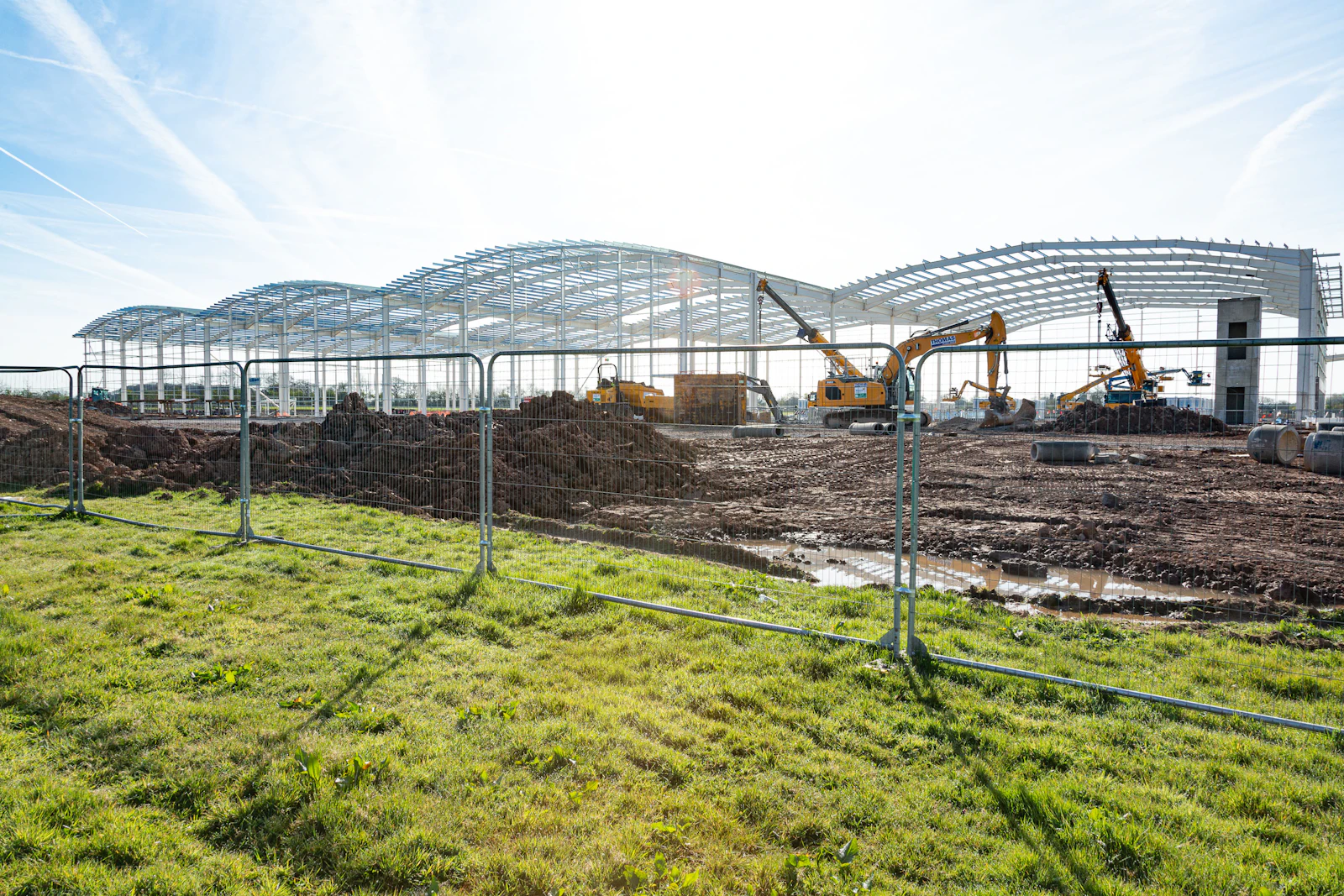
excavator and rental in construction work

How Term Length And Off-Rent Rules Change Your Effective Excavator Hire Cost

For San Francisco excavator equipment hire, the biggest savings lever is getting onto the correct billing term early (day vs. week vs. 4-week) and managing off-rent properly. Many rental programs define “normal” usage as single shift and express the included-hours concept as 40 hours per week and 176 hours per 28-day month; additional hours can be billed proportionally, and abrasive/demolition applications may trigger extra wear billing (especially undercarriage).

Practical estimator guidance: if the schedule is uncertain, it’s often cheaper to budget the weekly term and “buy” schedule float than to pay multiple day rates and then eat weekend billing because pickup missed a cutoff. For downtown SF, also factor the real cost of a missed pickup: it can be one extra day billed plus a second mobilization if the vendor must return due to blocked access.

Attachments, Buckets, And Add-Ons That Commonly Shift The Invoice

Attachments are where excavator rental pricing becomes “non-comparable” across quotes. One coordinator may be pricing a bare machine with a standard bucket; another may include a thumb, quick coupler, and specialty bucket set. If you want predictable excavator hire costs, specify attachments in the RFQ and require line-item pricing in the returned quote (even if you later roll it into a lump sum internally).

  • Hydraulic breaker/hammer: a common rental benchmark for a smaller hydraulic hammer attachment is on the order of $250/day, $750/week, or $1,750/month (rates vary widely by size and carrier).
  • Augers: a benchmark for an auger attachment can be around $200/day, $450/week, or $850/month.
  • Extra buckets / specialty buckets: budget $25–$125/day per extra bucket depending on width and type (ditch, clean-out, trenching). (Planning allowance; confirm in quote.)
  • Trailer needs for compact units: published rate sheets show equipment trailer costs commonly in the $125–$200/day range (useful when a compact excavator is customer-hauled rather than delivered).

San Francisco-specific consideration: ground protection is not optional on many urban sites. If you do not include track mats and ramping in your excavator equipment hire plan, you may pay for (1) building/facility mats, (2) replacement of damaged sidewalk/curb edges, and (3) cleaning fees due to track-out—three different cost buckets with the same root cause.

Delivery, Pickup, And Urban Dispatch: Planning Numbers That Match Real-World SF Constraints

Even when your vendor’s pricing is competitive, San Francisco dispatch realities can dominate your all-in excavator hire cost:

  • Two-way mobilization: treat mobilization as delivery + pickup, not a single fee. Contract schedules commonly show separate “each way” structures.
  • Timed delivery windows: budget standby/detention at $125–$175/hour if your curb space isn’t available at arrival (planning allowance; confirm with hauler).
  • Recovery/return logistics: if a machine is blocked in by backfill, fencing, or a late concrete pour, you can trigger recovery charges; one published policy notes a recovery fee minimum of $225.

Fuel, Cleaning, And Return Condition: Cost Controls You Can Actually Enforce

Excavator equipment hire costs in San Francisco are easiest to control when you enforce return condition rules on the jobsite, not when the invoice arrives.

  • Fuel: require “return full” documentation (photo of gauge + dated receipt). Published guidance notes refuel charges can be $5–$8 per gallon plus a $50–$100 service fee if returned short.
  • Cleaning: build a simple wash-down procedure into closeout (especially after trench spoils in wet season). Preventing a $150–$400 cleaning add is usually cheaper than paying it.
  • Damage documentation: take pickup and return photos of boom/stick, quick coupler, undercarriage, cab glass, and hour meter; this reduces disputes and accelerates off-rent closeout.

When Operated Excavator Hire Can Be Cheaper Than Bare Rental

If your project risk is driven by productivity, not just possession of the machine, operated excavator hire (equipment + operator) can be cost-effective in San Francisco—especially where confined access, utilities congestion, or night work adds risk. One published benchmark notes adding a certified operator can be $50–$100 per hour on top of the equipment rental, though structures vary (minimum hours, mobilization, fuel inclusion).

Estimator rule: if your crew would otherwise “learn on the job” and burn two extra rental days, paying for an experienced operator for even 8–12 hours can reduce total equipment hire cost and schedule risk (confirm union/site requirements and insurance).

Rental Order Checklist

Use this checklist to reduce avoidable charges and speed up billing closeout on excavator rentals in San Francisco.

  • PO and commercial terms: PO number, agreed rate (day/week/4-week), included attachments, and whether damage waiver is accepted or COI is provided.
  • Delivery coordination: exact delivery address, contact name/phone, site map, curb lane reservation/permit confirmation, delivery window (e.g., 9:00 a.m.–2:00 p.m.), and onsite receiving plan.
  • Access constraints: gate width, overhead clearance, street grade, and where the truck can legally stage; specify whether a forklift/telehandler is available if accessories arrive separately.
  • Jobsite requirements: spill kit, drip pans, track mats, and dust-control expectations for indoor/occupied environments.
  • Usage control: designate who may operate; confirm included hours (commonly 40/week, 176/28-day) and how overtime is billed.
  • Off-rent procedure: define who calls off-rent, cutoff time, and how “ready for pickup” is documented (photos showing machine is accessible and cleaned).
  • Return condition package: fuel receipt, hour-meter photo, and damage walkaround photos uploaded same day to prevent late dispute charges.

San Francisco-Specific Notes That Change Excavator Hire Costs

  • Downtown congestion and limited staging: if you cannot guarantee curb access, add a realistic detention allowance so you’re not forced into costly redeliveries.
  • Bridge and corridor pass-throughs: tolls and restricted route requirements can be billed as pass-through; confirm whether your vendor’s mobilization quote includes them or itemizes separately.
  • Hillside and waterfront conditions: steep grades and variable soils can increase undercarriage wear and cleaning needs; consider adding a contingency for track/undercarriage cleanup and wear when the excavator is working in abrasive fill or demolition debris.

If you want, share the target excavator size (ton class), expected duration (calendar days), and whether you need attachments (thumb/breaker/auger). With those three inputs, you can tighten the San Francisco excavator equipment hire cost budget to a narrower range and reduce contingency without increasing risk.
