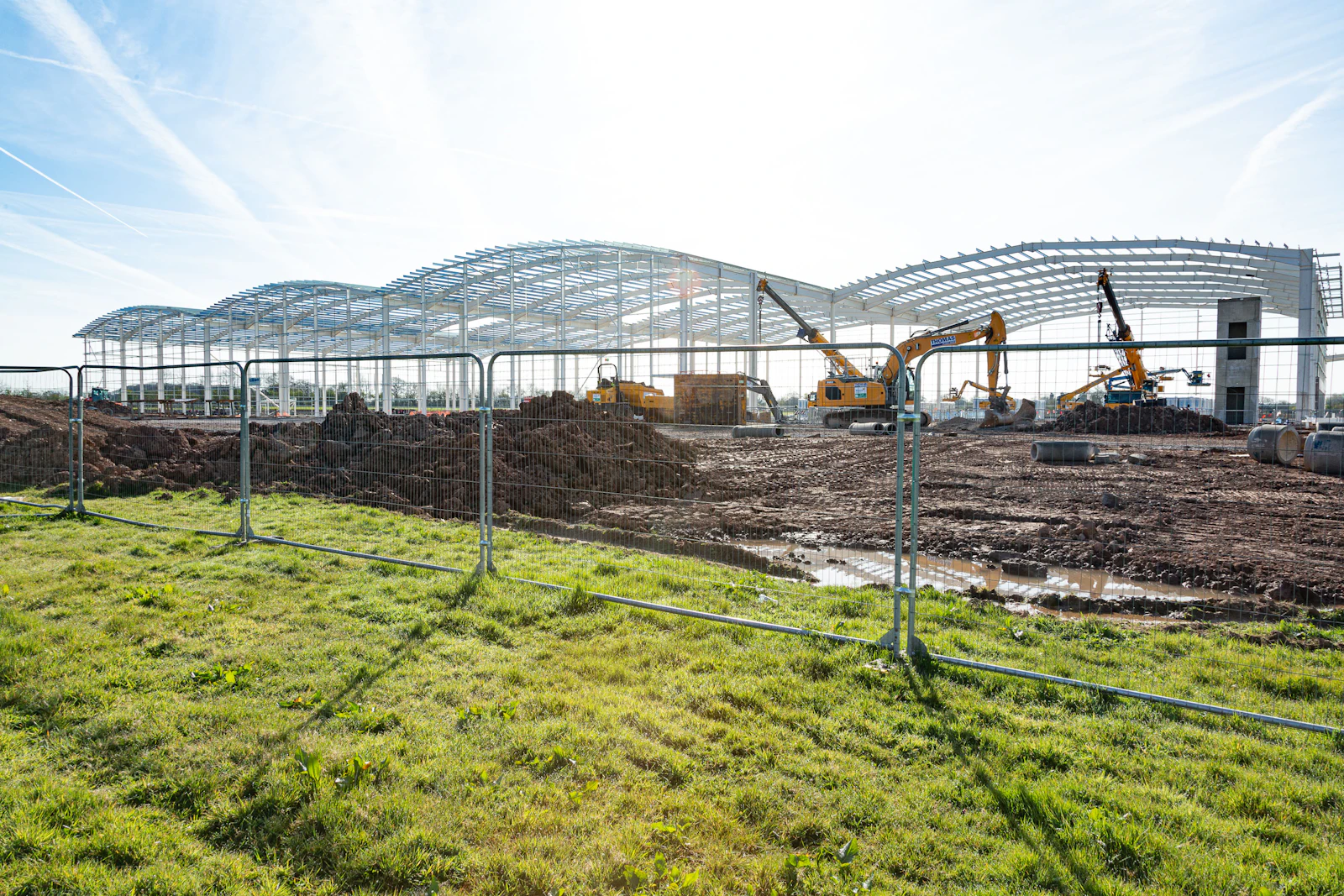
For San Jose excavator equipment hire in 2026, most rental coordinators budget (excluding tax) roughly $280–$550/day, $850–$1,650/week, and $2,000–$4,200 per 4-week for mini-to-compact excavators; and $500–$1,400/day, $1,700–$4,800/week, and $4,200–$12,000 per 4-week for 8–20 ton classes used on stormwater retention system scopes (basin cuts, outlet structures, trenching, and riprap handling). Bay Area metro pricing and logistics can run ~10%–25% higher than baseline U.S. averages depending on fleet tightness, delivery distance, and rain-season utilization risk. Large fleets (e.g., United Rentals, Sunbelt Rentals, Herc Rentals) and regional independents all quote within similar bands, but the total hire cost is usually driven by delivery/pick-up, waiver/insurance, meter-hour overages, and return-condition charges.
| Vendor |
Daily Rate |
Weekly Rate |
Review Score |
Website |
| United Rentals |
$895 |
$2 385 |
9 |
Visit |
| Sunbelt Rentals |
$875 |
$2 350 |
7 |
Visit |
| Herc Rentals |
$860 |
$2 300 |
7 |
Visit |
| H&E Rentals |
$840 |
$2 250 |
8 |
Visit |
| Cresco Equipment Rentals (The Cat Rental Store) – Santa Clara |
$920 |
$2 450 |
9 |
Visit |
Excavator Rental Rates San Jose 2026
The ranges below are practical 2026 planning numbers for excavator hire rates in San Jose (Santa Clara County). Assumptions: 1 shift billing (typically 8 hours/day, 40 hours/week, 160 hours/4-week), rates are for the excavator only (no operator), and “monthly” is commonly a 4-week (28-day) period, not a calendar month.
- 1–2 ton mini excavator (tight access, utility daylighting, shallow trenching): $280–$420/day; $850–$1,250/week; $2,000–$2,900/4-week. A published single-shift rate example shows $320/day, $880/week, $1,965/4-week for a mini excavator on a rate sheet, which is a useful anchor for budgeting.
- 3–5 ton compact excavator (storm laterals, catch basin tie-ins, small retention vault excavation): $350–$550/day; $1,100–$1,650/week; $2,700–$4,200/4-week.
- 7–10 ton excavator (common “sweet spot” for retention basin shaping and structure excavation): $500–$850/day; $1,700–$2,700/week; $4,200–$6,900/4-week.
- 14–20 ton excavator (mass cut, deeper structure excavation, heavy riprap placement): $900–$1,400/day; $3,000–$4,800/week; $7,500–$12,000/4-week. These bands align with published guidance that standard excavators tend to price above minis and can reach four-figure daily rates as size increases.
San Jose-specific note: if your stormwater retention system work is in dense corridors (Downtown San Jose, North San Jose tech campuses, or constrained HOA developments), expect higher total cost from delivery staging, traffic windows, and “can’t-pick-up-until-ready” standby time. Those site constraints frequently add more dollars than negotiating the base day rate.
How Excavator Size And Specs Move The Hire Price In San Jose
When you’re budgeting excavator equipment hire costs for stormwater retention system construction, the model class is only the start. The following spec choices materially change your 2026 hire price in San Jose:
- Tail swing / radius: Reduced tail swing (RTS) units often carry a premium because they solve traffic-control and fencing issues on tight sites.
- Rubber vs. steel tracks: Rubber tracks (and track pad condition) can lower restoration risk on paved access, but can trigger cleaning and damage exposure if you return the unit with embedded rebar wire or torn lugs.
- Tier and emissions compliance: Most fleets provide Tier 4 Final. If you need an ultra-low emission or alternative-fuel solution for campus ESG requirements, budget a premium and longer lead time.
- Hydraulics and auxiliary lines: If your retention scope includes a compaction wheel, thumb, or breaker, confirm aux hydraulics and coupler compatibility up front to avoid “swap-out” downtime that effectively increases your cost per productive day.
Stormwater Retention System Work: What To Budget Beyond The Base Excavator Rate
Retention systems are cost-sensitive because you often have multiple structures (inlets/outlets/manholes), variable soils, and inspection-driven sequencing. Beyond the excavator’s day/week/4-week price, most San Jose stormwater retention system estimates carry these excavator-related hire adders:
- Bucket package adders: trenching bucket $25–$60/day; 36–48 in. grading/cleanup bucket $35–$90/day; ditching/tilt bucket $120–$240/day (higher for specialty tilt-rotators).
- Quick coupler: $40–$110/day (often worth it on retention work if you swap trenching/cleanup buckets daily).
- Hydraulic thumb: $75–$160/day (common for placing riprap, setting inlet/outlet components, handling trench shield panels).
- Compaction wheel: $90–$180/day when you’re compacting trench backfill in lifts and want fewer hand-tamp passes.
- Breaker (hydraulic hammer) attachment: if you hit old concrete, slurry caps, or cobble, plan $450–$850/day for mid-range breakers; published attachment rate examples show lower/smaller classes can price around $300/day, $800/week, $2,000/month for a 500-lb class hammer in at least one rate sheet.
For stormwater retention systems, the “hidden” budget risk is often term extension: rain delays, inspection holds, or export trucking constraints can add 3–7 extra possession days where you’re still paying the daily/weekly clock even if production slows.
Hidden-Fee Breakdown For Excavator Equipment Hire
Base excavator hire rates typically exclude delivery/pick-up, refueling, environmental service charges, and other pass-throughs. Plan for these line items so the PO matches the final invoice.
- Delivery and pick-up (compact excavators): commonly $200–$450 each way within a local radius; beyond that, mileage is often quoted (budget $6–$9/mile beyond the included zone).
- Lowboy transport (14–20 ton class): frequently $450–$900 each way depending on yard location, escort/permit needs, and delivery window constraints.
- Minimum transportation charge: budget a $250 minimum even for short moves when the vendor has a minimum dispatch threshold.
- Site wait time / redelivery: if the truck can’t offload (gate locked, spotter missing, trench plates not set), budget $95–$150/hr and potential $200–$450 redelivery.
- Damage waiver / rental protection plan: commonly 10%–15% of base rental if you don’t provide acceptable physical damage coverage.
- Environmental/service charges: many national contracts include an environmental service charge line item; budget 2%–5% of rental as a planning allowance unless your vendor confirms otherwise.
- Fuel / refuel service: if you return short, refueling is billed at posted branch pricing; for 2026 planning in San Jose, many contractors carry an allowance of $5.50–$7.50/gal diesel equivalent for backcharges (verify with your supplier at order time).
- Cleaning and undercarriage wash-out: budget $150–$600 if returned with heavy clay/mud, concrete splatter, or stormwater sediment packed in rollers.
- Wear-item backcharges: bucket teeth commonly backcharge around $35–$95 each if missing/damaged; track damage can be substantially higher and is a major driver for taking the waiver when your insurance won’t respond.
- Lost/damaged accessories: keys $50–$150; missing pin/clip kits $20–$60; fire extinguisher replacement $40–$90.
Off-Rent, Weekend Billing, And Meter-Hour Rules That Change Your Cost
Two identical excavators can invoice very differently depending on contract rules:
- Shift included in the rate: many suppliers define the day/week/4-week rate as one shift. For overages, one published policy bills excess use at 1/8 of the daily, 1/40 of the weekly, and 1/160 of the 4-week charge (plus tax).
- Weekend/holiday possession: confirm whether weekly rates are “5 working days” or “7 consecutive days.” On Bay Area public works-adjacent sites, it’s common to pay for possession even if the excavator sits fenced over a weekend.
- Off-rent cutoffs: many branches require an off-rent call by early afternoon (often 1:00–3:00 PM) for next-day pick-up; miss the cutoff and you may incur another billed day plus an extra mobilization if schedules slip.
- Partial periods: if you keep equipment beyond a 4-week threshold by even 1–2 days, you can trigger a new billing period depending on the agreement; align pick-up dates to rate breaks where possible.
Example: Two-Week Excavator Hire For A San Jose Retention Basin Cut
Example: You’re building a neighborhood stormwater retention basin with a tight access gate (10 ft clear), no laydown outside working hours, and an inspection-driven schedule. You choose a 8–10 ton excavator for basin excavation and structure setting.
- Base hire: 2 weeks at $1,900/week (planning number) = $3,800.
- Delivery + pick-up: lowboy $650 each way = $1,300 (higher because deliveries must hit a 7:00–9:00 AM window to avoid school traffic).
- Hydraulic thumb: $120/day × 10 working days = $1,200.
- Quick coupler: $65/day × 10 days = $650.
- Damage waiver: assume 12% of base rental = $456 (planning allowance).
- Cleaning allowance: $300 because clay fines pack the undercarriage after rain events.
Planned excavator hire total (example): about $7,706 before tax and any meter-hour overtime. The key operational constraint here is that the site cannot accept pick-up until the basin is fenced and stabilized; if the fence subcontract slips 3 days, you may add $600–$850/day of additional possession cost even with zero production.
Budget Worksheet
Use this as a practical excavator equipment hire cost worksheet for San Jose stormwater retention system scopes (edit the quantities to your work term):
- Excavator base hire (selected size class): allowance $350–$1,400/day or $1,100–$4,800/week depending on tonnage.
- Bucket package allowance (trenching + cleanup + grading): $60–$250/day.
- Quick coupler allowance: $40–$110/day.
- Hydraulic thumb allowance: $75–$160/day.
- Breaker allowance (if demo/cobble expected): $300–$850/day.
- Delivery and pick-up allowance (compact): $400–$900 round trip.
- Delivery and pick-up allowance (lowboy/heavy class): $900–$1,800 round trip.
- Transport standby / wait time allowance: $95–$150/hr (carry at least 2 hours on constrained sites).
- Damage waiver / rental protection: 10%–15% of base rental if required.
- Environmental/service charge allowance: 2%–5% of rental (confirm per vendor).
- Fuel/refuel backcharge allowance: $150–$400/week (project-specific; depends on idling and haul distance on-site).
- Cleaning/undercarriage allowance at return: $150–$600.
- Wear items allowance (teeth, cutting edge, pins/clips): $150–$500.
Rental Order Checklist
- Confirm excavator size/weight class, tail swing, and required attachments (include coupler and thumb compatibility in writing).
- PO references: job number, cost code, requested rate structure (day/week/4-week), and the agreed “rate break” dates.
- Insurance packet: COI with additional insured + waiver of subrogation if required; confirm whether the vendor will still apply a 10%–15% damage waiver if documentation is incomplete.
- Delivery plan: site contact, gate access, offload area, and whether a spotter is required for lowboy unloading.
- Delivery windows/cutoffs: document any restricted windows (e.g., 7:00–9:00 AM only) and budget for potential after-hours premium ($150–$300).
- Off-rent procedure: who calls off-rent, cutoff time (target before 2:00 PM), and how you will document “ready for pickup.”
- Return condition photos: take time-stamped photos of undercarriage, buckets, coupler, and hour meter at both delivery and return.
- Fuel/DEF expectations: document whether you are “return full” or vendor will refuel at posted rates.
What San Jose Rental Coordinators Miss Most Often
On stormwater retention system work in San Jose, excavator hire overruns are rarely caused by the base rental number alone. They usually come from (1) preventable logistics charges, (2) unplanned possession days, and (3) attachment/return-condition surprises. The controls below are aimed at equipment managers and estimators who want predictable excavator equipment hire costs.
Delivery Logistics In The South Bay Can Be A Cost Multiplier
City-specific reality: South Bay traffic and jobsite staging limitations often force tighter delivery windows. When you can’t accept delivery/pick-up “anytime,” you increase the chance of wait time, redelivery, and extra billed days.
- Standby and reschedule exposure: carry $95–$150/hr for truck wait time when a lowboy arrives and the site isn’t ready (no spotter, trench plates missing, or insufficient turning radius).
- Restricted access neighborhoods: for HOA streets, add an allowance for mats or protective measures; otherwise, restoration risk can turn into cleaning or damage backcharges at return (budget $150–$600 cleaning and $300–$1,000+ restoration contingencies depending on your contract).
- Distance creep: “San Jose” pricing can vary if the dispatch yard is effectively in Milpitas, Santa Clara, Morgan Hill, or over the hill; budget mileage at $6–$9/mile beyond the included radius unless you have a fixed transport quote in the agreement.
Managing Meter Hours And Overtime Like A Rental Contract, Not A Field Problem
If your excavator is on a stormwater retention system schedule that occasionally runs long (concrete delivery misses, inspection holds, or dewatering delays), confirm how the vendor bills beyond one shift. At least one major rental provider publishes an overtime calculation where excess use is billed at fractions of the day/week/4-week rate (for example, 1/8 of daily, 1/40 of weekly, and 1/160 of a 4-week rate).
- Planning control: assign a foreman responsibility to record meter hours daily and flag when you’re trending above included hours by mid-week.
- Commercial lever: if you know your job will run double shifts for 3 consecutive days, negotiate a structured second-shift rate up front rather than accepting automatic overtime billing.
Insurance, Damage Waiver, And Why It Matters More On Stormwater Scopes
Retention system sites are hard on excavators: wet clay, sediment, trench shields, rock, and frequent bucket swaps. If you can’t provide acceptable physical damage insurance for the rented excavator, many contracts apply a waiver/LDW-like line item commonly in the 10%–15% range.
- Budget assumption: carry 12% of base rental as a default allowance until risk/insurance is confirmed.
- Operational control: require “before use” photos of buckets, coupler, auxiliary lines, and glass to dispute pre-existing damage.
Return-Condition Costs: The Silent Killer Of Excavator Hire Budgets
Return-condition backcharges hit when the machine comes back excessively dirty, missing wear parts, or with track/undercarriage issues.
- Cleaning: budget $150–$600 for wash-out when working in wet subgrade or when spoils include bentonite/slurry residues.
- Bucket teeth and cutting edges: carry $35–$95 per tooth (and verify tooth count at delivery).
- Hydraulic leaks and hose damage: if caused by misuse, expect service backcharges; carry a contingency of $250–$750 for minor hose/fitment issues on high-risk sites.
- Documentation requirement: capture time-stamped photos and hour-meter reading at pick-up; pair it with your off-rent call log so “ready for pick-up” timing is defensible.
When Operated Excavator Hire Can Be Cheaper Than Dry Hire In San Jose
This article focuses on dry hire (excavator only). However, for short-duration stormwater retention system tasks (one-day structure setting, limited excavation under live utilities, or when access constraints demand a top operator), operated excavator hire can reduce your risk of damage, overtime, and rework. San Jose labor conditions and public-sector pay scales highlight why operated work is expensive in the region, so you should compare operated pricing against a dry-hire + your own operator + productivity risk model.
- Budget signal: if your dry-hire plan requires adding a second shift for 2–3 days to catch schedule, an operated package may be competitive once you include overtime, waiver, and potential damage exposure.
Cost-Control Tactics That Typically Move The Needle (Without Changing The Machine)
- Align to rate breaks: plan pick-up on the exact day your weekly or 4-week rate breaks (avoid paying 2 daily rates when you’re 1 day short of a week).
- Pre-approve attachments: if the thumb or coupler is required for riprap or precast handling, include it on the initial contract; adding later can restart minimum term charges or trigger a service dispatch.
- Control redeliveries: confirm turning radius, overhead clearance, and whether the driver can tailgate offload. A failed delivery can effectively add $200–$450 plus schedule slip.
- Fuel plan: decide “return full” vs vendor fuel option at kickoff; refuel is typically charged at posted rates if you return short.
Quick Reference: 2026 San Jose Excavator Hire Assumptions (For Estimating Notes)
- Billing basis: 8/40/160 hour inclusion is common for day/week/4-week pricing models; overtime may apply beyond included hours.
- Metro premium: carry +10% to +25% for high-cost metro effects and constrained logistics.
- Damage waiver: carry 10%–15% unless insurance is confirmed acceptable.
- Transport: compact $200–$450 each way; lowboy $450–$900 each way (validate by yard location and delivery window).
- Cleaning: $150–$600 typical allowance on wet/dirty stormwater sites.
If you want, share the expected excavator size (ton class), access constraints (gate width), and whether you need a thumb/coupler/breaker. I can tighten the San Jose 2026 hire allowances into a procurement-ready cost band for that exact stormwater retention system work term—still vendor-neutral and table-free.