

Create an itemized estimate for your project, with materials, labor, and quantities you can review and edit.
Create my estimateStart a 7-day free trial. Sign up, then enter your project details.
For Tucson, Arizona excavator equipment hire planning in 2026 (dry-hire, bare machine), most rental coordinators should budget mini excavators (roughly 1–4 ton class) at about $250–$450 per day, $750–$1,350 per week, and $1,750–$3,800 per 4-week period; mid-size excavators (roughly 5–10 ton class) at about $375–$850 per day, $1,150–$2,550 per week, and $3,000–$7,500 per 4-week period; and full-size excavators (roughly 14–25 ton class) at about $750–$1,350 per day, $2,200–$4,000 per week, and $6,600–$12,000 per 4-week period, before delivery, waivers, and consumables. In Tucson, national fleets (United Rentals, Sunstate, Herc) and heavy dealers (such as the regional Cat dealer network) typically quote by account and availability, while local yards may publish select rates—use the bands below to build a defensible 2026 budget, then reconcile to your actual project hours, delivery windows, and off-rent rules.
| Vendor | Daily Rate | Weekly Rate | Review Score | Website |
|---|---|---|---|---|
| United Rentals | $1 550 | $4 150 | 6 | Visit |
| Sunstate Equipment | $1 500 | $4 000 | 10 | Visit |
| H&E Equipment Services | $1 600 | $4 250 | 8 | Visit |
| EquipmentShare | $1 525 | $4 100 | 8 | Visit |
| Herc Rentals | $1 650 | $4 400 | 8 | Visit |
Published Tucson reference point (mini class): ABEL Equipment Rentals in Tucson advertises a 2-ton mini excavator at $295/day (with a transport trailer included) and a 4-ton excavator at $350/day (with “free local delivery” noted), with a “pay for 4 days and keep for 7 days” weekly structure.
Assumptions for the planning ranges in this article: pricing is shown in USD and intended for 2026 budgeting; rates are for dry-hire (no operator), exclude taxes, exclude fuel, and assume a standard rental “shift” (commonly 8 hours/day, 40 hours/week, 160 hours per 4-week period). Many heavy-equipment agreements also accrue overtime on excess hours; for example, one Cat dealer’s rental terms define overtime as 1/8 of the daily charge per excess hour, 1/40 of the weekly charge per excess hour, and 1/160 of the 4-week charge per excess hour.
When you price an excavator rental in Tucson, the single biggest cost driver is the machine class (operating weight and reach), followed closely by attachments (thumb, breaker, auger), transport method (pickup vs. lowboy), and the contract billing rules (hour caps, weekend billing, off-rent cutoffs). To keep estimates consistent across projects, many contractors build an internal “rate card” with three machine bands and then add job-specific allowances for delivery, waiver, cleaning, and overtime.
Mini excavator equipment hire (about 1–2 ton class): plan $250–$330/day, $750–$950/week, $1,700–$2,300/4-week. A regional example outside Tucson: a John Deere 17G mini excavator has been advertised in Arizona at $245/day, $750/week, and $1,750/month, which helps validate the lower end of the mini band for 2026 planning (availability and delivery will still swing totals).
Mini/midi excavator equipment hire (about 3–4 ton class): plan $300–$450/day, $900–$1,350/week, $2,200–$3,800/4-week. The Tucson-published examples above (2-ton at $295/day and 4-ton at $350/day) sit in this bracket and are useful for quick ROM budgeting when a foreman requests a compact unit fast.
Mid-size excavator equipment hire (about 5–10 ton class): plan $375–$850/day, $1,150–$2,550/week, $3,000–$7,500/4-week. This is the “utility trenching and small sitework” sweet spot where attachment adders and mobilization logistics often decide the real cost, not the base rent.
Full-size excavator equipment hire (about 14–25 ton class): plan $750–$1,350/day, $2,200–$4,000/week, $6,600–$12,000/4-week. As a sanity check on the heavier end of the market, one published heavy-equipment price page (outside Arizona) lists 17–20 ton excavators at $2,200 per 7-day/40-hour period and $6,600 per 28-day/160-hour period, and 21–25 ton excavators at $2,500 per 7-day/40-hour period and $7,500 per 28-day/160-hour period. Use these as structure guidance for 2026 budgeting, then adjust for Tucson fleet mix, hauling distance, and seasonal demand.
1) Delivery radius and jobsite access drives totals in Tucson more than many teams expect. Even when a yard is “in town,” deliveries to Marana, Oro Valley, Vail, Sahuarita, or job sites near I-10 interchanges can push you from a simple rollback delivery into lowboy territory for larger units. For budgeting purposes, many Tucson-area coordinators carry allowances like:
2) Soil and dust conditions matter in Tucson. Caliche and cobble can increase tooth and bucket wear, and desert dust can drive stricter air-filtration expectations. Plan for at least one $75–$175 allowance for extra air-filter service or “dust condition” consumables when the work is in unimproved lots or during high-wind periods. If your site requires indoor excavation (warehouse, industrial retrofit), expect dust-control accessories (HEPA scrubber/negative air) to add $120–$360 per week depending on spec, plus labor to manage it.
3) Heat management and uptime risk can influence which fleet you choose. In peak summer operations, rental houses may prioritize newer units with better cooling packages for continuous shifts—those often price at the top of the band. If you run long shifts, budget overtime rent (not just overtime labor) so your estimate matches how the rental contract bills excess hours.
4) Billing rules (hours and off-rent) can move your effective day rate. A common estimating miss is ignoring hour caps. If your daily rate assumes 8 hours and you run 10 hours, those extra 2 hours can trigger overtime rental. Using the overtime structure cited earlier, if an excavator is $900/day, the excess-hour rental can budget at $112.50 per hour (1/8 of $900) beyond the included hours.
To keep Tucson excavator equipment hire costs predictable, build a standard “hidden-fee” stack into every estimate. The exact names vary by rental house, but the dollars behave similarly:
Base excavator rent is only half the story. For Tucson excavator rental cost control, treat attachments as separate line items with their own delivery and damage waiver implications. Typical planning adders:
For Tucson excavator equipment hire, your operational controls should match how rental houses bill. Add these constraints to your internal work order:
Scenario: A subcontractor needs an 8–10 ton excavator rental in Tucson for a 3-day waterline repair near a controlled-access commercial site. Work runs 10-hour shifts (to minimize lane closure days). The site only accepts deliveries 6:00–7:00 AM and requires track mats on finished asphalt.
Coordinator takeaway: even before fuel and tax, the “real” excavator hire cost in this short scope is closer to $3,671.50 when you include overtime rent risk, delivery constraints, mats, waiver, and cleaning. This is why Tucson excavator rental pricing should be estimated as a package, not just a day rate.
Use this as a copy/paste estimator worksheet for Tucson excavator equipment hire costs:
Before you release a PO for Tucson excavator hire, confirm these items to prevent avoidable charges:
If you need a quick market-validation check for mini excavator rental pricing bands (not Tucson-specific), published national compilations commonly cite mini excavator base-rent ranges in the neighborhood of $225–$575/day, $700–$1,550/week, and $1,800–$3,675/month, which is directionally consistent with the Tucson planning ranges above once delivery and job constraints are added.
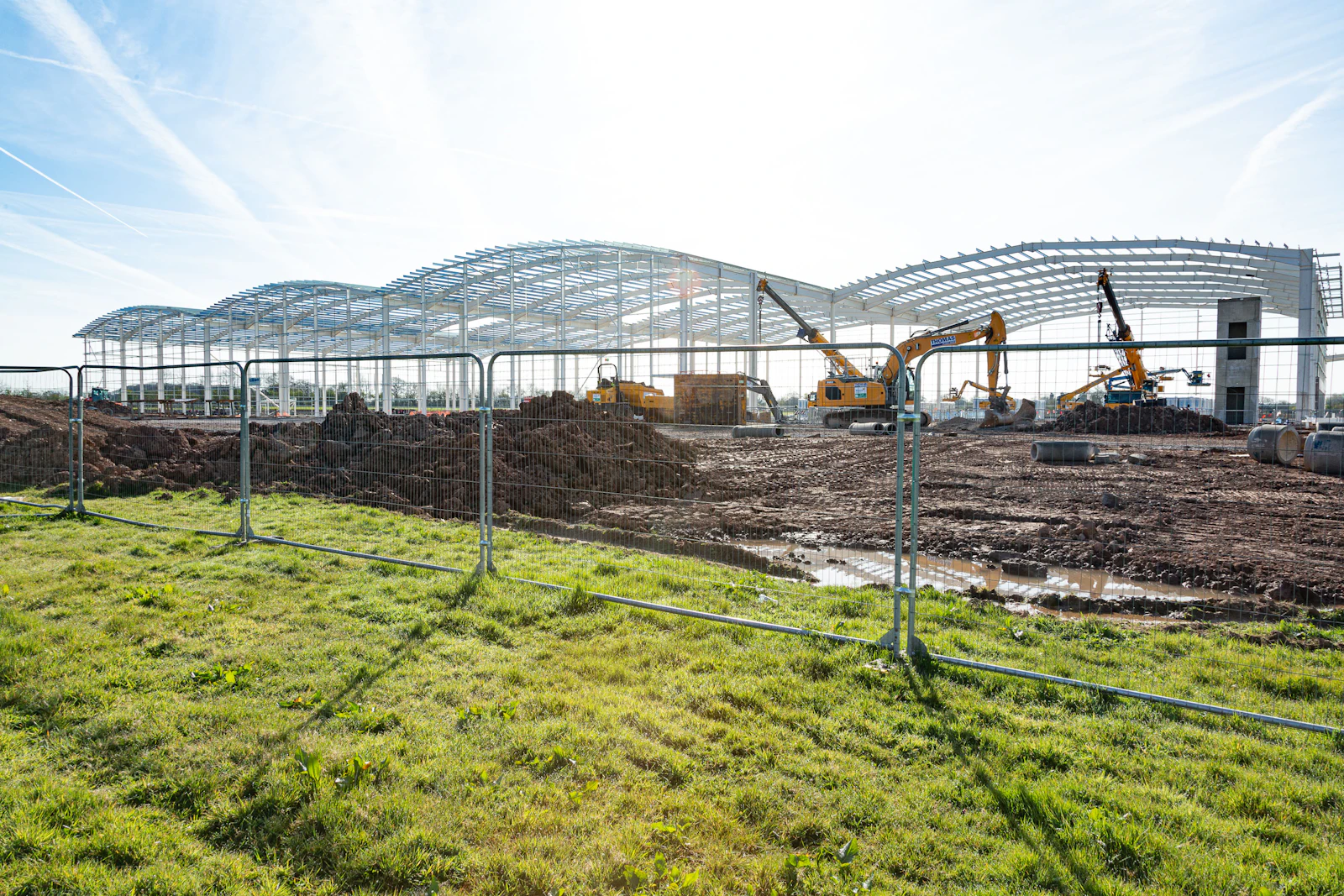
Cost predictability in excavator equipment hire is mostly process. In Tucson, where projects can move from dusty caliche in April to mud and access constraints during monsoon bursts, the same machine can produce very different invoice outcomes depending on whether you control transport, hours, and return condition. The goal is to make your excavator rental cost behavior repeatable across PMs and foremen.
For excavator equipment hire, the correct rate structure is the one that matches how long you will actually keep the machine “on rent” and how many hours you will meter in the period:
Practical Tucson rule: if you are paying lowboy mobilization (often $350–$650 each way for larger classes), it frequently becomes economical to move to a weekly or 4-week structure just to reduce “churn” and re-mobilization risk.
Mobilization controls: Consolidate deliveries. If you need a breaker and an extra bucket, request they ship on the same truck; otherwise you can accidentally pay two trips (for example, $450 + $450) on a short job where base rent is only $2,200/week. If you have multiple Tucson-area sites, ask whether the rental house will “transfer” the machine between sites on one mobilization charge rather than forcing off-rent/re-rent behavior.
Excess hour controls: If your contract includes 8 hours/day and you run 12s, you are not just paying overtime labor; you can also pay overtime rent. Using a common overtime method (1/8 of day rate per extra hour), a $1,000/day excavator can generate $125/hour of rental overtime. When a superintendent says “just keep it running,” make sure the estimate or T&M ticket carries that exposure.
Local conditions that often change excavator hire totals in Tucson:
Scenario: A crew needs a 2-ton mini excavator for a 2-day drainage repair in a residential-adjacent corridor. The question is whether to pick up with a trailer or pay for delivery.
When procurement needs to reduce excavator equipment hire costs in Tucson without sacrificing schedule:
This article focuses on dry-hire excavator rental costs, but there are cases where an operated excavator hire (machine + operator) can be cheaper in total project cost even if the hourly rate is higher. The tipping point is usually when:
If you stay with dry-hire, treat “operator efficiency” as a cost driver: a 25% productivity swing can outweigh a 10% rental discount.
Most disputed excavator hire charges are not about the day rate; they are about condition and timing. To reduce invoice risk:
Bottom line: in Tucson excavator equipment hire, your best savings are typically created by controlling mobilization events, preventing excess-hour rental overtime, and returning the machine in documented condition—not by chasing a small day-rate reduction.
