

Excavator Rental Rates in Tucson (Daily/Weekly) — 2026 Costs

Price source: Costs shown are derived from our proprietary U.S. construction cost database (updated continuously from contractor/bid/pricing inputs and normalization rules).
Profile image of author
Eva Steinmetzer-Shaw
Head of Marketing

Excavator Hire Costs Tucson 2026

For Tucson stormwater retention system work in 2026, most rental coordinators should budget excavator equipment hire (dry-hire / bare machine) in these planning bands: micro/mini excavators (roughly 1–4 ton) typically run about $250–$450/day, $900–$1,600/week, and $2,200–$3,800 per 4-week period; mid-size excavators (about 8–13 ton) commonly price around $500–$900/day, $1,350–$2,600/week, and $4,000–$7,500 per 4-week period; and standard 14–25 ton classes (often the production sweet spot for basins, outlet structures, and riprap handling) frequently land around $750–$1,650/day, $1,500–$3,100/week, and $3,000–$10,000 per 4-week period, depending on hour limits, bucket package, and transport logistics. These are planning ranges (not a quote): Tucson pricing is influenced by caliche/hardpan risk (often upsizing the machine or adding a breaker), dust-control expectations in dry months, and delivery mileage if the retention site is outside the typical “in-town” radius. National rental houses (with local branches) and Tucson-area independents usually quote similar structures, but totals swing based on attachments, shift usage, and off-rent timing.

Vendor Daily Rate Weekly Rate Review Score Website
United Rentals (Tucson, AZ – Branch 01J) $704 $1 810 8 Visit
Sunbelt Rentals (Tucson, AZ – Branch #554) $770 $2 155 8 Visit
Herc Rentals (Tucson, AZ) $530 $1 582 8 Visit
ABEL Equipment Rentals (Tucson, AZ) $350 $1 400 10 Visit

How Tucson Stormwater Retention Scopes Change Excavator Hire Costs

“Stormwater retention system” work is rarely just bulk excavation. On Tucson projects it typically includes a mix of detention/retention basin cut-and-fill, inlet/outlet trenching, structure excavation, riprap placement, and occasional subgrade rework after monsoon events. That variability drives the excavator rental rate you can justify and the adders you must carry. For example, a compact 2–4 ton mini excavator can be cost-efficient for tight inlet tie-ins and curb returns, but it may stall in caliche lenses without pre-rip or a breaker. Conversely, a 14–20 ton excavator is usually the economical production machine for basin cuts and outlet headwalls, but it increases delivery complexity (lowboy scheduling, site access, and potentially higher damage waiver exposure).

2026 Planning Ranges By Excavator Size (Dry-Hire) for Retention Work

Micro/mini (1–2 ton, tight access): Tucson-advertised minis can still price in the mid-$200s per day. One local Tucson listing shows $250/day and $1,000/week for a micro-sized unit (often selected for narrow gates, utility daylighting, and small drain swales).

Mini (2–4 ton): A Tucson-area yard advertises a 2-ton mini at $295/day and a 4-ton excavator at $350/day, with a weekly structure described as “pay for 4 days and keep for 7 days” (a common way to frame a discounted weekly). Use this as a reality-check when building your 2026 excavator equipment hire cost model for small structure work, underdrain tie-ins, and light trenching.

Mini to small (3.5–6 ton): Public contract fee schedules show daily/weekly/monthly structures that align with many commercial accounts (useful for 2026 budgeting even when Tucson street pricing differs). As one reference point, a schedule lists $323/day, $728/week, $1,742/month for a minimum 3.5-ton mini and $382/day, $1,006/week, $2,290/month for a 5–6 ton class.

Mid-size (8.5–13 ton): For stormwater retention basin trimming, slope shaping, and moderate trench depth without bringing in a full-size 20-tonner, mid-size excavator hire can be a strong cost-per-yard option. A published rate example for an 8.5–13 ton class shows $1,350 per 7 days (40 hours) and $4,000 per 28 days (160 hours). Treat this as a benchmark for hour-limited rates and then adjust for Tucson delivery and attachment needs.

Standard production (14–20 ton): For many Tucson detention/retention basins, this is where production and stability improve, especially when you’re handling rock, placing riprap, or cutting deeper sumps. Reference pricing examples include $1,850 per 7 days and $5,500 per 28 days for 14–15 ton, and $2,200 per 7 days and $6,600 per 28 days for 17–20 ton.

Large (21–25 ton): When you need reach and breakout for harder material or larger basin volumes, the 21–25 ton class can reduce cycle counts, but it increases mobilization and risk costs. One published benchmark lists $2,500 per 7 days and $7,500 per 28 days for 21–25 ton. Another public schedule example for a minimum 25-ton excavator shows $739/day, $2,035/week, $5,268/month (structure varies by account and assumptions).

Reality check (national average): A 2026 pricing compilation based on rental quotes reports an average excavator rental cost of $719/day, $2,021/week, and $5,108/month across a broad mix of sizes and regions. Use this as a “sanity check” when your Tucson stormwater retention estimate seems too low or too high.

Hour Limits, Shift Rules, and Why “Weekly” Isn’t Always 7 × Daily

Most heavy equipment rental agreements assume a single shift. If your stormwater retention system schedule pushes double-shifts (or long summer days), budget overtime on the machine rate, not just operator labor. One national rental provider describes single-shift entitlements as 8 hours/day, 40 hours/week, and 160 hours per 4 weeks, with excess usage billed using pro-rated fractions such as 1/8 of the daily rate per extra hour, 1/40 of the weekly rate per extra hour, and 1/160 of the 4-week rate per extra hour. This is a major cost driver when a retention basin must be cut, proofed, and stabilized before a forecasted rain window.

Attachments and Accessories: The Hidden Line Items on Retention Basins

Retention systems are attachment-heavy scopes. The base excavator hire rate is only the start; the accessories determine whether you’re productive on day one or burning hours waiting on the right bucket or coupler. As budgeting references (and to avoid under-carrying accessories), public contract pricing for excavator attachments shows adders in these kinds of bands:

  • Hydraulic thumb: example pricing shows about $81/day, $211/week, or $385/month (often essential for riprap, concrete debris, and structure setting).
  • Compaction wheel (excavator 28K–39K class): example pricing shows about $255/day, $644/week, or $1,472/month (useful for trench backfill density where a plate compactor is inefficient).
  • Hydraulic breaker: example pricing shows about $741/day, $2,095/week, or $4,563/month for certain breaker classes (critical if caliche or buried demo is likely).
  • Additional trenching/cleanup buckets: example schedules show trench buckets in the $22–$70/day range depending on width/class (helpful if you need both trench buckets and a wide cleanup bucket on the same retention job).

Tucson-specific note: If the stormwater retention basin is in decomposed granite with caliche layers, carrying a breaker allowance is often cheaper than suffering schedule slippage. If the work is in a tighter urban footprint (near sidewalks and existing utilities), carry at least one trench bucket and one grading/cleanup bucket to limit handwork and rehandling.

Hidden-Fee Breakdown

When you’re managing excavator equipment hire costs for a Tucson retention system, the “invoice creep” usually comes from logistics, protection products, and return condition—more than from the published base rate.

  • Delivery / pick-up: plan $350–$650 each way for heavier excavators (depending on distance, truck type, and whether you require a timed window). If you need a dedicated delivery inside a short window, some public bid tabs show an emergency delivery fee around $250 as a separate line item.
  • Environmental / administrative fees: some bid tabs show an environmental fee around 1.99%–2% of rental as a separate line. Carry 2%–4% as a planning allowance if your historical invoices trend that way.
  • Damage waiver / rental protection: many rental rate sheets and agreements price this as a percentage of the rental charge. A reference rate sheet shows a 15% damage waiver concept (percentage-based). For heavy excavators on retention work, planning 10%–18% is common depending on risk, insurance posture, and exclusions.
  • Fuel top-off / refuel service: if returned short, a public bid tab shows examples of $6.00–$10.95 per gallon to top off (varies by vendor/account), and some agreements also specify a separate service charge. For budgeting, carry $8–$14/gal effective cost when you include admin/service.
  • Cleaning fees: rental agreements commonly push cleaning back to the customer if returned excessively dirty (mud, concrete, paint). Budget $150 for light wash and $350–$650 if the undercarriage and tracks need extra work after wet conditions or caliche fines.
  • Weekend/holiday billing: if you need the excavator on-site for Monday 6:00 a.m. startup, confirm whether the supplier bills Saturday/Sunday as full days. A common planning approach is to carry a $75–$150/day weekend hold surcharge (or accept full-day billing) for critical-path stormwater retention excavator availability.
  • Off-rent timing: many branches require a cutoff time (often early afternoon) for next-day pickup routing. If you call off-rent after the cutoff, plan 1 additional day of billing. Carry 1 day of “pickup float” on short rentals and 2–3 days on month-long programs during peak season.

Example: 17–20 Ton Excavator Hire for a Tucson Retention Basin (4 Weeks)

Scenario: You’re cutting a neighborhood retention basin and outlet structure in Tucson with a tight turnover date before monsoon risk. The site is 12 miles from the yard, access is through a paved subdivision, and the geotech notes intermittent caliche. You plan single-shift but anticipate two late days for proof/grade.

  • Base excavator (17–20 ton) 28-day / 160-hour structure: budget $6,600–$8,800 (rate depends on account, hours, and machine spec). A published benchmark for this class shows $6,600 per 28 days under a 160-hour structure.
  • Delivery + pickup: plan $450 each way = $900 (add $250 if you require an emergency timed window).
  • Hydraulic thumb: plan $385–$650/month depending on class and coupler interface. A reference example shows $385/month.
  • Breaker allowance (caliche risk): budget $2,000–$4,600/week if a breaker is required for multiple days; a reference schedule shows $2,095/week for a breaker class (confirm match to carrier size).
  • Overtime (2 hours/day for 2 days): carry 4 hours billed at roughly 1/40 of weekly per hour or 1/160 of 4-week per hour (depends on billing period). Even small overtime bursts can add $150–$450 in equipment time on a mid-to-large excavator.
  • Damage waiver / protection: carry 10%–18% of base rental (example: $660–$1,584 on a $6,600–$8,800 base).
  • Environmental fee: carry 2%–4% (example: $132–$352 on a $6,600–$8,800 base).
  • Fuel top-off risk: carry 30–60 gallons exposure at $6.00–$10.95/gal if field fueling discipline is inconsistent (example: $180–$657 plus possible service charges).
  • Cleaning: carry $350 if rain event hits and the undercarriage returns caked (document condition at pickup/return).

Operational constraint that changes total cost: if you off-rent on a Friday after the branch cutoff time and pickup routes on Monday, you can effectively pay for a weekend hold (whether billed as full days or embedded in “keep until pickup” rules). To manage excavator hire costs, align demobilization with delivery cycles (swap your dozer/compactor deliveries on the same truck when feasible) and plan finish grading so the excavator can be cleaned and staged for pickup inside normal weekday windows.

City-Specific Cost Drivers for Tucson Excavator Equipment Hire

  • Caliche and hard digging: higher likelihood of needing a breaker or upsizing from a 6-ton to a 14–20 ton class; carry a breaker contingency even if you hope not to use it.
  • Dust control requirements: dry months can push more watering and cleanup; dust intrusion also increases air filter service frequency—avoid returning machines with clogged filters and caked radiators (cleaning charges and downtime risk).
  • Heat and cooling margin: in peak summer, plan for earlier starts and strict daily walkarounds; overheating downtime can trigger “paid but not producing” rental days unless you have replacement language.

Procurement Notes That Keep Excavator Hire Costs Predictable

To keep excavator rental rates and total ownership-of-invoice under control on Tucson stormwater retention projects, confirm (1) the billed hour limits per period, (2) whether the quoted rate includes buckets and a quick coupler, (3) off-rent cutoff times, and (4) your delivery window constraints (jobsite access hours in subdivisions, gate codes, and whether lowboy deliveries require traffic control). Also confirm whether the rental yard expects the excavator returned with a full tank and what refuel method is allowed (on-site fueling vs. jobsite fuel cube).
Our AI app can generate costed estimates in seconds.

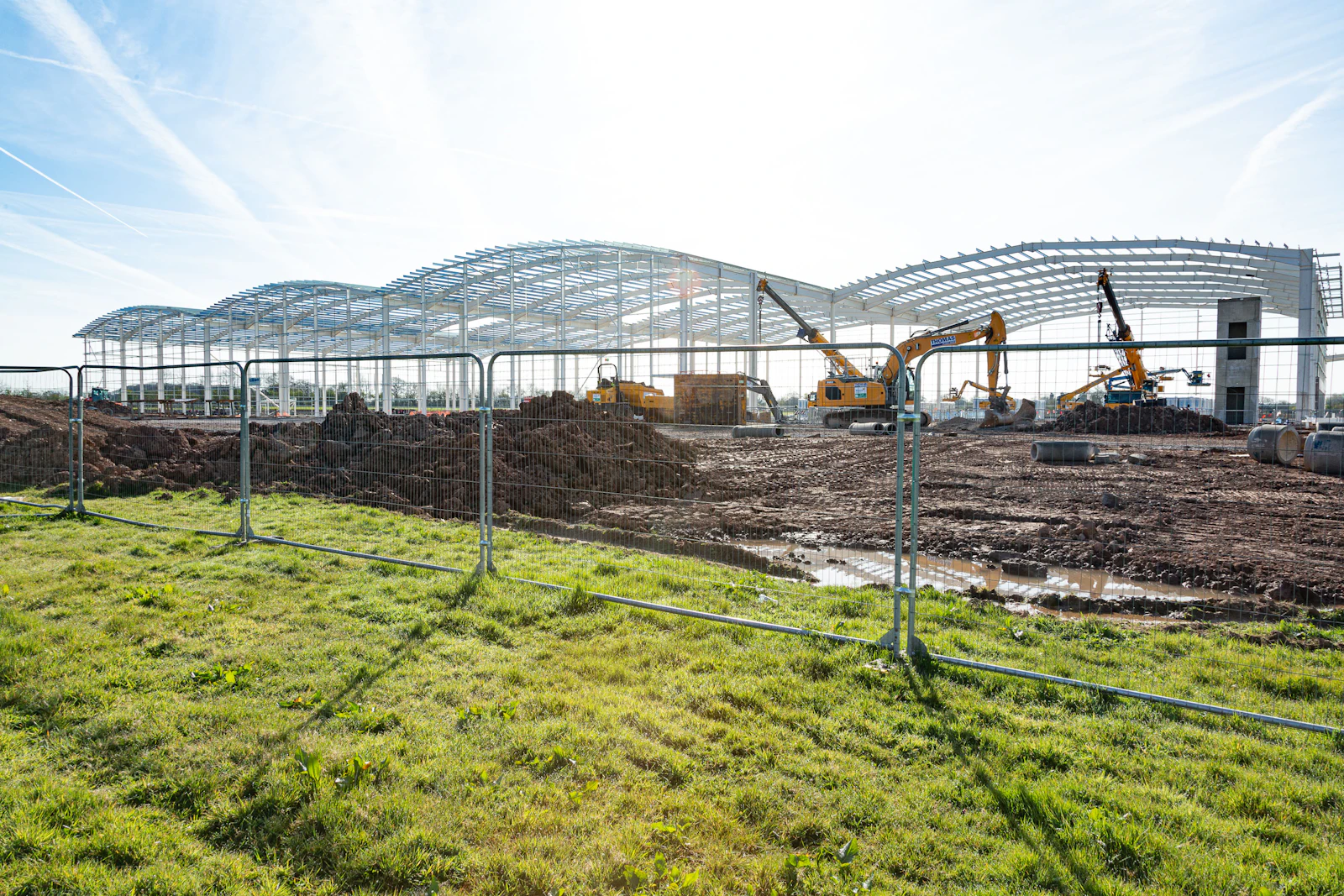
excavator and rental in construction work

Stormwater Retention System Takeoff Tips That Affect Excavator Hire Duration

Excavator equipment hire cost is strongly duration-driven—so your takeoff assumptions matter as much as your rate. For Tucson retention basins, the biggest schedule swings usually come from (a) over-excavation and rework to hit basin geometry and freeboard, (b) downtime waiting on survey staking or grade checks, (c) weather interruptions during monsoon activity, and (d) utility conflicts near inlet/outlet tie-ins. A public bid tab example shows a rained out fee at $100/day (not universal, but it illustrates how some contracts explicitly address non-productive time). Even without a formal rain-out clause, wet access and cleanup can add 1–3 extra billed days if you cannot off-rent until the machine is retrievable and clean.

What to Clarify on the Quote (So the Invoice Matches Your Estimate)

  • Billing period definition: “monthly” may mean 28 days and “weekly” may be hour-limited; confirm whether you’re buying 160 hours in a 4-week block (common in heavy equipment).
  • Bucket package: confirm included buckets (e.g., 12 in, 18 in, 24 in trench buckets; 36–48 in cleanup bucket) and price additional buckets if you need parallel operations.
  • Quick coupler: if not included, carry $35–$95/day equivalent cost impact (either as a line item or as lost productivity changing pins in the dirt).
  • Undercarriage expectations: confirm whether the yard requires the tracks/undercarriage to be free of excessive mud and rock; carry $150–$650 cleaning exposure depending on conditions.
  • Protection product: confirm damage waiver percentage and exclusions; a reference rate sheet shows 15% as a common damage waiver construct.
  • Fuel rules: confirm “return full” policy and the top-off rate. Public bid tabs show examples of $6.00–$10.95/gal; carry $8–$14/gal effective if your vendor adds service charges.
  • Environmental/other fees: carry 2%–4% if your historical invoices show a separate operational/environmental line (one bid tab shows about 1.99%–2%).

Budget Worksheet

Use this as a no-table worksheet to build a Tucson excavator equipment hire budget for a stormwater retention system package (adjust quantities for your program):

  • Excavator (primary production class, 14–20 ton): 1 × 4-week rental allowance = $6,600–$9,800 (rate depends on hours/spec).
  • Mini excavator (support for inlets/utility daylighting): 1 × weekly allowance = $900–$1,600 (or daily if intermittent).
  • Delivery & pickup (primary excavator): $900–$1,500 total (carry higher end for timed windows / remote sites).
  • Delivery & pickup (mini excavator): $0–$450 depending on whether you self-haul / trailer is included (some local offerings include a trailer; others deliver).
  • Damage waiver / protection: 10%–18% of base rental (example: $660–$1,764 on $6,600–$9,800).
  • Environmental/operational fees: 2%–4% of base rental (example: $132–$392 on $6,600–$9,800).
  • Fuel top-off exposure: 40 gallons at $6.00–$10.95/gal = $240–$438 (plus potential service).
  • Thumb (if handling riprap/structures): $385–$900/month depending on class.
  • Compaction wheel (if trench compaction by excavator is planned): $644–$1,600/week or $1,472–$3,000/month depending on size/availability.
  • Breaker contingency (caliche risk): carry 2 days at $741–$1,200/day = $1,482–$2,400, or carry a weekly if uncertainty is high.
  • Cleaning allowance: $350 baseline; $650 if monsoon conditions or sticky fines are likely.
  • After-hours / emergency delivery allowance: $250 (only if your schedule requires it).
  • Overtime hours on machine: 8 hours allowance (2 late days) billed per pro-rate rules; carry $250–$900 depending on class and rate structure.

Rental Order Checklist

Use this checklist to reduce change orders and billing disputes on excavator hire for Tucson stormwater retention systems:

  • PO scope: specify excavator class/weight, tail-swing requirement (ZTS vs conventional), track type, and bucket package (include cleanup bucket width).
  • Attachments on PO: list thumb, coupler, breaker, compaction wheel, trench buckets, and any specialty buckets; confirm each is billed per day/week/4-week (and whether it rides “at no charge” when unused).
  • Rate structure: confirm period is daily / weekly / 4-week and the included hour limits (8/40/160 is common).
  • Overtime billing: confirm the pro-rate method (1/8 daily, 1/40 weekly, 1/160 4-week) and who approves overtime.
  • Delivery requirements: provide delivery address, onsite contact, access constraints (subdivision quiet hours), and required delivery window; confirm if a timed window adds cost (carry $250 if emergency/timed).
  • Off-rent process: confirm cutoff time for next-day pickup; document the off-rent call/email time to stop the clock where contract allows.
  • Condition documentation: capture date-stamped photos at delivery and at pickup request (tracks, glass, counterweight corners, bucket teeth, quick coupler, hour meter).
  • Fuel & fluids: confirm return-full expectations and the top-off rate ($6.00–$10.95/gal examples exist) so the field team fuels before demob.
  • Cleaning: confirm what triggers cleaning charges; stage the excavator for pickup clean and accessible (avoid “stuck in the basin” extra days).
  • Protection product: confirm damage waiver percentage and whether your insurance certificate is accepted in lieu of waiver.

When to Consider Wet-Hire (Excavator + Operator) Instead of Dry-Hire

If your Tucson stormwater retention system scope includes tight utility corridors, live traffic control, or accelerated schedules, wet-hire can lower total risk even if the hourly cost is higher. As a planning allowance, many markets price excavator + operator in the $125–$210/hour band depending on class, minimum hours, and whether support truck/spotter is required. Use wet-hire selectively: it can be cheaper than paying 2–5 extra rental days due to production shortfalls or rework, especially when basin elevations must be hit precisely before inspection.

Reminder: This page is focused on excavator equipment hire costs for Tucson stormwater retention systems. Confirm final pricing and terms with your preferred supplier based on machine class, hours, and logistics.
