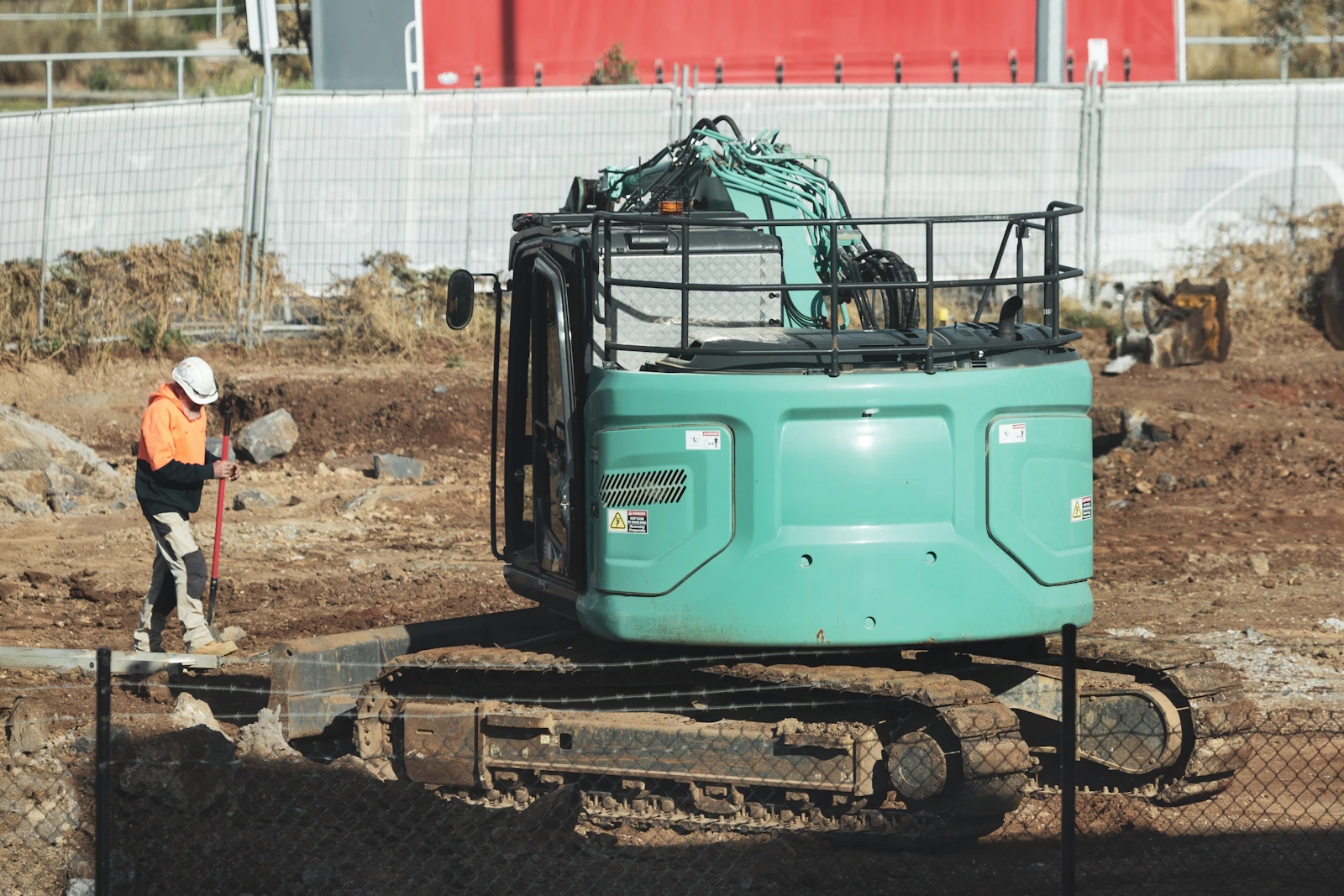
Excavator With Grapple Rental Rates Atlanta 2026
For Atlanta land clearing, 2026 budgeting for an excavator with grapple equipment hire typically lands in the following planning ranges (machine + grapple billed separately on most POs): a mid-size tracked excavator suitable for brush, stumps, and log handling is commonly $600–$1,150 per day, $1,900–$3,600 per week, or $4,200–$10,800 per 4-week period, with a grapple attachment commonly adding $250–$450 per day, $650–$1,200 per week, or $1,700–$3,000 per 4-week period depending on width, rotation, and coupler interface. These are planning ranges assuming one-shift utilization (meter-hours caps), standard buckets/teeth included unless otherwise noted, and no operator. In metro Atlanta, national fleets (Sunbelt Rentals, United Rentals, Herc Rentals) and CAT dealer rental stores can usually source both the carrier and the correct grapple, but availability tightens during peak grading and storm cleanup periods.
| Vendor |
Daily Rate |
Weekly Rate |
Review Score |
Website |
| United Rentals |
$1 250 |
$4 400 |
8 |
Visit |
| Sunbelt Rentals |
$1 200 |
$4 250 |
8 |
Visit |
| Herc Rentals |
$1 150 |
$4 050 |
7 |
Visit |
| H&E Equipment Services |
$1 100 |
$3 950 |
7 |
Visit |
| Yancey Rents (Yancey Bros. Co.) |
$1 300 |
$4 600 |
8 |
Visit |
Anchors for validating your 2026 budget: A public DeKalb County, GA bid tab (May 2021) shows a 42,000–47,000 lb excavator at $525 daily, $1,750 weekly, and $3,800 monthly (contract pricing), plus a 75,000–85,000 lb excavator at $750 daily, $2,000 weekly, and $5,895 monthly. For a second data point, a 2025 rental rate sheet shows large excavators such as a ~52,100 lb class unit at $875/day, $2,850/week, $8,300/4-week and a ~73,450 lb class unit at $1,000/day, $3,400/week, $10,500/4-week. Use these as baseline reality checks, then apply a 2026 escalation allowance (often +15% to +35% vs older public schedules) for Atlanta fleet demand, delivery logistics inside I-285, and attachment scarcity.
What Drives Excavator With Grapple Equipment Hire Costs on Atlanta Land Clearing Sites?
“Excavator with grapple” is a package term, but rental billing is usually two line items: the carrier (excavator) and the attachment (grapple) with its own minimums, wear rules, and damage exposure. Your total equipment hire cost moves most when any of the factors below change:
- Excavator operating weight and hydraulic spec: A ~35,000–45,000 lb unit (common for mixed brush/stump clearing) prices differently than a ~50,000–60,000 lb unit needed for heavier timber handling and faster piling. In practice, stepping up one size class often adds $125–$300/day to the base rate, but can reduce total days on site.
- Grapple type: A non-rotating root/tine grapple for brush and pile building is usually cheaper than a rotating grapple (better for sorting logs, controlled placement, and demolition-style handling). Rotators also introduce more hydraulic fittings and higher damage exposure (and sometimes higher waiver).
- Coupler interface and pins: If the grapple is not a direct pin-on match, plan for a quick coupler hire (often $45–$110/day) and additional mobilization time for fit-up/verification. Wrong pin size can burn a full shift before production starts.
- Utilization caps (meter hours): Most majors define a “rental shift” as 8 hours/day, 40 hours/week, 160 hours/4 weeks. Overages are billed as additional hours (often by formula off the base rate). For land clearing, this matters because grappling tends to be high-cycle work and operators rack up hours quickly even when travel miles are low.
- Undercarriage condition expectations: Atlanta’s red clay + wet weather can turn into heavy build-up. If you return with packed clay, you risk cleaning charges and a claims discussion about track seals/rollers. Budget it up front instead of fighting it later.
2026 Planning Ranges by Common Atlanta Land Clearing Setup
Use these ranges for equipment hire cost estimating (rates typically exclude taxes, fuel, delivery, waiver, and any operator):
- “Urban infill” clearing (tight access, smaller haul routes): 12–16 ton excavator + root grapple. Plan $500–$850/day, $1,600–$2,800/week, $3,800–$7,800/4-week for the carrier; plus grapple $250–$400/day, $650–$1,050/week, $1,700–$2,700/4-week.
- Typical suburban lot clearing (balanced production vs mobilization): 18–24 ton excavator + grapple (often the “sweet spot” for Atlanta subdivisions). Plan $600–$1,150/day, $1,900–$3,600/week, $4,200–$10,800/4-week; plus grapple $275–$450/day, $705–$1,200/week, $1,760–$3,000/4-week.
- Heavier timber / faster piling (when trucking and grinders are staged): 28–38 ton excavator + heavy-duty (sometimes rotating) grapple. Plan $950–$1,650/day, $3,100–$5,200/week, $9,500–$14,500/4-week; plus grapple $350–$600/day, $1,000–$1,800/week, $2,600–$4,800/4-week (higher if rotator + heavy coupler).
Grapple rate reality check: One published grapple bucket rate shows $280/day, $705/week, $1,760/4-week. That’s not “Atlanta-specific,” but it’s a useful sanity check for attachment line items when you’re building a land clearing equipment hire budget.
Hidden-Fee Breakdown for Excavator With Grapple Hire (Costs That Commonly Hit the Final Invoice)
To keep your PO aligned with the close-out invoice, carry explicit allowances for these common adders (typical metro Atlanta ranges):
- Delivery and pick-up (lowboy): Often $175–$450 each way inside a typical metro radius (commonly 25–35 miles). If the site is inside congestion corridors or needs timed delivery, add $75–$150 for scheduled/time-window handling.
- Same-day / after-cutoff mobilization: If you miss a dispatch cutoff (commonly 1:00–3:00 p.m. for next-day), some providers treat it as premium dispatch: budget $100–$250.
- Weekend/holiday billing rules: Some contracts treat weekends as non-billable only if the yard is closed and the machine is secured; others bill calendar days regardless. Budget at least 1 extra day per 2 weeks if your off-rent falls on a Friday and pick-up can’t happen until Monday.
- Damage waiver (DW) / rental protection: Commonly 10%–15% of the rental charges for the period (carrier + attachment). Clarify whether DW applies to hoses/cylinders and attachment teeth/wear items.
- Environmental / admin / recovery fees: Frequently 2%–5% as a line-item surcharge in addition to tax.
- Fuel / DEF expectations: Typically “full out, full back.” If returned short, refuel is commonly billed at a premium rate; for planning, carry $6.50–$8.50 per gallon equivalent for diesel plus a minimum service charge (often $50–$100).
- Cleaning and de-mudding: For red clay and vegetative debris, budget $175–$350 for basic wash-down, and $450–$900 if undercarriage/track frames require heavy de-pack or shop time.
- Excess meter hours: If you run beyond the included shift, overage is often billed based on the base rate formula (e.g., hourly computed from daily/weekly/4-week charges). For a mid-size excavator, that can easily equate to $80–$160 per extra hour depending on the base rate.
- Hydraulic hose damage exposure: Grapple work in brush increases hose snag risk. Budget $250–$600 contingency for a hose incident (parts + downtime + service call), unless you have strong on-site maintenance coverage.
- Service call / field mechanic dispatch: If an issue is determined to be operator damage or site-caused, dispatch commonly starts around $150–$250 plus mileage/time.
Atlanta-Specific Cost Considerations for Land Clearing Equipment Hire
- Delivery logistics inside I-285: Time-window requirements and traffic variability can force “first-call” (early) or “last-call” (late) deliveries. If your site only accepts delivery between 7:00–9:00 a.m. due to HOA or school traffic controls, treat delivery as a managed activity and add the time-window allowance.
- Red clay + storm cycles: After heavy rain, undercarriage packing and site ruts can increase wear and cleaning exposure. If you anticipate wet conditions, plan for at least one mid-rental clean-out so the return condition isn’t the first time someone addresses it.
- Dust control near occupied areas: On infill sites near active businesses or neighborhoods, dust suppression (water truck or hydrant meter) can be required; while not part of the excavator hire, it impacts the “real” cost of running grapple cycles all day.
Example: 2-Week Land Clearing Hire Package (Atlanta Metro) With Real Constraints
Example: You’re clearing a 3-acre tract in South Fulton with limited laydown, and the GC requires no deliveries after 2:00 p.m. due to school traffic and gate staffing. You need one 20–24 ton excavator and a rotating grapple to sort logs separately from brush.
- Excavator hire (2 weeks): budget $2,200–$3,400/week → $4,400–$6,800 total for two weeks (carrier only).
- Rotating grapple hire (2 weeks): budget $800–$1,200/week → $1,600–$2,400.
- Delivery + pick-up: assume $300 each way → $600.
- Damage waiver: assume 12% on rental charges (carrier + grapple). If rentals total $6,000, DW allowance is $720.
- Cleaning allowance: carry $350 minimum, and note “additional de-mud if required” to avoid disputes.
- Excess hours risk: if your operator runs 55 hours in a week (vs 40 included), budget 15 hours of overage at an effective $90–$140/hour depending on your negotiated rate structure.
Operational takeaway: The “rate” is rarely the cost driver by itself. Your dispatch cutoff, meter-hour discipline, and return-condition controls often swing the invoice by $1,000+ on a two-week Atlanta clearing package.
Budget Worksheet (Line Items and Allowances for a Clean PO)
Use the worksheet below to build a rental authorization that matches how rental companies actually invoice excavator + grapple equipment hire:
- Excavator (tracked) hire: allowance $600–$1,150/day or $1,900–$3,600/week based on planned duration.
- Grapple attachment hire (root/tine or rotating): allowance $250–$450/day or $650–$1,200/week.
- Quick coupler (if required): allowance $45–$110/day.
- Delivery (in) and pick-up (out): allowance $175–$450 each way (note site constraints and required delivery window).
- Damage waiver / rental protection: allowance 10%–15% of rental charges (confirm if applies to attachment).
- Environmental/admin fees: allowance 2%–5%.
- Fuel/DEF and refuel premium: allowance based on expected consumption + premium refuel rate; carry $200–$600/week as a placeholder if you don’t have firm burn-rate data.
- Cleaning / de-mud: allowance $175–$900 depending on season and soil conditions.
- Service call contingency (site-caused): allowance $250–$600.
- Excess meter hours: allowance 5–15 hours/week at the effective overtime rate derived from your base rate.
How Rental Terms Change the True Equipment Hire Cost (Shift Caps, Off-Rent Rules, and Weekends)
When you’re coordinating excavator with grapple equipment hire in Atlanta, the most expensive surprises tend to come from contract mechanics rather than base rates. Most major rental agreements are built around a one-shift utilization model (8/40/160 hours). That means two sites paying the same “weekly rate” can have very different total costs depending on utilization and off-rent discipline.
- Shift cap enforcement: If your clearing crew runs long days to beat a rain window (common in late spring/summer), your “weekly” can quickly become weekly + hourly overage. Treat meter hours as a controllable cost: require operators to log start/stop meter readings daily.
- Off-rent timing: Many providers require an off-rent notice and have a daily cutoff time. If you call off-rent late in the day, you can be billed another full day even if the machine is idle overnight. Put the cutoff in your superintendent’s close-out checklist.
- Weekend/holiday billing: Atlanta area projects often stop on weekends, but the machine may still be billed. If your schedule includes a weekend pause, negotiate the most favorable weekend policy you can (or plan the work so the machine returns before Friday cutoff).
- Partial-period math: Ask how the provider converts daily-to-weekly and weekly-to-4-week charges (some follow “accumulated to cap,” others follow fixed period billing). Aligning the conversion policy can save meaningful dollars on a 10–16 day clearing duration.
Attachment-Specific Cost Drivers for Grapple Work (Where Land Clearing Jobs Get Expensive)
Grapple work increases both productivity and exposure. From a rental coordinator’s view, the key cost drivers are compatibility, wear exposure, and the number of “touch points” where an incident becomes chargeable:
- Hydraulic plumbing and protection: Grapples add hoses, fittings, and sometimes a rotator motor—more parts to snag in brush. If you’re clearing dense understory, consider hose guards or routing protection; otherwise carry a $300–$800 incident allowance for a mid-rental repair event.
- Coupler verification: Require a delivery ticket note that the grapple was test-fitted and cycled at delivery. A 30-minute verification avoids a half-day standstill.
- Wear items and “consumables”: Clarify whether the grapple’s wear tips, pins, and bushings are covered as normal wear or charged back if bent from misuse. On aggressive piling, carry $150–$400 as a wear-and-tear contingency unless the agreement is explicit.
- Cleaning expectations are stricter: Grapples return with tangled wire, vines, and embedded debris. A “ready to rent” standard may trigger cleaning even if the excavator itself looks acceptable. Budget $75–$200 specifically for grapple cleaning if you’re working in heavy vine/brush.
Delivery, Access, and Site Control: Practical Atlanta Guidance
Delivery and access are routinely underestimated in metro Atlanta because they feel “administrative,” but they can equal a full day of base rent:
- Delivery radius assumptions: If the rental yard is outside your submarket (e.g., northeast metro to south metro), mileage/time may push delivery from $250 to $500+ each way. Lock in the delivery location (gate) and confirm whether the driver is allowed to unchain on site.
- Gate/escort requirements: If your site requires escort or badge-in, failed delivery attempts can create a “dry run” fee (often $100–$250). Avoid this by issuing the driver contact, gate code, and a 30-minute arrival window protocol.
- Laydown and theft prevention: Atlanta infill sites can have higher theft/vandal exposure. If you need a temporary fence or overnight security, capture that in the job cost even though it’s not on the rental invoice.
Rental Order Checklist (PO, Delivery, and Return Requirements)
Use this checklist to reduce disputed charges and align field operations with rental billing:
- PO scope: List excavator size class (operating weight range), required auxiliary hydraulics, and whether the unit must be zero-tail swing or have specific track width limits.
- Attachment definition: Specify grapple type (root/tine vs rotating), coupler/pin size, and whether quick coupler is included as a separate hire item.
- Rate structure: Confirm day/week/4-week rate basis and included utilization (e.g., 8/40/160 hours) and the overage calculation method.
- Damage waiver: Confirm DW % and what it covers (carrier, attachment, glass, hoses, cylinder damage, theft exposure).
- Delivery controls: Provide site address, gate instructions, contact name/number, and delivery time window; note any cutoff like “no deliveries after 2:00 p.m..”
- Condition at delivery: Require photos/video of excavator, grapple, coupler, and meter reading at drop-off; record pre-existing dents/hoses condition.
- Fuel and fluids: Document “full/full” expectations; define who provides DEF; set an internal rule to refuel before off-rent call.
- Off-rent procedure: Define who is authorized to call off-rent, what time of day they must call, and how the call is documented (email confirmation).
- Return condition: Require a basic wash-down and undercarriage de-pack before pickup; photograph the machine and grapple at pickup with meter reading visible.
- Close-out: Collect final rental ticket, delivery/pickup tickets, and any service call notes; reconcile meter hours versus included hours.
Should You Rent or Source a Machine-With-Operator for Atlanta Clearing?
For land clearing, many contractors compare straight equipment hire versus a machine-with-operator subcontract. Equipment hire can be cost-effective when you already have qualified operators and can keep utilization within the included shift. A machine-with-operator package can reduce damage exposure and shift-cap surprises, but it typically carries higher hourly cash flow and availability constraints.
As a planning benchmark (not a quote), if you budget an operator at $95–$140/hour burdened and the excavator hire at an effective $230–$450/day when averaged over a 4-week rate, your “all-in” production hour can still outperform day-rate equipment hire if you avoid overtime hours and weekend billing. The key is to match the hire term to the schedule: if you’re clearing intermittently, the weekly rate may be worse than a short-term day hire plus a faster disposal plan.
Final Estimating Notes for 2026 Atlanta Excavator Grapple Equipment Hire
- Don’t under-carry attachment costs: Published attachment rates show grapples can be several hundred dollars per day on their own, so leaving them out of the estimate is a guaranteed miss.
- Escalate older reference schedules: If you use historical public schedules as anchors, apply a 2026 uplift and add Atlanta dispatch/delivery realities; then negotiate once you have firm dates and duration.
- Write the PO for how you will actually use the machine: If you know you’ll run 50–60 hours/week for storm windows, price it that way at bid time rather than hoping you “stay under 40.”