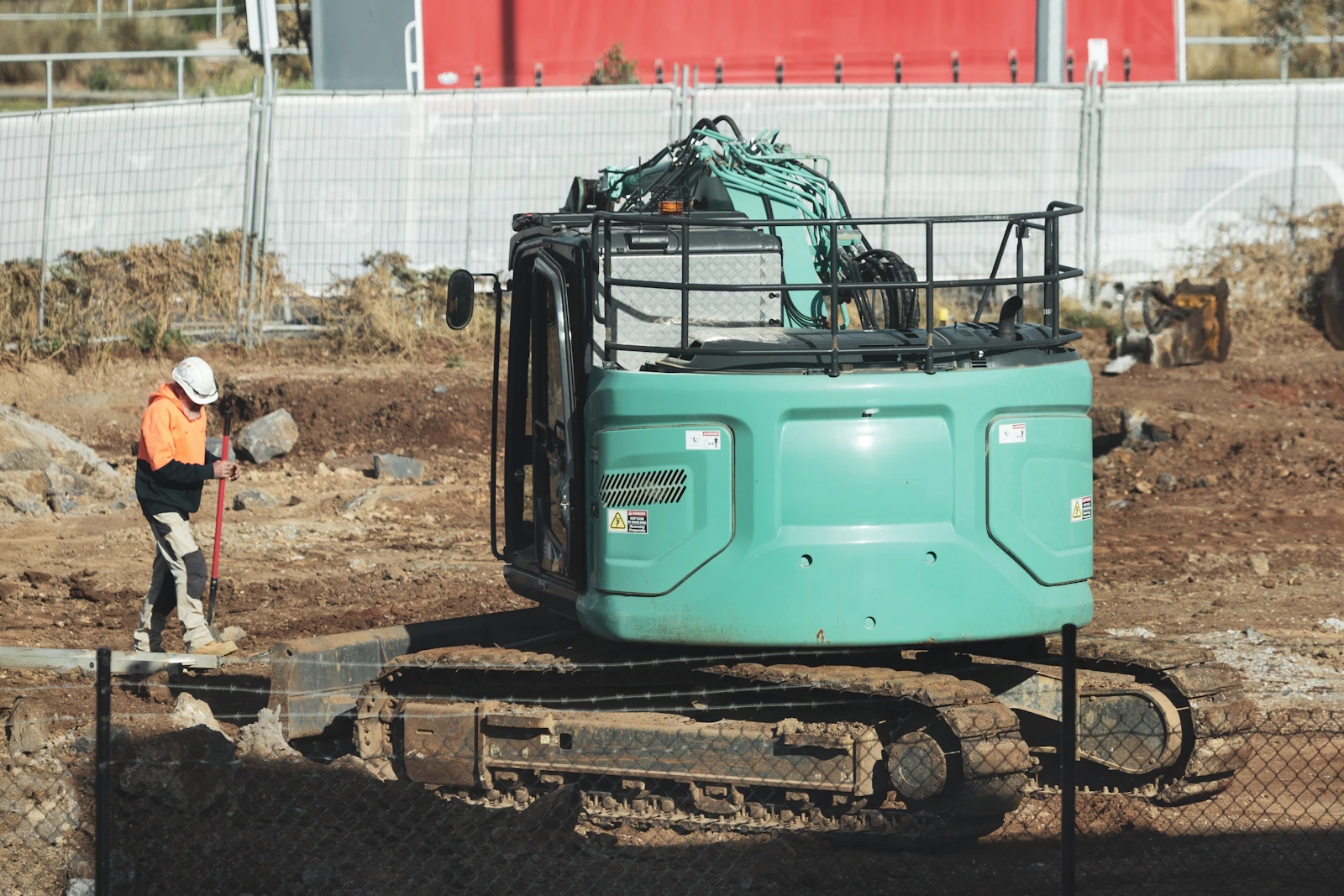
Excavator With Grapple Rental Rates Chicago 2026
For Chicago land clearing, 2026 budgeting for excavator with grapple equipment hire typically lands in these dry-hire (machine-only) planning ranges: $450–$700/day, $1,350–$2,000/week, and $3,000–$5,250/4-week for a compact 8,000–30,000 lb tracked excavator; and $750–$1,250/day, $2,250–$3,750/week, and $5,750–$9,500/4-week for heavier 35,000–85,000 lb classes when production, reach, and grapple capacity matter. As a reality check, published 2025 rate schedules show compact-to-mid excavators in the ~$200–$500/day band locally (model/spec dependent), while published rate cards for heavier tracked excavators commonly move into the ~$700–$1,250/day band.
| Vendor |
Daily Rate |
Weekly Rate |
Review Score |
Website |
| Sunbelt Rentals (Chicago, IL) |
$1100 |
$3 000 |
6 |
Visit |
| Burris Equipment (Chicagoland: Joliet / Lakemoor / Waukegan) |
$620 |
$1 860 |
9 |
Visit |
| United Rentals |
$1150 |
$2 980 |
6 |
Visit |
Grapple pricing is usually either (a) included in a packaged “excavator with grapple” line item for demolition/handling configurations, or (b) added as an attachment adder on top of a standard excavator hire rate. For planning, a rotating excavator grapple commonly budgets at $400–$500/day, $950–$1,200/week, and $1,950–$2,600/4-week depending on size and hydraulic requirements; one published attachment schedule lists a rotating grapple at $400/day, $950/week, $1,950/month.
Chicago-specific cost note (important for real PO totals): downtown access restrictions, tighter delivery windows, and alley/loading constraints can shift you toward smaller machines (higher $/productive hour) or require a smaller delivery truck plus extra on-site handling. Winter freeze/thaw and muddy shoulder seasons also tend to increase cleaning and undercarriage time, which shows up as cleaning fees, wear items, and occasionally “excessive mud” return charges.
What Drives Excavator With Grapple Hire Pricing for Chicago Land Clearing?
When you’re pricing an excavator with grapple hire for land clearing (brush, logs, root balls, storm debris, or invasive removal), the largest pricing swings usually come from machine class + grapple type + transport + billing rules. The same “excavator with grapple rental Chicago” request can price very differently depending on whether you need a compact excavator doing selective clearing behind a building line, or a 20+ ton unit handling heavy timber and loading trucks.
1) Excavator size class and undercarriage configuration
- 8,000–13,000 lb compact excavators: best for tight access, backyards, fenced lots, and alley work. Expect higher utilization limits (you’ll hit the hour cap quickly) and potentially higher wear/cleaning charges in muddy conditions.
- 18,000–30,000 lb mid-class excavators: common for commercial land clearing, small tract work, and debris handling where reach + stability matters. One published schedule shows this class at roughly $450/day, $1,350/week, $3,000/4-week on the low end for a 10K excavator and $550/day, $1,800/week, $4,250/4-week for an 18K–25K excavator (baseline excavator rate, before grapple).
- 35,000–55,000 lb excavators: higher production, better lift charts, and typically a better platform for larger grapples, hydraulic thumbs, and couplers—often a sweet spot if you’re feeding roll-offs or trucks continuously.
- 60,000–85,000 lb excavators: used when you’re processing heavy timber, storm debris, or large root balls at volume and need stability plus reach.
2) Grapple type, rotation, and hydraulic requirements
“Grapple” can mean very different tools operationally and cost-wise:
- Fixed (non-rotating) grapple / clamp: generally lower attachment hire cost, fewer hydraulic requirements, but slower on precise truck loading and sorting.
- Rotating grapple: faster sorting and truck loading; commonly priced as a premium adder. A published attachment schedule lists a rotating grapple at $400/day, $950/week, $1,950/month.
- Demolition grapple packages: some fleets quote a combined machine+grapple rate. For example, a published local schedule lists a large “excavator with demolition grapple” package at $778/day, $2,334/week, $7,000/month (spec/class dependent).
Cost-impacting spec checks (these prevent change orders): auxiliary hydraulics flow/pressure, case drain needs, coupler interface, pin grabber vs wedge coupler, and whether the grapple needs continuous rotation (electric/hydraulic) versus index rotation.
3) Rental periods, included hours, and overtime math
Most commercial contracts bill by time and include an hour cap. A published local schedule uses Daily (8 hours), Weekly (40 hours), Monthly (176 hours). If your land clearing crew runs long days or weekend pushes, overtime becomes a real cost driver.
For 2026 planning in Chicago, budget these common billing mechanics (confirm on the vendor’s contract):
- Overtime after 8 hours/day: often billed at 1/8 of the daily rate per additional hour. Example allowance: if the excavator is $600/day, the overage can land around $75/hour.
- Weekend billing: many houses treat Saturday as a billable day unless off-rented before a cutoff; Sunday/holiday terms vary. Allow a 2-day weekend minimum if delivered Friday for a “Monday return.”
- Off-rent cutoffs: common cutoffs are 2:00–4:00 PM local time; miss the cutoff and you may eat an extra day.
Chicago Cost Drivers That Frequently Add 15%–40% to the PO
To keep your equipment hire cost aligned with the eventual invoice, build your estimate around the “all-in rental” picture—not just the published day/week/month rate.
Delivery, pickup, and access constraints
- Base delivery/pickup inside the metro area: plan $225–$450 each way for compact/mid excavators; heavier units or specialty grapple packages often run $450–$1,200 each way depending on trailer class and escort needs.
- Mileage model (when used): allow $7–$12 per loaded mile beyond a vendor’s “free radius.”
- Downtown congestion / restricted windows: allow $75–$200 for constrained delivery timing, liftgate needs, or “must deliver before 7:00 AM / after 3:00 PM” site rules.
- Tolls and route constraints: build a $25–$75 allowance for toll routes when the dispatch route requires it.
- Failed delivery/return attempt: common charge band is $95–$175 if the driver can’t access the drop or the site contact is unavailable.
Required accessories that change the real hire cost
- Hydraulic quick coupler: allow $75–$150/day if not included and if you’re swapping between grapple + bucket + rake.
- Tooth bucket retained on rent: many vendors require the “standard bucket” stay with the machine; allow a $0–$50/day handling/retention impact if it complicates transport or staging.
- Ground protection mats / plywood: for urban lots and parkway protection, allow $10–$25 per mat per week plus extra freight if delivered with the machine.
- On-site spill kit / absorbents (often mandated): allow $35–$90 if required by GC/site EHS and not already carried by your team.
Hidden-Fee Breakdown for Excavator With Grapple Equipment Hire
These are the line items that most often surprise projects when the scope is “land clearing” (high debris, mud, and mixed materials). Use them as estimating allowances and then negotiate/confirm on the rental agreement.
- Damage waiver / rental protection plan: commonly 10%–18% of the rental charge (equipment-only portion). If your base rent is $6,000, that’s a $600–$1,080 adder.
- Cleaning fee (mud/vegetation/sap): typical allowance $175–$600 depending on undercarriage condition and whether debris is packed in the track frames.
- Fuel service and refuel: if returned below the required level, allow $6.00–$8.50/gal plus a $35–$75 service fee (varies by contract).
- DEF (if applicable): allow $9–$15/gal if billed back (many sites prefer you top off yourself).
- Wear items: bucket teeth often back-charge at $20–$45 per tooth if missing/damaged; pins/clips can be $15–$60 each.
- After-hours emergency swap or road call: allow $150–$350 dispatch fee if the issue is non-warranty (e.g., debris ingestion, improper fueling).
- Late return penalty: commonly 1/2-day or a full day if returned past a defined cutoff (frequently tied to the 8-hour day).
Example: Chicago Land Clearing Package Cost (Realistic Constraints)
Scenario: You’re clearing a 1.5-acre infill site on the Northwest Side with limited staging, truck loading to roll-offs, and a GC that only allows deliveries 7:00–9:00 AM and returns 1:00–3:00 PM. You select a mid-class excavator suitable for grapple work and budget a 2-week rental (10 working days) plus a weekend hold.
- Base excavator hire: allow $550/day equivalent (or $1,800/week class band) for a mid excavator; budget 2 weeks = $3,600 (planning number).
- Rotating grapple attachment: allow $950/week; budget 2 weeks = $1,900 (or negotiate a blended package).
- Delivery + pickup: allow $350 each way = $700 due to timed windows and congestion constraints.
- Weekend billing exposure: allow 1 extra day if off-rent cutoff is missed; at $550/day that’s $550 contingency.
- Damage waiver: assume 14% of rental ($3,600 + $1,900 = $5,500) = $770.
- Cleaning: allow $300 for mud/sap and undercarriage pack-out.
- Overtime: assume two 10-hour days (2 extra hours/day). Using the 1/8 daily rule on a $550 day, overtime budgets about $69/hour. Two days × 2 hours × $69 ≈ $276.
Order-of-magnitude total (equipment hire + common fees): $3,600 + $1,900 + $700 + $550 + $770 + $300 + $276 ≈ $8,096, before tax and before any operator/labor costs. The key takeaway: transport timing, weekend rules, waiver, and cleaning can move the total by well over $2,000 versus “just the weekly rate.”
Budget Worksheet (No-Tables) for an Excavator With Grapple Hire PO
Use this as a copy/paste worksheet for a 2026 Chicago land clearing estimate. Adjust allowances to match your contract terms and site conditions.
- Excavator base rent (weekly or 4-week): allowance $1,350–$3,750/week depending on class
- Grapple attachment rent (rotating/fixed): allowance $950–$1,200/week (rotating)
- Hydraulic quick coupler (if separate): allowance $75–$150/day
- Delivery to site: allowance $225–$450 (compact/mid) or $450–$1,200 (heavy) each way
- Pickup from site: allowance $225–$450 (compact/mid) or $450–$1,200 (heavy) each way
- Tolls/congestion/time-window delivery premium: allowance $25–$200
- Damage waiver / protection: allowance 10%–18% of equipment rent
- Cleaning/undercarriage: allowance $175–$600
- Fuel/DEF true-up at return: allowance $150–$450 (job dependent)
- Overtime/over-hours: allowance $150–$600/week if running long days
- Weekend/holiday exposure (billing rule contingency): allowance 1 extra day of base rent
- Ground protection mats (if required): allowance $100–$400 plus freight
Rental Order Checklist for Excavator With Grapple Equipment Hire
- Confirm machine class/weight and grapple type (fixed vs rotating) and compatibility (coupler, pin size, aux hydraulics).
- Confirm rental period definitions and included hours (e.g., 8 hrs/day, 40 hrs/week, 176 hrs/month) and overtime rules.
- Get the off-rent cutoff time in writing (typical: 2:00–4:00 PM) and clarify weekend billing treatment.
- Provide PO number, jobsite address, site contact, and a delivery window with a 30–60 minute call-ahead requirement.
- Confirm delivery vehicle requirements (lowboy vs tag trailer), on-site unload space, and whether street/alley occupancy permits are needed.
- Insurance: COI requirements, waiver option, and any additional insured wording from the GC.
- Condition documentation at delivery: photos of undercarriage, grapple tines, hydraulic lines, quick coupler, and hour meter.
- Return condition requirements: fuel level target (often full), debris removal expectations, and “no mixed waste in the carbody.”
- Closeout: off-rent email/time stamp, pickup confirmation, and final meter/hour capture to reconcile over-hours.
Procurement tip for Chicago land clearing: If you anticipate mixed debris (wire, fencing, rebar remnants, or demolition scrap), consider adding a line item allowance for hose protection and “damage investigation” time—those issues are common and can trigger back-charges even when the base rental rate looked competitive.
How to Quote the Right Excavator With Grapple Hire Package (So You Don’t Re-PO Mid-Job)
For land clearing, the best-performing rentals are usually the ones scoped correctly up front. The fastest way to blow up an excavator with grapple equipment hire cost is to start with an undersized unit and then add days, swap machines, or add transport events. Use this approach when you request quotes in Chicago:
Define “production intent” in the RFQ
- Material: brush only vs logs vs root balls vs mixed C&D debris.
- Handling plan: stockpile on site vs direct-load to roll-offs vs direct-load to end-dumps.
- Travel: is the excavator moving over long distances (track wear, cleaning, mobilization to different gates)?
- Access: gate width, turning radius, overhead lines, and alley constraints (often decisive in Chicago infill work).
Choose a grapple spec that matches the work
- Rotating grapple: typically wins when you’re sorting and loading continuously; it can reduce truck wait time (which is often more expensive than the grapple adder).
- Fixed grapple or thumb-style handling: may be adequate for selective clearing and short moves, often at a lower attachment hire cost.
- Quick coupler + bucket retained: if you need to grub roots and then handle debris, a coupler can prevent a mid-job attachment change order. Budget $75–$150/day if it’s separate.
Managing Off-Rent, Weekend, and Holiday Billing in Chicago
In Chicago, billing disputes are usually caused by timing and documentation rather than the advertised rate. To keep the equipment hire cost predictable:
- Off-rent timing: schedule demob with at least a 24-hour buffer and confirm the vendor’s cutoff (many use 2:00–4:00 PM). Miss the cutoff and you can incur another full day.
- Weekend holds: if the machine sits idle but remains on rent, you’re still paying. If you must hold through a weekend for site security reasons, negotiate a reduced weekend standby or pre-agree to a Monday morning pickup with no Saturday billing (not always available, but worth asking).
- Weather days: for land clearing, weather delays can be significant. Consider a contract clause or internal allowance for 1–3 weather days per month in shoulder seasons rather than assuming perfect utilization.
Return Condition Standards That Change Total Hire Cost
Land clearing returns are where costs often appear. Build these into your closeout process:
- Refuel expectations: if you don’t have onsite fueling, returning low can mean $6.00–$8.50/gal plus $35–$75 service. If your internal fueling is cheaper, fuel it before pickup.
- Undercarriage clean-out: sap, wire, vines, and mud pack are common; allow $175–$600 cleaning if you can’t pressure wash on site.
- Photo documentation: take “before pickup” photos of the grapple, hoses, and coupler area to reduce damage disputes. This is especially important when multiple subs work near the machine.
- Damage waiver limitations: many waivers don’t cover negligence or prohibited use. Make sure the crew knows: do not use the grapple as a hammer, and keep it out of scrap piles with hidden rebar.
2026 Planning Notes for Chicago Excavator With Grapple Equipment Hire
Use published schedules as anchors, then carry a contingency for the things that swing fastest in 2026: availability, specialty attachments, and transport. Published 2025 schedules show compact excavators in the $200–$500/day band depending on model and a large “excavator with demolition grapple” package at $778/day for certain classes; separate published rate cards show heavier tracked excavators commonly at $700–$1,250/day depending on weight class.
Recommended contingencies (estimator-friendly):
- Rate volatility contingency: add 5%–10% if you’re booking inside 7–10 days of need in peak season.
- Attachment availability contingency: add $200–$600 to cover a possible upgrade (larger grapple, rotating head, or coupler requirement) if your first-choice spec is unavailable.
- Transport/time-window contingency: add $150–$350 when the site has strict delivery/pickup windows or downtown access constraints.
Ownership vs Hire (Cost-Focused, Land Clearing Reality)
For many Chicago contractors, owning the excavator but renting the grapple (or vice versa) can be an effective middle path. If your utilization is intermittent, hire tends to win because it transfers maintenance, undercarriage risk, and seasonal idle time to the rental house. If you’re clearing continuously, the rental premium may exceed ownership carrying cost—but only if you can keep utilization high enough to avoid paying for weather days, weekend holds, and transport churn.
Practical rule-of-thumb for rental coordinators: if you expect to pay 3–4 consecutive 4-week periods on the same excavator class in a year, request a long-term rate or rent-to-own option; otherwise, manage it as standard equipment hire and focus on minimizing delivery events, overtime hours, and cleaning back-charges.