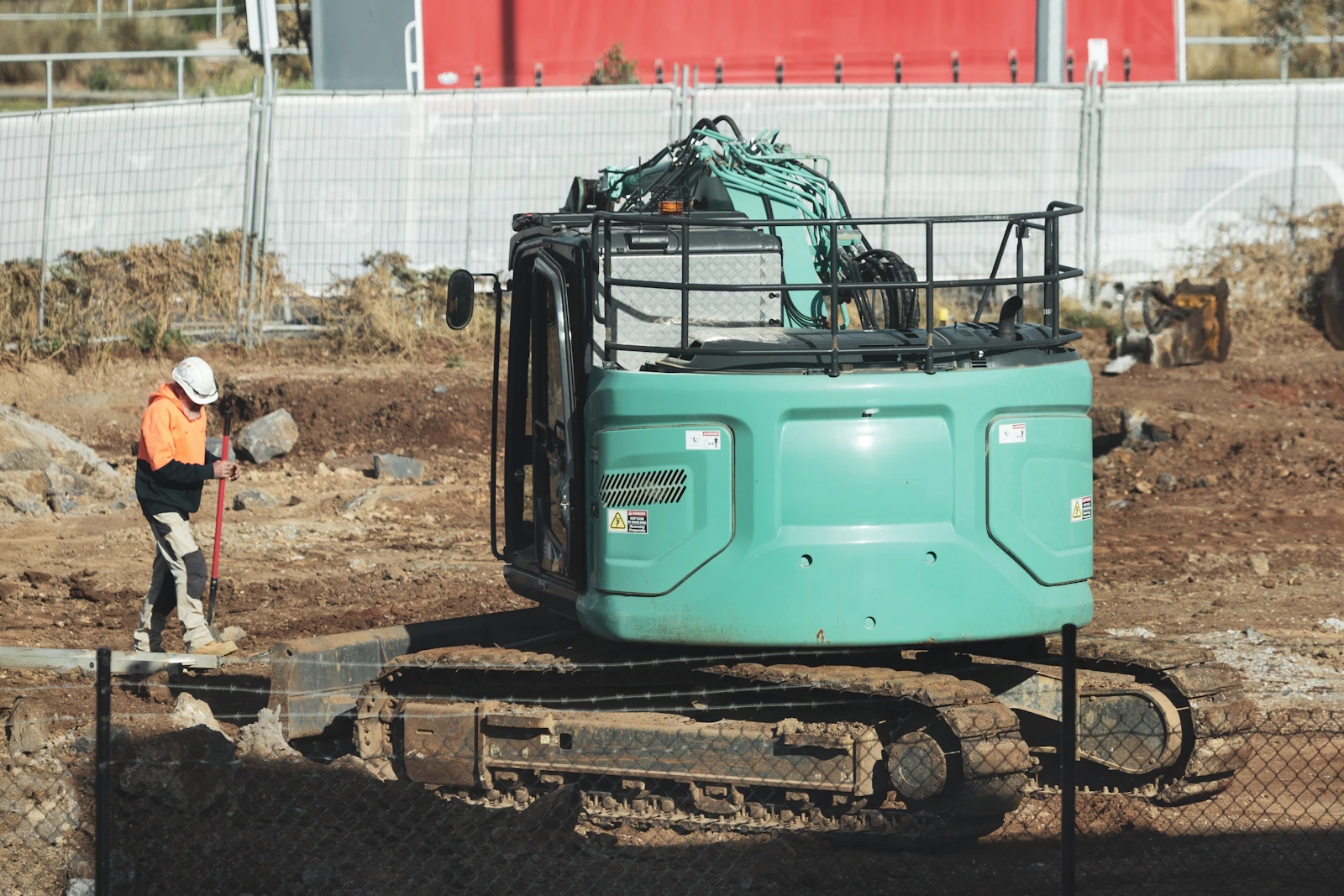
Excavator with Grapple Rental Rates Colorado Springs 2026
For land clearing equipment hire in Colorado Springs, plan 2026 budget ranges (machine + grapple attachment) of roughly $650–$1,150/day, $2,200–$3,900/week, and $5,900–$10,800/28-day month for a production-ready 8–15 ton excavator with grapple suitable for brush, slash handling, and pile building. Smaller compact units with a lighter-duty grapple can land lower, while larger 20–30 ton excavators with rotating grapples trend materially higher. In the Colorado Springs market, most coordinators will quote across national fleets and regional yards (for example, Sunbelt, United, Wagner Rents/Cat Rental Store, and H&E), and the pricing you actually pay is usually driven as much by transport, hour limits, and return condition requirements as by the posted “day rate.”
| Vendor |
Daily Rate |
Weekly Rate |
Review Score |
Website |
| United Rentals |
$1 020 |
$2 615 |
9 |
Visit |
| Sunbelt Rentals |
$700 |
$1 775 |
8 |
Visit |
| Herc Rentals (All Rental Center – Colorado Springs) |
$900 |
$2 200 |
9 |
Visit |
| Wagner Cat Rentals (The Cat Rental Store) |
$950 |
$2 500 |
9 |
Visit |
What Actually Counts As “Excavator With Grapple” For Land Clearing Hire Pricing?
When you request an excavator with grapple hire, rental desks may clarify whether you mean (1) a grapple bucket / root grapple (fixed, non-rotating), (2) a rotating grapple (typically higher daily cost and higher damage exposure), or (3) an excavator with hydraulic thumb plus a brush rake/root rake (often cheaper than a dedicated grapple). For land clearing in and around Colorado Springs (Black Forest, Falcon, Fountain, and the I-25 corridor), the difference matters: a rotating grapple usually improves productivity in slash sorting and loading, but it increases attachment cost and can increase damage waiver exposure and wear/cleaning charges.
2026 Planning Ranges by Excavator Class (Machine + Grapple)
Use the ranges below to build an internal estimate for excavator grapple attachment rental before you firm-quote with a branch. These are planning ranges meant for trade equipment managers and assume a standard rate structure where daily rental is a 24-hour period with a metered-use limit (commonly 8 hours of use), and weekly/monthly have hour caps that trigger overtime.
- Compact excavator (5,500–10,000 lb) with light grapple: typically $450–$800/day, $1,450–$2,600/week, $3,900–$6,900/28-day. This class can work for tight-access brush clearing and light material handling, but will struggle in rocky soils and larger stem sizes without a disciplined production plan.
- Mid-size excavator (12–18 ton) with root/tine grapple or rotating grapple: typically $850–$1,350/day, $2,900–$4,800/week, $7,900–$12,500/28-day. This is the most common “do-it-all” class for Colorado Springs land clearing where you’re grabbing slash, rolling logs, setting boulders, and building burn piles (where permitted).
- Large excavator (20–35 ton) with rotating grapple: typically $1,250–$2,100/day, $4,300–$7,200/week, $11,500–$19,500/28-day, usually justified when you are feeding grinders, working heavy stems, or moving large rock/overburden while also managing vegetation.
As a reality check against published U.S. rate cards: one multi-category rate sheet shows large excavator day rates commonly in the $650–$1,395/day band and rotating grapple attachments in the $210–$225/day band (with weekly/monthly equivalents).
Key Cost Drivers That Change Excavator With Grapple Hire Cost in Colorado Springs
1) Metered hour limits and overtime. Many rental agreements price a “day” as a 24-hour period but cap usage at 8 operating hours. Weekly and monthly commonly cap at 40 hours/week and 120 hours/month, with an hourly rate above the maximum. One published rate sheet explicitly states 8/40/120 hour caps and shows separate hourly-over-maximum charges.
Estimator allowance (hour overages): If your clearing plan needs 10 metered hours/day, carry an overtime allowance of roughly $95–$160 per excess hour (varies by excavator size/class and vendor contract language). If the branch requires documenting hour meter photos at off-rent, make that part of your closeout process to prevent disputes.
2) Attachment selection: fixed grapple vs rotating grapple. A published rate card shows grapple bucket/root/tine attachments around $195/day and rotating grapples often around $210–$225/day, with week/month conversions.
Estimator allowance (attachment adder): In Colorado Springs 2026 planning, carry $175–$325/day for the grapple portion depending on size, rotation, and wear policy.
3) Transport, access, and delivery windows. Colorado Springs delivery pricing tends to move with (a) machine size/weight class and (b) whether your drop is straightforward (wide driveway, firm shoulder) or constrained (steep grade, tight HOA streets, soft shoulders after snowmelt). Carry these cost allowances even if you plan “customer pickup,” because grapple jobs frequently need lowboy/rollback logistics:
- One-way delivery or pickup: $175–$450 for compact units; $350–$950 for mid/large excavators (depends on distance, trailer class, and scheduling).
- Distance/mileage surcharge (where applicable): $5–$9 per mile outside a base radius (common in many rental fleets).
- Minimum transport charge: often effectively 1 hour shop time plus load/unload even on short hops; carry $250 as a minimum transport placeholder if you have no quote yet.
- Same-day or after-hours delivery premium: carry $150–$300 when you need a late drop (important if the jobsite only allows heavy deliveries after 6:00 pm).
Colorado Springs-specific note: If you’re staging near higher elevations (Monument, Palmer Lake, Woodland Park direction), include extra float time in the delivery window—mountain weather and chain requirements can flip a “first thing AM” delivery into a billable standby day if your crew is waiting on iron.
4) Return condition, refuel/fluids, and cleaning. Land clearing creates invoice-sensitive returns: sap, resin, mud, and slash packed into track frames. A published rental sheet notes that equipment should be returned clean and with full fuel and shows a $5.75/gallon refuel charge example (rates subject to change).
- Refuel charge (diesel): carry $6.25–$8.50/gal in 2026 planning if you return short on fuel (even if the contract lists a lower historical figure).
- Cleaning fee (undercarriage/track frames): carry $150–$400 depending on mud, pine needles, and whether you have to pressure-wash off sap/resin.
- Debris removal/disposal: carry $75–$250 if the branch bills for disposal of slash pulled from the machine at return.
5) Damage waiver / rental protection and deposits. Some yards apply a damage waiver or similar coverage add-on as a percentage of the rental. One excavator rental listing example notes a mandatory damage waiver charge of 10% that can sometimes be waived if you provide proof of coverage.
- Damage waiver / rental protection plan: carry 10%–17% of the bare rental rate (machine + attachment) unless your corporate policy opts out with a certificate/binder.
- Refundable deposit / authorization hold: carry $1,000–$5,000 depending on machine class and account terms (especially for new accounts or one-off projects).
Hidden-Fee Breakdown (Build These Into Your Equipment Hire Estimate)
Most “excavator grapple rental rates Colorado Springs” searches focus on the sticker day rate. For land clearing, the invoice swing usually comes from predictable-but-missed rules. Build allowances for:
- Minimum billing rules: many programs treat short rentals as a percentage of daily. One published policy states rentals of ≤4 hours are charged at 60% of the daily rate.
- Weekend billing: a published policy example charges a weekend pickup (Friday afternoon) to Monday morning as one daily rate—great if planned, expensive if your jobsite is idle.
- Missed off-rent cutoff: carry an extra 1 billable day risk if you can’t get the machine accessible for pickup before the branch’s cutoff time (often early/mid-afternoon).
- Wear charges on attachments: grapple tines and cutting edges may have wear policies; carry $35–$125/day risk on high-wear attachments if the rental agreement flags wear charges.
- Track damage risk: if you run over stumps/rock ledges, a single damaged rubber track can become a backcharge in the $1,800–$4,500 range (size dependent). Photograph tracks at delivery and at pickup.
- Environmental / shop fees: carry 2%–5% of rental as a general “shop/environmental” fee placeholder if your historical invoices include it.
Colorado Springs Operating Constraints That Change Real Hire Cost
- Elevation and heat impacts: higher elevation can reduce engine performance; if your production plan is tight, you may need to upsize a class, which often moves the day rate by $200–$600/day for the same “grapple-capable” scope.
- Rocky soils and decomposed granite: expect slower cycle times and higher tooth wear. If you backcharge missing teeth, carry $180–$350 as a replacement allowance per set for planning.
- Dust control expectations: in dry, windy conditions, you may need onsite dust suppression; if the machine returns with heavy dust-packed coolers, you can trigger additional cleaning time. Carry $75–$150 for cooler cleanout risk if you’re working in fine, dry soils.
Budget Worksheet (No Tables)
- Base excavator hire (mid-size 12–18 ton): allowance $950/day x ____ days (or $3,600/week x ____ weeks)
- Grapple attachment hire: allowance $250/day x ____ days (or $900/week x ____ weeks)
- Delivery + pickup: allowance $650 (2 moves @ $325)
- Damage waiver / protection: allowance 12% of rental line items
- Fuel/refuel risk at return: allowance 30 gal x $7.50/gal = $225
- Cleaning/undercarriage washout: allowance $250
- Overtime/metered hour overages: allowance 6 hours x $125/hr = $750
- Wear/backcharge contingency (teeth, pins, hoses): allowance $500
- Standby day risk (weather/access): allowance 1 day x $1,200 = $1,200
Rental Order Checklist (PO, Delivery, Return)
- PO and cost code: confirm whether grapple is its own line item or bundled with the excavator rate.
- Spec confirmation: excavator weight class, aux hydraulics, coupler type, grapple type (fixed vs rotating), guarding needs.
- Rate structure confirmation: clarify 8-hour/day meter limit, weekly/monthly hour caps, and the hourly overage rate.
- Delivery window: confirm cutoffs (for example, “deliver by 10:00 am” vs “sometime today”) and any jobsite gate/escort requirements.
- Condition at delivery: take photos of hour meter, tracks, cab glass, counterweight corners, grapple tines, and hydraulic couplers.
- Off-rent process: document who can call off-rent, the cutoff time, and where the machine must be staged for pickup.
- Return requirements: expectations for “broom clean,” undercarriage cleanout, and fuel level (return full vs bill refuel).
- Closeout documentation: pickup ticket signed, meter photo at pickup, and a copy of any damage/repair notes before the machine leaves your site.
Example: 3-Day Land Clearing Push With a Mid-Size Excavator + Grapple
Scenario: You’re clearing a 2-acre infill parcel on the east side of Colorado Springs. Access is tight (single gate), and the client requires all slash stacked in two designated piles and rocks segregated for later hauling. You choose a mid-size excavator with a rotating grapple to minimize rehandling.
- Rental term: 3 days on rent
- Equipment hire (planning): $1,150/day all-in (excavator + rotating grapple) = $3,450
- Delivery + pickup: $750 (tight access window; requires a scheduled time block)
- Damage waiver: 12% of rental = $414
- Metered hour overages: 2 long days at 10 hours/day, over by 4 hours total x $125/hr = $500
- Cleaning: sap + slash packed into the house = $250
- Estimated equipment hire total: $6,114 (before tax/fees)
Operational constraint that changes cost: if you miss the off-rent cutoff on day 3, you can easily buy a fourth billable day (or an extra weekend day) depending on branch rules—so schedule your pickup staging and gate access early.
If you need a smaller unit for tight residential access, a regional Colorado example for a 6,000 lb class mini excavator shows $300/day, $900/week, and $2,200/month (thumb-equipped). That’s useful as a lower-bound benchmark before adding a grapple-capable attachment package.
How To Control Excavator With Grapple Equipment Hire Costs (Practical Levers)
For excavator with grapple equipment hire on land clearing scopes, cost control is mostly about eliminating “invoice surprises” rather than grinding the base day rate down by $25. The levers below are the ones rental coordinators can actually pull in Colorado Springs without trading away production or safety.
Convert to Week or 28-Day Month Earlier Than You Think
If your clearing plan includes weather risk, inspection holds, or utility locates, the safest budgeting move is to price the week (or 28-day month) and then negotiate off-rent rules. Many rental programs define “monthly” as a 28-day period, not a calendar month.
- Planning trigger: if you expect 4+ billable days, price the week and compare against 4 individual days.
- Planning trigger: if you expect 3+ weeks, price the 28-day month and then focus negotiations on off-rent cutoff time and transport.
- Meter discipline: keep a daily log of hour meter readings so you can prove you stayed under caps or justify why you exceeded them.
Lock Down Metered Hour Assumptions in Writing
Published policies commonly state daily rates cover a 24-hour period with no more than 8 hours of use.
- Pre-job clarification: confirm whether idle time counts (it often does, because the hour meter runs while the engine runs).
- Overage structure: confirm if overages are billed at an hourly rate or pro-rated daily rate; carry a conservative allowance of $100–$160/hr for mid/large machines when you don’t have the exact contract rate.
- Long-term maintenance downtime: some policies require maintenance every 100 hours on long-term rentals. Build a schedule so the service event doesn’t burn a full billable day of downtime.
Transport Is a Cost Line Item, Not a Rounding Error
For Colorado Springs land clearing, transport cost is often the swing factor between an acceptable and unacceptable equipment hire total—especially when the excavator class changes the trailer type.
- Two-way transport budget (compact): $350–$800
- Two-way transport budget (mid-size 12–18 ton): $650–$1,600
- Two-way transport budget (large 20–35 ton): $1,200–$2,800 (lowboy + permitting risk on certain routes)
Local practice note: if the site is south toward Fountain/Pueblo direction or north toward Monument with a narrow delivery window, you can trigger a reschedule fee. Carry $150–$300 as a “missed delivery window” contingency if your jobsite access is unpredictable.
Manage Damage Waiver Exposure Like Insurance, Not Like a Fee
If your corporate policy has inland marine coverage, you may be able to opt out of certain rental protection programs by providing a binder. If you don’t, treat the damage waiver as a predictable percentage add-on. A published excavator rental listing example shows a 10% damage waiver concept and explains opt-out conditions tied to proof of coverage.
- Planning range: 10%–17% of (excavator + grapple) rental charges.
- High-risk drivers: steep slopes, rocky terrain, stump fields, and night work.
- Documentation control: delivery and pickup photos reduce “pre-existing damage” disputes—especially on grapple tines, stick cylinders, and auxiliary lines.
Control Cleaning and Refuel Backcharges With Clear Return SOPs
Land clearing returns are where cost drift happens. One published rental sheet notes return expectations (clean + full fuel) and shows an example refuel charge of $5.75/gal.
- Refuel SOP: top off within 2 miles of the yard (or use onsite tank) and keep a fuel receipt tied to the rental contract.
- Cleaning SOP: knock out track frames and undercarriage daily; carry $150–$400 cleaning allowance if you can’t wash onsite.
- Cab and glass protection: for slash-heavy work, carry $60–$120 for disposable cab floor protection and $30–$75 for additional tie-down/strap consumables to secure attachments during staging.
Right-Size the Grapple Package (Don’t Overbuy Rotation If You Don’t Need It)
Rate cards commonly show fixed grapple buckets and rotating grapples priced differently.
- Choose fixed grapple when the scope is mostly pile building and short moves; it can reduce attachment line items by roughly $15–$60/day versus rotating in some rate structures.
- Choose rotating grapple when you’re sorting (logs vs slash vs rock) and loading trucks; the productivity benefit often offsets the added hire cost by reducing idle machine time and rehandling.
- Confirm hydraulic requirements: auxiliary flow and coupler compatibility. A mismatch can trigger a same-day swap fee and an extra transport cycle (carry $350–$900 contingency if the first drop is wrong-spec).
When Operated Hire Becomes Cheaper Than Dry Hire
If you’re consistently blowing hour caps, paying overtime, and carrying a large damage-waiver load because multiple operators touch the machine, operated equipment hire (excavator + operator) can pencil out. As a planning benchmark (not a quote), many contractors in the Front Range will see operated excavator rates in the $150–$250/hr band depending on class, term, and scope complexity—often with a mobilization and minimum hours. Use this comparison only to decide which procurement path to solicit; the rental economics are very different from dry hire.
Colorado Springs Vendor Availability Notes (Practical Procurement)
For procurement planning (not pricing promises), Colorado Springs coordinators typically source earthmoving equipment and heavy attachment packages through branch networks such as Sunbelt (local branch listing), United Rentals (Colorado Springs branch listing), Wagner Rents/Cat Rental Store (Colorado Springs location), and H&E/H&E Rentals (Colorado Springs location listing). Availability is seasonal; spring and early summer land clearing demand can tighten grapple inventory and push you toward a higher class unit or split sourcing (machine from one yard, grapple from another), which increases transport cost and coordination risk.
Closeout: Off-Rent Rules and Documentation to Prevent Extra Billable Days
- Off-rent cutoff: confirm the exact time (carry 1 extra day contingency if you cannot stage the excavator for pickup before cutoff).
- Weekend/holiday billing: confirm whether a Friday pickup missed by 2 hours pushes pickup to Monday and how that bills.
- Return condition evidence: meter photo, fuel gauge photo, and 360-degree walkaround photo set at pickup.
- Attachment separation: document that grapple and excavator were both picked up (two assets, two tickets). Missing attachment documentation is a common source of disputed charges.
If you want, provide (1) target excavator class (e.g., 14–16 ton vs 20–22 ton), (2) expected on-rent duration, and (3) whether you need rotating grapple. I can tighten the Colorado Springs 2026 equipment hire cost range and recommend which line items to lock as “not-to-exceed” on the PO.