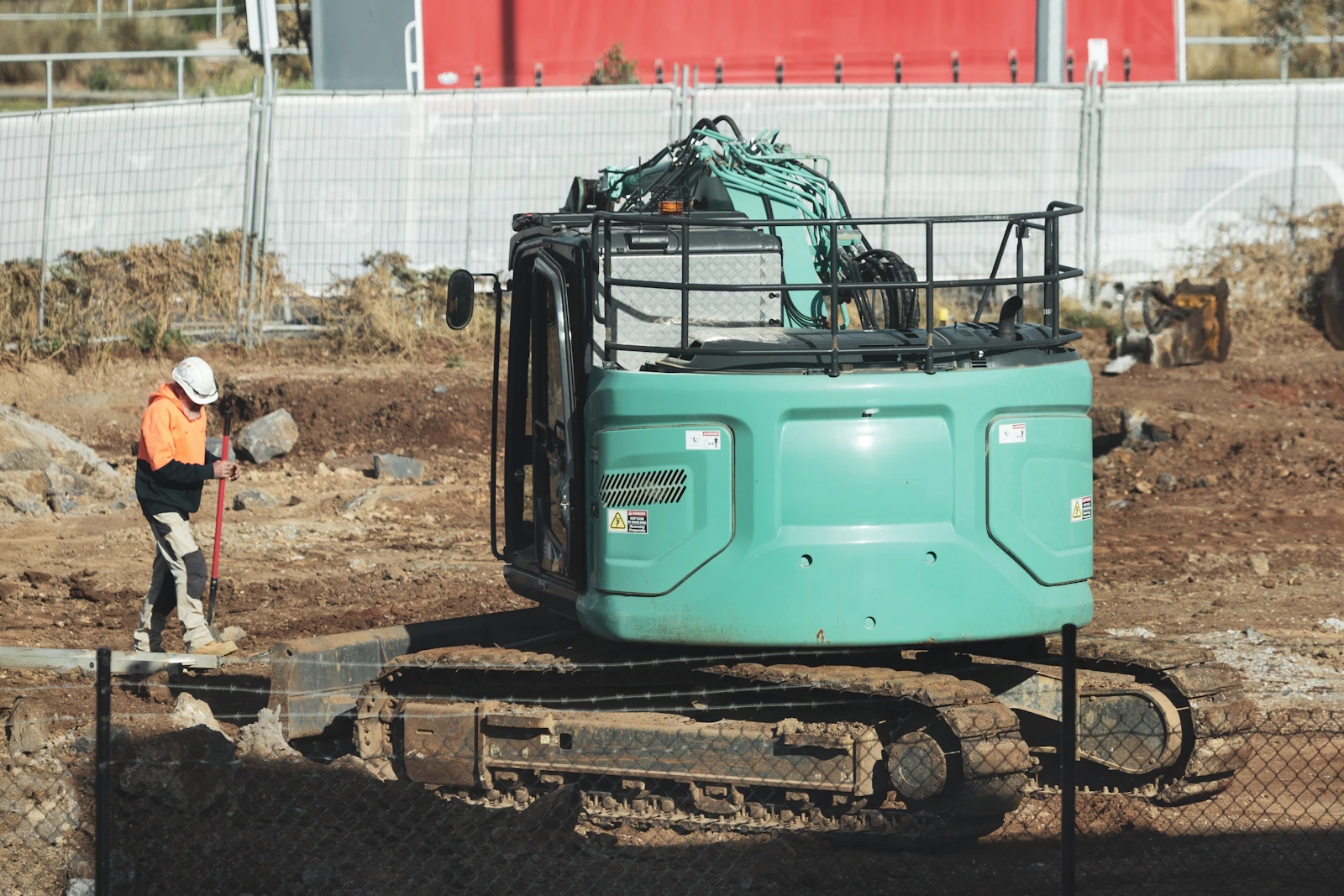
Excavator With Grapple Rental Rates Los Angeles 2026
For 2026 estimating in Los Angeles, budget excavator with grapple equipment hire as a packaged, bare-rental (no operator) cost in these planning ranges: compact 6–8 ton excavator + grapple at $650–$1,050/day, $2,100–$3,350/week, and $5,400–$8,600 per 4-week; mid-size 14–18 ton excavator + rotating grapple at $1,150–$1,900/day, $3,700–$5,900/week, and $9,600–$15,800 per 4-week; and 20–25 ton excavator + rotating grapple at $1,450–$2,500/day, $4,900–$7,900/week, and $12,800–$20,900 per 4-week. These ranges assume Tier 4 Final class machines where available, an 8-hour metered day, a 40-hour week, a 160-hour 4-week month, and separate line items for delivery, damage waiver/insurance, fuel, and return-condition charges. In practice, Los Angeles rental coordinators commonly source through national providers (United Rentals, Sunbelt, Herc, Cat Rental Store) plus strong independents across LA/OC/IE—your landed cost will depend more on term, metered hours, transport complexity, and grapple hydraulics than the logo on the counter.
| Vendor |
Daily Rate |
Weekly Rate |
Review Score |
Website |
| United Rentals |
$737 |
$2 490 |
6 |
Visit |
| Sunbelt Rentals |
$645 |
$1 642 |
6 |
Visit |
| Herc Rentals |
$827 |
$2 200 |
8 |
Visit |
| Sunstate Equipment |
$704 |
$2 377 |
8 |
Visit |
| Quinn Rental Services (Cat Rental Store / Quinn Company) |
$771 |
$2 604 |
7 |
Visit |
Important scope note for land clearing: many suppliers quote the excavator “with bucket” by default, while the grapple is a separate attachment hire line. For estimating, treat “excavator with grapple rental Los Angeles for land clearing” as (1) base excavator hire, (2) grapple attachment hire, and (3) jobsite logistics (haul, fueling, cleaning, off-rent timing).
What Drives Excavator With Grapple Equipment Hire Costs For Land Clearing In Los Angeles?
Land clearing is hard on iron and on billing terms. The grapple accelerates production for brush, storm debris, root balls, and timber handling, but it also pushes you into a higher-spec excavator configuration: auxiliary hydraulics, compatible coupler, and (often) a higher transport class. The biggest cost drivers Los Angeles estimators should carry are: excavator size/weight class, grapple type (fixed vs rotating), metered hours versus calendar days, delivery radius and access constraints, and return-condition risk (mud, wrapped wire/rope in the coupler, bent tine tips, damaged hoses).
Base Machine Hire: Size Class Matters More Than Any Single Fee
National transaction benchmarks show wide spreads by class: mini excavators commonly fall in the $150–$400/day band, while mid-size machines (13–25 ton) often price in the $700–$1,500/day band before metro premiums and add-ons. In Los Angeles, it’s reasonable to plan a 15%–25% metro premium versus a lower-cost market when fleet availability is tight, especially during peak grading and utility seasons.
For land clearing scopes, compact excavators can be cost-effective only if the grapple is sized correctly and the machine has enough lift capacity and stick reach to stage material. When the work includes repeated “grab-lift-swing” cycles (brush piles, palm fronds, eucalyptus limbs), crews frequently outperform a bucket+thumb setup with a rotating grapple—but you’ll pay for it in attachment hire and hydraulic requirements.
Grapple Attachment Hire: Budget It As A Separate Line Item
Grapple pricing varies by style and coupler interface. Published rate sheets in the U.S. market show rotating grapples renting around $400/day, $950/week, and $1,950/month (attachment-only), and grapple bucket-style excavator attachments listing around $280/day, $705/week, and $1,760 per 4-week. Use these as “sanity check” anchors, then adjust for Southern California availability, coupler compatibility, and hose protection requirements.
Common grapple adders that change the hire cost:
- Hydraulic quick coupler hire: often $60–$125/day (or bundled into the excavator class rate); if not included, it becomes a surprise cost when you need to swap between bucket and grapple in the same shift.
- Auxiliary hydraulic line / “third-line” compatibility issue: allow $0–$350 in changeover labor/hoses if the delivered excavator isn’t already set up for the grapple you reserved.
- Hose whip checks / hose sleeves requirement: allow $15–$45/day (or $60–$180/week) if the supplier requires additional protective gear for brush and demolition debris.
Metered Hours And Overage: Where “A Day” Becomes An Expensive Day
Most Los Angeles-area bare rental terms still behave like: 1 day = up to 8 engine hours, 1 week = 40 hours, 4-week month = 160 hours. If your land clearing crew runs long days to make traffic-control windows, expect overage billing. Carry an overage allowance of:
- Excavator hour overage: $90–$180 per excess hour (varies by class and contract), billed on the meter.
- Grapple attachment overage: $35–$75 per excess hour when the attachment is metered or when the supplier applies “high utilization” terms for specialty tools.
- Weekend/holiday utilization risk: some branches treat weekend as 2 calendar days if the machine is out Friday PM and returns Monday AM; for estimating, add $0–$2,500 contingency depending on whether you can off-rent before a weekend cutoff.
Operational constraint that moves real dollars: many rental counters have an off-rent cutoff (commonly around 2:00–3:00 PM) for next-business-day pickup scheduling. Miss it, and you can buy an extra day even if the machine is parked. Build a dispatcher reminder into your daily production plan.
Delivery, Access, And Los Angeles Logistics Premiums
Delivery is where Los Angeles estimates blow up—because traffic and access time are real. Planning ranges for transport-related charges on an excavator with grapple hire package:
- Standard delivery + pickup (round trip): $300–$1,000 total depending on distance, weight class, and whether a tilt-deck can be used.
- Per-trip mobilization (each way): carry $250–$650 if the vendor quotes each leg separately.
- Delivery beyond included radius: allow $4–$8 per loaded mile beyond a typical local zone (confirm at quote).
- Jobsite wait time / redelivery: carry $125–$195/hour for truck wait time if the gate isn’t open, the spotter isn’t present, or the offload area isn’t ready; redelivery can effectively repeat a $250–$650 trip charge.
Los Angeles-specific considerations that change cost: (1) delivery windows often must avoid peak congestion—if your project requires 6:00–7:00 AM delivery to beat traffic, some suppliers apply an early-hour dispatch premium of $150–$300; (2) hillside and canyon work (e.g., along Mulholland corridors) may require a lowerboy placement plan and increases “wait time” risk; (3) dust control expectations are higher during dry months—if your site requires track-out controls and frequent cleanup, the rental return condition risk (cleaning fees) rises.
Hidden-Fee Breakdown (Cost Items That Commonly Appear After The Base Rate)
For equipment hire costs that stay controllable, pre-carry these as explicit allowances (and then reconcile against the quote):
- Damage waiver / rental protection plan: commonly 10%–15% of rental charges; published examples show 15% of standard rental rate for some rental protection plans.
- Refundable security deposit / credit hold: often $2,000–$7,500 depending on machine class and customer credit profile; this affects working capital even if it’s returned.
- Environmental / shop / admin fees: often $5–$25/day or a per-contract fee.
- Fueling / recharge surcharge: if returned short, carry $7–$10/gal for vendor-fueled diesel plus a potential $95–$175 service/fuel trip fee if a truck has to be dispatched.
- Cleaning fee (mud, clay, plant sap, seed heads, concrete slurry): commonly $175–$450; land clearing debris in the carbody and undercarriage is a frequent trigger.
- Wear-and-tear / damage pass-through items: bucket teeth often billed $18–$35 each if missing; track pad damage can be assessed at $25–$60 per pad depending on style and contract terms.
- Late return / unauthorized holdover: carry 1.5× daily rate risk if the branch books the unit for another customer and you miss the pickup window.
Land Clearing Scope Adders: What You’re Actually Paying For
“Land clearing” can mean light brush removal or heavy root extraction and sorting. The more the scope looks like material handling, the more you should expect these adders to appear in the quote or in your internal scope sheet:
- Second attachment on the same contract (e.g., ditching bucket kept onsite): $35–$95/day to keep it on rent (even if it sits).
- Rake or brush rake (if available for excavators): often $150–$350/day (market-dependent; confirm availability early).
- Thumb upgrade vs grapple (if switching): a hydraulic thumb may be a lower-cost option than a rotating grapple for some brush handling; if quoted separately, carry $75–$200/day as a planning adder for the thumb package.
Example: 2-Week Excavator With Rotating Grapple Hire In Los Angeles (Land Clearing)
Scenario: 14–18 ton excavator with rotating grapple for invasive brush removal and log staging on a tight-access site near Sun Valley. Crew plans 10 working days over two weeks, with early starts to avoid neighborhood restrictions and LA traffic. Assumptions: weekly billing (40 hours/week), delivery is two trips, and the machine must be returned clean with photo documentation.
- Excavator base hire: 2 weeks at $3,650/week = $7,300
- Rotating grapple attachment hire: 2 weeks at $950/week = $1,900
- Delivery + pickup: $475 each way = $950
- Damage waiver (planning): 12% of rental charges (7,300 + 1,900) = $1,104
- Environmental/shop fees: $15/day x 10 workdays = $150
- Fuel top-off at return: 45 gallons x $8.50/gal = $383
- Cleaning allowance: $275
Estimated pre-tax subtotal: $12,062 (then add local tax as applicable). Working-capital note: carry a $5,000 deposit/hold risk even if refundable, plus contingency if you exceed 40 hours/week (overage) or miss the off-rent cutoff.
Budget Worksheet (Los Angeles Excavator With Grapple Equipment Hire)
- Excavator base hire allowance (select class): $650–$2,500/day or term equivalent
- Grapple attachment hire allowance: $280–$400/day (or $705–$950/week)
- Delivery + pickup allowance: $300–$1,000 round trip
- Wait time / redelivery contingency: $250–$750
- Damage waiver / insurance allowance: 10%–15% of rental charges
- Fuel top-off allowance at return: $250–$900 (plus potential $95–$175 service trip)
- Cleaning/undercarriage wash allowance: $175–$450
- Wear items / minor damage allowance: $150–$600 (teeth, hoses, coupler pins, track pads)
- After-hours/early delivery window allowance (LA traffic): $150–$300
- Documentation/admin allowance (photos, condition report handling): $0–$150
Rental Order Checklist (PO, Delivery, Return, And Off-Rent Controls)
- Confirm excavator weight class, tail-swing configuration, and required reach for staging piles (do not assume “a 15-ton” fits your gate)
- Confirm grapple type (fixed vs rotating), coupler style, pin-on vs quick-coupler interface, and required auxiliary hydraulics
- PO must state rental term (day/week/4-week), included metered hours (8/40/160), and overage billing method
- Provide certificate of insurance or explicitly approve damage waiver % on the PO
- Lock delivery window and site contact; require call-ahead (30–60 minutes) to reduce truck wait time charges
- Require delivery condition photos: hour meter, fuel level, undercarriage, coupler, grapple tines, and hydraulic hoses
- Define refuel expectation at return (full tank vs “same as delivered”) and document the delivered level
- Define return-condition expectation (no wrapped wire/roots in coupler, carbody cleared of brush, cab cleaned out)
- Set internal off-rent reminder and cutoff time (commonly 2:00–3:00 PM) to avoid weekend/holdover charges
- Schedule pickup with a named contact and confirm access for a lowboy/tilt-deck; stage the machine where it can be loaded without delay
For Los Angeles land clearing, the fastest way to reduce total equipment hire cost is usually not negotiating $25/day off the base rate—it’s eliminating unplanned days via off-rent discipline, preventing redelivery/wait time, and returning the excavator and grapple in documented, clean condition.
How To Quote “Excavator With Grapple” Correctly (So The Hire Cost Matches Field Reality)
Most cost overruns on excavator with grapple hire happen because the quote was assembled as a generic excavator rental, then the grapple was “added later.” For Los Angeles land clearing, confirm these technical and commercial details up front so you don’t pay premium rates for downtime:
- Hydraulic flow and pressure compatibility: rotating grapples can have higher flow demands. If the vendor swaps the excavator at dispatch, you may receive a unit that technically runs the grapple but cycles slowly—turning your planned 10-day clearing effort into 13 days (and adding another week charge).
- Coupler standardization: if your job needs both bucket and grapple onsite, specify a compatible quick coupler and confirm whether you’re billed for “extra attachment on rent” even when it sits (often $35–$95/day).
- Hose routing and guarding: land clearing exposes hoses to brush snags. If the supplier requires additional guarding, carry a small daily allowance ($15–$45/day) or plan to provide your own sleeves per contract.
Choosing Between A Grapple, A Thumb, Or A Brush Rake (Cost Versus Production)
For equipment managers, the question is rarely “is a grapple cool?” It’s whether the grapple’s hire cost is offset by schedule gain and reduced handling equipment. Practical guidance for land clearing estimating:
- Hydraulic thumb package: typically lower attachment cost than a rotating grapple (planning: $75–$200/day), but slower for repeated sorting/stacking and less secure for irregular brush bundles.
- Rotating grapple: higher attachment hire (published examples around $400/day and $950/week) but can reduce re-handling, especially when staging logs for haul-off.
- Grapple bucket style: often priced lower than rotating grapples (published example $280/day) and can be a good fit when you need more “scoop + grab” behavior than pure clamping.
Los Angeles Operational Constraints That Change Total Hire Cost
These are the LA realities that should be in your internal rental notes (not left to the field to discover):
- Traffic and delivery cutoffs: if the branch can’t reach your site before closing, pickup slides and you can buy another day. Build your off-rent call for early afternoon (often 2:00–3:00 PM) and stage the machine for quick load-out.
- Dust control and cleanup expectations: dry-season work increases cleaning risk at return. Carry $175–$450 cleaning allowance when the site has fine soils, seed heads, or sap that cakes onto the undercarriage.
- Heat and long idle periods: in valley summer work, crews often idle for coordination windows. Rental clocks don’t stop when the engine runs—control idle and confirm whether the vendor considers “day” as calendar or metered hour.
- Noise and neighborhood windows: if the job can only run 7:00 AM–3:30 PM, your “week” may be production-limited; favor weekly pricing only if you can actually use the hours.
Managing Insurance, Damage Waiver, And Loss-Risk On Grapple Jobs
Land clearing plus grapple equals higher damage exposure (tines, rotator, hoses, coupler face, cab glass). Many suppliers will either require proof of coverage or charge a damage waiver/rental protection plan percentage. A published rental protection plan example prices at 15% of the standard rental rate and limits coverage in specific ways (it is not insurance).
Cost-control actions that actually reduce total hire cost (not just risk):
- Require pre- and post-shift photo documentation (meter, fuel, undercarriage, coupler, grapple tines)
- Wrap hose protection and “no snag” operating rules into the daily toolbox talk
- Define a “stop-work” escalation if the grapple rotator is leaking—continuing to run can turn a $0 cost into a multi-day downtime + repair backcharge problem
When Monthly (4-Week) Hire Wins In Land Clearing
If the job has uncertain haul-off timing, permit coordination, or sequential clearing zones, a 4-week rate can be cheaper than stacking weeks—provided you manage utilization and off-rent correctly. National benchmarks show that monthly excavator rentals can reduce the effective daily cost substantially versus daily pricing. For Los Angeles, the economics are similar, but the penalty for “extra days” is higher—so only commit to 4-week hire when you control access, haul-off, and inspection sequencing.
Quick Estimating Rules (Use As A Cross-Check, Not A Substitute For Quotes)
- If you need the machine 1–2 days, daily pricing is normal—but expect the highest effective cost per hour.
- If you need the machine 3–10 working days, weekly pricing usually lands best if you can keep it productive.
- If you have multi-zone land clearing and uncertain delays, 4-week hire may protect you from repeated mobilizations, but only if the machine won’t sit.
- For specialty attachments like rotating grapples, availability can force premium pricing; pre-book to avoid “last unit in the yard” rates.
Pricing Data References Used For 2026 Planning Ranges
The planning ranges and benchmark anchors above were built from (1) marketplace transaction benchmarks for excavator rental averages and ranges updated in March 2026, (2) published examples of hidden-cost add-ons including delivery and damage waiver impacts and metro premiums, and (3) published attachment rate examples for grapples.