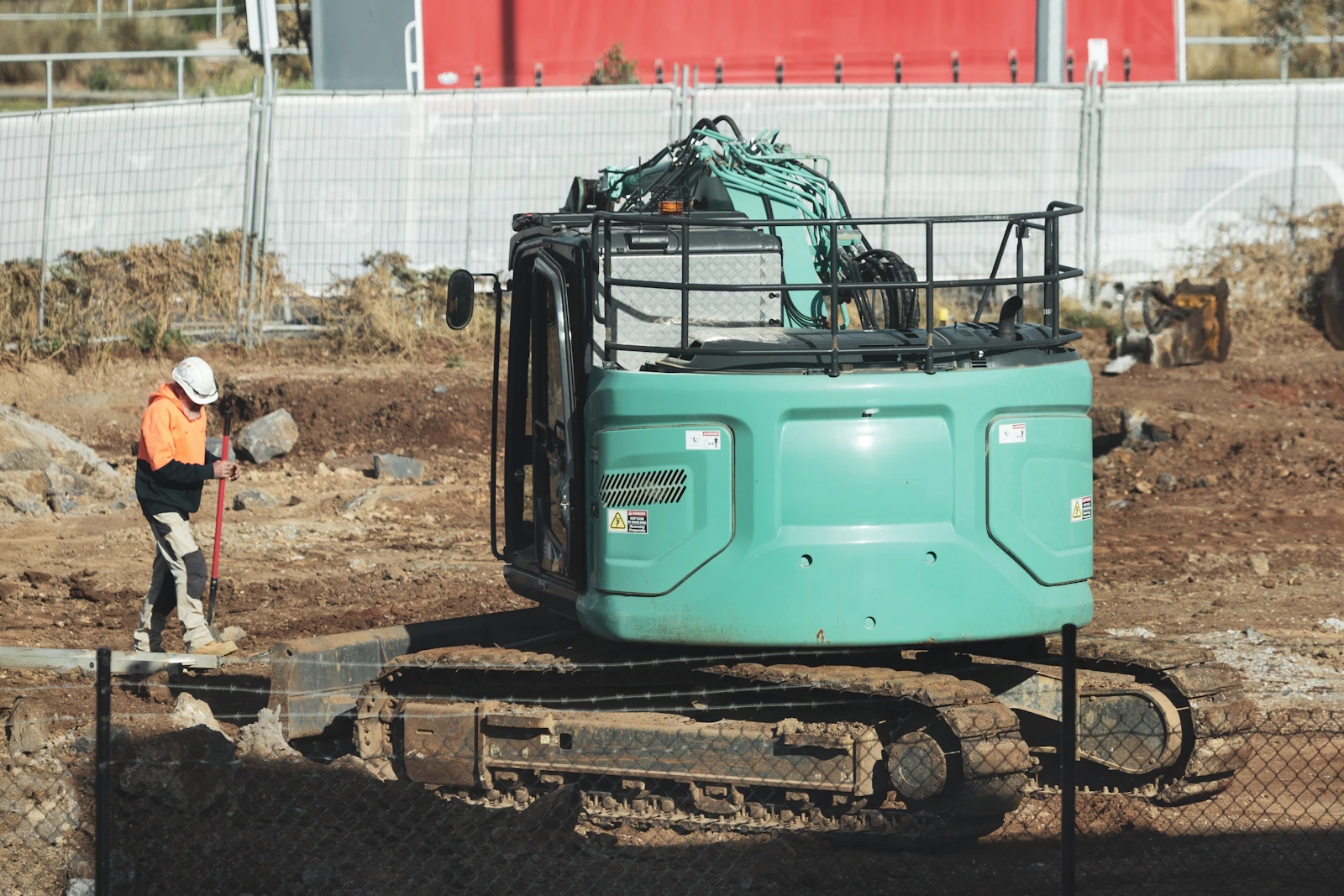
For Louisville, Kentucky land clearing in 2026, budgeting an excavator with grapple typically lands in these planning ranges (bare machine, no operator, before tax): $650–$1,050/day, $2,200–$3,600/week, or $6,600–$10,800/4-week month for a common 18–22 ton class unit with auxiliary hydraulics suitable for a root/brush grapple. Larger 30–35 ton production units often budget at $950–$1,450/day, $3,400–$5,200/week, or $10,200–$15,600/4-week. A grapple attachment is usually a separate line item at $250–$450/day, $850–$1,250/week, or $1,800–$3,000/4-week, depending on whether it’s fixed or rotating and on coupler/hose requirements. In Louisville you’ll usually source these packages through national rental houses (e.g., United Rentals, Sunbelt Rentals, Herc Rentals) and local equipment yards or dealers; final numbers hinge on delivery radius, meter-hour caps, and return-condition requirements.
| Vendor |
Daily Rate |
Weekly Rate |
Review Score |
Website |
| United Rentals |
$750 |
$2 950 |
8 |
Visit |
| Sunbelt Rentals |
$725 |
$2 850 |
8 |
Visit |
| Herc Rentals |
$700 |
$2 750 |
7 |
Visit |
| EquipmentShare Rentals |
$740 |
$2 900 |
8 |
Visit |
| G. Taylor Rentals |
$680 |
$2 650 |
9 |
Visit |
Excavator with Grapple Rental Rates Louisville 2026
Assumptions behind these 2026 planning ranges: most suppliers price excavators on an “8-hour shift / 40-hour week / 160-hour (4-week) month” meter allowance, then bill overage if you exceed the included hours. Many Louisville-area land clearing jobs run long days during favorable weather, so meter-hour management is one of the biggest cost levers on an excavator with grapple hire package.
Budget ranges by typical land clearing package (Louisville planning):
- 14–17 ton excavator + fixed grapple: $525–$850/day, $1,850–$2,950/week, $5,550–$8,850/4-week.
- 18–22 ton excavator + fixed grapple (common for brush/log handling): $650–$1,050/day, $2,200–$3,600/week, $6,600–$10,800/4-week.
- 18–22 ton excavator + rotating grapple (better sorting/stacking productivity): $800–$1,250/day, $2,800–$4,300/week, $8,400–$12,600/4-week.
- 30–35 ton excavator + heavy-duty grapple: $950–$1,450/day, $3,400–$5,200/week, $10,200–$15,600/4-week.
Reality check on grapple line items: published rate sheets and listings commonly show grapple/rotating-grapple attachment pricing in the ~$280/day range for some grapple buckets and up to ~$400/day for rotating grapples, reinforcing why most Louisville bids treat the grapple as a meaningful add-on rather than “included with the excavator.”
What Drives Excavator With Grapple Hire Costs on Louisville Land Clearing Jobs?
For equipment managers and estimators, excavator with grapple equipment hire cost variance in Louisville usually comes from five places: (1) excavator size class (tonnage and stick configuration), (2) grapple type (fixed vs rotating; rake grapple vs bucket grapple), (3) auxiliary hydraulics and coupler compatibility, (4) transport and jobsite access (lowboy scheduling, escorts, delivery cutoffs), and (5) billing rules (meter overages, weekend minimums, off-rent timing, and return condition).
1) Size class and stability requirements
Land clearing tends to push you toward a heavier, more stable excavator than trenching would. Moving brush and logs with a grapple loads the boom differently than digging, and many suppliers will steer you into the 18–22 ton class for general clearing and into 30–35 ton for higher production or larger timber. Jumping from an 18–22 ton unit to a 30–35 ton unit can move your time-charge budget by $300–$550/day or $1,200–$2,000/week, before transport and attachments.
2) Grapple selection: fixed vs rotating (and why it matters on invoices)
Rotating grapples improve placement and sorting, but they add cost and introduce more “must-have” accessories (case drain routing, electrical control if applicable, additional hoses, and sometimes a different coupler). Typical 2026 Louisville planning adders you’ll see on quotes:
- Fixed grapple: $250–$350/day (or $850–$1,050/week).
- Rotating grapple: $350–$450/day (or $950–$1,250/week).
- Coupler / linkage mismatch allowance: plan $75–$150/day if a quick coupler or adapter is required to run the grapple efficiently.
3) Meter-hour caps and overtime billing (the “silent” land clearing cost)
Even when you rent “daily,” many suppliers treat the rental as a shift-based rate with included hours. Planning allowances that keep bids from getting burned:
- Included hours assumption: 8 hours/day, 40 hours/week, 160 hours/4-week month.
- Meter overage: commonly budget $95–$145 per excess hour for 18–35 ton class equipment (varies by size and contract terms).
- Second-shift / extended use: if you run 10 hours/day for five days, you’ve created 10 excess hours; at $120/hour that’s $1,200 in overage on top of the weekly rate.
4) Delivery, pickup, and Louisville-specific access constraints
Transport is a major part of excavator with grapple hire costs because you’re typically moving a tracked machine plus at least one attachment. Planning ranges that match how rental coordinators commonly see transport priced:
- Local lowboy mobilization (each way): $175–$325 per trip for in-metro moves when access is simple.
- Base + mileage model: $150–$200 base charge plus $4.00–$7.00 per loaded mile.
- Minimum transport charge: often $100–$200 minimum even for short hops.
- After-hours / “must deliver by 7:00 a.m.” premium: budget +20% to +35%.
City-specific considerations (Louisville): (1) tight subdivision access in areas like the Highlands, St. Matthews, and older industrial corridors can force smaller trucks or staged delivery, which increases trips; (2) Jefferson County clay and frequent wet conditions can raise the odds of track/mud cleaning charges at return; (3) Ohio River-area humidity and summer heat can drive longer idle time (A/C load, regen events on Tier 4), which still accrues meter hours and can trigger overage.
Why these transport ranges are realistic: published contract schedules show delivery/pickup structures that combine a flat charge with a per-mile add, and other rental yards publish per-mile delivery with minimum trip charges—models that mirror what you’ll see when sourcing equipment for Louisville jobs.
Hidden-Fee Breakdown (What Usually Hits the PO After the Rate Sheet)
To keep excavator with grapple hire costs controlled, pre-negotiate (and write into the PO) how these common adders are applied:
- Damage waiver / loss damage waiver (LDW): commonly 10%–15% of gross rental time charges. Some programs pair that with a customer responsibility such as $1,000 or 10% of fair market value as a deductible/participation amount. (If you have an in-force inland marine policy with a rental clause, you may be able to decline the waiver.)
- Cleaning on return: for muddy/greasy equipment, it’s common to see a set cleaning fee such as $250 per item (or a broader cleaning range on heavy equipment of $150–$450 depending on severity and attachments).
- Refuel / re-diesel charge: if you return short, published examples include fuel back-charges like $8 per gallon; many suppliers also apply an admin/service component on top.
- Wear items / consumables: teeth, cutting edges, and pin retainers may be billed if returned beyond normal wear. Budget allowances like $25–$60 per tooth (plus labor) prevent surprises on grapple-intensive work.
- Late return / after-cutoff fees: if the yard closes at 4:00–5:00 p.m., returning after cutoff can trigger an additional day or a late fee (some policies cite 25% of the daily rate per hour after the end time).
These line items are not “gotchas” when they’re documented; they become gotchas when the project team assumes the day/week/month figure is the full equipment hire cost.
How to Control Excavator With Grapple Equipment Hire Costs in Louisville
Lock the billing clock (off-rent) and weekend rules
- Off-rent notice: plan for 24 business hours notice expectations in your internal workflow (submit off-rent the day before you want billing to stop).
- Weekend minimums: many suppliers treat a “weekend” as a 2-day minimum (or bill Friday-to-Monday as multiple days). If your land clearing plan is weather-dependent, clarify whether a rain day can pause billing.
- Holiday billing: confirm whether holidays are “free days” or billed days when the unit remains on rent.
Specify required accessories up front
Grapple work often needs accessories that change the quote materially. If they show up late in the process, they also show up late on the invoice. Consider explicitly calling out:
- Aux hydraulics / second auxiliary circuit: allowance $50–$120/day if the base excavator needs a different configuration to run the grapple you selected.
- Hydraulic quick coupler: allowance $75–$150/day (or a weekly equivalent) when swapping between grapple and bucket on the same shift.
- Additional bucket for grading/cleanup: allowance $40–$90/day for a cleanup bucket when the base package only includes one bucket.
- Track mats / roadway protection (if required by owner): allowance $8–$15 per mat per day (or negotiate a weekly bundle) to avoid surface damage claims.
Document return condition like it’s a closeout submittal
To reduce cleaning/wear disputes, require the foreman or superintendent to capture: (1) end-of-rent photos, (2) fuel level, (3) attachment serial numbers, and (4) meter hours at off-rent. If you can’t document it, you can’t defend it.
Budget Worksheet (Louisville Excavator With Grapple Hire)
Use this as a bid-day and PO-day checklist (no tables; line items shown as bullets with planning allowances):
- Base excavator rental (18–22 ton): allow $2,200–$3,600 per week × ____ weeks.
- Grapple attachment (fixed/rotating): allow $850–$1,250 per week × ____ weeks.
- Quick coupler / adapter (if needed): allow $75–$150 per day × ____ days.
- Delivery + pickup: allow $175–$325 each way × 2 trips (or base + $4–$7/mile) + $100–$200 minimum assumption.
- After-hours delivery window premium: allow +25% if delivery must occur outside 9:00 a.m.–4:00 p.m.
- Damage waiver (if not waived by insurance): allow 10%–15% of time charges.
- Cleaning contingency (mud/clay): allow $250 per item (or $150–$450 job allowance).
- Refuel contingency: allow $8/gal back-charge risk × ____ gallons if return is short.
- Meter overage contingency: allow $95–$145/hr × ____ hours (especially for 10–12 hour clearing days).
- Wear items contingency: allow $300–$900 (teeth, cutting edges, pins) for grapple-heavy work.
- Swap-out / service trip allowance: allow $250–$450 if a tech visit or attachment swap requires dispatch.
Rental Order Checklist (PO, Delivery, Return)
- PO must state: excavator size class, auxiliary hydraulics requirement, grapple type (fixed vs rotating), coupler type, bucket(s) included, and meter-hour allowance (8/40/160 or other).
- Insurance documents: COI naming additional insured + waiver of subrogation if required; clarify whether you are declining LDW due to coverage.
- Delivery requirements: exact address + gate code, delivery contact, preferred time window, site hazards, and whether a lowboy can safely turn around.
- Acceptance at delivery: record meter hours, take photos, confirm attachment serial numbers, and verify condition notes on the ticket.
- Off-rent process: who is authorized to off-rent, how notice is sent, and the cutoff time to stop next-day billing.
- Return requirements: fuel level target, cleaning standard (undercarriage), attachment accounted for, and photo documentation at pickup.
- Invoice requirements: invoice must reference PO, list separate lines for base unit, grapple, delivery/pickup, LDW, fuel, cleaning, and overage.
Example: 2-Week Louisville Land Clearing Package (Real-World Constraints)
Scenario: Clearing a wooded lot in east Louisville with constrained access (single driveway, staged brush piles). You rent an 20-ton excavator plus a rotating grapple for 10 working days (2 calendar weeks). Delivery distance is 18 loaded miles from the yard, and you require 7:00 a.m. delivery to meet a homeowner HOA noise window.
- Excavator (weekly): $2,800/week × 2 = $5,600.
- Rotating grapple (weekly): $1,100/week × 2 = $2,200.
- Delivery + pickup: (base $175 + 18 miles × $5.50) ≈ $274 each way × 2 = $548.
- Early delivery premium: +25% on delivery leg only ≈ +$69.
- Damage waiver: 12% of time charges (5,600 + 2,200 = 7,800) = $936.
- Meter overage risk: crew runs 10-hour days for 6 days (2 extra hours/day beyond 8) = 12 hours × $120/hr = $1,440 (if enforced under your contract).
- Cleaning contingency: Louisville clay/mud event: allow $250.
Planning total (before tax, excluding fuel you provide): approximately $11,043 including a realistic overage contingency. If you manage the shift to stay within the included hours and return clean/fueled, the same package can land closer to $9,300–$9,800.
Key takeaway: for land clearing, the grapple makes the job, but meter hours + transport timing often decide whether the equipment hire cost stays inside the bid.
2026 Market Notes for Excavator With Grapple Equipment Hire in Louisville
In 2026 planning, expect excavator with grapple rental pricing to remain sensitive to (a) fleet utilization during peak sitework months and (b) attachment availability. Grapples are a smaller sub-fleet than buckets, so the grapple often becomes the schedule constraint even when excavators are available. For Louisville land clearing projects, this typically shows up as either (1) a premium for the exact grapple type requested or (2) a requirement to accept a comparable attachment and budget minor productivity differences.
Attachments and Options That Commonly Change the Hire Cost
Land clearing packages rarely stay “excavator + grapple only.” If your scope includes stacking, sorting, or loading out, the following adders frequently appear:
- Hydraulic thumb (if you choose thumb instead of grapple): allow $75–$175/day depending on size and whether it’s progressive.
- Bucket swap (ditch/cleanup bucket): allow $40–$90/day per additional bucket.
- Rake / root rake attachment: allow $150–$300/day when a rake is used to windrow roots/brush ahead of grapple handling.
- Hydraulic hose/guard package (brush conditions): allow $25–$60/day when the supplier requires guarding for heavy brush work.
- Fire extinguisher / spill kit compliance rental: allow $10–$25/day if required as a separate rental item (some suppliers include, some don’t).
Cost Drivers Specific to Land Clearing (Beyond the Posted Rate)
Off-rent rules and “ready-for-pickup” definition
On land clearing sites, the excavator is frequently “done” while piles are still being chipped or hauled. If the machine is blocked in by piles or soft ground, the supplier may not consider it ready for pickup. To avoid extra billed days:
- Maintain a 12–14 ft clear egress path for a lowboy and keep the excavator parked within 50–100 ft of firm access (site-dependent).
- Schedule pickup before the yard cutoff; missing a 4:00 p.m. cutoff can turn into an additional billed day.
Weekend/holiday billing and weather volatility
Louisville weather swings (spring rain, summer storms) can tempt teams to “hold the unit just in case.” If your contract bills weekends as full days when the unit remains on rent, carrying the excavator through a rainy weekend can add $1,300–$2,400 (two days at $650–$1,200/day class pricing) without moving a stick. If your job is weather-sensitive, negotiate:
- Weekend standby language (reduced rate) or a defined “no-work” billing rule.
- Emergency off-rent procedure if the site becomes inaccessible.
Insurance, Damage Waiver, and Risk Costs You Should Budget Explicitly
For heavy equipment hire, most suppliers will offer (or automatically apply unless declined) a damage waiver/LDW. Industry training materials and rental policies commonly place this charge in the 6%–15% range, with many agreements clustering around 10%–15%. Separately, customers are often still responsible for a participation amount/deductible (commonly structured as a percentage of value or a fixed amount). The practical estimating rule: if you can’t decline LDW with your insurance, treat LDW as a line item, not a contingency.
Negotiation Points Rental Coordinators Use (Without Changing the Scope)
- Convert day-rent to week-rent at day 3: If production extends, push to have the invoice “cap” at the weekly rate once you cross 3 billed days.
- Bundle grapple + coupler: Ask for a packaged attachment rate rather than separate daily lines (helps avoid double-counting minimums).
- Transport consolidation: If you’re also renting a skid steer or dozer, combine moves to reduce trips (saves $175–$325 per avoided leg in typical metro moves).
- Pre-approve wear thresholds: Define what “normal wear” means on teeth/edges so you don’t argue over a $300–$900 closeout charge.
Closeout: What to Photograph and Record to Protect the Equipment Hire Budget
- Meter reading at end of last shift (protects against accidental overage billing).
- Fuel level photo (protects against refuel back-charges like per-gallon rates).
- Undercarriage condition (mud packed into tracks is a common cleaning trigger).
- Grapple condition including hoses and coupler pins (protects against damage claims).
- Pickup timestamp and name of carrier/driver (protects against “still on rent” disputes).
If you want, share the expected acreage, timber size (brush vs mature trees), and the closest cross-streets in Louisville; I can tighten the recommended size class and a more defensible weekly/monthly hire budget range while keeping it vendor-neutral.