

For land clearing in the Nashville, Tennessee market, 2026 planning budgets for excavator with grapple equipment hire (dry hire, no operator) typically land in the following ranges: $380–$950 per day, $1,500–$2,750 per week, and $3,400–$6,200 per 4-week month. These ranges assume a compact-to-mid-size tracked excavator (roughly 9,000–25,000 lb class) plus a grapple (or rotating grapple) and standard bucket, billed on an 8-hour meter-day / 40-hour week / 160–200-hour 4-week cycle, excluding delivery, tax, fuel, and damage waiver. In Nashville, fleets are commonly sourced through national rental houses (with local yards) as well as Middle Tennessee independents; final pricing is mainly driven by excavator weight class, grapple type/coupler, delivery constraints in and around the metro, and how strictly the vendor enforces off-rent and meter-hour overages.
| Vendor | Daily Rate | Weekly Rate | Review Score | Website |
|---|---|---|---|---|
| United Rentals (Nashville, TN – Branch M76) | $725 | $2 150 | 9 | Visit |
| Sunbelt Rentals (Nashville, TN – Branch #128) | $700 | $2 050 | 9 | Visit |
| Herc Rentals (Nashville, TN) | $710 | $2 090 | 9 | Visit |
| EquipmentShare (Nashville / La Vergne, TN) | $690 | $2 000 | 6 | Visit |
| Thompson Machinery (The Cat Rental Store – Nashville, TN) | $715 | $2 100 | 10 | Visit |
How to read the numbers: A grapple-equipped excavator is usually priced as (1) the excavator base rate plus (2) an attachment adder for the grapple (and sometimes (3) an add-on for a hydraulic quick coupler, plus (4) hoses/pins/guards if not included). In land clearing, you will also see pricing shift based on whether you need a rotating grapple for log/brush handling versus a simpler grapple bucket. Published rate cards show that a rotating grapple can price like a high-value attachment on its own (for example, one published rate card lists a rotating grapple at $400/day, $950/week, $1,950/month).
Nashville planning approach (recommended): budget a base excavator in the right weight class, then add the grapple as a discrete line item, then apply delivery and protection (damage waiver/insurance) as separate cost drivers. That method avoids “all-in” assumptions that get blown up by delivery windows, weekend billing rules, and meter-hour overage.
Compact tracked excavator (about 8,000–13,000 lb): plan $300–$550/day, $1,000–$1,600/week, $2,400–$3,600/4-week for the excavator itself (dry). Local published examples in the Middle Tennessee orbit include a mini excavator at $280/day, $1,000 for 7 days, $2,500/month. Another published example (compact excavator with hydraulic thumb) shows $250/day, $1,000/week, $2,500/month.
Mid-size tracked excavator (about 18,000–25,000 lb): plan $525–$800/day, $1,700–$2,500/week, $4,000–$6,500/4-week depending on tail swing, auxiliary hydraulics, guarding, and availability. Published rate-card examples for this weight band commonly sit in the mid-hundreds per day (for example, an 18K–25K class excavator listed at $550/day, $1,800/week, $4,250/month).
Grapple attachment adder (typical): plan $80–$450/day, $300–$950/week, $400–$1,950/4-week, primarily depending on grapple type (bucket vs rotating), coupler style, and size match. A published grapple-bucket example shows $280/day, $705/week, $1,760/4-week for an excavator grapple bucket (note: rates vary materially by region, size, and coupler). For smaller local “attachment add-on” models, a published Middle Tennessee example lists a grapple at $80/day with weekly/monthly package pricing.
1) Grapple type: bucket grapple vs rotating grapple. For land clearing (brush piles, logs, and directional stacking), a rotating grapple often reduces machine repositioning time—but the attachment rate is typically closer to “premium attachment” territory (commonly several hundred dollars per day). A rotating grapple published at $400/day is a realistic benchmark for cost planning.
2) Auxiliary hydraulics and coupler compatibility. If the excavator is not already plumbed for the required flow/pressure or if a compatible coupler is not on the machine, your rental coordinator may need to price a different unit, add a coupler line item, or plan for shop time. In practical terms, that can move you from a “compact package” to a higher spec unit even when digging depth is not the constraint.
3) Utilization rules (meter hours) and overage billing. Most professional rentals treat a “day” as up to 8 engine hours, a “week” as up to 40 hours, and a “4-week month” as 160–200 hours before overages. When land clearing hits long pushes (storm cleanup, accelerated grading behind a mass clearing crew), overage can become a primary cost driver. In 2026 budgeting, it is prudent to carry a contingency for overage at $70–$120 per meter hour (varies by size class and negotiated rate), especially if you are stacking brush and handling timber all day rather than trenching intermittently.
4) Delivery constraints unique to the Nashville metro. Two Nashville-specific cost pressures to plan for:
Delivery / pick-up (flat vs mileage): for a compact-to-mid excavator with grapple, carry $200–$450 each way inside a typical metro radius, or plan mileage billing at roughly $4–$7 per loaded mile with a minimum trip charge (often $150–$250). If your site requires a dedicated lowboy and the vendor can’t backhaul efficiently, “short distance” can still price high. If you have multi-machine mobilization (excavator + attachments + spare bucket), consider consolidating to reduce minimums.
Damage waiver vs. providing your own physical damage coverage: many vendors offer a waiver commonly budgeted at 10%–15% of the base rental rate (sometimes applied to attachments too), while requiring you to carry liability separately. For estimating, treat damage waiver as a compounding cost driver on longer terms (especially when the grapple is high-value).
Fuel / recharge surcharges: land clearing runs machines hard. If the contract requires “return full,” carry a refuel backcharge allowance; published rental policies show refuel rates as high as $10 per gallon for diesel on return. In Nashville, where jobsite fueling vendors may impose call-out minimums, it is often cheaper to plan an on-site slip tank than to accept return refuel charges.
Cleaning fees (mud, clay, sap, and debris): grapple work pulls brush, clay, and root balls into undercarriage areas. Carry an allowance for pressure wash and debris removal. Published policies show cleanup billed at $140 per hour when equipment is returned dirty. A practical Nashville land-clearing allowance is $125–$175/hour for cleaning time plus a potential fixed pressure-wash charge of $200–$350 if sap/mulch is embedded in the grapple tines or coupler.
Weekend and holiday billing rules: some vendors offer “weekend rates,” others bill calendar days regardless of hours, and some treat Saturday pickup/return differently. A published example shows a weekend package on compact equipment (e.g., a weekend rate set above the daily rate rather than two separate days). In Nashville, plan that Friday afternoon delivery often results in Monday morning pickup; confirm whether that bills as 1 day, 2 days, or 3–4 calendar days.
Off-rent rules and “call-off” cutoffs: if your project pauses for weather (frequent spring storms) or brush hauling delays, you can be paying standby. Build a process: off-rent by 2:00–3:00 PM local time to avoid next-day billing; document off-rent in writing; and get a pickup ticket number the same day. (Cutoffs vary by yard—verify during order.)
For Nashville excavator with grapple rental for land clearing, the grapple alone is rarely the whole attachment story. Common adders to budget (even when not explicitly priced as “rent”):
Scope: clear a 1.5-acre lot in the Nashville metro (brush + small trees up to 8 inches diameter), stack burn piles, and load out logs. Constraint: site only accepts deliveries 9:30 AM–2:30 PM due to adjacent school traffic and a shared access drive.
Order-of-magnitude rental-only budget: ~$4,180 before tax and consumables, excluding trucks/chippers/haul-off. The largest controllable drivers are (1) avoiding re-delivery, (2) staying under meter-hour caps, and (3) returning the grapple/coupler clean and undamaged.
For Nashville-area excavator with grapple equipment hire, the best savings typically come from (a) committing to a defined 4-week term when you truly need it, (b) consolidating attachments (grapple + spare bucket + coupler) with one supplier to reduce trucking minimums, and (c) aligning delivery/pickup with the yard’s routing days. If you have multiple lots, ask for a “transfer” line item between sites rather than full demob/remob—budget transfers at $250–$600 depending on distance and trucking class.
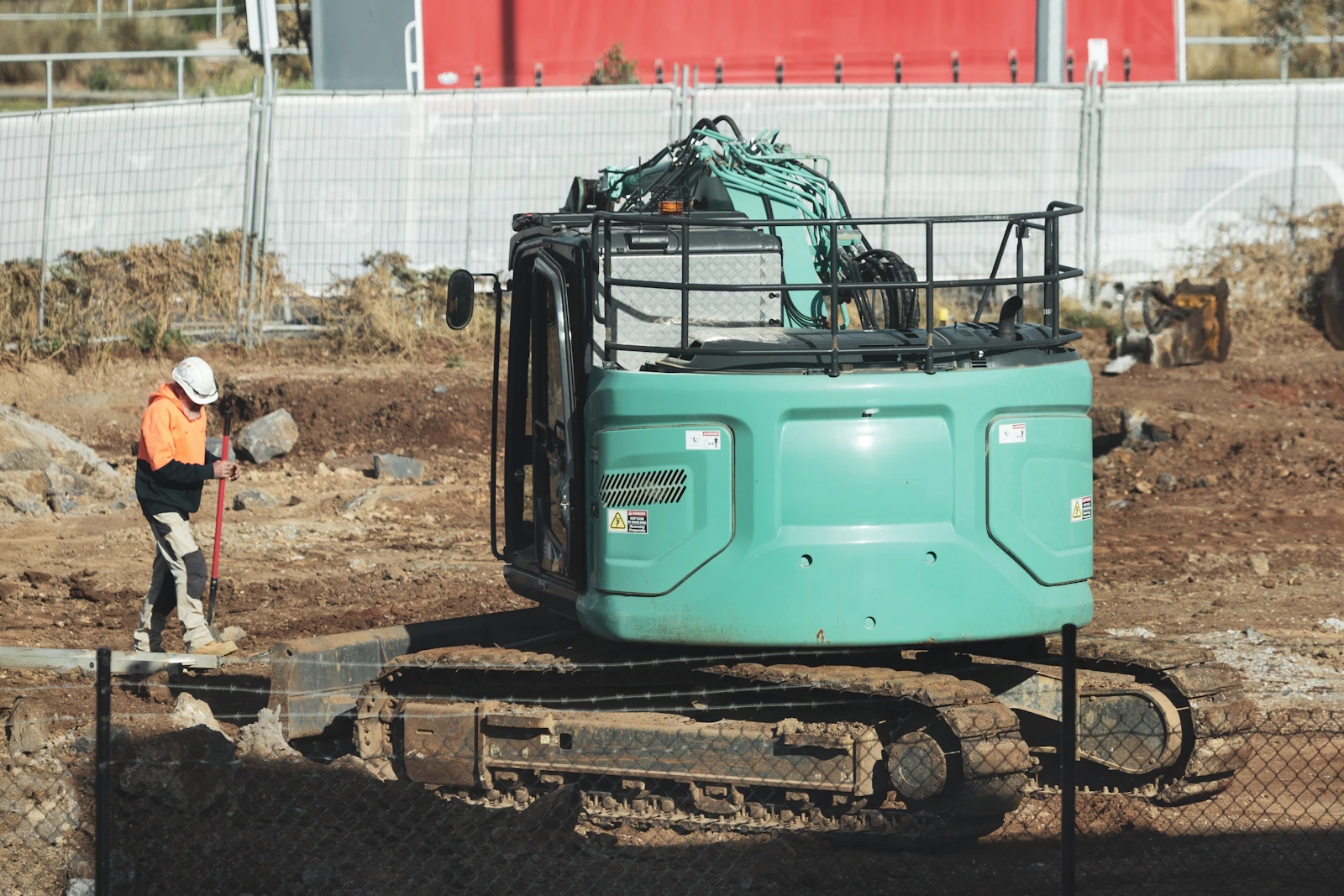
Use the following line-item worksheet to build a Nashville land clearing rental budget that reflects true equipment hire costs, not just the advertised excavator rate.
For Nashville land clearing, “cheapest daily rate” is rarely the lowest total cost. Instead, match grapple setup to production:
For 2026, plan for rental variability driven by fleet utilization and storm/event demand. When Nashville has a high volume of clearing tied to development schedules or storm debris cleanup, compact excavators and grapple-capable attachments tighten first. The practical estimator takeaway is to protect your schedule: a “slightly higher” daily rate from a supplier who can meet the delivery window can be cheaper than a low quote that misses the start date and forces overtime or an extra week.
Also note that published local pricing models sometimes include “weekend packages” (e.g., weekend rates that sit between 1 and 2 daily charges) and discounted trailer add-ons, which can be cost-effective for compact units when you have in-house towing capacity and DOT compliance. For mid-size excavators, however, most Nashville land clearing teams will rely on vendor trucking—so focus negotiation energy on trucking minimums, transfer charges, and off-rent cutoffs.
If you need a single-number 2026 budgeting rule for Nashville excavator with grapple equipment hire costs on land clearing: carry $2,500–$4,500 for a one-week package (excavator + grapple + trucking + waiver + cleaning/fuel contingencies) for compact-to-mid size, and adjust upward if you require a rotating grapple, restricted urban delivery windows, or you anticipate high meter-hour utilization. Use the worksheet above to keep your estimate aligned with how rental invoices actually land—because most overruns come from trucking, protection fees, overage hours, and return condition, not from the base excavator day rate.
