

For Sacramento land clearing scopes in 2026, an excavator with grapple equipment hire package typically budgets in these planning ranges (dry hire, no operator): $550–$1,050/day, $1,850–$3,450/week, and $4,900–$9,500 per 4-week period, depending on excavator size class, grapple type (fixed vs. rotating), quick-coupler/auxiliary plumbing requirements, and how aggressively you negotiate 4-week utilization. For the excavator carrier alone, Sacramento planning ranges commonly land around $250–$600/day, $1,050–$1,800/week, and $2,800–$4,800/month, with the grapple added on top. National chains (e.g., United Rentals, Sunbelt Rentals, Herc Rentals) and strong local independents will often quote similar base structures, but the “all-in” number is usually decided by delivery rules, off-rent cutoffs, and damage-waiver/cleaning line items more than the advertised day rate.
| Vendor | Daily Rate | Weekly Rate | Review Score | Website |
|---|---|---|---|---|
| United Rentals | $1 080 | $2 785 | 8 | Visit |
| Sunbelt Rentals | $1 050 | $3 480 | 9 | Visit |
| Herc Rentals | $2 275 | $5 880 | 8 | Visit |
| Holt of California (The Cat Rental Store) | $1 250 | $4 100 | 8 | Visit |
| Papé Machinery Construction & Forestry | $1 150 | $3 800 | 8 | Visit |
Assumptions used for 2026 planning ranges (adjust to your contract):
When you scope “excavator with grapple rental” for land clearing in Sacramento, your total equipment hire cost is primarily a function of (1) excavator operating weight and hydraulic performance, (2) grapple geometry and whether rotation is required, and (3) how the rental company bills time, transport, and wear. As a practical estimator’s rule, a grapple-equipped package moves from “light clearing and brush handling” to “production clearing and log handling” quickly, and the hire cost follows the hydraulic demand.
Size class impacts the rental band. A compact excavator class (roughly 3–6 ton) may be sufficient for brush piles, small stumps, and loading light debris; mid-size (8–14 ton) is more common when you’re pulling larger root balls, handling logs, or working faster with less repositioning; larger (20–30 ton) starts to trigger higher hauling and site-access constraints. Planning ranges are typically negotiated as a carrier rate plus an attachment rate, and Sacramento quotes can be very sensitive to whether the branch has the exact hydraulic/quick-coupler configuration already on the yard (reducing changeover labor and downtime).
Grapple type is a major adder. Fixed grapples (or grapple buckets) are generally the cheapest way to add material handling. Rotating grapples command higher day/week/4-week numbers because they add complexity, increase replacement cost, and are often in tighter supply. A published reference point for a rotating grapple attachment (attachment-only) shows rates such as $400/day, $950/week, and $1,950/month (market varies by region and class). Another published reference for a grapple bucket attachment shows $280/day, $705/week, and $1,760 per 4 weeks. Use these as reality checks when Sacramento quotes come back with unusually low attachment numbers that may be missing rotation, coupler brackets, or return-condition requirements.
Land clearing rarely rents as “just an excavator.” Grapple jobs routinely pick up adders that are small individually but material in total:
Local Sacramento note: for infill land clearing (North Natomas, Rancho Cordova industrial parcels, West Sacramento), jobsite space constraints can force a tighter swing radius and make a compact radius excavator class more attractive even when day rates are higher—because it reduces re-handling and keeps you inside fencing/neighbor setbacks. Conversely, for open parcels toward Elk Grove and the southern county line, production usually favors a heavier class with more reach, even if transport is higher.
Transport is one of the most underestimated cost lines for excavator with grapple equipment hire, especially once you move beyond compact machines. For Sacramento metro planning, budget as if transport is charged each way, with a minimum haul plus mileage or “zone” pricing. Typical planning allowances include:
A published heavy-equipment rate sheet example (from outside California) explicitly shows a delivery allowance structure such as $300 for a 50-mile delivery and $120 per additional 25 miles—useful as a sanity check when you are building transport allowances without a firm quote. In Sacramento, also factor operational constraints that change real transport cost: (1) tight delivery windows because of I-5/I-80 congestion, (2) downtown/urban gate check-in procedures that can trigger detention, and (3) soft-ground seasonal conditions near levee-adjacent work where a transport driver may require a graded pad before offload.
For professional rental coordinators, the “hidden fees” are rarely hidden—they’re just buried in terms. For excavator with grapple hire in Sacramento, build explicit allowances for the following cost lines:
Two Sacramento-specific realities tend to move total cost for excavator with grapple rental on land clearing: (1) you may lose a day when the site is rained out or too muddy to operate, and (2) weekend handling can unintentionally add billable days.
Shift caps and overtime: Many rental contracts define the base day as one shift (often 8 hours). If your clearing crew runs long days to hit inspection or burn-window deadlines, clarify overage billing. A common structure prorates overtime at roughly 1/8 of the daily rate per extra hour. Example: if your excavator day rate is $560/day, overtime can land around $70/hour beyond the included shift, depending on the contract language and whether the attachment is prorated separately.
Weekend and holiday billing: If you take delivery Friday and can’t return until Monday (yard closed or no Saturday receiving), some contracts effectively bill 3 days (Fri/Sat/Sun) unless you have a negotiated “weekend courtesy” clause. For land clearing, where weather or neighbor-hour restrictions can stop work, confirm whether “possession” or “meter hours” controls billing.
Off-rent cutoff: Many branches require off-rent notice by early-to-mid afternoon (often around 2:00–3:00 PM) for next-business-day pickup. Miss the cutoff and you may carry another billable day. Build your internal process so your superintendent, coordinator, and dispatcher align on off-rent timing and photo documentation before the cutoff.
Example: 10 working days of land clearing on a 6-acre parcel near Elk Grove with limited laydown space, requiring brush handling, log stacking, and loading green waste. You select a mid-size excavator class with a rotating grapple for productivity, and you need a tight delivery window because the gate is shared with an active tenant.
Estimated hire total (equipment + typical fees, excluding tax): $3,300 + $1,900 + $600 + $780 + $300 + $450 = $7,330. The same scope can move materially if: (a) rain forces “possession days” without production, (b) you miss the off-rent cutoff and carry an extra day, or (c) you incur a second mobilization because the first delivery arrived outside the approved window and was turned away (detention at $95/hour plus redelivery).
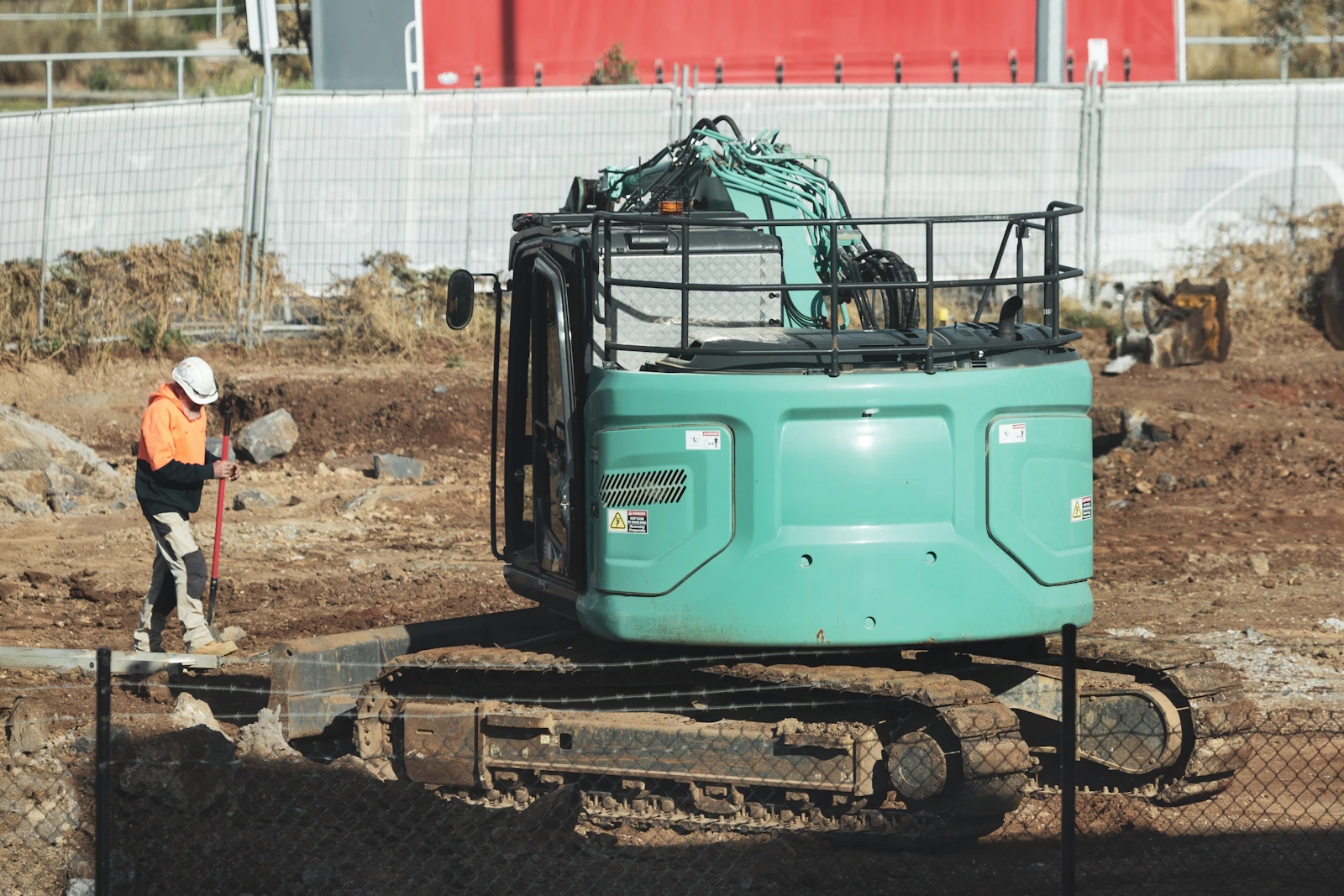
Use this as a practical estimating framework for excavator with grapple equipment hire costs in Sacramento land clearing. Adjust for your actual class, term, and contract language (especially shift caps and off-rent rules).
For Sacramento excavator with grapple hire, the fastest way to control cost is to eliminate avoidable redeliveries, weekend overbilling, and return-condition disputes.
From a trade/rental manager perspective, damage waiver selection is a financial decision. Paying 12%–18% on a $7,000 rental ticket can look expensive—until you compare it to a single grapple hose failure, a smashed grapple cylinder guard, or undercarriage damage in stump fields. If you decline the waiver, confirm your internal insurance can handle: (1) rented equipment physical damage coverage, (2) attachments listed as scheduled or blanket, and (3) whether your deductible (often $1,000–$5,000) makes the waiver a cheaper risk transfer for short-term land clearing.
Documentation is the other lever. Clear check-in/check-out photos and meter readings are often the difference between a $0 closeout and a backcharge for “missing teeth” or “excess mud.” In Sacramento’s shoulder seasons, when parcels can turn soft after storms, it is common to see additional cleaning and track condition scrutiny; preempt that with documented return condition.
This article focuses on dry equipment hire costs, but you should still run a quick comparison if your land clearing schedule is tight or your crew lacks grapple experience. If your dry hire rate plus overtime/overage is creeping up—especially when you are paying for possession days due to rain, access restrictions, or utility locates—an operated package can be cost-competitive because you pay for production rather than possession. The decision point often shows up when you expect: (a) frequent repositioning in tight spaces, (b) heavy log handling with higher damage exposure, or (c) a need to finish inside a 2–3 day window that would otherwise force long shifts and overtime proration.
Dust control: During Sacramento’s dry season, dust-control requirements (project specs, local agency requirements, or neighbor constraints) can force reduced travel speed and watering cycles. While not a line item on the excavator rental contract, it changes utilization: you may keep the machine longer to complete the same volume of clearing. Plan a schedule contingency of 10%–20% on rental term if dust-control slows cycle times, especially on decomposed granite or dry topsoil.
Heat impacts: Summer heat can reduce operator pace and increase idle time. If your contract bills by possession with shift caps, idle still counts. Consider negotiating weekly/4-week terms early to avoid expensive day-rate extensions.
Access and soft ground: Levee-adjacent or irrigated parcels can require mats or a more appropriate machine class. If you add ground-protection mats, that’s another rental line; if you don’t, you may pay in track damage (budget risk: track pad replacement can be billed at $65+ per pad depending on class and availability).
Benchmarking sanity checks: If a Sacramento quote feels out of family, cross-check against published market references. For example, one Northern California published mini excavator rate shows $325/day, $975/week, and $2,500 per four weeks for a 1.5-ton class machine (note: class/region differs, but the time-multiple structure is informative). National rental cost analysis also reports broad averages such as $719/day, $2,021/week, and $5,108/month for excavator rentals across data points—useful as a reality check when comparing Sacramento bids across size classes.
