

For San Antonio land clearing in 2026, budget excavator with grapple equipment hire as two stacked costs: the base excavator hire plus the grapple (or rotating grapple) attachment hire. For a production-focused land-clearing setup (typically 30,000–50,000 lb class excavator with auxiliary hydraulics and quick-coupler), planning ranges commonly land around $600–$900 per day, $1,500–$2,400 per week, and $3,300–$5,500 per 4-week period for the excavator, then add $250–$450 per day, $650–$1,100 per week, and $1,700–$2,500 per 4-week period for the grapple attachment depending on style and coupler. National fleets (for example, Sunbelt Rentals and United Rentals) and regional independents will quote different structures for delivery, included hours, and off-rent rules, so treat these as 2026 planning allowances rather than a guaranteed price.
| Vendor | Daily Rate | Weekly Rate | Review Score | Website |
|---|---|---|---|---|
| United Rentals | $995 | $3 650 | 8 | Visit |
| Sunbelt Rentals | $975 | $3 600 | 8 | Visit |
| Herc Rentals | $950 | $3 450 | 7 | Visit |
| H&E Equipment Services | $925 | $3 350 | 7 | Visit |
| Texas First Rentals | $895 | $3 250 | 8 | Visit |
2026 San Antonio planning ranges (dry hire, excluding tax, fuel, and operator):
San Antonio land clearing is rarely a simple day rate. The total equipment hire cost typically swings on (1) machine weight class and undercarriage type, (2) grapple style and coupler compatibility, (3) whether your quote includes any utilization cap (hours included), and (4) the logistics and return-condition rules that determine when billing stops.
For brush and debris handling, many coordinators prefer the 30,000–34,000 lb class because it balances reach and lift without needing specialized hauling in every situation. Stepping up to the 45,000–50,000 lb class can reduce cycle time in heavier cedar, mesquite root balls, and mixed C&D piles, but the monthly hire and trucking exposure generally rise. If the scope includes pulling stumps and loading out with a grapple, the larger class can be cheaper per cubic yard even if the day rate is higher, but only when you keep it productive and avoid hour overages.
Budget the grapple as its own line item. A grapple bucket that matches your coupler (for example, S-style couplers are common in many fleets) reduces changeover time and avoids on-site pin swaps that can burn half a shift. Rotating grapples cost more to hire but can cut labor on sorting and loading by reducing repositioning. If your excavator does not have the correct auxiliary lines (including rotation circuits where needed), you may be pushed into a different attachment or a different base machine, which often costs more than the grapple itself.
For commercial dry hire, it is common to see utilization conventions like an 8-hour day, 40-hour week, and 160-hour four-week month. That matters for land clearing because grapple work can quietly run 10–12 engine hours when crews are trying to beat weather or trucking windows. Plan for overage exposure in your estimate: a common internal allowance is $75–$150 per excess hour (or a prorated fraction of the daily rate), plus additional service costs if you run extended hours for multiple days.
Delivery radius norms and traffic windows: Many San Antonio deliveries price as a base zone inside the Loop or inside a mileage band, then jump to a per-mile charge outside that band. Traffic on I-35 and I-10 can force delivery windows (for example, arrive before 3:00 pm for same-day set) and can trigger re-delivery charges if the site is not ready.
Soil and vegetation: Caliche layers and dense mesquite root balls can increase tooth wear and cleaning time. Consider budgeting replacement bucket teeth at $18–$35 per tooth if damage is billed back, and add an allowance for pressure washing if the machine comes back with packed clay.
Heat and dust control: Summer heat increases idle time for cooling and can lower production. Dust-control requirements on urban infill or near adjacent occupied properties can add non-obvious costs (water, track-out control, and extra cleaning on return).
Example: 2-week land-clearing push on a 1.8-acre tract near the Loop with tight haul-out windows. You schedule a 30,000–34,000 lb excavator plus a grapple bucket for 10 working days, but the machine stays on site over one weekend because pickup is only available Monday–Friday.
Estimated equipment hire subtotal (pre-tax): $6,848. If equipment hire is taxable at your location, add Texas state sales/use tax at 6.25% plus local tax up to a maximum combined 8.25% (commonly 8.25% in San Antonio).
Operational constraints that change the number: If you exceed the included hours (commonly based on an 8-hour day), budget $75–$150/hour overage; if the vendor cannot pick up until Tuesday, you may pay an additional day even if the crew is finished. Photo-document the return condition to reduce cleanup and damage disputes.
Note: If your land clearing plan includes loading out into end-dumps or roll-offs, confirm that your grapple selection can efficiently place material without damaging containers; the wrong grapple can increase load-out time and push you into overage hours even when the daily rate looks good.
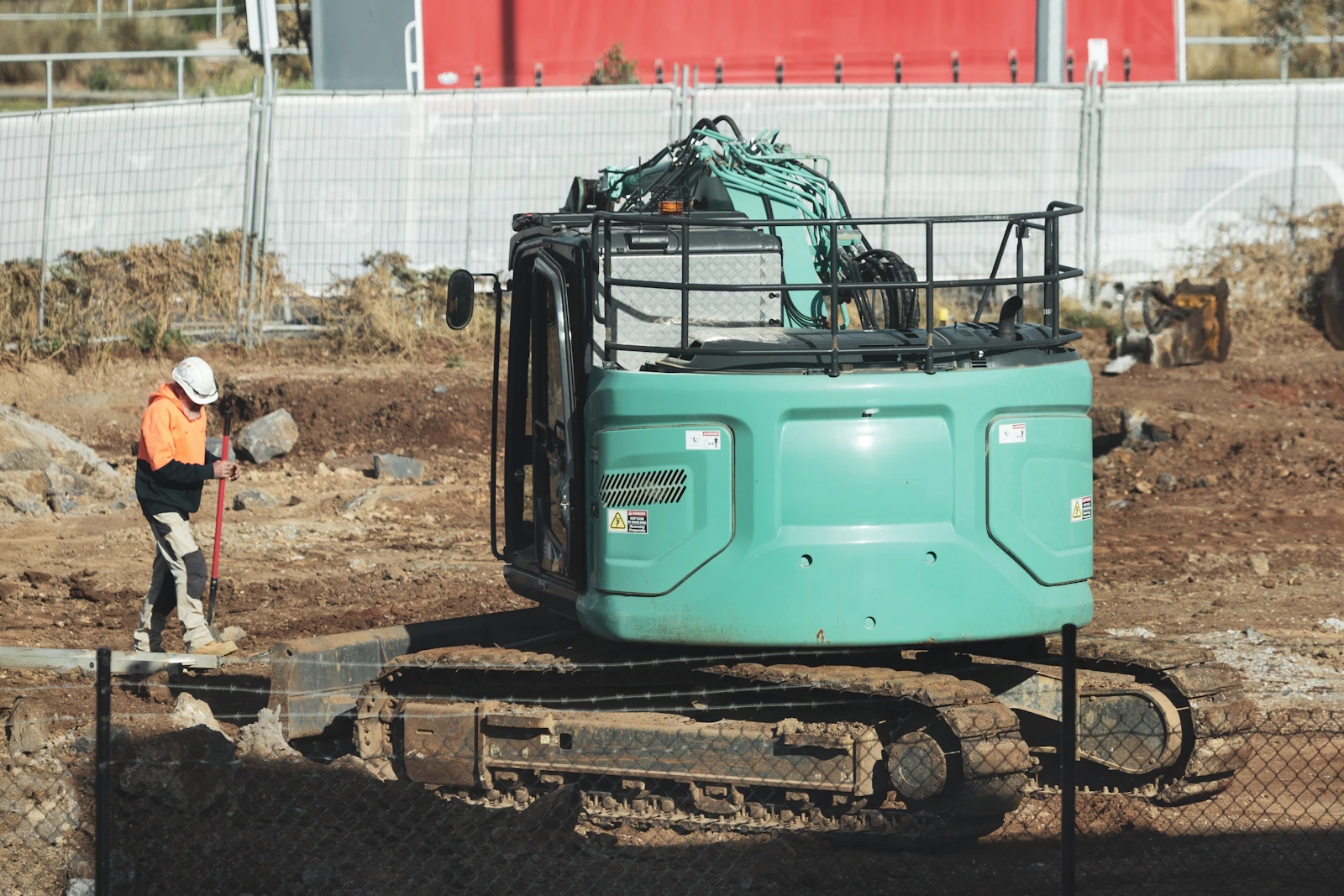
In practice, the lowest quoted day rate rarely wins on land clearing. The winning number is the all-in equipment hire cost per cleared acre after you account for downtime, overage hours, trucking, and return-condition charges. The coordinator levers that move cost the most are scheduling discipline (delivery and pickup), attachment readiness, and avoiding unplanned hold days.
Schedule delivery to match crew readiness: If the excavator arrives before your grapple, you pay for idle iron. If the grapple arrives first, it sits in the mud and can get billed from time-out anyway. For San Antonio sites, request a firm delivery window and confirm whether the branch has a same-day cutoff (for example, order by 10:00 am for afternoon delivery) and whether after-hours arrival triggers a premium (commonly $75–$150).
Stop the meter early with off-rent discipline: Build a closeout step into the superintendent’s daily plan. When the clearing punchlist is complete, call off-rent immediately, then stage the machine for pickup (accessible, cleaned of loose brush, and with photos). Carry a contingency for 1 additional day if pickup is delayed by dispatch, weather, or site access restrictions.
Manage weekend holds: If your rental period crosses a weekend, ask whether Friday pickup (after 2:00–3:00 pm) can be treated as a Monday pickup without additional days. If not, it can be cheaper to schedule work to finish by Thursday and return Friday morning, even if that means adding a second operator for a single day rather than paying 2 idle days of hire.
Not all grapples are priced or used the same way. When you request an excavator with grapple hire for land clearing, specify the grapple’s intended work so the vendor does not dispatch a grapple bucket when you actually need a rotating grapple for sorting and loading. Published grapple bucket examples show pricing in the hundreds per day, while rotating grapples can price higher due to complexity and demand.
Land clearing returns are where invoices inflate. Brush packs into the undercarriage, caliche cakes the tracks, and mesquite thorns end up everywhere. To control cost, budget a 30–60 minute end-of-shift cleanup routine and treat return photos as a required deliverable. If your agreement includes percentage-based cleanup (for example, 10% when returned dirty), the difference between a quick rinse and a dirty return can be material on a multi-week rental.
For many commercial rentals in Texas, equipment hire can be subject to sales/use tax unless an exemption applies. Texas imposes a 6.25% state sales and use tax, and local jurisdictions can add up to 2% for a maximum combined rate of 8.25%. In San Antonio, the combined rate is commonly 8.25%.
Separately, decide whether you are accepting a damage waiver (typically 10%–15% of time charges) or providing your own insurance and contract-compliant COI. If you provide your own coverage, confirm requirements such as waiver of subrogation and additional insured wording early; missing paperwork can delay delivery and cause a paid hold day.
Availability and pricing pressure for excavators and specialty attachments tends to spike during peak earthwork and storm-response periods. If your land clearing schedule is fixed (utility corridor, ROW clearing, or development opening), reserve the grapple and base machine together, and request a substitution ladder (acceptable alternates by weight class) so you do not end up paying premium day rates for last-minute availability. Also plan for heat-driven maintenance windows; a mid-project service event can be less expensive than running to failure and paying for downtime while still on rent.
Bottom line for estimators: For excavator with grapple equipment hire cost planning in San Antonio, your most defensible estimate is a time-charge range plus explicit adders (delivery, waiver, cleaning, fuel, and overage). If you separate those adders as allowances, your forecast variance drops sharply when the job gets compressed or pickup slips.
