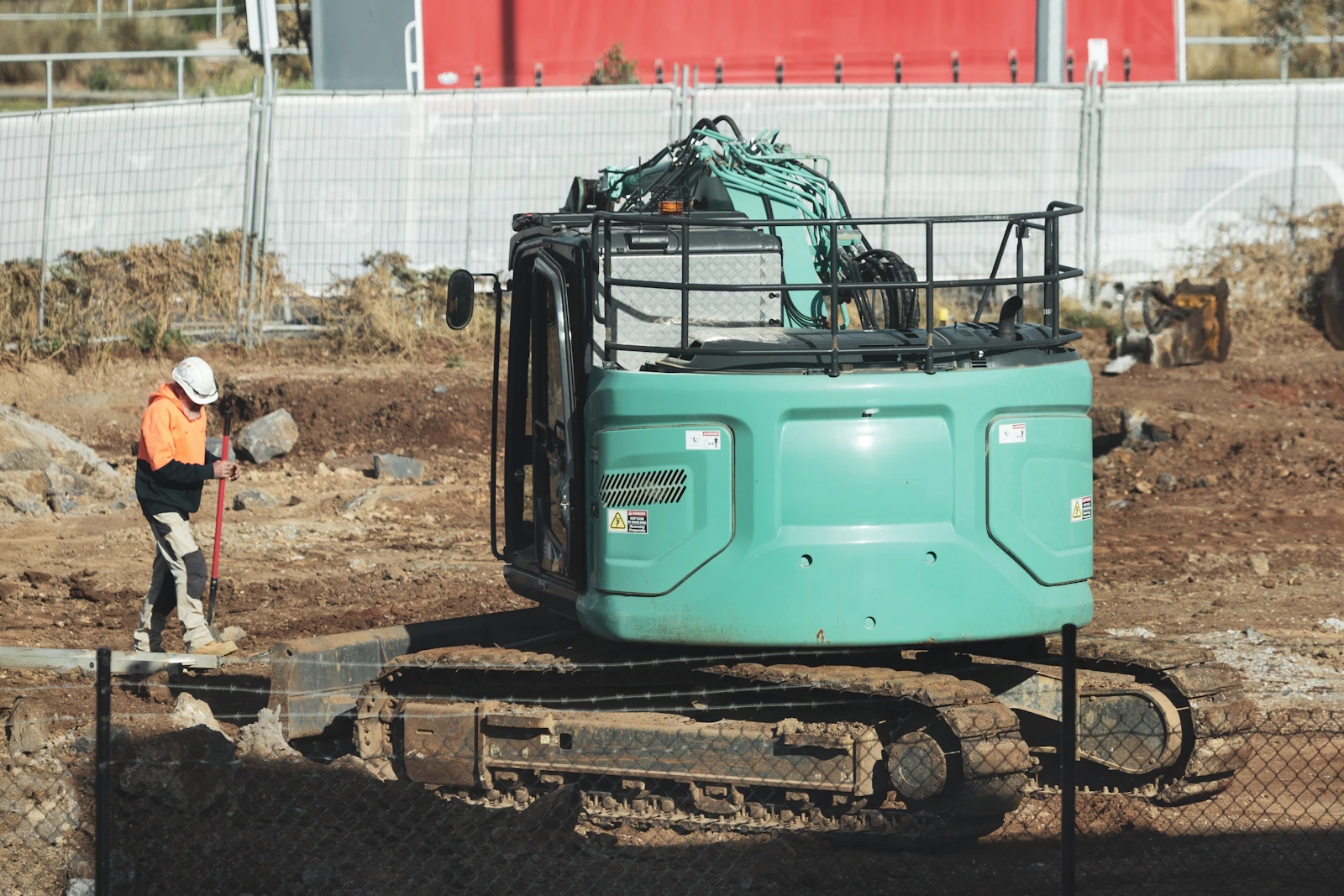
Excavator With Grapple Rental Rates San Francisco 2026
For 2026 planning in San Francisco land clearing, budget excavator with grapple equipment hire in these working ranges (before tax, delivery, and protection plans): a mid-size 14–18 ton excavator typically lands around $750–$1,150/day, $2,800–$4,200/week, and $8,400–$12,500/month (most rental calendars treat a week as ~5 billable days and a month as ~20 billable days). The grapple attachment itself commonly adds $175–$325/day, $650–$1,150/week, and $1,950–$3,300/month, putting combined hire cost ranges near $925–$1,475/day, $3,450–$5,350/week, and $10,350–$15,800/month. Rates vary by machine class (10–12 ton vs 20–25 ton), hydraulic flow needs, emissions tier, and transport complexity into SF. In practice, national houses and local independents (for example, United Rentals, Sunbelt Rentals, Herc Rentals, and Bay Area-heavy independent equipment yards) will quote differently based on availability, credit terms, and delivery constraints into dense neighborhoods.
| Vendor |
Daily Rate |
Weekly Rate |
Review Score |
Website |
| United Rentals |
$950 |
$3 150 |
9 |
Visit |
| Sunbelt Rentals |
$925 |
$3 050 |
9 |
Visit |
| Herc Rentals |
$900 |
$2 950 |
8 |
Visit |
| The Cat Rental Store (Peterson Cat – Bay Area) |
$975 |
$3 250 |
8 |
Visit |
What Drives Excavator With Grapple Hire Pricing for Land Clearing in San Francisco?
San Francisco pricing is rarely just “the day rate.” For land clearing, the most common cost drivers are machine size, grapple type, transport requirements, and jobsite constraints that increase billable time (standby, access limits, off-rent rules). Use the points below to normalize quotes so you can compare true equipment hire costs apples-to-apples.
- Operating weight class and tail swing: A compact 8–10 ton unit may price lower but can underperform on brush piles; a 20–25 ton machine generally increases hire cost and transport. Zero tail swing and reduced tail models can carry a 5%–15% premium when availability is tight.
- Grapple type and hydraulic requirements: A rotating grapple or high-flow demand can push attachment hire up by $50–$125/day compared with a basic fixed grapple. If the excavator must be equipped with an auxiliary hydraulic kit, expect an equipment configuration premium of $25–$90/day where offered.
- Minimum rental and billing increments: Many yards enforce a 1-day minimum; some enforce a 2-day minimum on specialty attachments. Hourly billing (when available) often uses a 4-hour minimum and converts to full-day after that.
- Weekend and holiday billing: If you take possession Friday and off-rent Monday, some terms count Saturday/Sunday as billable unless you negotiate “weekend free” or establish a clear off-rent timestamp. A common late-off-rent penalty is an extra 1 day charge if notice is not received by the vendor cutoff (often 2:00–4:00 PM local time).
- San Francisco access and staging: Tight streets, limited staging, and steep grades can trigger special delivery planning (smaller tilt-deck, timed delivery windows, flaggers), adding real cost even when the base hire rate is competitive.
Choosing The Right Excavator And Grapple Package (Cost-First)
For land clearing, you’re typically paying for three things: breakout force/reach, grapple control (open/close and sometimes rotate), and cycle time. The cheapest package can become the most expensive if it forces longer rental duration or adds standby due to under-sizing.
- Common planning sweet spot: 14–18 ton excavator with a brush/root grapple for light-to-medium vegetation and debris sorting.
- Heavier clearing: 20–25 ton class is more productive for heavy brush, small stumps, and dense piles, but expect a step-up in monthly equipment hire cost (often $1,500–$3,500/month more than mid-size) plus higher transport.
- Attachment adders you’ll see on quotes: quick coupler $35–$75/day; severe-duty bucket upgrade $20–$60/day; hydraulic thumb alternative $45–$110/day (sometimes less than a grapple, but not a direct substitute for brush handling).
- Wear parts and consumables: cutting edges and teeth are often considered wear; if returned excessively worn or missing, budget $18–$45 per tooth and $120–$350 for edge-related charges depending on bucket width and policy.
Delivery, Mobilization, And Pickup Costs In San Francisco (Lowboy Reality)
Transport is frequently the largest “hidden” line item after the base equipment hire. For an excavator with grapple, assume a lowboy or heavy tilt-deck plus potential access support. San Francisco’s curb regulations, narrow corridors, and timed construction windows can amplify charges versus suburban Bay Area deliveries.
- Typical round-trip delivery/pickup allowance (planning range): $350–$950 for straightforward access within the metro area.
- Single-trip charges: $175–$450 per leg is common; confirm whether the quote is one-way or round-trip.
- Mileage-based delivery: some fleets add $6–$12/mile beyond a base radius (often 10–15 miles).
- After-hours / timed delivery windows: if you require a tight arrival window (e.g., 7:00–8:00 AM) or after-hours, plan an extra $125–$300.
- Access complications: dead-end streets, steep grades, or crane/rigging needs are not typical for excavator delivery, but if required, standby for transport crew can run $95–$165/hour.
- Bridge tolls and incidentals: may be passed through; don’t be surprised by $8–$10 per applicable crossing on top of mobilization (policy varies).
San Francisco-specific considerations: (1) If your site is in congested neighborhoods (SoMa, Mission, North Beach), a smaller delivery truck plus shuttle can add $250–$600. (2) If you need curb occupancy control, include an allowance for traffic control/flagging; even if staffed by your GC, some vendors add coordination fees. (3) Hill starts and tight turning can influence which trailer can safely offload—confirm unloading approach up front to avoid a “failed delivery” fee (often $150–$350 plus re-delivery).
Hidden-Fee Breakdown For Excavator With Grapple Equipment Hire
These are the recurring cost items that move final spend 15%–40% away from the advertised day/week/month number. Lock these down in the rental agreement and your PO notes.
- Damage waiver / rental protection plan: commonly 10%–16% of time-and-material charges (sometimes applied to delivery too—verify). If you decline, you may need higher insurance limits and a certificate naming the vendor as additional insured and loss payee.
- Security deposit / authorization: for new accounts or card-based rentals, plan $500–$3,000 deposit/authorization; for higher-value packages it can be $5,000+ depending on credit.
- Fuel and fluids: units are typically delivered full and must be returned full. If returned short, refuel is often billed at $4.50–$7.50/gal plus a service charge of $25–$75.
- Cleaning: “broom clean” is rarely enough after land clearing. Budget $150–$600 for wash/undercarriage cleaning if returned muddy, with higher charges if invasive plant material needs special handling.
- Grease and pin wear expectations: if the grapple has pins/bushings damaged by lack of greasing, vendors may bill a shop minimum (often $125–$225) plus parts.
- Late return penalties: common triggers are missing the off-rent cutoff time or holding past the scheduled pickup day. A typical late fee is 1/5 of weekly rate per day or a full extra day if held beyond a grace period (often 1–2 hours).
- Meter-based overtime (when specified): some contracts cap usage at 8 hours/day or 40 hours/week. Overage can be billed at $85–$160/hour depending on size class and market.
Land Clearing Work Term: How Duration Changes Your True Hire Cost
Land clearing rarely runs as a smooth, single mobilization. Productivity is constrained by green-waste haul-off, access, dust-control, and inspection holds—each can extend rental duration. In San Francisco, plan for more “calendar days on rent” than “productive days” unless you stage debris removal well.
- Green-waste and debris logistics: if you’re building piles for haul-off, your excavator with grapple may be “on rent” while trucks cycle. One way to control cost is scheduling dedicated loading windows so the excavator isn’t idling for half-days.
- Disposal/tipping allowances (not rental, but directly impacts rental duration): if tipping runs $75–$140/ton and trucks are delayed, the equipment hire duration stretches. Budget operationally so you don’t pay an extra week of equipment hire due to disposal bottlenecks.
- Dust-control: if you must run water trucks or misters, the grapple may need to keep material lower to reduce dust, which can reduce cycle speed. Consider whether an added attachment (e.g., rake) would reduce dust-producing rework.
- Site access windows: if you only get access 9:00 AM–3:00 PM, a day rate may be less economical than weekly if you still hold the machine overnight to keep momentum.
Example: San Francisco Hillside Lot Clearing (Realistic Numbers)
Example: You’re clearing a tight hillside lot near Twin Peaks with constrained access. You select a 16-ton excavator plus grapple for vegetation and debris sorting. You need the machine for 10 working days (two work weeks), but due to trucking limits you expect 12 calendar days on rent.
- Base hire (weekly pricing assumed): $3,600/week for excavator x 2 weeks = $7,200.
- Grapple hire: $900/week x 2 = $1,800.
- Delivery/pickup: hillside/tight access requires timed delivery: $650 round-trip plus $200 timed-window adder = $850.
- Damage waiver: 12% of rental charges (equipment + attachment) = $1,080 (12% of $9,000).
- Cleaning allowance: invasive vegetation and mud: $350.
- Fuel top-off risk: if returned 40 gal short at $6.25/gal plus $50 service = $300.
In this scenario, the “rate card” rental looks like $9,000, but your realistic equipment hire spend plans closer to $10,880–$11,230 once delivery, waiver, and return condition are included. The estimator’s control levers are (a) firm trucking schedule to avoid a third week, (b) confirming weekend billing rules, and (c) pre-agreeing acceptable return condition documentation (photos).
Budget Worksheet (No Tables)
- Excavator base hire allowance: $750–$1,150/day (or $2,800–$4,200/week)
- Grapple attachment hire allowance: $175–$325/day (or $650–$1,150/week)
- Quick coupler (if needed): $35–$75/day
- Severe-duty bucket upgrade (if applicable): $20–$60/day
- Delivery and pickup (round-trip): $350–$950 (add $125–$300 for timed window)
- Site access/failed delivery contingency: $150–$350
- Damage waiver / protection plan: 10%–16% of rental charges
- Deposit/authorization contingency (cashflow, not cost): $500–$3,000+
- Fuel top-off/def fluids contingency: $150–$500 (or $4.50–$7.50/gal if billed by vendor)
- Cleaning and decontamination allowance: $150–$600
- Overtime/meter overage allowance (if capped): $85–$160/hour
- Weekend/holiday billing contingency: 1–2 extra day charges if off-rent timing is missed
Rental Order Checklist (PO, Delivery, Return Requirements)
- Confirm equipment details on PO: excavator class (e.g., 16-ton), tail swing type, emissions tier, aux hydraulics, track type, and grapple type (fixed vs rotating).
- State billing basis: day/week/month structure; confirm whether week equals 5 billable days and month equals 20 billable days.
- Write the off-rent rules into the PO notes: required notice timing (often by 2:00–4:00 PM), weekend billing approach, and pickup scheduling responsibility.
- Delivery requirements: exact address, gate codes, contact name/number, delivery window, unloading area dimensions, grade concerns, and whether a spotter is provided.
- Insurance/waiver: confirm damage waiver percentage (10%–16%) or provide COI meeting vendor limits.
- Meter terms: confirm included hours (commonly 8/day or 40/week) and hourly overage rate ($85–$160/hr if applicable).
- Return condition documentation: require pre-pickup photos of undercarriage, grapple pins, hoses, and cab; document fuel level and any existing damage.
- Refuel/recharge expectations: “return full” and identify vendor refuel pricing ($4.50–$7.50/gal) plus service charge ($25–$75).
- Cleaning expectations: define “acceptable” versus “chargeable” mud/vegetation; confirm cleaning fee range ($150–$600).
San Francisco Cost Controls That Actually Move The Number
- Negotiate weekend terms up front: If your work shuts down weekends, negotiate “non-operating weekend” handling so you aren’t billed 2 extra days for idle time.
- Prevent failed deliveries: In SF, a failed delivery can cost $150–$350 plus re-delivery. Use photos of curb/staging area and confirm trailer type.
- Coordinate dust and debris logistics: Land clearing is schedule-fragile; every extra calendar day can effectively add $925–$1,475 of combined equipment hire cost if you’re on day rates.
How To Compare Quotes Without Getting Surprised Later
When you’re buying excavator with grapple equipment hire for land clearing, the decision should be based on total cost over the work term, not just the day rate. In San Francisco, quote structure differences (delivery model, damage waiver application, included hours) routinely swing total spend more than the spread between two base rates.
- Normalize the time basis: Convert everything to an “effective per billable day” for your planned duration. Example: a $4,000/week quote is effectively $800/day if the week is 5 billable days, but it becomes $667/day if your vendor grants a 6-day week for extended work.
- Confirm whether the grapple is priced as an attachment or a specialty tool: Some vendors apply a higher minimum on specialty attachments (e.g., 2-day minimum) and enforce stricter cleaning/inspection on return.
- Ask how the damage waiver is calculated: If the waiver is 14% and applied to equipment + delivery + environmental fees, it will be materially higher than a 12% waiver applied to equipment only.
- Clarify “day” definition: Some agreements define a day as 24 hours from delivery; others define it as “one calendar day.” If your delivery arrives at 3:30 PM, this matters for billing if you off-rent quickly.
Operational Constraints That Change Real Rental Cost (And How To Plan For Them)
For land clearing in San Francisco, the machine frequently sits while other constraints catch up. If the agreement bills continuously, those constraints become direct equipment hire cost.
- Delivery cutoffs and off-rent timing: If your off-rent call must be in by 3:00 PM and you miss it, you may pay another day even if the excavator never turns a track. Put the cutoff in your foreman’s closeout checklist.
- Indoor/adjacent-to-occupied work: If clearing is near occupied structures (schools, hospitals, sensitive neighbors), dust-control may require slower handling and more precise loading. If you add a water trailer or misting system, plan site space so the excavator doesn’t lose 1–2 hours/day to repositioning.
- Refuel logistics in dense neighborhoods: If you cannot stage fuel, you may pay a mobile fueling premium or lose production. A lost half-day can be a hidden cost equal to $450–$750 of combined equipment hire value depending on your rate basis.
- Heat, elevation, and hydraulic performance (Bay Area microclimates): Higher hydraulic oil temps on long cycle days can reduce performance; if you’re pushing continuous grapple cycles, plan conservative production assumptions so you don’t extend rental by 1–3 days.
Additional Cost Items Often Missed In Land Clearing Equipment Hire
- Environmental and recovery fees: some invoices include an environmental fee of 2%–5% on rental charges.
- Administrative fees: contract/admin/document fees of $10–$35 per contract are common.
- City/jobsite compliance support: If your vendor must coordinate a special drop with limited street occupancy, allow $50–$150 in coordination charges where used.
- Hose/pin damage exposure: Grapple hoses can be vulnerable in brush. If a hose is damaged due to operating conditions, you may see repair costs plus a shop minimum (often $125–$225) and downtime billed as “on rent” depending on terms.
- Service call rates: If you request field service for non-warranty issues (e.g., stuck pin due to lack of greasing), plan $150–$225/hour plus travel (commonly $2.50–$5.00/mile).
When A Different Package Is Cheaper Than An Excavator With Grapple
Staying cost-focused sometimes means changing the equipment mix rather than squeezing the day rate. For lighter brush and tight access, a tracked skid steer with grapple can reduce mobilization cost and simplify SF delivery, but it may extend duration on heavier material. Conversely, if you’re dealing with bigger stumps and heavy sorting, a larger excavator may reduce total days enough to win on total equipment hire cost.
- If access is the limiting factor: A smaller excavator may reduce delivery complexity and avoid a $250–$600 shuttle premium, even if the day rate is slightly higher than expected.
- If productivity is the limiting factor: Upsizing from 16-ton to 22-ton might add $150–$250/day, but if it shortens the job by 3 days, you may save $1,500+ net after delivery and waiver impacts.
Return, Off-Rent, And Documentation: Protecting Your Final Invoice
Most “surprise” charges happen at the end of rent. Tighten these processes and you protect both cost and schedule.
- Photo set at pickup: Take timestamped photos of the undercarriage, cab, counterweight corners, grapple tines, hoses, and quick coupler area. This helps dispute post-return damage claims.
- Fuel and cleanliness confirmation: Record fuel gauge and take a photo. If you can’t refuel to full, agree in writing to vendor refuel pricing (e.g., $6.25/gal + $50 service) so it’s not open-ended.
- Off-rent confirmation number: Get a confirmation number or email and include the exact date/time. Missing cutoff by even 30 minutes can trigger another day depending on policy.
- Weekend handling: If pickup is scheduled Monday, confirm whether Saturday/Sunday are billable. If they are, consider scheduling Friday pickup (even with a $175–$450 pickup leg) if it avoids 2 extra rental days.
2026 Planning Notes For San Francisco Excavator Hire
For 2026 estimating, plan for variability driven by availability, emissions compliance demand, and seasonal workload (utility work, storm cleanup, and peak construction months). Keep your estimate defensible by stating assumptions: tonnage class, grapple type, delivery radius, included hours, and whether you’re using day, week, or month billing. If you need guaranteed delivery into dense SF corridors, the lowest headline rate is often not the lowest total equipment hire cost once timed delivery and failed-delivery risk are included.
Recommended estimating assumptions to state in your bid notes: (1) Week = 5 billable days; month = 20 billable days. (2) Delivery/pickup within 15 miles of vendor yard. (3) Damage waiver at 12%. (4) Cleaning allowance $350. (5) Overage billed at $120/hour if usage exceeds 40 hours/week where applicable.