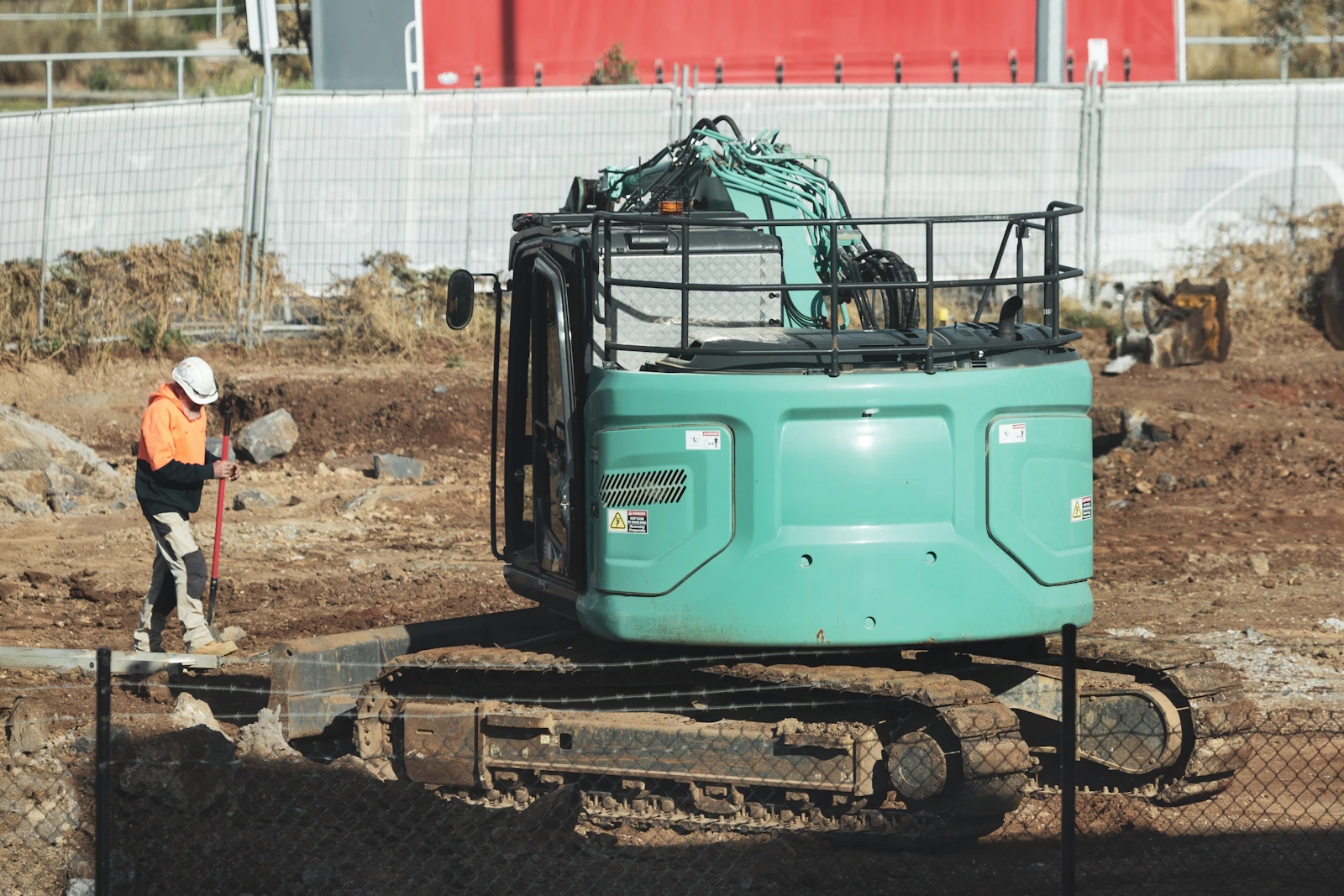
For Seattle land-clearing scopes in 2026, budgeting an excavator with grapple equipment hire typically means carrying both (1) the base excavator dry-hire rate and (2) a grapple (or a higher-capability material-handling attachment) as an adder—plus delivery, waiver/insurance, and return-condition allowances. As a practical planning range for the Greater Seattle market, expect $400–$700/day, $1,400–$2,400/week, and $3,500–$6,500/4-week for a 5–10 ton class excavator suitable for brush, stumps, and sorting; a true rotating grapple commonly adds $200–$450/day depending on size and hydraulic requirements. National suppliers with Seattle-area branches (e.g., United Rentals, Sunbelt Rentals, Herc) and strong local independents can all price competitively, but the real invoice is usually driven by access, transport, and how your off-rent is executed—not just the headline day rate.
| Vendor |
Daily Rate |
Weekly Rate |
Review Score |
Website |
| United Rentals |
$608 |
$1 733 |
9 |
Visit |
| Sunbelt Rentals |
$526 |
$1 514 |
9 |
Visit |
| Herc Rentals |
$827 |
$2 200 |
8 |
Visit |
| EquipmentShare |
$644 |
$1 685 |
9 |
Visit |
| N C Machinery (The CAT Rental Store – Seattle/Tukwila) |
$710 |
$2 120 |
8 |
Visit |
Excavator With Grapple Rental Rates Seattle 2026
Key assumption for the ranges below: dry hire (no operator), standard 8-hour shift billing (where applicable), and a 4-week “monthly” term (some vendors use 28 days). Taxes, consumables, and jobsite damage are excluded unless noted. For land clearing, “excavator with grapple” can mean either a machine equipped with a hydraulic thumb (common on compact/mid machines) or a dedicated grapple (fixed or rotating). Clarifying which attachment you need is the first step to pricing correctly.
Seattle anchor example (published local rate): A Seattle-area branch listing for a 12,500 lb Kubota KX057 excavator shows $430/day, $1,500/week, and $3,500/month, and notes the unit is equipped with a hydraulic thumb. It also shows small bucket adders (e.g., $10/day for certain buckets and $20/day for a cleanout bucket). Use this as a sanity check when building 2026 budgets for similarly sized machines in Seattle.
2026 planning ranges for Seattle excavator hire (base machine only):
- 3–4 ton compact excavator (tight access, light clearing, trenching, small stump removal): $275–$450/day, $900–$1,400/week, $2,400–$3,800/4-week (higher end for cab/heat/low hours).
- 5–10 ton excavator (typical urban land clearing, brush/stump work, loading green waste): $400–$700/day, $1,200–$2,100/week, $3,200–$5,500/4-week.
- 13–25 ton excavator (production clearing, heavier stumps, mass handling, larger sorting): $700–$1,500/day, $2,100–$4,500/week, $5,500–$12,000/4-week plus heavier transport and often higher insurance requirements.
2026 planning ranges for grapple adders (attachment only):
- Rotating excavator grapple (sorting/material handling): plan $350–$450/day, $900–$1,150/week, $1,900–$2,400/4-week when available for your coupler/aux flow; one published rate sheet shows a Rotating Grapple at $400/day, $950/week, $1,950/month.
- General-purpose grapple (commonly stocked for compact loaders; sometimes adaptable): published attachment pricing in the market can be as low as $105/day, $350/week, $1,280/month, but confirm compatibility (hydraulic connections, coupler style, weight class) before you rely on this for an excavator plan.
How to use these ranges for a real Seattle land-clearing estimate: pick the excavator size for production and access first, then add the correct grapple type (thumb vs fixed grapple vs rotating grapple). If you only need to pinch brush and place logs, a thumb may be sufficient and may be included on the machine (as shown in the Seattle example above). If you need to sort, load, and control irregular debris efficiently, rotating grapples (and higher aux flow requirements) typically drive the attachment adder and may push you up a machine size class.
What Drives Excavator With Grapple Hire Cost on Seattle Land-Clearing Sites?
For excavator with grapple equipment hire cost in Seattle, the biggest cost drivers are operational—not marketing:
- Machine class vs access: In Seattle neighborhoods, the cheapest “right size” machine is often the one that fits the work envelope without rehandling. A 5–10 ton unit can be the best cost/production point, but if you’re constrained by a narrow gate, steep driveway, or limited staging, you may be forced into a 3–4 ton class and add days.
- Attachment hydraulic requirements: Rotating grapples can require additional circuits and flow. If the branch can’t supply a matched grapple, you can lose time (or be forced into a different coupler package).
- Forestry guarding / land-clearing configuration: Cab guarding, belly pans, and debris screens can carry higher day rates and, more importantly, tighter damage rules. In practice, this often increases your damage-waiver spend and return-condition scrutiny.
- Ground conditions: Seattle rain cycles and saturated soils can increase undercarriage cleaning time and track damage risk. That tends to translate into higher cleaning fees or a stricter “return clean” standard.
- Staging and haul routes: Short deliveries inside a typical metro radius are one cost model; ferry moves, constrained downtown delivery windows, or long-mileage mobilization are another.
Attachment Pricing: Grapple vs Hydraulic Thumb vs Buckets
Because you specified an excavator with grapple rental in Seattle for land clearing, treat the attachment as a separate line item unless your supplier explicitly confirms it’s included.
- Hydraulic thumb (often included on the machine): Some local listings show the excavator already equipped with a thumb, which can eliminate a separate “grapple” line for basic grabbing.
- Thumb as a priced option (not always included): Some published rate structures price a hydraulic thumb as a small daily adder (example: $22.80/day, $45.60/week, $137.75/month for a thumb on a 45,000 lb class excavator in one price sheet). Use this to validate that “thumb included” is not universal.
- Rotating grapple (true sorting): Expect higher adders; one published attachment rate shows $400/day, $950/week, $1,950/month. This is typically justified by productivity on sorting piles and controlling irregular loads.
- Bucket adders and tooth wear: Even when “one bucket included,” extra buckets are commonly billed. A Seattle listing shows $10/day adders for certain buckets and $20/day for a cleanout bucket. Carry a wear allowance too (common internal budgeting is $8–$15 per tooth if your scope is rocky or you’re prying stumps).
Estimator tip: If the rental counter describes the attachment as a “grapple,” ask whether it’s a thumb, a fixed grapple bucket, or a rotator. The difference can be several hundred dollars per day, and the wrong attachment can add 1–2 extra rental days in rehandling time—far more expensive than paying for the correct grapple.
Delivery, Mobilization, and Access Costs Around Seattle
Delivery is where Seattle invoices often diverge from the initial quote—especially for land clearing where the machine is heavy, the site is constrained, and you need a specific drop orientation.
- Typical structure (published example): one widely used pricing format is a flat charge per way plus a mileage rate, e.g., $120 each way plus $3.25 per loaded mile. Budgeting example: 18 loaded miles each way would be about $178.50 each way (120 + 18×3.25) or roughly $357 round trip, before any access complications.
- Seattle access and waiting time: carry a trucking waiting-time allowance such as $75 per 30 minutes if the driver is held at a gate, needs escorting, or can’t reach the pad due to parked cars or soft shoulder.
- Downtown / constrained neighborhoods: you may need a smaller truck, timed deliveries, or a traffic control plan. A practical allowance is $150–$350 for special delivery handling, plus any flagging you already carry under your general conditions.
- Ferry / out-of-core moves: if your “Seattle” job is actually across water (Bainbridge, Vashon) or deep into the peninsula, treat delivery as a separate quotation: it can easily add $300–$900 to mobilization once waiting time and routing are included.
Hidden-Fee Breakdown
For land clearing excavator grapple equipment hire, these are the most common “invoice expanders” to carry explicitly on the PO. (The specific wording varies by supplier; the cost impact is consistent.)
- Damage waiver / rental protection: budget 10%–18% of the base rental (machine + attachment), depending on class and your account terms. This is often applied daily and capped; confirm whether it applies to attachments.
- Insurance spend: if you’re not covering the supplier’s requirements via certificate, some market guidance puts insurance adders in the $50–$100/day range for certain equipment rentals. Treat this as a budget placeholder until your risk team confirms.
- Fuel / return-full policy penalties: carry a refuel allowance even if you plan to return full. Some policies can charge a service fee (example: $75) plus a punitive fuel price approach if returned short.
- Cleaning fees (undercarriage, cab, grapple): plan $150–$450 if you’re working in wet ground or clay. Land clearing often triggers extra debris removal from the quick coupler and stick area.
- Environmental / admin fees: common budgeting allowances are 2%–5% of rental charges.
- Minimum rental charges: even if you only run 3–4 hours, you may still pay a full day. Carry a 1-day minimum assumption unless your contract states otherwise.
Billing Rules That Change the Invoice (Hours, Off-Rent, Weekends)
Two customers can rent the same excavator with grapple at the same day rate and end up with invoices that differ by 20%–40% because of billing rules:
- Included run hours and overage: many programs treat “day” as 8 engine hours, “week” as 40 hours, and “4-week” as 160–200 hours. If your land-clearing plan is a 10-hour day, carry an overage allowance such as $35–$85 per hour (machine class dependent).
- Off-rent cutoffs: many Seattle-area branches require a morning cutoff (commonly around 10:00 a.m.) for same-day off-rent. Missing the cutoff can add another billable day, even if the machine is parked.
- Weekend/holiday billing: a “weekly” rental is often 7 calendar days, not 5 working days. If you take delivery on a Thursday for a Monday-start, you can accidentally pay for idle weekend days unless you negotiate delivery timing.
- Late return: carry a late-return contingency such as 25% of the daily rate per hour beyond a short grace period, with a full-day charge after a longer threshold (policies vary). The cost impact is real on congested Seattle pickups.
Example: Seattle Land-Clearing Takeoff (Dry Hire) With Real Constraints
Example scope: clear and sort brush/limbs and small stumps on a tight residential lot in North Seattle, with limited street staging and a strict delivery window (deliver 7:00–9:00 a.m.). You need control for debris sorting into a roll-off and to stack salvageable logs.
- Equipment plan: 5–6 ton excavator with thumb (or grapple) + rotating grapple if sorting productivity is critical.
- Base excavator hire budget: assume $1,500/week × 2 weeks = $3,000 (anchored to a published Seattle-area 12,500 lb weekly rate; adjust up/down by class).
- Rotating grapple adder budget: assume $950/week × 2 weeks = $1,900.
- Delivery/pickup allowance: budget $360–$650 round trip depending on miles and waiting; a published structure is $120 each way + $3.25/loaded mile (your mileage will vary).
- Damage waiver allowance: 14% of rental charges (machine + attachment) ≈ $686 on $4,900.
- Cleaning allowance: $250 (wet soil + brush fines packed into tracks).
- Overtime allowance: 6 hours of run-hour overage at $55/hour = $330 if the crew runs two 10-hour days.
Planning subtotal (before tax): roughly $6,526 on this example once you carry realistic delivery, waiver, cleaning, and overage allowances. The takeaway for equipment managers: the base rental line ($4,900) is often only ~70%–80% of the expected invoice for land-clearing conditions.
Budget Worksheet
Use the following as a fast PO-ready budgeting artifact for excavator with grapple equipment hire costs in Seattle (no tables):
- Base excavator rental (size class: ___ ton): allowance $___/day or $___/week for ___ weeks
- Grapple attachment (fixed or rotating): allowance $200–$450/day or $900–$1,150/week
- Hydraulic thumb (if not included): allowance $25–$75/day
- Additional bucket adders (e.g., grading/cleanout): allowance $10–$25/day
- Delivery & pickup (round trip): allowance $350–$900 (include waiting-time risk)
- Damage waiver / rental protection: allowance 10%–18% of rental subtotal
- Insurance compliance costs (if applicable): allowance $50–$100/day
- Fuel/DEF and refuel penalties contingency: allowance $150–$400
- Cleaning/undercarriage: allowance $150–$450
- Run-hour overages (if >8 hrs/day): allowance $35–$85/hour for ___ hours
- Ground protection mats (if required): allowance $15–$35 per mat/week + delivery $250–$450
- Return-condition photo documentation/admin time: allowance 0.5–1.0 hr internal time
Rental Order Checklist
- Confirm dry hire vs operated hire on the PO (and who supplies the operator if applicable)
- Machine class, make/model acceptable, and whether thumb is included
- Attachment specifics: grapple type (fixed vs rotating), coupler type, aux hydraulics, hose routing
- Quoted term: day/week/4-week; clarify whether “week” is 7 calendar days
- Included hours and overage rate; document $___/hour in writing
- Delivery address, drop orientation, surface type, and delivery window constraints (Seattle street parking plan)
- Certificate of insurance requirements (limits, additional insured, waiver options)
- Refuel/recharge expectations (return full; DEF expectations if applicable)
- Off-rent process: cutoff time, how to request pickup, and when billing stops
- Return condition documentation: start/end photos, hour meter, attachment serials, existing damage notes
2026 Planning Notes for Excavator With Grapple Equipment Hire in Seattle
Seattle land-clearing demand is seasonal and weather-sensitive, which shows up in both availability and the “soft costs” around hire. In practice, you can protect your budget by controlling three things: (1) when you take delivery, (2) what you specify for attachments, and (3) how you execute off-rent.
- Lead time and substitution risk: if you need a true rotating grapple, carry a contingency for either (a) a different coupler package or (b) stepping up a machine class. A reasonable Seattle contingency is $150–$300/day for a class step-up when the exact configuration is not in the yard.
- Heat/rain impacts on productivity: wet conditions slow sorting and increase cleanup. A practical cost allowance is an extra 0.5 day of rental per week of sustained rain for small residential sites where trucks can’t stage efficiently.
- After-hours and Saturday logistics: if your schedule forces pickup outside normal windows, carry an after-hours logistics allowance such as $150–$250 per event (site access, gates, escort, and driver waiting time).
Cost Controls Specific to Seattle Access and Documentation
On Seattle infill sites, cost control often comes down to “admin in the field”:
- Photo the undercarriage at pickup and return: it reduces disputes that can otherwise turn into a cleaning fee ($150–$450) plus downtime.
- Control mud and fines before loading out: a 20-minute end-of-shift track clean can prevent a larger cleaning charge and reduce trailer deck cleanup requirements.
- Document attachment condition: grapple tines, pins, and hose guards should be photographed. Budget for hose damage exposure anyway: field-repair events can run $250–$600 depending on routing and fittings.
Additional Hire Adders Common on Land-Clearing Rentals
If you’re hiring an excavator with grapple for land clearing, these adders are common and should be carried as allowances even when not quoted up front:
- Debris guarding / forestry package: allowance $75–$175/day if available and required by your safety plan.
- Wide tracks / low ground pressure configuration: allowance $50–$125/day when specified.
- Spill kit / environmental compliance kit: allowance $25–$60/week if billed as a consumable or kit rental.
- Locking fuel cap / key control devices: allowance $10–$25/week when used to reduce theft risk on street-adjacent sites.
- Stump and root work wear contingency: carry $200–$500 per month equivalent for teeth, pins, and bushing wear if you’re prying and twisting in rocky fill.
When a Track Loader + Grapple Might Beat Excavator + Grapple on Hire Cost
Some Seattle land-clearing packages (especially brush removal and loading into trucks) can be cheaper with a compact track loader and grapple because the loader can shuttle and load faster in tight footprints. However, excavator + grapple usually wins when you must pull stumps, reach over obstacles, or work on slopes where you need controlled placement. If you’re unsure, request both budgets and compare “all-in invoice” drivers: delivery, waiver, and cleaning are often similar, while productivity differs.
Closeout Guidance: Off-Rent Without Paying Extra Days
- Schedule off-rent 24 hours ahead: reduces the chance you miss a cutoff and pay an extra day.
- Return full fuel and remove debris from the grapple/coupler: reduces refuel/cleaning fees and speeds inspection.
- Capture hour meter and final condition photos: protects against run-hour overage disputes.
- Confirm when billing stops: some programs stop billing when off-rent is called in; others stop when the machine is physically picked up. Get this in writing to avoid a surprise 1–3 extra days on congested pickup routes.
Bottom line for Seattle equipment managers: the most reliable way to budget excavator with grapple equipment hire costs is to treat the invoice as (base rate) + (attachment adder) + (delivery) + (waiver/insurance) + (return-condition). Carrying explicit numeric allowances for each component will produce POs that match reality on land-clearing jobs.