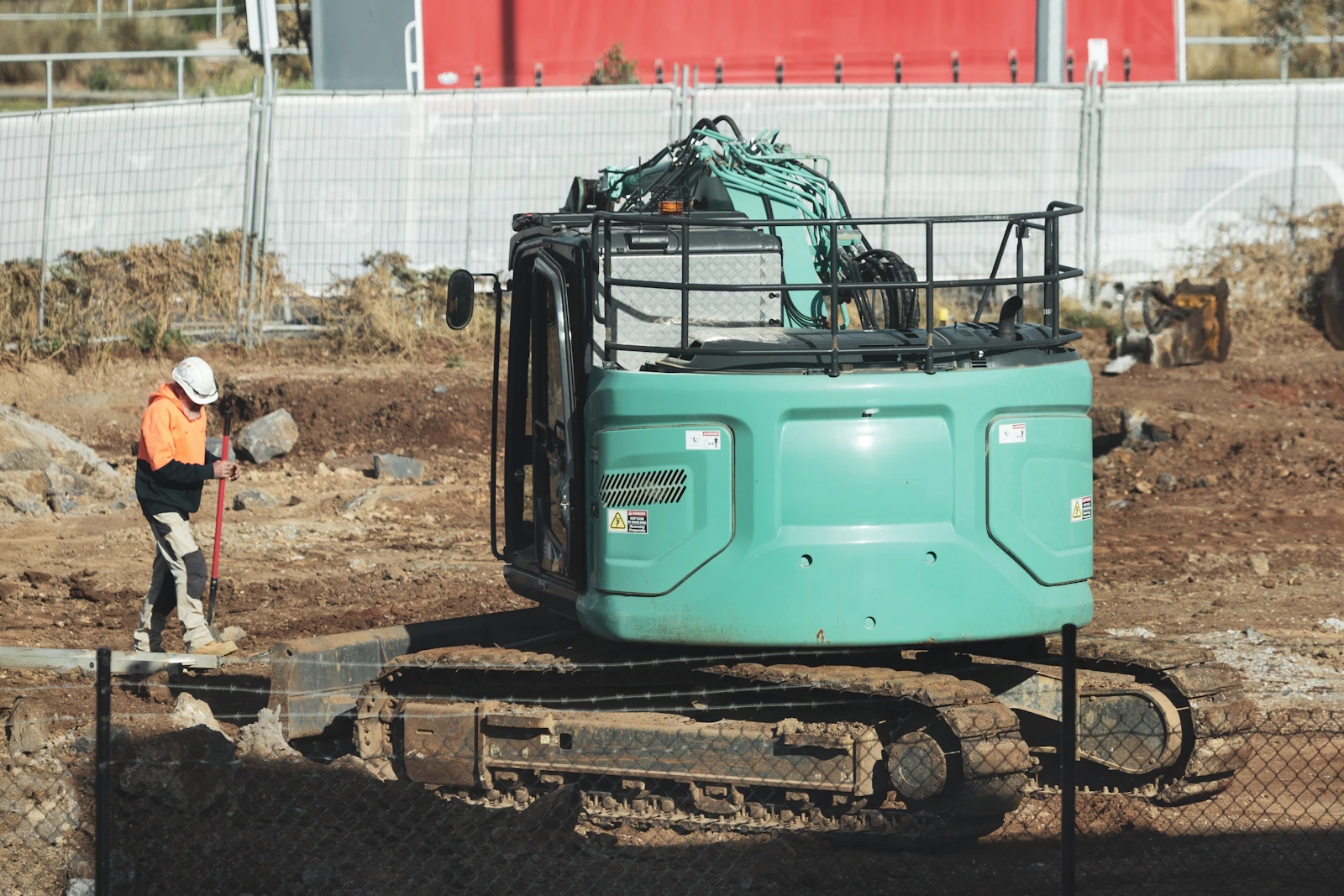
Excavator With Grapple Rental Washington Land Clearing
For Washington, DC-area land clearing scopes in 2026, plan budgetary equipment hire ranges (single shift, attachment included, excluding fuel, transport, and protection products) of $450–$700/day, $1,600–$2,400/week, and $3,900–$6,500 per 28-day month for compact mini excavators with a light-duty grapple; $650–$1,000/day, $2,200–$3,200/week, and $5,400–$8,400 per 28-day month for mid-size minis/small excavators with a rotating grapple; and $850–$1,350/day, $2,750–$3,950/week, and $6,200–$10,000 per 28-day month for 18K–35K class excavators paired with a production grapple for brush, logs, and demolition sorting. These planning ranges reflect how DC metro pricing typically tracks above many non-urban markets once delivery constraints, off-rent rules, and damage-waiver selections are applied. In practice, most rental coordinators will quote from the same handful of major branches (for fleet depth and service coverage) plus well-run independents for specialty grapples and short-notice support.
| Vendor |
Daily Rate |
Weekly Rate |
Review Score |
Website |
| United Rentals |
$800 |
$2 400 |
10 |
Visit |
| Sunbelt Rentals |
$760 |
$2 250 |
7 |
Visit |
| Herc Rentals |
$780 |
$2 300 |
8 |
Visit |
| Carter Rental – The Cat Rental Store (Carter Machinery) |
$820 |
$2 450 |
8 |
Visit |
| EquipmentShare |
$750 |
$2 200 |
8 |
Visit |
Published Benchmarks for Excavator and Grapple Hire (Use as Pricing Anchors)
When you are building a Washington, DC equipment hire budget, it helps to anchor your estimate to at least one published rate sheet (even if the branch you ultimately use is different). One published schedule shows a 30–34K hydraulic excavator at $622.25/day, $1,596.00/week, and $3,367.75/month (single shift pricing in that schedule).
For the grapple side, a published excavator attachment rate sheet lists a rotating grapple at $400/day, $950/week, and $1,950/month.
Those two published numbers illustrate a key estimating reality: on short-term hires, a rotating grapple can be a material portion of the daily burn (often similar to, or in some cases more than, the base machine on smaller classes). If you are pricing an excavator with grapple equipment hire package for land clearing, always carry the attachment as its own line item in the estimate (even if the vendor bundles it), because that is where substitutions, availability issues, and damage exposure tend to concentrate.
Compact excavator benchmarks can also be pulled from published local-style listings. One mini excavator listing shows $320/day, $1,280/week, and $3,200/month for a roughly 6,300 lb class unit (8 work-hours included per 24-hour period per that listing).
Finally, it is useful to note what a rotating grapple can look like at smaller classes: one attachment schedule lists a rotating grapple at $210/day, $800/week, and $2,395/month for specific mini excavator fitments, and also lists non-rotating grapple bucket/root/tine style units at $195/day, $700/week, and $1,995/month.
What Affects Excavator With Grapple Equipment Hire Cost in Washington, DC?
Washington, DC land clearing pushes pricing upward for reasons that do not always show up in a simple day/week/month quote. The cost drivers below are the ones that most often change your total equipment hire spend (and your risk) on grapple work.
- Excavator weight class and undercarriage configuration. A published tracked-excavator schedule shows day rates stepping from $400/day for an 8K class excavator up to $700/day for a 30K class excavator and higher for larger classes. Those class steps often correlate to transport class, jobsite access, and productivity, so you should treat them as scope-altering choices, not just rate differences.
- Grapple type (rotating vs fixed) and duty rating. Rotating grapples are typically quoted separately (example published: $400/day rotating grapple) and may carry higher damage exposure and wear expectations on demolition sorting and log handling.
- Auxiliary hydraulics and interface items. For a grapple-ready excavator, confirm high-flow/aux plumbing, case drain (if required), coupler style, and whether the grapple is pin-on or quick-coupler compatible. Interface mismatches cause last-minute swaps and expensive down-time.
- Term definition and meter-hour caps. Many providers price “daily” as a 24-hour period but cap included run time (commonly an 8-hour production shift). Overage policies are where DC overtime and weekend work can materially change your bill.
- Site constraints unique to the DC metro area. Tight curb space, staging limits, and the need to keep sidewalks/lanes open often force (a) smaller classes with longer duration, or (b) larger classes with higher transport complexity and stricter delivery windows. Either path can raise total hire cost versus a simpler suburban greenfield clearing job.
Hidden-Fee Breakdown
To keep an excavator with grapple equipment hire quote “apples to apples,” carry the following as explicit estimate allowances. The goal is not to assume every fee will hit, but to prevent budget surprises when operations (delivery windows, off-rent timing, or return condition) do not match the rental house’s default assumptions.
- Delivery and pick-up charges. Published examples show transport priced as $120 each way + $3.25 per loaded mile on a schedule (common structure: flat + mileage).
- Alternative transport models (flat + per-mile, bundled). One listing shows delivery priced as $100 + $4 per mile and states it includes both delivery and pick up (confirm if that is truly round-trip and how mileage is measured).
- Move charges on operated equipment. A Washington, DC metro operated-equipment schedule shows excavator move charges such as $500 for a Cat 326 and $600 for certain dozers, with notes that some moves are quoted individually.
- Damage waiver / loss damage waiver (LDW) vs insurance binder. Some providers require an insurance binder for equipment rentals (excluding certain attachments). Budget an LDW line as a percentage allowance if you are not providing a certificate of insurance that satisfies the rental contract.
- Fuel, DEF, and return condition. At least one rental policy example explicitly requires refueling and topping off DEF prior to return; if you do not meet this, budget a refuel service charge plus fuel at the vendor’s posted rate.
- Cleaning and undercarriage washout. For grapple land clearing, carry a cleaning allowance (typical estimator carry: $150–$350) when you expect mud packing, vines, wire, or trash in the undercarriage. (Allowance figure is a planning assumption; confirm local branch policy.)
- Wear items and grapple teeth. Some attachment schedules note that wear charges may apply to certain items (important for brush/forestry-adjacent work where wear is expected).
- Weekend/holiday billing rules and overtime. One DC metro operated-equipment schedule states overtime is charged after 8 hours per day and on Saturdays, Sundays, and holidays.
- Hydraulic thumb as a lower-cost alternative. If your “grapple” requirement is actually material handling rather than true sorting, note that a published schedule shows a hydraulic thumb as low as $22.80/day, $45.60/week, and $137.75/month in that schedule (class-specific).
Right-Sizing the Grapple Package for Land Clearing (Cost Versus Production)
For land clearing in Washington, DC, grapple selection should be tied to your disposal plan and trucking rhythm, not only to the clearing means and methods. In estimating terms: the grapple is not just an attachment cost; it is a cycle-time multiplier.
- Brush and light timber (sorting to truck or roll-off). A compact excavator with a fixed grapple bucket (or a hydraulic thumb) can be cost-effective if the primary task is picking and placing rather than continuous sorting. Use this approach where access constraints prevent a larger machine and where debris can be staged without re-handling.
- Mixed demo debris and log handling. A rotating grapple generally reduces “re-grabs” and improves placement into high-sided containers. Published rotating grapple rates (examples: $400/day on one sheet and $210/day on another sheet) show why this choice must be made early: it changes the daily cost materially.
- Stump and rootball handling. Confirm whether you need a rake, frost bucket, or stump splitter wedge in addition to a grapple. Bundled rental packages can look cheaper than line-item pricing, but they often shift costs into wear charges and cleaning expectations.
Example: DC Metro Infill Lot Clearing With Delivery Constraints (Real Numbers)
Scenario. You are clearing an infill parcel in the Washington, DC metro area with limited laydown, a single gate, and a requirement to keep a shared driveway open during business hours. You need an excavator with a rotating grapple for one production week and expect the machine to run near a full shift daily.
Planned equipment hire (1 week). Use a published benchmark of an 18K–25K tracked excavator at $1,800/week and a rotating grapple at $950/week, for a combined base hire of $2,750/week (single shift).
Transport allowance. Carry transport as a separate line even if quoted “included.” Using an example transport structure of $120 each way plus mileage at $3.25 per loaded mile, and assuming 15 loaded miles each way, the allowance is $240 flat plus $97.50 mileage (total $337.50).
Run-time overage exposure. If your contract day includes an 8-hour run-time cap (common structure), budget a contingency for overtime work or overage billing if the crew pushes beyond the cap to catch a truck window or avoid weekday staging conflicts. (Confirm the specific provider’s meter-hour rules before issuing the PO.)
Return condition allowance. Because grapple work often drags soil, vines, and wire, carry a cleaning allowance of $250 plus a small hardware/wear allowance of $75 for pins/retainers/teeth issues discovered at off-rent inspection (planning assumptions; finalize once the branch confirms policy).
Budget check. A realistic “week-one” equipment hire budget for this scope is often $3,400–$4,200 all-in after transport, waiver/insurance selections, and return-condition outcomes are finalized, even when the base week rate looks closer to $2,750.
Budget Worksheet
Use the following estimator-style line items (no tables) when you build an equipment hire budget for an excavator with grapple in Washington, DC.
- Excavator base hire (select class): allowance $1,200–$3,750/week depending on weight class and spec (rubber tracks, zero-tail, aux hydraulics).
- Rotating grapple attachment hire: allowance $800–$950/week (confirm fitment and rotation requirements).
- Optional hydraulic thumb (if used instead of grapple): allowance $23–$46/week on schedules where thumb is a separate line (class-specific).
- Delivery and pick-up: allowance $240–$800 total depending on distance and windowing (carry as flat + mileage when applicable).
- Access control and ground protection: allowance $200–$1,000 for mats/plates, plus handling time (critical in DC curb-space and landscaped setbacks).
- Damage waiver / insurance compliance: allowance 10%–18% of base hire if required (planning assumption; verify with vendor and your risk manager).
- Fuel and DEF: allowance $150–$450/week depending on idle time, travel on site, and refuel plan (carry more in winter idle or summer heat where operators may idle for cab comfort).
- Cleaning/undercarriage: allowance $150–$350 at return (planning assumption).
- Standby / redelivery risk: allowance $250–$750 if deliveries are likely to miss cutoffs due to DC traffic or site not being ready (planning assumption).
Rental Order Checklist
Before you release a PO for excavator with grapple equipment hire (Washington, DC land clearing), ensure the rental order packet is complete and defensible.
- PO and contract controls: PO references equipment class, grapple type (rotating or fixed), included buckets, included hoses/couplers, and any wear-charge language.
- Insurance / binder: confirm whether an insurance binder is required for the machine and whether the attachment is excluded.
- Delivery window and site readiness: confirm delivery cutoffs, required contact names, and whether the carrier can access the gate without blocking lanes.
- Transport pricing model: confirm whether transport is flat, mileage-based, or bundled; capture the exact formula (example structures are published as $120 each way + $3.25/loaded mile, or $100 + $4/mile on some listings).
- Run-time caps and overage rules: confirm daily included hours and the overage calculation method; do not assume calendar-day means unlimited run time.
- Off-rent process: document who is authorized to call off-rent and how same-day pickups are handled if the site cannot hold equipment overnight.
- Return condition documentation: require time-stamped photos of grapple, coupler/pins, cylinder rods, track condition, and meter reading at off-rent to support disputes.
- Fuel/DEF expectations: confirm refuel and DEF top-off requirements prior to return.
How Rental Terms and Meter Caps Change Your Equipment Hire Total
For Washington, DC land clearing, the fastest way for an excavator with grapple equipment hire budget to go sideways is misunderstanding what “a day” means in the rental contract. A published rental FAQ provides a clear example of how many branches structure terms: a 24-hour day with an 8-hour run-time limitation, a 7-day week with a 40-hour limitation, and a 4-week period with a 160-hour limitation. That same policy example states over-usage fees can be billed at one-quarter of the day rate per hour, and that running over 4 hours beyond the included amount can trigger an additional day of rent.
For rental coordinators, this means you should budget DC infill clearing with at least one of the following controls in place:
- Define shift strategy in advance. If the excavator will be used only for loading trucks during a short daily window, you can often stay under meter caps even if the rental is on site for multiple calendar days.
- Coordinate trucking and grapple work to reduce idle. Grapples encourage operators to keep working (continuous sorting), which can unintentionally push meter hours above included thresholds.
- Plan for weather and site holds. If the machine sits but stays on rent due to schedule uncertainty, you may pay full hire while receiving partial utilization.
Delivery Windows, Curb Space, and Off-Rent Rules in Washington, DC
Washington, DC is a high-friction delivery environment compared with suburban land clearing. Even when your branch rate is competitive, total equipment hire cost is shaped by delivery timing, access, and the paperwork required to avoid re-delivery and standby charges.
- Traffic and delivery cutoffs. DC-area congestion and restricted laydown often force narrower delivery windows. If your site is not ready, you can incur a second mobilization or rescheduling fees. One operated-equipment schedule explicitly notes that rentals under 10 hours may be charged for two moves (in and out), which is a reminder to verify how the vendor treats short-duration, high-logistics deliveries.
- Move charges within the DC metro area. A DC metro operated-equipment listing shows move charges such as $500 for a Cat 326 and $500 for certain mini excavators; it also indicates some items are quoted individually. Use these published move figures as a reasonableness check when you receive a transport quote that seems out of pattern.
- Round-trip delivery formulas. If you are renting from a smaller yard, you may see simpler formulas like $100 + $4 per mile that claim to include both delivery and pickup; ensure the radius is measured from the correct yard and whether the per-mile is one-way or round-trip.
- Off-rent documentation. For grapple work, the condition at off-rent is as important as the duration. Require photo documentation of the grapple rotator (if present), cylinder rods, and coupler interfaces at pickup to avoid “damage discovered in yard” disputes.
Operated Versus Bare Equipment Hire: DC Reality Check
On many Washington, DC land clearing scopes, “excavator with grapple” is procured as operated equipment rather than bare rent, especially where site safety and production control matter more than lowest day rate. A DC metro equipment provider publishes excavator hourly rates (including operator) such as $150/hour for a mid-size excavator class and $190/hour for a Cat 326 class, and also states overtime is charged after 8 hours per day and on weekends/holidays.
Estimating guidance: if your scope is short, logistically complex, or requires an experienced operator to safely sort material into high-sided containers, an operated rate can reduce overall cost risk by consolidating responsibility for competent operation, daily checks, and (often) basic consumables. However, you must carry (a) move charges, (b) minimum-hour requirements (example shown: 4-hour minimum in the same conditions list), and (c) standby billing when site conditions prevent work.
Ways to Reduce Excavator With Grapple Hire Costs Without Sacrificing Production
Cost control on excavator with grapple equipment hire is mostly operational discipline. The following tactics are the ones that typically move the needle in DC, where access and delivery timing can dominate the total.
- Right-size the machine class to the haul plan. If you are loading 10–20 yd containers from a single position, a smaller excavator with a rotating grapple may be cheaper than mobilizing a larger excavator that requires more complex delivery and ground protection.
- Use a thumb when you do not need true sorting. If your scope is pick-and-place of brush piles rather than continuous sorting, check whether a hydraulic thumb line item is available and priced as a small adder (example published: $22.80/day class thumb).
- Schedule delivery and off-rent around DC constraints. Pre-book a delivery window, and issue an off-rent notice the moment production ends. The goal is to avoid paying for a weekend on rent because pickup could not be scheduled.
- Control meter hours. If your vendor applies 8-hour caps, plan staffing so the excavator is working when trucks are ready, not idling while the crew is prepping. Overage billing can be punitive (example policy: one-quarter of day rate per hour).
- Return it clean and documented. Grapple jobs attract cleaning and damage disputes; photos and basic wash-down reduce chargebacks and admin time.
Ownership Versus Hire (Land Clearing Use Case)
Ownership can beat hire when utilization is steady and the grapple is used daily across multiple projects, but it is rarely a clean win in the Washington, DC market unless you can keep the machine working and control transport. Equipment hire remains cost-effective when:
- you need a specific grapple configuration occasionally (rotating vs fixed) and do not want to carry attachment inventory,
- you need to scale up quickly for a clearing window,
- you benefit from vendor service capacity during critical path work, or
- you want to avoid idle capital during permitting delays and seasonal work stops.
2026 Planning Notes for Washington, DC Equipment Hire Budgets
For 2026 planning, use a 28-day month convention in your internal budget (many rental quotes treat “month” as 4 weeks) and keep transport as a separate, auditable line item. Also, do not assume published rates are fixed: at least one rental FAQ explicitly states that rates are subject to change and that delivery and pick-up are not included by default.
Practical close-out advice for DC land clearing: reconcile meter hours weekly, confirm off-rent in writing, and match delivery invoices to the agreed formula (flat + mileage). That process discipline is often worth more than chasing a slightly lower day rate, because it prevents the common cost leakages that occur on grapple work: extended on-rent due to pickup scheduling, meter-hour overages, and return-condition chargebacks.