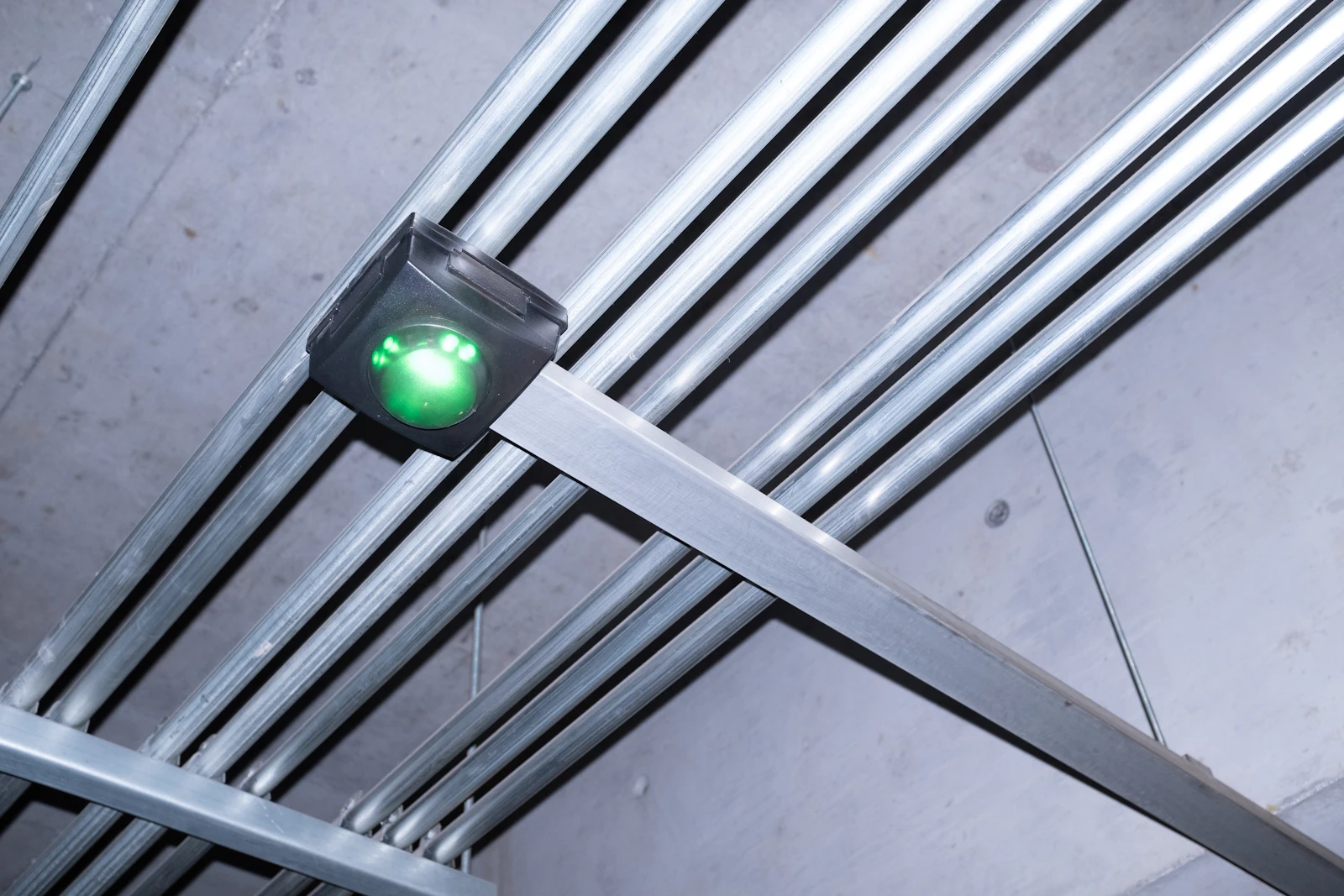
Laser Level Rental Rates Los Angeles 2026
For Los Angeles tile-flooring scopes in 2026, plan laser level equipment hire budgets around three practical tiers: (1) basic red-beam cross-line laser hire at $25–$45/day, $90–$160/week, $240–$420/4-weeks; (2) interior 3x360 green-beam laser level rental for layout at $40–$75/day, $140–$260/week, $380–$690/4-weeks; and (3) rotary/grade laser kits with receiver for longer corridors and control lines at $60–$125/day, $200–$395/week, $550–$895/4-weeks. These are 2026 planning ranges assuming normal wear, contractor account terms, and one-shift use. In LA, coordinators commonly source laser levels through national rental houses (e.g., United Rentals, Sunbelt, Herc) or big-box tool rental for short-duration needs, then normalize totals with delivery constraints, protection plans, and accessory adders. Note that many rental systems treat “monthly” as a 4-week (28-day) rate.
| Vendor |
Daily Rate |
Weekly Rate |
Review Score |
Website |
| United Rentals |
$79 |
$175 |
9 |
Visit |
| Sunbelt Rentals |
$88 |
$245 |
6 |
Visit |
| Herc Rentals |
$59 |
$208 |
8 |
Visit |
| The Home Depot Tool Rental |
$57 |
$171 |
8 |
Visit |
What You Are Actually Hiring For Tile Flooring (And Why It Changes Cost)
“Laser level” gets quoted loosely. For tile flooring, the cost driver is usually the beam configuration and mount kit, not the body only. Interior tile crews typically need a visible, stable reference for: straight runs off control lines, consistent reveals at transitions, level perimeter lines for wainscot, and checking substrate flatness before setting. That pushes most commercial tile packages toward self-leveling cross-line or 3-plane (3x360) lasers rather than a builder’s optical level.
Operationally, paying more for the right laser often reduces rework: one missed reference line on a 2,500 SF floor can cost more than a week of laser level hire when you include demo, patch, reset, and schedule impact. In Los Angeles, that risk is amplified by night-shift/occupied-tenant work and compressed elevator windows in mid-rise/high-rise projects.
2026 Hire Cost Ranges By Laser Type (Use These In Bid-Level Budgets)
Use the following ranges to build consistent “apples-to-apples” equipment rental budgets across LA tile flooring projects (especially when different foremen request different brands):
- Cross-line (2-line) red-beam laser level rental: $25–$45/day; $90–$160/week; $240–$420/4-weeks. Best for small restroom floors, backsplashes, and short wall runs where visibility is manageable.
- 3-plane 3x360 green-beam laser hire (tile layout friendly): $40–$75/day; $140–$260/week; $380–$690/4-weeks. Best for corridor control lines, full-unit floors, consistent door undercuts, and wall tile plumb references.
- Rotary laser level kit hire (with receiver): $60–$125/day; $200–$395/week; $550–$895/4-weeks. This is the “long throw” option—useful for long corridors, exterior podium decks, or when you need receiver-based reference instead of line visibility.
Benchmark data points you can use to sanity-check quotes: one published rotary laser kit rate sheet shows $125/day, $395/week, $895/4-weeks (with a 4-hour minimum). Another published general laser level package shows $57.01/day, $171.01/week, $399/4-weeks (rates vary by region, but the week-to-day and 4-week-to-week ratios are typical).
Accessory Adders That Move Total Hire Cost (Tripods, Poles, Receivers)
Tile-flooring laser level rentals fail in the field when the package is missing the right mounts. Avoid “cheap body / expensive scramble” by budgeting the accessories up front:
- Tripod hire: allow $5–$15/day; $15–$45/week; $45–$120/4-weeks (varies by head type and quick-release quality).
- Laser receiver (if not included): allow $15–$35/day; $45–$95/week. Receiver inclusion is common on rotary kits but inconsistent on line lasers.
- Grade/rod story pole: allow $8–$20/day; $25–$60/week (especially if you are tying elevations across multiple rooms).
- Fine-adjust wall bracket / magnetic mount: allow $6–$18/day; $20–$50/week for commercial-grade brackets that hold calibration in vibration/foot traffic.
- Spare battery pack and charger kit: allow $10–$25/day; $30–$70/week if the unit is expected to run continuously during layout and setting.
LA-specific note: if the job requires elevator travel and repeated setup/tear-down, the “micro accessories” become real cost items—plan for at least 1 spare mount and 1 spare battery so the crew is not idling during freight-elevator reservation windows.
Hidden-Fee Breakdown For Laser Level Equipment Hire In Los Angeles
Most disputes on small-tool rentals are not about the base day rate—they are about add-ons and cutoffs. For LA tile flooring, build these into your estimate notes so the PM understands why a “$45/day laser” can invoice at $180+.
- Minimum rental term: commonly 4 hours for some specialty items (example published rotary laser listing shows 4-hour minimum).
- Delivery and pickup (if you are not picking up): allow $45–$125 per trip inside LA County depending on branch distance, parking constraints, and requested windows. If the site is in DTLA or Hollywood with limited loading, add a $25–$60 “driver wait/parking” allowance.
- After-hours / time-window delivery: allow $75–$150 when the site only accepts 6:00–7:00 a.m. or night deliveries.
- Damage waiver / rental protection plan: commonly 10%–15% of time charges for small tools (varies by vendor and account structure). Use it selectively—especially for multi-crew sites where chain-of-custody is weak.
- Cleaning fee: allow $25–$85 if returned with thinset haze, grout dust infiltration, or concrete slurry on the case/mounts.
- Calibration or “out-of-tolerance” event: allow $95–$250 if a drop impact requires service and the unit fails a check. (This is the most common surprise charge on lasers.)
- Missing components: allow $15–$45 per missing small item (target plate, bracket knobs, case inserts), and $120–$300 for a missing receiver depending on model.
Rules That Change Billable Days: Off-Rent Cutoffs, Weekend Billing, And Late Returns
For planning in Los Angeles, assume that off-rent is not retroactive: the meter starts when it leaves the yard (or is delivered) and stops when the branch processes the return (not when your crew “stops using it”). If you are trying to avoid weekend billing, coordinate a return that meets the branch cutoff—often a morning cutoff on Mondays. If your crew is working extended shifts, confirm whether the agreement includes only one-shift use; some national rental terms define a standard shift as 8 hours/day, and excess use can be billable at an hourly fraction of the base rate (e.g., 1/8 of the daily, 1/40 of the weekly, 1/160 of the 4-week) under certain contracts.
Practical LA tip: if the site is far from the branch in traffic (Westside to East LA, or valley-to-downtown), schedule pickup/return with enough buffer to avoid an accidental extra day. A “stuck on the 101” late return can cost more than the delivery fee you were trying to avoid.
How Los Angeles Job Conditions Push Laser Level Hire Costs Up Or Down
Even though laser levels are small, LA jobsite logistics can create big percentage swings in equipment hire cost. Plan for these location-driven drivers when you build tile flooring budgets:
- Downtown LA high-rise access: freight elevator reservations often run in 30–60 minute blocks, and many buildings require COI submission 24–72 hours ahead of delivery. Missed windows create paid standby and can extend rental days.
- Parking/loading constraints: where a truck cannot stage legally, add a realistic $25–$60 allowance for parking/wait time or escort labor for hand-carry.
- Heat and storage: in summer, vans can exceed safe storage temps. If the laser has a published operating range (example listing shows up to 122°F), still avoid leaving it baking in the cab—heat cycling can increase calibration drift and re-check time.
Example: Tile Flooring Laser Level Rental Costed Like A Real Order (With Constraints)
Example: 10-working-day tenant-improvement tile flooring scope, 18th floor in DTLA. Crew needs a 3x360 green-beam laser plus a backup unit for parallel layout while setting, with one tripod and one wall bracket. Delivery must hit a 6:00–7:00 a.m. loading window, and the building requires a COI.
- Primary 3x360 green laser: allow $220/week x 2 weeks = $440
- Backup cross-line laser: allow $130/week x 2 weeks = $260
- Tripod: allow $25/week x 2 = $50 (published catalogs show tripods can be as low as $15/week; LA often runs higher due to demand and quality level)
- Wall bracket: allow $35/week x 2 = $70
- Spare battery kit: allow $45/week x 2 = $90
- Time-window delivery fee: allowance $125
- Pickup fee: allowance $95
- COI/admin processing allowance: $25
- Damage waiver: assume 12% of time charges (time charges here = $440 + $260 + $50 + $70 + $90 = $910) → $109
- Cleaning allowance: $40 (thinset/grout dust risk)
Budgeted hire total (pre-tax): $440 + $260 + $50 + $70 + $90 + $125 + $95 + $25 + $109 + $40 = $1,304. The key point: the base lasers ($700 of the $1,304) are only about 54% of the budget once you cost real LA access and risk. If the return misses cutoff and adds 1 extra day at $55 plus a weekend, the overrun can exceed the delivery fee you tried to avoid.
Budget Worksheet (Estimator-Friendly, No Surprises)
Use this bullet worksheet to build a consistent “laser level equipment hire” allowance into Los Angeles tile flooring estimates (adjust quantities to crew count and phasing):
- Laser level (3x360 green) rental: ____ weeks at $____/week (allow $140–$260/week)
- Backup laser level (cross-line) rental: ____ weeks at $____/week (allow $90–$160/week)
- Tripod: ____ weeks at $____/week (allow $15–$45/week)
- Wall bracket/magnetic mount: ____ weeks at $____/week (allow $20–$50/week)
- Receiver (if needed): ____ days at $____/day (allow $15–$35/day)
- Grade/story pole (if needed): ____ days at $____/day (allow $8–$20/day)
- Spare battery/charger kit: ____ weeks at $____/week (allow $30–$70/week)
- Delivery: $____ (allow $45–$125 per trip)
- Pickup: $____ (allow $45–$125 per trip)
- Time-window / after-hours logistics: $____ (allow $75–$150)
- Damage waiver / rental protection plan: ____% of time charges (allow 10%–15%)
- Calibration / out-of-tolerance contingency: $____ (allow $95–$250)
- Cleaning contingency: $____ (allow $25–$85)
- Missing-component contingency (receivers/targets/knobs): $____ (allow $30–$150)
Rental Order Checklist (PO, Delivery, Return Documentation)
- Confirm laser type (cross-line vs 3x360 vs rotary) and indoor/outdoor visibility requirement for tile flooring layout.
- PO must state: on-rent date/time, off-rent intent date/time, and whether weekends/holidays are billable.
- Delivery instructions: exact address, on-site contact, loading dock rules, elevator reservation, and gate/entry codes.
- Request “kit list” in writing: laser body, case, charger, batteries, bracket, tripod, receiver, target plate, and any rod/pole.
- At delivery: photograph contents in the case and record serial numbers (prevents missing-component disputes).
- Verify function: self-leveling lock works, beam brightness, receiver pairing (if applicable), and mount threads are not stripped.
- Dust-control requirement: if floor grinding is happening nearby, specify that the laser must be stored in the case between shots and kept out of silica dust zones (reduces cleaning and failure claims).
- Return condition: wipe down, remove thinset/grout dust from seals, pack all accessories into the case inserts, and photograph the packed kit.
- Off-rent procedure: call/email off-rent notice, get confirmation number, and confirm branch cutoff to stop billing.
Cost Control Notes Specific To Tile Flooring Crews
- Don’t overbuy accuracy: tile layout needs repeatable lines more than long-distance grade accuracy. If you’re not shooting elevations across long distances, a rotary kit may be unnecessary cost.
- But don’t underbuy visibility: if you’re working under bright temporary lighting and reflective tile, green-beam lasers reduce layout time. Paying an extra $20/day to save 30 minutes/day across a 3-person crew is usually net-positive.
- Chain-of-custody matters: lasers are high-theft, easy-to-walk items. If multiple subs share a gang box, use a sign-in/out log and budget a damage waiver accordingly.
Why “Associated Charges” Matter Even On Small Tools
Some national rental providers publish associated-charge structures that apply across categories—transport surcharges, cleaning charges, and defined shift-rate rules. For example, one major provider describes a transportation surcharge with a fixed component of 9% (or a minimum of $9) plus a variable fuel component, and also describes standard shift entitlements of 8 hours/day, 40 hours/week, 160 hours/4-weeks, with excess billed as fractional hourly charges. This is a reminder to read the agreement terms even on a “simple” laser level hire.
Ownership Vs. Hire (Quick 2026 Decision Rule For LA Tile Contractors)
If your tile crews run a 3x360 laser on most jobs, ownership can win quickly—provided you have controls for theft and calibration. A practical LA decision rule: if the crew would rent the same class of laser for 10–14 weeks/year (or if you routinely pay delivery/pickup and time-window fees), ownership often beats hire. If you only need it for punch phases or occasional corridor layout, hire remains the cleaner option because it externalizes calibration drift, damaged mounts, and missing accessory replacement.