

Laser Level Rental Rates in Seattle (Daily/Weekly) — 2026 Costs

Price source: Costs shown are derived from our proprietary U.S. construction cost database (updated continuously from contractor/bid/pricing inputs and normalization rules).
Profile image of author
Eva Steinmetzer-Shaw
Head of Marketing

Laser Level Rental Rates Seattle 2026

For Seattle door installation crews, budget laser level equipment hire in 2026 by package type and jobsite constraints (pickup vs. delivery, accessory completeness, and off-rent timing). As a planning range: (1) interior cross-line / plumb-dot laser packages typically land around $25–$45/day, $85–$150/week, and $250–$450/4-week hire when sourced through local tool counters; (2) rotary laser w/ receiver packages commonly budget $45–$85/day, $149–$240/week, and $271–$477/month for standard “laser level package” and “pipe/grade” kits published on Washington schedules; and (3) premium rotary / construction laser kits (higher durability/accuracy, or contractor kit bundles) can run $98–$125/day and $294–$395/week, with four-week pricing commonly budgeted up to about $895. These ranges are consistent with published WA equipment rate schedules and current rental listings, but your exact Seattle branch pricing will still depend on account terms, availability, and whether the kit includes tripod/rod/receiver. For procurement, most crews in Seattle end up sourcing through national rental fleets (United Rentals, Sunbelt, Herc) plus regional independents (Star Rentals) and tool-rental counters when same-day pickup matters.

Vendor Daily Rate Weekly Rate Review Score Website
United Rentals $65 $215 9 Visit
Sunbelt Rentals $65 $220 9 Visit
Herc Rentals $63 $210 8 Visit
The Home Depot Tool Rental (West Seattle #8944) $59 $175 9 Visit
Star Rentals (Kent, WA – Seattle metro) $60 $200 10 Visit

Source rate examples used for 2026 planning: WA schedule “Laser Level Package” $26/day, $85/week, $271/month and “Laser Level – Pipe Grade Kit” $47/day, $149/week, $477/month; rates listed as expiring 3-31-2027.

Additional rate examples used to set the upper band: a rotary laser level shows $125/day, $395/week, $895/four-week with a 4-hour minimum; a bundled laser kit shows $98/day and $294/week plus a $75 deposit and a stated $74 minimum; and a rental listing for a Spectra LL300N shows $56.25/day, $131.25/week, $375/month.

Which Laser Level Hire Package Fits Door Installation Work?

Door installation layout typically needs level reference across the head, plumb reference for jamb legs, and a repeatable line for hardware alignment across a run (e.g., a corridor retrofit or multi-unit turnover). The lowest total equipment hire cost in Seattle generally comes from selecting the lightest package that still avoids rework:

  • Cross-line / plumb-dot laser hire (interior): best when you’re setting prehung doors, verifying rough opening plumb/level, and aligning strike/hinge locations. In cost terms, this usually avoids the adders for receivers and grade rods.
  • Rotary laser hire w/ receiver (mixed indoor/outdoor): used when you need consistent reference beyond line-of-sight (receiver), longer distances, or when ambient light washes out an interior beam near glazing. Expect higher hire cost and more “kit completeness” risk (missing clamps/receiver/rod creates day-two scramble charges).
  • Pipe/grade kit hire: usually unnecessary for standard door installation, but it can show up on mixed scopes (site access ramps, slab transitions, exterior thresholds) where a crew wants one instrument to cover both access and interiors.

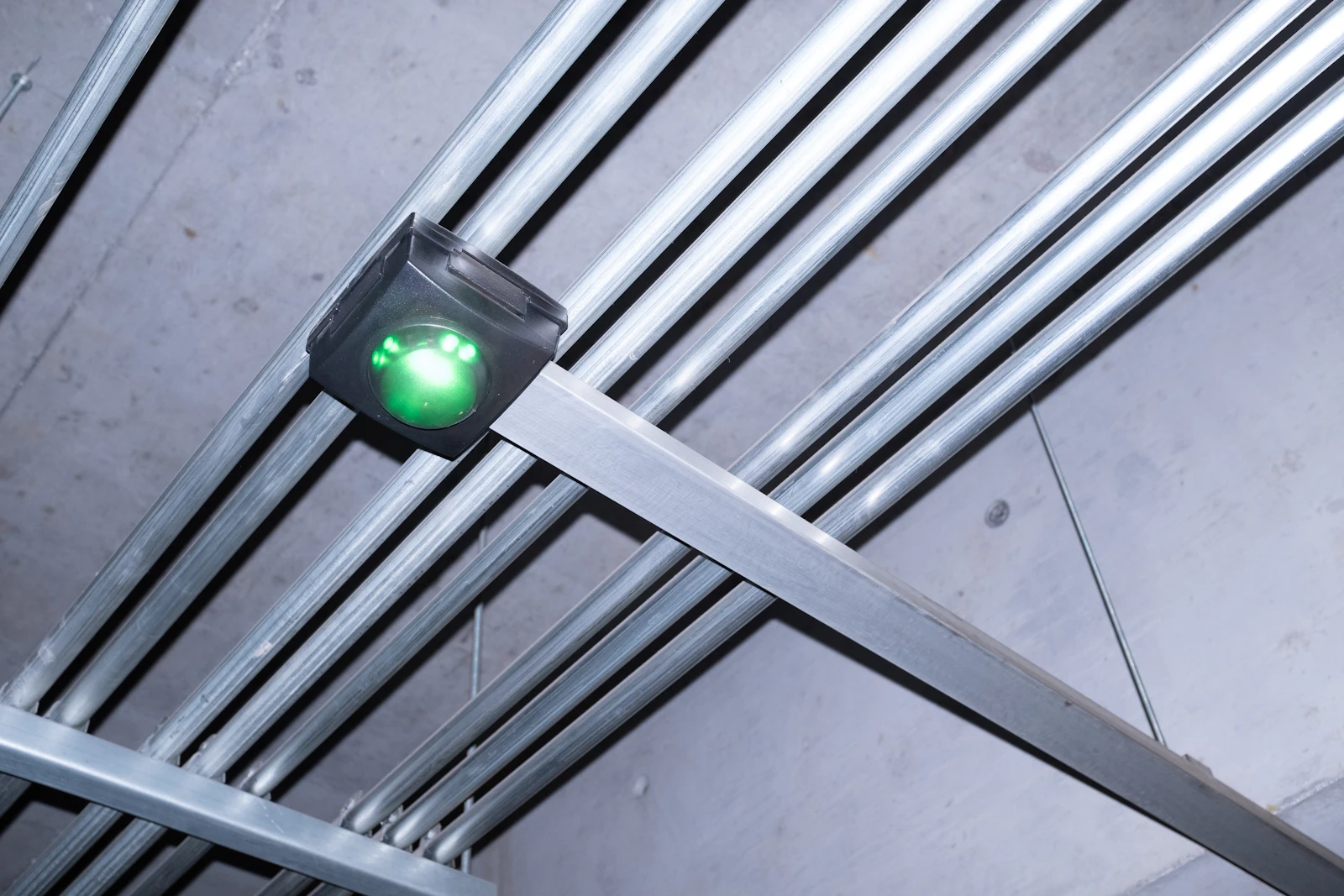
Seattle-specific note: green-beam lasers can be a practical spend in Seattle’s darker winter interiors and in high-glare storefront retrofits, but they often land in the “premium kit” price tier. If the work is predominantly tenant improvement inside conditioned space, confirm whether a lower-cost red-beam interior laser will meet production needs before you approve the higher day rate.

What Drives Laser Level Equipment Hire Costs in Seattle?

Laser level hire pricing looks simple on paper (day/week/month), but the invoice usually moves based on accessory decisions and jobsite logistics. For door installation, the major cost drivers are below.

1) Kit Completeness (The Fastest Way to Blow the Budget)

Most rental disputes for laser levels aren’t about the base day rate—they’re about what the branch considers “included.” A “laser level package” may include tripod/rod/receiver, while an “interior laser” may not. Published listings explicitly show packages that include common accessories (sensor/receiver, tripod, rod/stick).

When you’re estimating Seattle laser level equipment hire costs for door installation, budget the accessory adders even if you intend to pick up a bundled kit:

  • Tripod hire adder: $8–$18/day or $25–$60/week (allowance, varies by branch and tripod class).
  • Laser pole / clamp kit: $6–$15/day (especially useful in finished spaces where tripod legs create trip hazards).
  • Receiver/rod combo adder (if not in kit): $15–$35/day.
  • Target cards / brackets: $2–$6/day.

2) Rental Clock Definitions (4-Hour Minimums, 24-Hour Days, and 4-Week “Months”)

Laser level rentals are often billed as a minimum term and then a day/week/month ladder. In the field, that means you can pay a “day” for what was operationally a two-hour door layout session if pickup/return timing isn’t managed. Examples in published listings include a 4-hour minimum and a half-day listing priced as $40 for 4 hours, with a “full day” defined as a 24-hour keep time and a monthly term shown as 4 weeks.

Estimator implication for Seattle: If your crew will be in a downtown core building with restricted loading (common morning-only windows), assume you may lose the ability to “same-day return” and should budget at least one full day, even if the laser is only needed for a partial shift.

3) Delivery, Access, and Downtown Seattle Friction Costs

Laser levels are small, so many teams default to pickup. In Seattle, pickup is often the least-cost path because delivery can trigger secondary costs that aren’t obvious on a small-tool rental:

  • Delivery / pickup minimum charge: commonly $75–$150 each way as a planning allowance (varies by fleet routing and minimum ticket policies).
  • Downtown parking / loading costs: $40–$80/day can be real if your crew needs paid parking or a commercial loading zone plan to avoid citations.
  • Building logistics: allow 30–60 minutes of labor for freight-elevator coordination, badge-in, and package screening (this is labor, but it is a predictable “rental clock” driver because missed windows create extra days).

If you must deliver, require a delivery window commitment in writing (e.g., “before 9:00 AM”) and clarify whether the vendor will call 30 minutes out. Seattle high-rises often turn “delivery” into a staged handoff at a loading dock, and your team can still eat internal handling time that extends the rental term.

4) Risk, Loss, and Damage Waiver Adders

Laser levels are high-theft, high-misplacement items because they move between rooms quickly on door scopes. For planning, carry these common equipment hire cost adders on Seattle projects:

  • Damage waiver / rental protection: often budget 10%–15% of rental charges (confirm whether it covers theft or only accidental damage).
  • Security deposit / authorization: $75–$300 depending on vendor/tool class; some listings show a $75 deposit for a laser kit.

  • Missing component charges: $25–$120 each for clamps, brackets, or chargers as a practical allowance (these are the items that disappear).
  • Replacement exposure: $300–$2,000+ depending on laser class and whether a receiver/rod is part of the kit (treat as a risk contingency if you’re in an unsecured remodel environment).

5) Calibration and “As-Found” Condition

For door installation, you may not need a formal calibration certificate, but you do need the instrument to be accurate. Budget a potential calibration check / recert fee of $45–$95 if your client requires documentation or if the branch flags the unit for out-of-tolerance upon return. Also plan for a cleaning fee (commonly $15–$50) if the kit returns with drywall dust embedded in the case foam or if adhesive/paint overspray lands on lenses.

Operationally, treat the laser as “return-clean.” Some rental contracts require equipment to be returned in the same condition and place responsibility on the renter to wash/clean prior to return; written language like this appears in published equipment rental contract terms.

Hidden-Fee Breakdown for Laser Level Equipment Hire

Use this section to keep Seattle laser level hire costs tight on door installation packages—these are the line items that most often show up after the base rate:

  • Minimum rental / minimum spend: examples include a $74 minimum on a laser kit listing.
  • Partial-day billing: half-day pricing like $40/4 hours can be available, but only if you can return inside the window.
  • Late return penalty: budget 1 extra day if returned after cutoff; add a $25–$60 after-hours/lockbox processing allowance where applicable.
  • Weekend billing: many branches treat Friday afternoon pickup as a multi-day weekend charge unless you have a contractor weekend program; carry a 2-day weekend assumption if you can’t guarantee Monday AM return.
  • Battery / recharge charges: $10–$25 if returned uncharged (common on rechargeable kits); or disposable batteries billed at cost plus handling.
  • Lost accessories: $35–$90 for a missing charger; $25–$80 for a receiver clamp; $40–$120 for a grade rod section (allowances).
  • Jobsite delivery (if used): $75–$150 each way, plus $5–$9/mile outside the normal radius (allowances; confirm local fleet routing).
  • Documentation admin: allow 15 minutes coordination time for COI, W-9, and jobsite delivery instructions; this reduces rental days by preventing failed deliveries.

Example: Door Installation Laser Level Hire With Real Constraints and Numbers

Scenario: Tenant improvement on a 12th-floor Seattle office suite with 10 interior doors and a corridor alignment requirement. Building allows deliveries only 7:00–9:00 AM, freight elevator must be booked in 30-minute slots, and your crew can’t stage tools overnight in the unit. You choose a “laser level package” to avoid accessory surprises and you plan on pickup rather than delivery.

2026 planning budget (equipment hire only):

  • Laser level package hire:$26/day for 3 days = $78 (published WA schedule example).
  • Damage waiver allowance:12% of rent = $9.36 (allowance; confirm your vendor’s program).
  • Deposit / authorization:$75 card hold (returned if complete/undamaged; listing example).
  • Downtown parking allowance:$55/day x 2 days = $110 (crew pickup/return plus site access).
  • Recharge allowance:$15 if returned uncharged.
  • Cleaning allowance:$25 if case returns dusty from door trimming and jamb adjustments.
  • Late return contingency:1 extra day at $26 if freight elevator booking slips and the tool misses branch cutoff.

Why this matters: Even on a low day-rate instrument, Seattle access constraints can turn a nominal $78 hire into $200+ of fully burdened rental-related cost if you don’t control parking, cutoff times, and return condition.

Budget Worksheet

Use the following bullet items as an estimator-ready allowance set for Seattle laser level equipment hire costs tied to door installation scopes:

  • Laser level hire (interior cross-line): $25–$45/day allowance
  • Laser level hire (rotary kit w/ receiver): $45–$85/day allowance
  • Pipe/grade kit hire (only if thresholds/exterior work is included): $47–$70/day allowance (rate example published at $47/day)
  • Tripod (if not bundled): $8–$18/day
  • Receiver/rod (if not bundled): $15–$35/day
  • Laser pole / clamp kit: $6–$15/day
  • Damage waiver / protection: 10%–15% of rental
  • Deposit/authorization: $75–$300 (example listing shows $75)
  • Cleaning fee allowance: $15–$50
  • Recharge / battery fee allowance: $10–$25
  • Calibration check allowance (if required by client): $45–$95
  • Delivery/pickup allowance (if required): $75–$150 each way
  • Downtown Seattle parking/loading allowance: $40–$80/day when applicable
  • Late return contingency: 1 additional day of base rent

Rental Order Checklist

Before you release a PO for laser level hire in Seattle (door installation), require these items so the rate you estimated matches the invoice:
  • PO references: project name, site address, floor/suite, and on-site contact phone
  • Define package: cross-line vs rotary; confirm whether kit includes tripod, rod/stick, receiver/sensor, clamp, target, and charger
  • Confirm rental clock: 4-hour minimum? 24-hour day? 7-day week? 4-week month? (examples show 4-hour minimums and 4-week months)
  • Delivery instructions (if used): loading dock location, delivery window, elevator booking rules, and dock contact
  • Off-rent procedure: who calls off-rent, cutoff time, and whether voicemail/email counts
  • Protection: damage waiver percent and what it excludes (especially theft)
  • Return condition: clean, dry, charged; photograph contents in the open case at pickup and return
  • Lost/missing accessories: agreed replacement schedule or “bill at list” acknowledgment

Draft costed estimates with AI assistance, then review before sharing.

laser and level in construction work

How to Reduce Total Equipment Hire Cost Without Slowing Door Installation

Seattle laser level equipment hire costs are easiest to control when you treat the laser as a managed kit (not a “tool”). The following steps typically reduce rental days and eliminate back-charges on door installation scopes:

  • Match the tool to the tolerance, not the habit: If the scope is strictly interior doors with short runs, a lower day-rate interior cross-line laser often replaces a rotary kit without productivity loss.
  • Standardize one accessory set per crew: The hidden cost is not the laser—it’s the second trip for a missing clamp/charger. Lock an “included items” checklist into your PO notes and require the counter to initial it.
  • Schedule pickup/return around branch cutoff: If your crew finishes at 2:30 PM but the branch cutoff is 3:00–4:00 PM, plan the return run the same day. Missing the cutoff is commonly the difference between a half-day and a full extra day.
  • Avoid delivery unless the site makes pickup impossible: A $75–$150 each-way delivery allowance can exceed the base daily rent on entry-level laser packages.
  • Control parking exposure: For downtown Seattle, pre-authorize a specific garage and include a $40–$80/day parking allowance in the work package so field teams don’t “solve” it with extended rental days.

Off-Rent, Weekend, and Cutoff Rules That Change Your Laser Level Invoice

Door installation is often sequenced around other trades (drywall touch-up, paint, flooring transitions). That sequencing creates rental waste unless the rental coordinator enforces off-rent rules. Build these assumptions into Seattle equipment hire planning:

  • Off-rent is not automatic: If the laser sits in a gang box after the last door is set, the meter keeps running until your PM/foreman calls off-rent and the unit is physically returned.
  • Friday pickups can bill as multi-day: If you pick up a kit Friday afternoon “for Monday,” you can easily incur 2–3 days depending on the vendor’s weekend program and return timing. Budget a weekend exposure of 2 days unless your account terms state otherwise.
  • After-hours return risk: If you return via drop box, confirm who is responsible if a kit is incomplete (missing receiver/charger) when the branch opens and inspects. Carry a $25–$120 missing-component contingency on weekend drops.

Accessory and Consumable Adders to Carry on Door Installation Rental Scopes

Even when you hire a “laser level package,” Seattle door scopes frequently pick up adders because crews need mounting options in finished spaces and redundancy to keep production moving:

  • Second tripod/pole for parallel workfaces: $8–$18/day
  • Magnetic bracket or micro-adjust mount: $5–$12/day
  • Extra battery / charger redundancy: $6–$15/day (or a $10–$25 recharge fee risk if returned depleted)
  • Protective case / tethering expectation: $0 line item, but real cost if you need cable locks; allow $5–$12/week if your vendor offers it as an accessory

Where a listing explicitly defines the kit contents, use it as your “scope of supply” reference during checkout (examples show kits including tripod, grade rod, receiver/sensor, and measuring stick).

Insurance, Damage Waiver, and Return-Condition Documentation

Most rental houses will offer a damage waiver (often budgeted at 10%–15% of rent) that may exclude theft or unexplained disappearance. For Seattle door installation work in occupied buildings, theft exposure is real because doors are often staged in corridors while crews move room-to-room. Practical controls that reduce total hire cost (by avoiding “lost kit” charges):

  • Take pickup photos of the open case showing laser, receiver/sensor, rod, tripod, clamp, charger, and serial number tag.
  • Require a return photo set at the counter (or at the job trailer before courier pickup).
  • Assign one person as “kit owner” per crew so accessories do not migrate between floors.
  • Return tools clean, dry, and complete; published contract language in equipment rental agreements commonly places the return-condition obligation on the renter.

2026 Seattle Planning Notes for Rental Coordinators

For 2026 budgeting, the most defensible approach is to treat published Washington pricing as a floor and then carry Seattle logistics as separate allowances. A WA rate schedule shows a “Laser Level Package” at $26/day, $85/week, $271/month and a “Laser Level – Pipe Grade Kit” at $47/day, $149/week, $477/month, with the schedule noted as expiring 3-31-2027.

In the Seattle metro, you can also see nearby tool-rental counters advertising low daily rates on leveling gear (for example, a builders level w/ tripod and stick listed at $25/day near Tacoma), which helps validate the lower band when you only need short-range interior reference.

At the same time, premium rotary laser kits can price substantially higher—examples show $98/day for a bundled kit and up to $125/day for a rotary laser level listing—with four-week pricing up to $895.

Bottom line for Seattle door installation estimating: If you control pickup/return timing and kit completeness, laser level equipment hire is usually a low-risk, low-dollar rental. If you don’t control those items—especially on downtown or high-rise work—the rental term and back-charges can exceed the base rate quickly. Build the accessory, parking/loading, and late-return contingencies into the bid so your “laser level hire” line item stays aligned with the final invoice.
