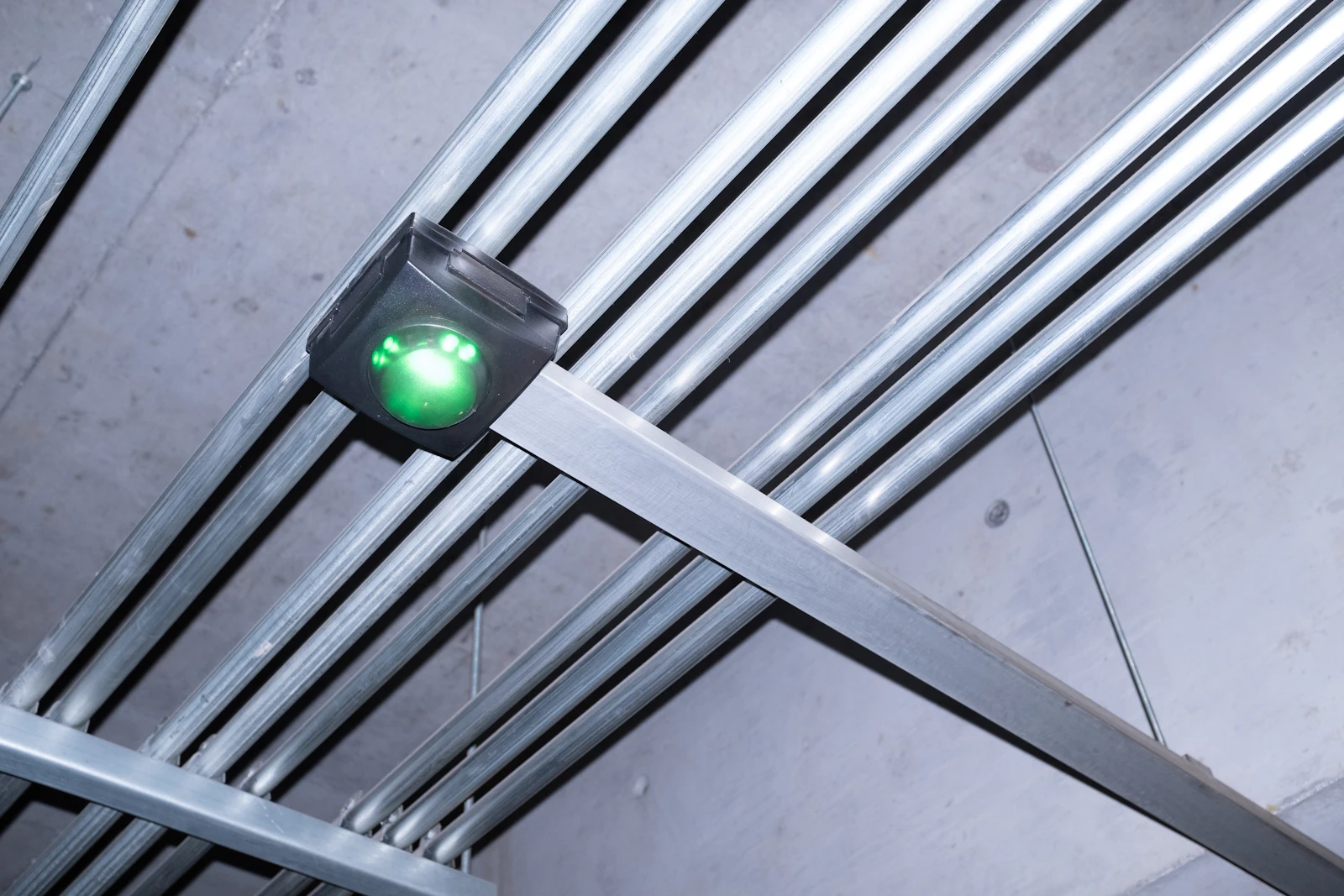
Laser Level Hire Costs Washington 2026
For Washington, DC–area commercial door installation, 2026 planning budgets for laser level equipment hire typically land in three bands: (1) cross-line / 3-plane interior laser levels at about $35–$75/day, $140–$260/week, and $420–$780/4-week; (2) rotary laser kits with receiver (better for long corridors and exterior references) at roughly $85–$150/day, $300–$450/week, and $630–$1,050/4-week; and (3) optical auto-levels at about $20–$45/day, $50–$110/week, and $150–$300/4-week. These ranges assume contractor-grade kits, normal wear, and standard pickup/return cutoffs—actual billed totals in DC usually swing more from logistics (parking, delivery windows, off-rent timing, and accessories) than from the base day rate. Published rate examples from other North American rental counters frequently cluster around $55–$65/day and $195–$260/week for a basic laser level rental, which is a good “sanity check” when validating quotes for 2026 budgets.
| Vendor |
Daily Rate |
Weekly Rate |
Review Score |
Website |
| Sunbelt Rentals |
$84 |
$233 |
7 |
Visit |
| United Rentals |
$79 |
$175 |
8 |
Visit |
| Herc Rentals |
$289 |
$601 |
8 |
Visit |
Where The Washington, DC Laser Level Rental Numbers Come From
Laser level hire pricing is not standardized across the DC metro; the best practice for estimating is to anchor your budget on a few published benchmarks (even if they’re outside DC), then add DC-specific logistics allowances. For example, one published rental counter lists a laser level at $65/day, $260/week, and $780/month (month as a 4-week style billing period in many rental programs). Another published listing shows a laser level at $55/day and $195/week. A 2025 rate guide PDF (non-DC) shows lasers/levels pricing in the same neighborhood (for example, $55/day, $165/week, $495/4-week for a construction auto-level).
At the “higher capability” end, government/contract rate sheets for construction lasers show that exterior rotating lasers can price materially higher than interior cross-line tools (e.g., $130/day, $320/week, $630/month on one statewide contract reference), which helps explain why DC quotes for full rotary kits (laser + receiver + bracket + tripod) often land well above small interior kits. Likewise, a separate contract rate sheet includes multiple laser categories (dual grade lasers, Rugby series, etc.) with day/week/month structures, reinforcing that “laser level” is a category—not a single price point.
Finally, national rental platforms do carry levels and leveling lasers as a defined rental category (useful when you need consistent fleet availability for multi-site work), but published online catalogs often emphasize specifications and availability more than a single universal price.
What Type Of Laser Level Should You Hire For Door Installation?
Door installation workflows usually need two things: (1) repeatable plumb reference for jambs and hinges and (2) consistent level datum for head heights and hardware lines across a run. Your rental cost is driven by choosing the minimum tool that reliably delivers those references in the actual job conditions:
- Cross-line laser (red): economical for short interior lines-of-sight. Plan the base hire range above, plus accessories if not included.
- 3-plane / 3 x 360° laser (often green): faster setup for repetitive openings and layout lines; commonly priced at the top of the interior band due to higher replacement value and demand.
- Rotary laser + receiver: best when you need a reference across long corridors, stairwells, or when bright ambient light washes out a line laser. Expect a higher day rate and more accessory charges.
- Optical auto-level: can be the lowest hire cost, but slower for door crews unless you already have an established benchmark workflow and a tech comfortable with readings/rod work.
Washington, DC Cost Drivers That Move The Final Hire Invoice
In DC, the base hire rate is often the smallest part of the rental total once you add delivery logistics and “jobsite friction.” Budget these as line-item allowances (and confirm in the quote):
- Delivery/pickup instead of counter pickup: plan $65–$175 each way for a small-tool courier in the District, depending on window constraints and distance; many suppliers treat “inside delivery” as premium.
- Downtown parking and access time: if a driver can’t legally stage at the dock/curb, you may see $25–$75 added as a parking/garage pass reimbursement, or waiting time billed after a grace period.
- Waiting/standby on secure sites: for federal or high-security buildings, budget $95/hour after the first 30 minutes if the delivery team is held at security screening or for elevator scheduling.
- Delivery windows and cutoffs: if your GC only accepts deliveries 6:00–8:00 AM or 3:00–5:00 PM, expect an after-hours or scheduled-window adder of $40–$120.
- Weekend/holiday billing behavior: picking up Friday and returning Monday can bill as 3 days at some counters unless there’s an explicit “weekend special” rule; clarify in writing.
DC-specific practical note: if your crew is working in tight interior fit-out zones (occupied offices, healthcare, or schools), dust control and protection requirements can push you toward tripod-based setups (less wall drilling), which can also increase accessory rentals (tripods, wall mounts, poles) and cleaning expectations.
Accessory Adders You Should Price With Laser Level Equipment Hire
Door crews lose time (and incur change orders) when a kit arrives without the “small stuff.” When budgeting laser level equipment hire costs in Washington, DC, add these typical accessory ranges unless the quote explicitly lists them as included:
- Tripod (light-duty): $8–$15/day or $25–$45/week.
- Tripod (construction/heavy): $12–$22/day or $40–$70/week (more stable in corridor traffic and uneven slabs).
- Laser receiver/detector (for rotary or pulse mode): $15–$40/day or $55–$125/week.
- Grade rod / story pole: $10–$25/day or $35–$85/week.
- Wall/ceiling mount or magnetic bracket: $5–$12/day (often the cheapest way to keep lines consistent when staging multiple door frames).
- Spare battery/charger kit: $6–$15/day (worth it if your site bans “unattended charging”).
If you’re using a rotary kit, confirm whether the quoted package is “laser only” or “kit with detector + bracket + tripod.” Published rental catalogs often describe “laser level” as a category item where accessories may be separate line items, not automatic inclusions.
Hidden-Fee Breakdown (The Stuff That Blows Up Small-Tool Rentals)
Laser levels are a classic “small-tool” rental where fees can exceed the base hire if you don’t manage the process. Common hidden or avoidable charges to plan for:
- Minimum charge: many counters enforce a 1-day minimum; some specialty survey/laser categories can be 2-day minimum (especially on contract rate sheets).
- Damage waiver / rental protection: commonly 10%–15% of the rental subtotal (sometimes capped). Treat it as a budget line item, not a surprise.
- Deposit / authorization hold: plan $100–$300 for a basic kit and up to $500 for higher-end rotary/detector packages (varies by account terms and credit).
- Calibration/out-of-spec handling: if returned “suspect” (impact damage, moisture intrusion), budget a potential evaluation fee of $45–$125 plus repair costs.
- Cleaning fee: $25–$95 if returned with drywall compound, concrete slurry, or adhesive residue on the case, mount, or tripod feet.
- Recharge/refuel equivalent: for battery tools, a recharge/admin fee of $15–$35 if returned dead or missing charger.
- Late return penalty: common structures include $15–$35 per hour after cutoff, or an additional full day when you miss the return window.
- Missing parts: brackets, targets, and detectors are the usual culprits; budget replacement exposure of $20–$80 per small component, and $250–$450 for a receiver/detector depending on model.
Example: DC Office Corridor Door Package With Real Constraints
Scenario: Replace and set 24 hollow metal doors across 3 floors in a downtown Washington, DC office. Work is nights/weekends only, with building deliveries allowed 6:00–7:00 AM and material staging restricted to one janitor closet per floor. Crew wants consistent head heights and plumb across a long corridor run.
- Tool selection: 3-plane green laser (interior) plus heavy tripod. Budget: $60/day x 6 days = $360 (planning figure within the interior band).
- Tripod adder: $18/day x 6 = $108.
- Scheduled delivery window adder: $85 (tight 6–7 AM acceptance).
- Delivery + pickup: $125 each way = $250 (downtown curb restrictions assumed).
- Damage waiver: 12% of rental subtotal (tool + tripod) = $56.16.
- Recharge allowance: $25 (if returned dead after weekend shift).
Budgeted hire total (planning): about $849 before tax. The key takeaway: even for “small-tool” laser level equipment hire, DC delivery constraints and protection adders can represent 35%–55% of the invoice if you’re not doing counter pickup and standard business-hour returns.
Budget Worksheet (Estimator-Friendly Line Items)
- Laser level equipment hire (interior cross-line/3-plane): allowance $35–$75/day
- Rotary laser upgrade (if corridor length/brightness requires): allowance +$40–$90/day
- Tripod (heavy duty): allowance $12–$22/day
- Receiver/detector (if rotary or pulse mode): allowance $15–$40/day
- Wall/ceiling mount bracket: allowance $5–$12/day
- Delivery and pickup (DC): allowance $65–$175 each way
- Scheduled delivery window / after-hours handling: allowance $40–$120
- Parking/garage reimbursement: allowance $25–$75
- Waiting time on secure/managed sites: allowance $95/hour after 30 minutes
- Damage waiver / rental protection: allowance 10%–15% of rental subtotal
- Cleaning fee contingency: allowance $25–$95
- Recharge fee contingency: allowance $15–$35
- Late return contingency: allowance $15–$35/hour or +1 day
Rental Order Checklist (PO, Delivery, Return, And Closeout)
- PO details: include job name, site address, cost code, requested pickup/return dates, and whether weekend billing is authorized.
- Equipment spec on PO: state “interior 3-plane laser” vs “rotary laser w/ receiver,” required accuracy, and whether a tripod and wall mount must be included.
- Delivery instructions: dock/curb location, contact name/number, security procedures, and elevator reservation requirements.
- Delivery window: confirm cutoffs (e.g., must arrive before 7:00 AM) and what happens if the driver is delayed by traffic.
- Condition documentation at handoff: take timestamped photos of the laser, case, detector, tripod, and serial numbers; verify accessory count on the ticket.
- Operational rules: confirm off-rent process (email/call required), return cutoff time, and whether “after cutoff” becomes a full additional day.
- Return condition: wipe down, remove tape/compound, return batteries/charger, coil straps, and ensure the case latches; document condition with photos at return.
How To Control Laser Level Hire Costs On Multi-Week Door Programs
When door installation extends beyond a few days, the biggest cost lever is switching from ad-hoc day rentals to a coordinated weekly/4-week structure and tightly controlling off-rent timing. In the DC metro, even one missed return cutoff can convert a planned weekly rate into a blended week-plus-days outcome that’s hard to recover in billing.
Plan Around Off-Rent Rules And DC Return Cutoffs
Most rental counters treat laser levels as non-metered tools, so billing is time-based. To protect your equipment hire budget, align the field schedule with three practical controls:
- Return cutoff management: build a hard internal cutoff of 2:00 PM for same-day returns if the vendor cutoff is later (DC traffic + parking + security screening can erase your buffer).
- Weekend strategy: if you must hold the laser over a weekend, confirm whether the vendor offers a “Friday PM to Monday AM” deal; otherwise, plan the hold as +2 days in your estimate.
- Documented off-rent notice: require supers to send an off-rent email/text with timestamp as soon as the last door line is verified—don’t wait for the tool to physically leave the building.
Insurance, Damage Waiver, And Why Laser Kits Get Flagged
Laser levels sit in a high-loss category (small, portable, and valuable), so vendors often push damage waiver/rental protection. If you’re managing a door installation program across multiple floors/subs, decide centrally whether you will:
- Accept a 10%–15% damage waiver line (often simpler for small tools), or
- Provide proof of insurance and decline waiver, while increasing your internal controls (sign-out logs, locked storage, daily battery/parts check).
If you decline the waiver, budget a realistic exposure amount for “missing parts” closeout. For planning, it’s common to hold a contingency of $50–$150 for small missing components and $250–$450 for a receiver/detector replacement exposure (model-dependent).
Delivery, Inside Placement, And Secure-Site Realities In Washington, DC
Washington, DC is a logistics city. Your laser level equipment hire cost can double when deliveries are treated like “white glove” moves. Controls that reduce the DC premium:
- Standardize a pickup point: aim for a single superintendent pickup from a rental counter when feasible. The avoided cost is often $130–$350 (round-trip delivery/pickup allowance).
- Use a “meet-and-handoff” curb plan: if a building won’t allow tool carts inside, designate a curb handoff and have your labor move the kit upstairs. This can avoid inside-delivery adders of $50–$150.
- Pre-authorize parking: providing an approved loading zone or garage ticket can avoid $25–$75 reimbursements and reduce standby charges.
Calibration And Accuracy: The Cost Of Being “Almost Plumb”
On door installs, small drift becomes big rework. If you suspect a drop, a knocked tripod, or “line wandering,” treat it as a cost event immediately instead of letting it burn labor:
- Swap-out policy: ask the rental provider for a same-day swap; even if you pay another $65–$175 courier fee, it can be cheaper than re-hanging doors.
- Keep a quick-check routine: run a daily plumb check on a known vertical reference; catching an issue early can prevent multi-opening rework.
- Protect the kit: budget $10–$20 for a dedicated padded storage tote or lockable cabinet tag system on multi-trade floors (cheap insurance against damage/parts loss).
When A Rotary Laser Rental Actually Saves Money On Door Lines
Even though rotary laser kits are higher-cost equipment hire than cross-line lasers, they can reduce layout resets on long corridors and multi-floor datum transfers. Use a rotary package when any of the following are true:
- Corridor sight lines exceed 80–120 ft and the line laser becomes hard to see.
- You need consistent height control across multiple smoke doors and frame headers where a drifting reference creates cascading issues.
- Ambient light is high (glass-heavy atriums) and you’ll end up renting a receiver anyway.
A useful benchmark: rotating laser pricing on a public contract reference lists $130/day and $320/week for an exterior rotating laser category. That’s not a DC quote, but it’s a credible reference point for why a “real” rotary kit invoice often lands above an interior 3-plane kit.
2026 Market Notes For Laser Level Equipment Hire
For 2026 planning, expect laser level rentals to remain sensitive to (a) replacement cost inflation for contractor-grade electronics, (b) loss/damage rates, and (c) demand spikes in peak interior fit-out cycles. National rental marketplaces continue to carry levels and leveling lasers as a standard category (helpful for availability and fleet consistency), while local counters may compete on day rates but vary widely in accessory inclusions and cutoff rules.
Quick Reference: How To Ask For A Quote That Won’t Change Later
To keep your Washington, DC laser level equipment hire quote stable (and prevent surprise fees), request the quote with these specifics:
- Exact kit definition (laser model class + tripod + mount + receiver if needed)
- Billing structure (day vs week vs 4-week), and weekend rule in writing
- Return cutoff time and late fee structure (hourly vs full-day)
- Delivery/pickup fees, delivery window constraints, and standby billing terms
- Damage waiver % and what it covers vs excludes
- Cleaning/recharge expectations and fees
If you need a reality-check, published examples from other rental counters show basic laser level pricing commonly around $55–$65/day and $195–$260/week, which helps validate that a DC quote is “in family” before logistics and protection adders.