

Create an itemized estimate for your project, with materials, labor, and quantities you can review and edit.
Create my estimateStart a 7-day free trial. Sign up, then enter your project details.
For 2026 planning in Baltimore, light duty generator equipment hire (portable gasoline units typically ~3 kW to 10 kW) generally budgets in working ranges of $65–$160/day, $240–$550/week, and $650–$1,400 per 4-week period, before tax and before delivery/fuel/waiver adders. Lower rates tend to assume contractor pickup and an open-frame unit; higher rates usually reflect a “silent/quiet” generator, tighter delivery windows, or a package that includes distribution (cords/GFCI/spider box) and compliance accessories. In practice, Baltimore rental coordinators often benchmark quotes across national rental houses (e.g., United Rentals, Sunbelt Rentals, Herc) plus regional tool houses to lock an available unit and the right support for jobsite uptime.
| Vendor | Daily Rate | Weekly Rate | Review Score | Website |
|---|---|---|---|---|
| United Rentals | $95 | $285 | 8 | Visit |
| Sunbelt Rentals | $90 | $270 | 8 | Visit |
| Herc Rentals | $100 | $300 | 7 | Visit |
| The Home Depot Tool Rental | $75 | $225 | 7 | Visit |
| Carter Machinery (CAT Rental Store) | $110 | $330 | 8 | Visit |
Reality check from published regional pricing: a Maryland-area listing for a Honda EG6500-class generator shows $85–$110/day, $340/week, and $800/month (posting updated May 26, 2026). A DC/Beltway tool house shows a 7,000-watt generator at $100/day and $350/week with a $400 deposit (plus smaller units such as a 4,500-watt generator at $79/day with a $325 deposit). For another benchmark, a statewide public rate sheet shows a 6 kW portable generator at $87/day, $325/week, and $731/month. These published numbers are not “what everyone pays” in Baltimore, but they are useful anchors for 2026 estimating and for explaining deltas when delivery, waivers, and accessories are added.
Suggested 2026 estimating ranges by size (dry hire, before tax, pickup assumed):
Assumptions behind the ranges above: 8-hour day / 40-hour week / 28-day (4-week) month is a common rental structure; fuel is typically excluded; delivery/pickup and damage waiver (if elected) are excluded; accessories are priced separately.
Light duty generator rental pricing in the Baltimore market typically follows the same mechanics as other small jobsite equipment hire: a minimum rental period, a standard shift definition, and conversion rules (day-to-week, week-to-month) that may or may not trigger automatically depending on the contract. Many branches quote a 4-hour minimum (even if you “only need it for a quick task”), then step to an 8-hour day rate and a 40-hour week rate. For example, a regional published rate card shows explicit 4-hour, daily (8-hour), and weekly pricing for portable generators.
For managed accounts and public pricing schedules, you’ll also see explicit language on metered/over-allotted hours that changes the true cost if the generator runs longer than the standard shift. One Maryland pricing schedule describes: standard day = 8 hours with additional hours billed at 1/16 of the daily rate; standard week = 40 hours with additional hours billed at 1/80 of the weekly rate; standard month = 176 hours with additional hours billed at 1/352 of the monthly rate. That same schedule also references “double shift” pricing at 1.5× the applicable rental rate for 16-hour usage, and “triple shift” pricing at 2× for 24-hour usage with unlimited use.
Estimator takeaway: if your site intends to run a light duty generator continuously (e.g., night work, dewatering controls, temporary refrigeration, or extended lighting), your “cheap” day rate can convert into a higher effective rate once over-hours, shift factors, and weekend billing rules are applied. Get the hour assumptions in writing on the quote and align them to your work plan.
Within the “light duty” class, the rental rate spread is mostly driven by (1) power quality and noise requirements, (2) runtime/fuel strategy, and (3) distribution and safety accessories required by GC/owner policies.
1) Noise and power quality. If you’re working around the Inner Harbor, hospitals, universities, or occupied tenant spaces, a quiet/silent generator (often inverter-based or acoustically enclosed) can be the difference between working and getting shut down. Published benchmarks show higher day/week/month rates for “silent” portable generators versus open-frame units.
2) Starting amps vs running watts. Light duty generators routinely get under-scoped when they’re asked to start inductive loads (small air compressors, vacuum systems, core drills) or multiple chargers at once. Under-scoping creates cost via trip-outs, call-backs, and mid-rental swaps (often with another delivery charge). Build a wattage/load allowance and consider specifying a step-up size if the job is schedule-critical.
3) 120/240V and receptacle mix. A unit that can provide 240V output and the correct twist-locks is usually priced and managed differently than a basic 120V-only portable. If your tools or temporary distribution require specific connectors, you’ll pay either in higher base rate or in accessory rentals (adapter whips, quad boxes, spider boxes).
4) Risk transfer (damage waiver / RPP) and insurance compliance. Many rental contracts require you to provide proof of insurance meeting their terms or purchase a rental protection plan (RPP). For example, United Rentals describes RPP as optional (not insurance) but required if you don’t show proof of property insurance per their agreement, and it limits exposure to the lesser of 10% of replacement value, 10% of repair cost, or $500 (plus taxes), subject to conditions and exclusions.
On light duty generator equipment hire, the “hidden fees” are usually not hidden at all—they’re buried in the rental contract mechanics. Build them into the estimate and into the PO notes so they don’t hit you as surprises.
Most cost overruns on portable generator hire happen because the project needs more than “a generator.” It needs a workable and code-compliant temporary power setup—especially on multi-trade interior jobs.
Accessory adders to consider (published examples):
Baltimore field note: if the generator must be placed outdoors for ventilation but the workface is inside (common on downtown renovations), your cord set lengths increase quickly. That tends to push you toward heavier-gauge cords, additional cord management, and more time coordinating safe routing (doors, sidewalks, egress paths). Those logistics are cost drivers even when the base generator day rate looks modest.
Two to three local realities often change the net cost of light duty generator equipment hire in Baltimore:
Compliance that prevents chargebacks: confirm whether the GC/owner requires CO monitoring, fire extinguisher placement, spill containment, and documented daily inspections. These are often small adders individually, but they reduce the risk of rental damage claims and schedule impacts (which are the most expensive “fees” on generator hire).
Use this as a quick estimator’s allowance list for a typical Baltimore portable generator hire package (edit to match your load plan and delivery method):
Scenario: 3-night tenant fit-out near the Inner Harbor. Work is 7:00 p.m.–5:00 a.m. (10-hour shifts). Owner requires low noise; generator must be outside with 100 ft cording to power HEPA air scrubbers and tool charging.
Estimate build (planning numbers):
Coordinator note: the generator line might look like “only” a few hundred dollars, but access constraints and distribution frequently push total equipment hire costs into the $900–$1,200 range for a short, downtown Baltimore overnight package once you include logistics, waiver, accessories, and weekend rules.
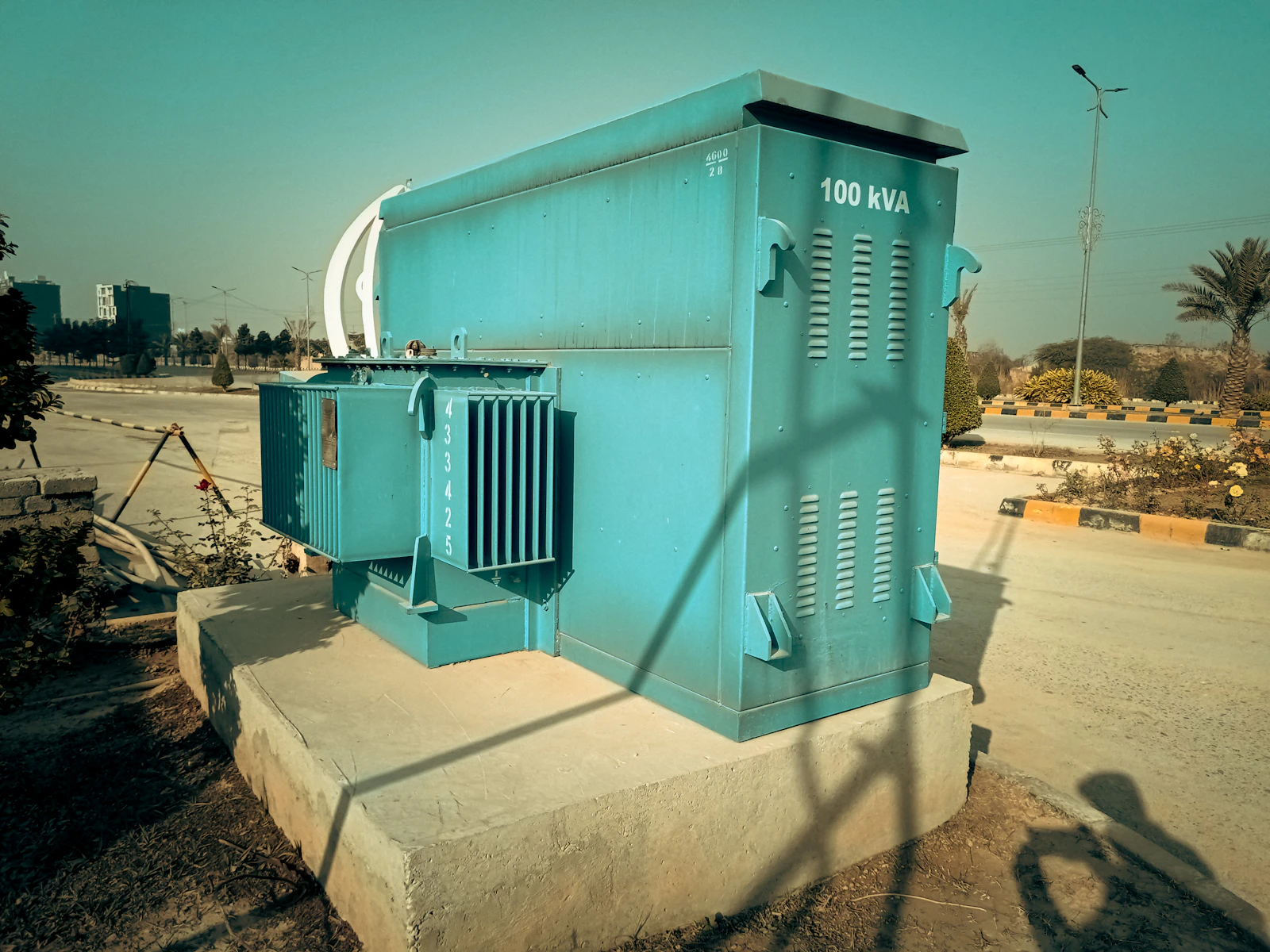
Light duty generator hire is one of the easiest temp-power packages to control—if you treat it like a managed rental (scope + schedule + accessories + return plan) rather than a last-minute tool pickup.
On portable generator equipment hire, “off-rent” timing and return condition drive avoidable charges. Put these controls into your site closeout routine:
If the load is continuous, the receptacle requirements are complex, or you need 3-phase distribution, a light duty portable generator can become the most expensive option due to downtime and repeated mobilizations. A clean indicator is when you start adding multiple spider boxes, long feeder runs, or when the load needs to be supported as “temporary power” rather than “tool power.”
Cost step-up reference: published pricing for a towable 20 kW generator shows day/week/month rates around $341/day, $805/week, and $2,008/month. That is a different equipment class than “light duty,” but it’s useful for explaining to a PM why the project is paying more: you’re buying stability, receptacle capacity, and uptime support—not just watts.
Also watch distribution creep: the minute you’re pricing multiple distribution components (spider boxes, quad boxes, camlocks, step-down transformers), the “accessories” can rival the generator line. Published schedules show meaningful day/week/month rates for distribution gear (for example, spider boxes and quad box cables).
For contractors who repeatedly need a 6–7 kW portable generator in Baltimore (service work, short-duration TI jobs, punch lists), ownership can pencil—provided you have the internal discipline to maintain it and to manage transport safely. The break-even is usually driven by (1) how often you pay delivery/pickup, and (2) whether you routinely pay waiver, cleaning, and missed off-rent days.
A simple decision rule for coordinators: if you’re renting the same light duty generator class 20–30 days/year and paying two-way delivery more than a few times (e.g., $250 each way benchmarks exist on published schedules), ownership may be worth a formal review. If your use is sporadic, or you need “quiet” units only on certain buildings, hire remains the better risk-managed option.
Bottom line for Baltimore 2026 estimating: the base day/week/month rate for light duty generator hire is only half the story. The winning estimate includes delivery mechanics, hour assumptions, waiver/insurance handling, accessory scope, and a documented return plan—because those are the levers that actually control total equipment hire costs.
