

For Washington, DC structural steel erection teams planning 2026 work, budget magnetic drill (mag base drill / magnetic drill press) equipment hire in the range of $70–$140/day, $255–$550/week, and $470–$1,650 per 4-week period, depending on hole capacity (typically 3/4 in. chuck units through 1-5/8 in. annular-cutter-capable units), duty cycle, and whether you need a low-profile head for tight web/flange clearances. These are planning ranges built from published rental schedules across multiple rental houses and will land higher in DC when you add urban delivery constraints, off-rent cutoffs, and cutter consumables. National equipment providers (for example, United Rentals, Sunbelt Rentals, and Herc) and ARA-style regional tool rental houses can all supply mag drill hire, but pricing is most predictable when you lock a weekly or 4-week rate and pre-list the accessories (annular cutters, coolant kit, safety chain/tether, and vacuum/dust control where required).
| Vendor | Daily Rate | Weekly Rate | Review Score | Website |
|---|---|---|---|---|
| D&B Rentals (Sterling, VA – Washington DC metro) | $74 | $251 | 9 | Visit |
| Sunbelt Rentals (Washington, DC) | $85 | $250 | 7 | Visit |
| Herc Rentals (Washington DC metro) | $270 | $748 | 10 | Visit |
| United Rentals (Washington, DC metro) | $95 | $265 | 8 | Visit |
Published reference points that bracket the above 2026 planning range: examples include $48/day and $152/week for a 1/2 in. magnetic drill press at a Mid-Atlantic rental center, $45/day and $135/week (and $405/month) for a magnetic drill with annular cutter listing, $71.50/day and $286/week (and $470.80/month) on a Northeast rental booking site, $95/day and $252/week (and $504/month) on a rate-posting tool rental portal, and higher posted rates such as $139/day, $553/week, and $1,658/4-week on another published schedule. Use these as rate anchors when you request DC metro quotes (especially for downtown deliveries and secure sites).
Assumptions used for the Washington, DC 2026 hire ranges above: (1) electric 115–120V magnetic drill suitable for structural steel erection field drilling; (2) rental is for the drill body only unless stated; (3) annular cutters/twist bits are treated as consumables or separate line items; and (4) delivery/pickup, damage waiver, and jobsite logistics are excluded from the base rate.
Important scope note for estimators: many suppliers explicitly treat cutters/bits as separate from the drill rental (and in some catalogs the rental listing notes that drill bits are not included). Plan your purchase/consumables budget accordingly, especially when you expect 50+ holes and cannot tolerate downtime waiting for a replacement cutter.
On steel erection scopes, magnetic drill equipment hire cost is driven less by the “drill” and more by the production package you actually need to make compliant holes in the field: access, power, cutter type, and return condition. In Washington, DC (and the broader DMV), the biggest cost movers tend to be (a) the need for annular cutter capability for clean holes through flanges/plates, (b) secure-site logistics (escort, screening, controlled delivery windows), and (c) documentation requirements (tool tag/asset ID, inspection record, return photos) that slow both pickup and off-rent.
Mag drill rental rates also vary by capacity and form factor. A lighter 1/2 in. chuck unit can be cheaper day-to-day, but if your detail requires 13/16 in., 7/8 in., 15/16 in. or larger bolt holes via annular cutters, you can end up paying more overall through cutter damage, slow feed rates, or remobilization to correct hole quality. For structural steel erection, most coordinators standardize on a 3/4 in. Weldon-shank annular cutter system and treat anything else as a specialty exception.
Use the cost drivers below to convert a “day rate” into a realistic magnetic drill hire cost for structural steel erection in Washington, DC.
Even when the crew only drills for two shifts, billing rules can push you into a day or weekend minimum. Published schedules commonly show short-duration options like $49.50 for 3 hours or $63 for 4 hours, and weekend rates (example posted as $112/weekend)—but many suppliers still treat late returns as another full day. If there is any chance you will hold the drill through a weekend due to follow-on punch list drilling, start by pricing the weekly rate and then negotiate off-rent cutoffs in writing.
For steel erection field drilling, your total equipment hire cost typically includes a cutter plan. Common allowances (plan-level, not vendor-specific) include:
Why this matters: published drill listings often state that drill bits are not included, which is consistent with how national tool catalogs separate cutters from the drill body. Build your estimate so the mag drill hire cost does not get “blown up” by untracked cutter replacement at return.
Washington, DC steel erection frequently runs into power and access limitations (limited temp power early in the sequence, or long cord runs across controlled pathways). Typical adders you should plan for:
If you will drill on elevated steel, factor the time and risk of moving power with the crew. A slightly higher mag drill weekly rate can be cheaper than multiple lifts of a generator and cord management.
Magnetic drills are physically small, but DC logistics can be disproportionately expensive relative to the base tool rate. Plan (and negotiate) the following:
DC-specific note: if your only receiving window is a 30-minute dock slot and the drill must be badged through, you can pay more in failed-delivery risk than the drill’s day rate. Confirm receiving rules before you dispatch.
For magnetic drill equipment hire, many coordinators carry a damage waiver to cap accidental damage exposure (especially with overhead drilling and fall/tether risks). Use these planning allowances if your supplier contract does not specify:
When a foreman says “we just need a mag drill for a day,” these are the cost levers that typically turn a day rate into a multi-line equipment hire cost.
To localize your Washington magnetic drill hire cost estimate for structural steel erection, bake in these DMV realities:
Use this bullet worksheet to build a realistic magnetic drill equipment hire cost line for Washington, DC structural steel erection (no tables—copy/paste into your estimate notes).
Scenario: You have a Washington, DC structural steel erection scope with field mods for clip angles and a stair stringer pickup. The detail calls for 64 holes across mixed thicknesses (3/8 in. to 7/8 in.). The GC only allows deliveries 7:00–9:00 a.m., and the material hoist is booked after 2:00 p.m. daily. You choose weekly pricing to avoid weekend exposure.
Budgetary total (equipment + typical adders): $1,387.40 before tax. Key operational constraint: if the drill cannot be returned before the supplier’s off-rent cutoff (often morning cutoff), a “simple” Friday demob can become an extra billed day—so schedule return with the same rigor as a lift demob.
Rate anchors (published examples) used to build the 2026 planning range above: $48/day and $152/week (1/2 in. magnetic drill press), $45/day $135/week $405/month (magnetic drill listings), $71.50/day $286/week $470.80/month (booking site), $95/day $252/week $504/month and $112 weekend (rate portal), $72/day $286/week (catalog listing), and $139/day $553/week $1,658/4-week (published schedule).
Accessory scope note: suppliers commonly treat accessories/add-ons as separate availability-dependent items.
Cutter/bit inclusion note: some national listings explicitly note that drill bits are not included with magnetic drill rentals.
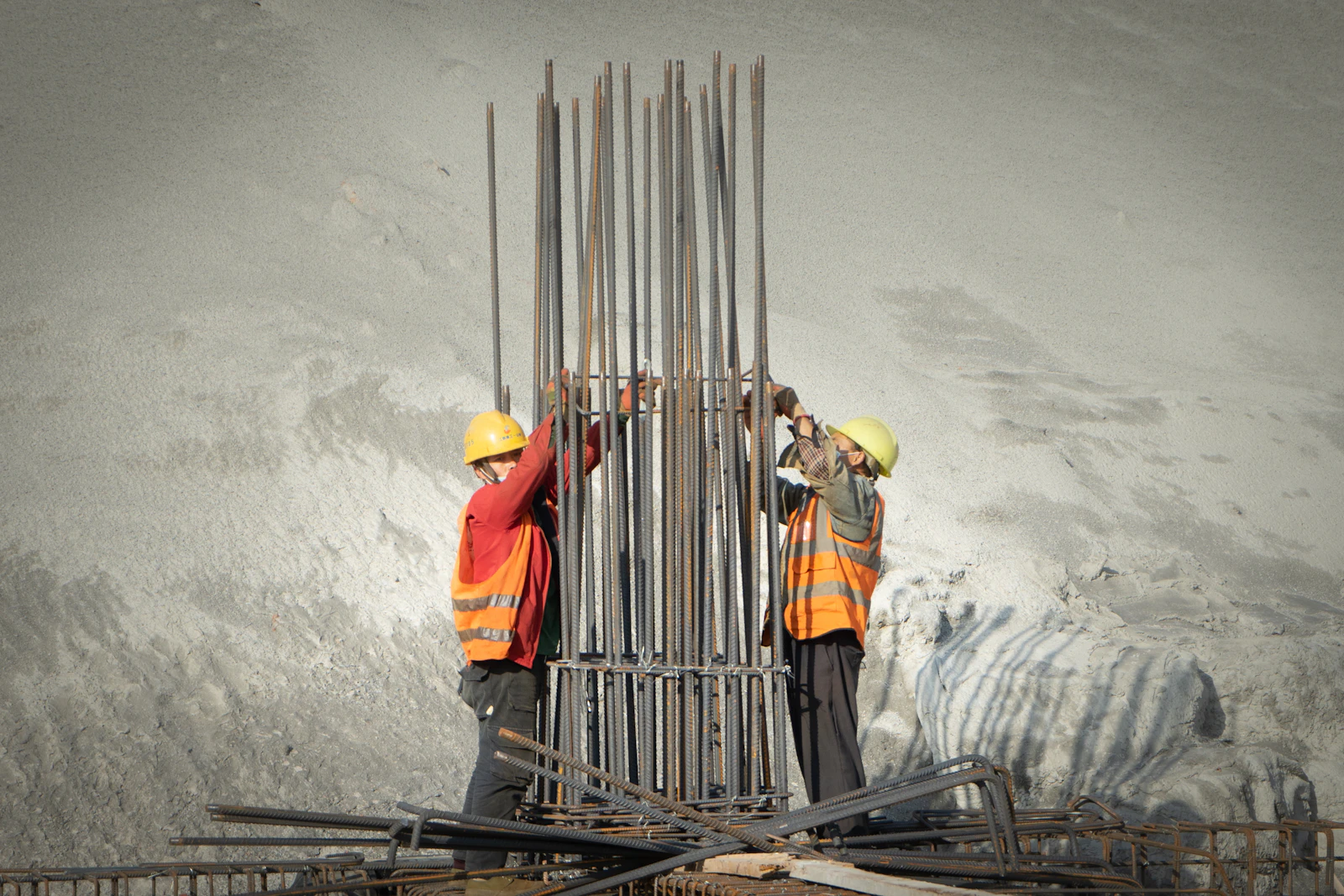
Reducing magnetic drill equipment hire cost on structural steel erection is usually about preventing re-rent, not squeezing the day rate. In the Washington, DC metro, a single failed delivery window or missed off-rent cutoff can erase any rate negotiation. Use the levers below that real rental coordinators control.
Use this checklist to cut closeout friction and prevent “extra day” billing on magnetic drill hire in Washington, DC.
These items don’t just affect safety; they affect your final invoice.
If your company performs recurring steel mods, the breakeven can be quick. A mid-tier magnetic drill purchase often lands around $1,200–$3,500 (depending on capacity and whether it’s a low-profile specialty unit). Compare that to common published rental anchors: for example, postings of roughly $252–$553/week and $504–$1,658/4-week exist in the market. If you routinely rent 10–14 weeks/year (especially across multiple crews), ownership can be justified—but only if you also control cutter inventory, maintenance, and custody so the tool doesn’t disappear on a jobsite.
Estimator’s shortcut: if your fully-burdened weekly rental (including delivery share, waiver, and consumables risk) is about $500/week, then a $2,500 purchase breakeven is roughly 5 weeks of equivalent rental exposure—before maintenance and loss risk.
It depends on the contract and whether you negotiated weekend terms. Some posted schedules include explicit weekend rates, but many branches bill continuous time unless a weekend special is selected in advance. If you cannot physically return tools on weekends due to DC site access rules, negotiate a weekend cap before delivery.
Plan $10–$40 per missing small item (pilot pins, feed handles, safety chain) and $75–$250 for missing cases or specialty arbors, depending on the supplier’s parts schedule. The cheapest way to avoid it is return-condition photos and a check-in list at the gang box.
On steel erection, cutters are often treated like consumables: you either bring your own set or you purchase through the rental house and accept replacement charges for damaged tooling at return. For estimating, carry a cutter allowance (example: 6–12 cutters total across diameters) plus spares for schedule-critical sizes.
Rate-source context used in this article: published magnetic drill schedules and catalogs show a broad spread by region and tool capacity, including posted examples for day/week/month or 4-week pricing and short-duration rates (3–4 hour). Use these as anchors when you request Washington, DC metro quotes for structural steel erection work and then localize for delivery windows, secure-site rules, and off-rent cutoffs.
