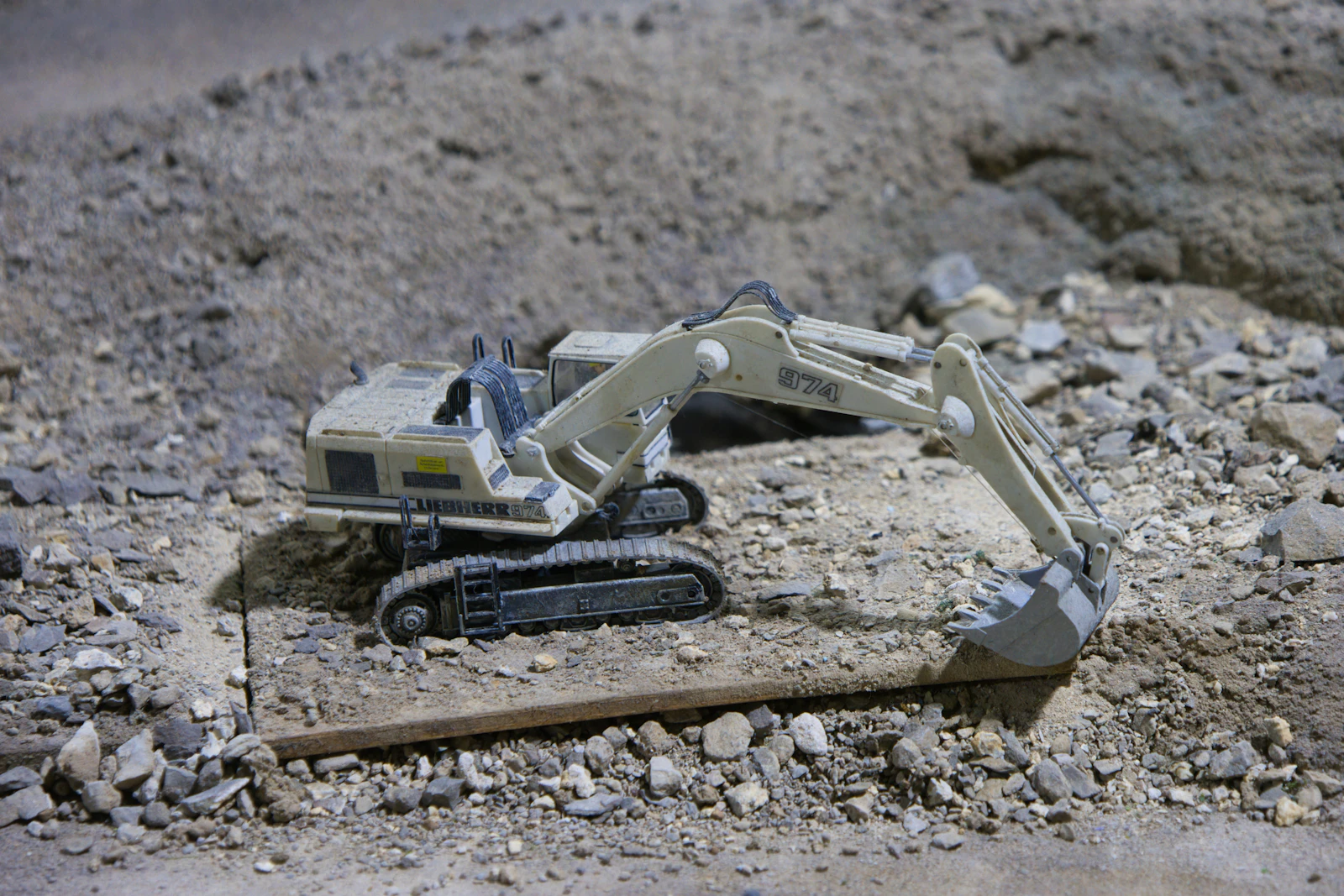
Mini Excavator Rental Rates Austin 2026
For 2026 planning in Austin foundation repair work, budget mini excavator equipment hire (machine-only, no operator) in these practical brackets: 1–2 ton (2,000–4,000 lb) at $250–$425/day, $850–$1,350/week, and $2,000–$3,400 per 4 weeks; 3–4 ton (7,000–9,000 lb) at $350–$575/day, $1,050–$1,650/week, and $2,700–$4,200 per 4 weeks; and 6–8 ton (14,000–19,000 lb) at $525–$850/day, $1,500–$2,350/week, and $3,900–$6,800 per 4 weeks. Expect better value on 4-week terms when schedule risk is high and you may need to hold the machine through inspections and backfill. In Austin, most rental coordinators will quote from national fleets (e.g., United Rentals, Sunbelt Rentals, Herc Rentals, EquipmentShare) plus regional yards; the right buy depends more on delivery constraints, attachment availability, and off-rent rules than on the advertised day rate alone.
| Vendor |
Daily Rate |
Weekly Rate |
Review Score |
Website |
| United Rentals |
$395 |
$1 580 |
9 |
Visit |
| Sunbelt Rentals |
$385 |
$1 540 |
9 |
Visit |
| Herc Rentals |
$375 |
$1 500 |
8 |
Visit |
| The Home Depot Tool Rental |
$360 |
$1 440 |
8 |
Visit |
| The Cat Rental Store |
$410 |
$1 640 |
9 |
Visit |
How To Anchor Your 2026 Budget Using Published Reference Rates
If you need a defensible baseline for an internal estimate, it helps to compare your quotes to at least one published schedule. A 2025 national price schedule example shows a 7,000–8,999 lb diesel mini excavator at $380/day, $975/week, $2,173 per 4 weeks, and a 14,000–19,000 lb diesel mini excavator at $595/day, $1,505/week, $3,850 per 4 weeks. Those figures are not “Austin-specific street pricing,” but they are useful as a sanity check when a quote comes in materially above market without a scope reason (tight access, same-day delivery, specialty bucket package, etc.).
Also confirm how your supplier defines a “month.” Many national rental systems display daily, weekly, and monthly (28 days) rates, which is functionally a 4-week billing period rather than a calendar month. Aligning your internal estimate with the supplier’s billing convention avoids a common gap where PMs assume 30 days but the invoice is priced as 28-day cycles plus overage.
What Foundation Repair Scope Does To Mini Excavator Equipment Hire Cost In Austin
For foundation repair (perimeter exposure, grade beam access, pier/underpin areas, drainage rework), the mini excavator rarely works as “machine-only.” The equipment hire cost moves primarily with (1) access width and tailswing restrictions, (2) rock conditions (Austin limestone/caliche), and (3) whether spoils handling is on-site (stockpile) or off-site (loading to trucks). Three scope items that routinely change your PO total:
- Narrow access package: if the gate is 36–42 inches, you may be forced into a 1–2 ton machine, increasing days on rent (lower production) even if the day rate is cheaper.
- Rock excavation allowance: Austin-area shallow limestone can push you toward a heavier class (and/or a breaker). Breaker adders can exceed the delta between a 3.5-ton and a 6-ton mini, so decide early.
- Spoils management: if you must load into a 10–14 yd dump truck on a short cycle, consider a larger mini with a thumb; if you’re just trenching and spoils can windrow, a smaller unit may be cheaper overall.
Attachments And Bucket Packages: The Fastest Way To Blow The Budget
For foundation repair, attachments are often where “mini excavator hire pricing” quietly escalates. If the yard’s base rate includes only one general-purpose bucket, you may need to add trenching buckets, a grading bucket, and a thumb depending on how you’re exposing the structure and restoring grade. As a published reference point, one national schedule lists mini-ex attachment adders such as auger (medium torque) at $114/day, $336/week, $831 per 4 weeks; breaker 391–600 lb class at $248/day, $699/week, $1,500 per 4 weeks; breaker 601–900 lb class at $429/day, $1,243/week, $2,635 per 4 weeks; and a swing coupler up to 9,000 lb at $65/day, $171/week, $501 per 4 weeks.
For estimating in Austin, treat those attachment figures as directional and then add local logistics (delivery and availability). In practice, 2026 Austin quotes commonly land in these planning adders (machine-compatible, subject to stock):
- Hydraulic thumb (if not factory-installed): $75–$165/day; $250–$525/week.
- 12-inch trench bucket: $15–$35/day; $45–$115/week (often waived if bundled).
- 24-inch ditch-cleaning / grading bucket: $35–$85/day; $120–$260/week.
- Rock bucket / severe-duty teeth: $40–$95/day; $140–$325/week.
- Hydraulic breaker (typical for limestone lenses): $225–$475/day; $750–$1,450/week (size and carrier class dependent).
Estimator note: if your foundation repair plan includes any sawcut-and-remove slabs or tight work along an existing wall, the right bucket (and a thumb) can reduce hand labor and reduce the number of rental days—often a better ROI than chasing the lowest daily hire rate.
Delivery, Pickup, And Off-Rent Rules That Matter In Austin
Most mini excavator rentals in Austin are delivered on a rollback or equipment trailer; even if you can self-haul, check whether the supplier allows customer transport (some do; some require their carrier due to liability). Build delivery as a separate line item, because it is frequently a larger swing factor than the day-rate spread between vendors—especially in Central Austin where traffic and restricted access affect routing.
- Delivery/pickup (each way) planning allowance: $125–$325 each way inside a typical metro radius; $325–$650 each way if the job is outside the common delivery zone or requires a larger truck.
- Mileage-based transport (when used): $4.50–$8.00 per loaded mile (often with a minimum of 15–25 miles).
- Time-window / “must deliver between” premium: $75–$175 when the site only accepts a tight window (downtown staging, school zones, or limited driveway access).
- Same-day dispatch premium: $100–$250 when you need a machine urgently due to active excavation exposure and weather risk.
Confirm off-rent cutoffs in writing. A common operational reality is that calling off-rent after the supplier’s cutoff (often mid-afternoon) triggers at least one additional day of billing because the machine cannot be picked up and processed before the next billing cycle. In Austin summer heat, also plan for earlier daily start times; if your crew begins at 6:00–7:00 AM, verify whether the supplier can deliver the day prior (which may add a “pre-delivery day” charge if the contract does not include free prepositioning).
Hidden-Fee Breakdown For Mini Excavator Equipment Hire
The following items are where invoices typically diverge from the initial “mini excavator rental rates” conversation. Include them explicitly in your estimate so you can compare supplier quotes apples-to-apples.
- Damage waiver / rental protection: commonly 10%–18% of the base rental (machine + attachments). Public bid schedules frequently show 14%–15% as a reference point.
- Shift limits and overtime: many contracts price a standard shift as 8 hours/day, 40 hours/week, 160 hours/4 weeks, with excess usage billed by formula (e.g., 1/8 of the daily charge per hour over on a daily rental).
- Cleaning: $95–$225 for normal wash/undercarriage clean; $250–$450 if clay mud packs the tracks or concrete slurry hardens under the house-side.
- Fuel / refuel: return full; otherwise budget $6.00–$8.50/gal (retail + handling) plus a $35–$75 service fee. If your foundation repair staging forces long idle times for safety spotters, you’ll burn more than you think.
- Wear items and damage billing: lost key $50–$95; bucket tooth set $120–$280; rubber track damage can be $900–$2,500 depending on size and whether it’s repairable.
- Environmental/admin fees: $5–$25/day or 2%–6% of rental on some MSAs (varies widely—confirm before PO issue).
Example: Austin Foundation Repair Perimeter Exposure (Rental Coordinator View)
Scenario: North Austin residential foundation repair requiring 65 linear feet of perimeter exposure to a depth of 4 feet with a 42-inch gate, limestone lenses expected, and spoils stockpiled on-site (no hauling). Crew will operate one standard shift but must keep the trench open overnight for inspection and pier layout. You choose a 3–4 ton rubber-track mini excavator with a trench bucket and a breaker standby option.
- Mini excavator equipment hire (7,000–9,000 lb class): $450/day × 4 billed days = $1,800 (planning rate within the 2026 range above).
- 12-inch trench bucket adder: $25/day × 4 = $100.
- Breaker allowance (only if rock stops production): $325/day × 2 = $650 (carry as contingency if borings are uncertain).
- Delivery + pickup: $225 each way = $450.
- Damage waiver: 15% × (1,800 + 100 + 650) = $382.50 (if applied on attachments as well).
- Cleaning allowance: $150 (tracks + undercarriage).
- Fuel/consumables allowance: $120 (top-off + spill pads; adjust to your internal policy).
Order-of-magnitude equipment hire total: $1,800 + $100 + $650 + $450 + $382.50 + $150 + $120 = $3,652.50 (before tax). The main operational constraints driving this number are (1) holding the machine through inspection windows (days billed), and (2) whether limestone triggers breaker days—both of which typically dwarf small differences in base day rate.
Budget Worksheet (Austin Mini Excavator Equipment Hire)
- Mini excavator (select class): $350–$575/day (3–4 ton) or $525–$850/day (6–8 ton)
- 4-week term alternative: $2,700–$4,200 per 4 weeks (3–4 ton) or $3,900–$6,800 per 4 weeks (6–8 ton)
- Delivery (each way): $125–$325 (add $75–$175 if tight delivery window)
- Damage waiver: 10%–18% of rental subtotal
- Attachments allowance: $40–$95/day for specialty bucket(s); $225–$475/day breaker if rock expected
- Overtime allowance: 1–3 extra hours/day at 1/8 daily rate per hour (if your contract follows shift formulas)
- Cleaning/return condition: $95–$450 depending on mud/concrete exposure
- Fuel/top-off/service: $6.00–$8.50/gal + $35–$75 fee if refueled by supplier
- Surface protection: $75–$250 (plywood/mats) if working near finished flatwork or tight residential drives
- Contingency: 10%–20% for schedule holds (inspection delays, rain holds, or access conflicts)
Rental Order Checklist (PO, Delivery, Return)
- PO scope language: “Mini excavator equipment hire for foundation repair,” include class/weight range, rubber tracks, and any tailswing/access constraints (gate width in inches).
- Billing structure: confirm day/week/4-week basis and whether “monthly” is defined as 28 days.
- Shift limits: confirm 8-hour shift basis and overtime formula (or negotiate a flat project rate).
- Attachments: list bucket sizes, thumb, breaker option, coupler type (pin-on vs quick coupler), and whether teeth are included.
- Insurance & damage waiver: decide waiver vs COI; document deductible responsibility and exclusions (glass, tracks, theft).
- Delivery instructions: jobsite contact, call-ahead requirement (30–60 minutes), gate code, overhead clearance, and a defined laydown area.
- Receiving protocol: take arrival photos/video (hour meter, existing dents, track condition), and document bucket/attachment serials.
- Off-rent procedure: cutoff time, minimum notice, and how partial days are handled; get off-rent confirmation number/email.
- Return condition: fuel level requirement, cleaning expectations (especially undercarriage), and required documentation (photos + signed pickup ticket).
Why Austin Mini Excavator Hire Quotes Vary More Than You Expect
Two Austin quotes can differ by 25%–40% with the “same” mini excavator because the invoice is a bundle of operational decisions: delivery logistics, attachment package, waiver/insurance, and what your schedule does to billed days. For foundation repair, the machine frequently sits (open excavation protection, engineer review, pier layout), which is why a 4-week equipment hire term sometimes pencils better than chaining week rates—even when you think you only “need it for 10 days.”
Scheduling Levers: How To Reduce Billed Days Without Taking Risk
- Pre-job utility clearance: if locates are incomplete, you may hold the excavator while waiting. A single avoidable extra day at $450/day plus 15% waiver is ~$517.50.
- Deliver late, off-rent early (when allowed): negotiate whether a 3:00–5:00 PM delivery counts as a full day; some MSAs allow “late day” delivery at reduced charge, others do not.
- Weekend billing: if you take delivery Friday and off-rent Monday, clarify whether Saturday/Sunday bill at full day, half day, or are bundled into a weekly rate. When in doubt, budget 0.5–1.0 day of weekend exposure.
- Weather holds: in Austin’s heavy rain events, clay can load tracks and shut down production; build a 1–2 day weather hold in spring/fall schedules if you’re excavating around a structure.
Insurance, Damage Waiver, And Documentation Practices That Prevent Back-Charges
For mini excavator equipment hire on foundation repair, damage risk is less about collisions and more about tracks, undercarriage, and hydraulic lines near debris. If you take a damage waiver, confirm whether it applies to attachments and whether there are exclusions for misuse (e.g., prying on slabs). If you decline the waiver and rely on your insurance, make sure your COI is accepted and that your internal process can respond quickly to claims—otherwise you can lose days in dispute while the supplier keeps billing.
Practical documentation steps that reduce cost exposure:
- Condition photos at delivery and pickup: include both sides of tracks and the blade edge.
- Hour meter log: record start/end each shift; if a dispute arises, you can validate whether “excess hours” charges make sense under shift-rate rules (8 hours/day baseline).
- Attachment checklist: confirm the correct bucket width and coupler pins; missing pins often become a $75–$150 parts/handling add.
Cost Drivers Specific To Austin Foundation Repair Sites
- Limestone and caliche lenses: plan either (a) a breaker contingency (often $225–$475/day in Austin planning), or (b) upgrading carrier class. If you do both, your equipment hire cost can jump by $1,000+ in a single week.
- Heat impacts and cab selection: in July–September, a cabbed unit with A/C can maintain productivity and reduce idle-only “shade breaks.” Expect a cabbed configuration to sit toward the high end of the day-rate range and sometimes carry a minimum term.
- Central Austin access/staging: tight driveways and limited street staging often force a narrower machine and a tighter delivery window; budget the $75–$175 time-window premium and potential re-delivery charges if the site is not ready.
Using Public Schedules To Spot Outliers (Without Expecting Those Exact Rates)
Public bid tabs and schedules can help you challenge outlier pricing. For example, one municipal bid lists a 7,500 lb mini excavator at $225/day, $795/week, $1,495/month with a $150 mobilization charge and 15% damage waiver (values shown for one supplier on that bid). In the same document, a 15,000–19,000 lb mini excavator appears at $472/day, $1,472/week, $2,852/month (line item reference).
Those numbers are contract-specific and not guaranteed in Austin, but they illustrate two critical estimating truths: (1) a heavier mini can be roughly 2× the daily rate of a small unit, and (2) mobilization and waiver can be material line items that must be carried explicitly.
When A 4-Week Hire Is The Safer Foundation Repair Play
If your foundation repair scope includes inspection holds, engineer sign-off, phased excavation around utilities, or backfill delays due to material availability, the 4-week mini excavator equipment hire rate can reduce the penalty for schedule uncertainty. A published national schedule shows meaningful 4-week discounts versus stacking weekly rates for common mini-ex classes. In Austin, rental coordinators often use 4-week terms to avoid repeated delivery/pickup events (each one carrying cost and schedule risk) and to keep a known-good unit on the project.
Quick Estimator’s Rule Set (No Tables, Just Decisions)
- If access is <42 inches, start with a 1–2 ton mini, but add 25%–50% more days for production loss unless you can pre-strip fencing/landscape.
- If limestone is possible, carry either 2 breaker days (e.g., $325/day × 2 = $650) or price a heavier carrier; don’t ignore it.
- If the schedule has unknown holds, price a 4-week term and compare to (2 weeks + extra days). Many surprises disappear when the billing structure matches the uncertainty.
- If the site is downtown/central Austin with tight delivery windows, carry $150–$350 extra logistics contingency for failed delivery attempts or re-route delays.
Procurement Notes For Comparing Mini Excavator Equipment Hire Quotes
To compare quotes cleanly, request each supplier to break out: base machine rate, attachment rate, damage waiver %, delivery/pickup, minimum term, shift definition (hours), and cleaning/fuel policies. If a quote is materially cheaper, verify whether it excludes a bucket package or assumes customer transport. Also ask for the off-rent cutoff and whether you can “drop off-rent” by email to avoid after-hours disputes.
Finally, keep your estimate internally consistent: if your accounting treats “month” as 30 days but your supplier uses 28-day monthly rates, you’ll see systematic overages. National rental systems explicitly reference monthly pricing as 28 days in their online rate display process.