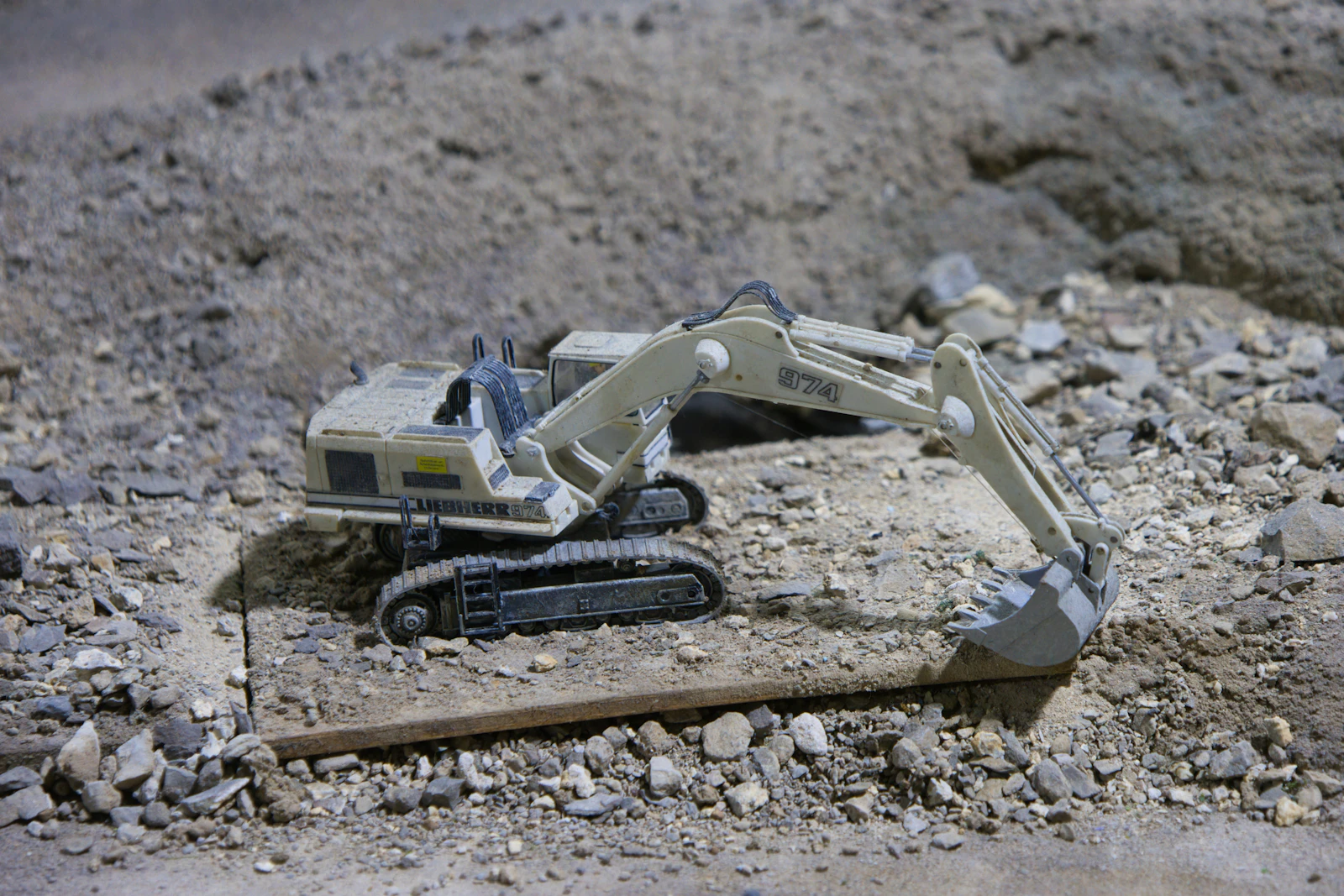
Mini Excavator Rental Rates Austin 2026
For retaining wall construction in Austin (dig-out, footing trench, drainage line, and backfill handling), 2026 budgetary mini excavator equipment hire typically lands in these ranges (machine-only, excluding delivery, fuel, and protection products): 1–2 ton class $275–$375 per day, $950–$1,250 per week, and $2,250–$3,200 per 4-week period; 3–4 ton class $325–$475 per day, $1,150–$1,650 per week, and $2,900–$4,250 per 4-week period; 5–6 ton class $450–$650 per day, $1,600–$2,250 per week, and $3,900–$5,200 per 4-week period. These planning ranges align with publicly visible Texas market signals such as Austin-area marketplace floors (e.g., low weekly/monthly starting points) and published rate sheets/bid tabs showing mini-excavator day/week/month pricing and common delivery charges; note that many national programs quote a “monthly” rate as a 28-day period rather than a calendar month. In Austin, the most reliable way to tighten the number is to price by operating weight + tail swing + bucket package + delivery radius and then add predictable fees (damage waiver, environmental/recovery, cleaning, and late/off-rent rules).
| Vendor |
Daily Rate |
Weekly Rate |
Review Score |
Website |
| Sunbelt Rentals (Austin, TX) |
$300 |
$995 |
9 |
Visit |
| United Rentals (Austin, TX) |
$315 |
$840 |
9 |
Visit |
| Herc Rentals (South Austin, TX) |
$360 |
$970 |
8 |
Visit |
| EquipmentShare Rental (Austin, TX) |
$260 |
$780 |
7 |
Visit |
How Mini Excavator Size And Configuration Changes The Hire Cost
For retaining wall scopes, “mini excavator” covers multiple cost tiers. Your rental coordinator should standardize quoting inputs so you are not comparing unlike configurations (this is one of the most common reasons equipment hire costs drift between estimate and invoice).
Typical Austin retaining-wall selection bands
- Micro (roughly 1–2 ton): tight gates, light trenching, limited reach. Often attractive on paper but may extend duration in Central Texas limestone/caliche, increasing total hire days.
- Compact mid (roughly 3–4 ton): the most common band for residential retaining wall construction (footings, drain rock handling, and general excavation) when access is constrained but production still matters.
- Large mini (roughly 5–6 ton): better breakout force and reach; typically lowers total duration on rockier cuts and larger walls, but costs more to mobilize and can trigger tighter access requirements.
Configuration items that routinely add cost in Austin quotes (allowances you can carry in 2026 budgets):
- Cab with HVAC premium: add $25–$60 per day when available (or plan to step up a class if only cab units are in stock).
- Zero-tail or reduced-tail swing: often priced at a premium in the same weight band; carry $20–$45 per day as a planning allowance when working close to structures/fences.
- Quick coupler / hydraulic quick-attach: add $15–$35 per day if not included (this becomes a hard requirement when you need trenching + grading buckets + thumb in the same shift).
- Rubber tracks: standard on many minis, but track damage back-charges are common—treat “track protection” as a cost item (see Hidden-Fee Breakdown).
What Drives Mini Excavator Hire Pricing For Retaining Wall Construction In Austin?
Austin pricing is not only about machine size; it is also about how your site conditions affect delivery effort, accessories, and time on rent. Three Austin-area realities that show up in retaining wall mini excavator hire costs:
- Limestone/caliche and cobble: harder digging increases tooth wear and can push you toward a heavier mini or a breaker allowance. If you under-size the unit, you may “save” $75–$150 per day but add 2–4 extra rental days, which is typically the more expensive outcome.
- Access and staging constraints in Central Austin: narrow streets, limited curb space, and gated properties can force smaller delivery vehicles, tighter delivery windows, or additional ground protection. Carry $150–$450 per day for traffic control/spotting and site labor when the drop zone is constrained or the machine must be walked in from a staging area.
- Heat and schedule compression: in peak summer, crews often shift earlier. If your rental house has a standard delivery cut-off (for example, same-day requests after mid-day pushing to next day), a missed delivery window can add a full extra day on rent. Treat schedule risk as an equipment hire cost driver, not just a project management issue.
Attachments And Accessories That Change Your Equipment Hire Cost
Retaining wall construction is attachment-driven. If your estimate only includes “mini excavator with bucket,” you are typically missing 15%–40% of real equipment hire spend once thumb/grading/compaction needs are included.
Common attachment adders (carry as 2026 allowances)
- Hydraulic thumb: plan $75–$125 per day (one published schedule shows $81 daily / $211 weekly / $385 monthly for a thumb).
- Auger drive (for deadman anchors, fence/guardrail posts, or drainage features): plan $125–$175 per day (one published schedule shows $141 daily / $406 weekly / $1,066 monthly).
- Hydraulic breaker/hammer (when limestone is unavoidable): carry $320–$450 per day for smaller hammers and up to $428 per day and higher on published schedules depending on breaker class.
- Additional buckets: trenching and grading buckets are often priced separately when you need more than the “one bucket included” package. Carry $15–$35 per day for a second bucket and $50–$125 per week depending on width and quick-coupler style.
- Ground protection mats: when you must cross finished surfaces, carry $10–$25 per mat per day plus handling labor (or budget a flat $120–$250 per week for a small mat package if the vendor bundles).
- Plate compactor / trench roller: compaction is integral to wall backfill performance. If you are renting compaction alongside the mini excavator, published rate sheets show compaction daily numbers like $225 per day for a reversible plate and $275 per day for a trench roller class.
Procurement note: if you need a thumb, confirm whether the quoted excavator is “plumbed” for it. A “thumb-ready” unit may rent at a higher base rate, but it is usually cheaper than swapping machines mid-rental.
Delivery, Pickup, And On-Site Logistics Costs In Austin
Delivery is frequently the biggest non-obvious line item on a mini excavator hire. As a Texas benchmark, a published county bid tab shows a $225 each-way delivery fee and notes that after-hours hauling is negotiated locally (and tolls/permits are not included). Use that as a reality check when a quote appears to have “free” mobilization baked in—many vendors simply embed it into the machine rate.
For Austin-area planning, carry these mobilization allowances:
- Standard delivery/pickup within metro radius: $175–$325 each way (often quoted as a flat rate inside a defined mileage band).
- Beyond standard radius: $6–$12 per loaded mile (or a higher flat rate tier).
- Dedicated time-window / jobsite appointment: add $75–$175 per trip if your site requires a strict 30-minute call-ahead and the driver cannot “drop and go.”
- After-hours / weekend delivery: add $150–$300 per trip where available (or expect next-business-day scheduling).
Operational constraints that materially affect total equipment hire cost on Austin retaining wall projects:
- Delivery cutoffs: confirm the branch’s daily dispatch cutoffs. Missing the cut can create a full extra day on rent if your crew is ready but the machine arrives next day.
- Drop location and access notes: if the truck cannot access the rear yard, you may be billed additional handling time or required to provide a spotter/forklift.
- Off-rent timing: many rental operations require off-rent calls before a specified time to stop billing the next day. Treat off-rent communication as a cost control step.
Hidden-Fee Breakdown
Use this section as an estimator’s checklist for “equipment hire cost creep” on mini excavator rentals supporting retaining wall construction in Austin.
- Damage waiver / rental protection: commonly budget 10%–15% of the rental subtotal (example documentation shows a 10% damage waiver on a published rate sheet).
- Environmental/recovery fee: carry 2%–6% of rental charges (often applied to rental and some service lines).
- Cleaning fee (mud, concrete slurry, adhesive): carry $125–$300; published terms show a $75 cleaning charge on a rate sheet as an example baseline, but heavy clay/mud and concrete fines typically escalate above that.
- Fuel/defuel charge: if returned below “full,” carry $6.50–$9.50 per gallon equivalent; one published policy example shows $5 per gallon fuel back-charge language (rates vary by market and time).
- Weekly hour cap: some rate structures define weekly pricing around a standard utilization cap (example terms show weekly based on 40 hours). If you exceed the cap, confirm the hourly overage rate or “extra day” rule.
- Weekend/holiday billing: confirm whether Saturday/Sunday count as chargeable days for your agreement, and whether “week” means 5 business days or 7 consecutive days.
- Track and undercarriage damage: nails, rebar, sharp limestone, and curb impacts can trigger back-charges. Budget a contingency of $150–$500 on constrained urban sites, especially if you are crossing demo debris.
- Missing accessories (pins, keys, bucket teeth): carry $25–$150 for minor missing items and ensure the delivery ticket notes what was supplied.
Example: 7-Day Mini Excavator Hire For A Residential Retaining Wall In Central Austin
Scenario: 40 linear feet of segmental retaining wall, average 4 ft exposed height, with a 12 in drainage zone and 4 in perforated drain. Site is Central Austin with limited street staging (truck must deliver between 7:00–9:00 a.m.), and excavation encounters intermittent limestone lenses.
Equipment hire plan (budgetary, 2026):
- 3–4 ton mini excavator: 1 week at $1,250 (mid-band allowance).
- Hydraulic thumb: 1 week at $211 (published weekly example) to handle rock and wall block placement logistics.
- Second bucket (grading/ditch): $95 per week allowance.
- Delivery + pickup: $250 each way = $500 (Austin planning allowance; Texas benchmark shows $225 each way).
- Damage waiver: 12% of rental lines ($1,250 + $211 + $95) = $187.
- Environmental/recovery: 4% of rental lines = $62.
- Fuel/defuel allowance: $140 (return-to-full risk buffer).
- Cleaning allowance: $175 (mud + limestone fines).
- Ground protection: $160 (mats package allowance to cross a finished driveway section).
Budgetary total equipment hire cost for the mini excavator package: approximately $2,796 before tax. Key constraint: if the wall excavation runs long and you keep the machine through an extra weekend, the incremental cost is usually cheaper as a weekly extension than stacking daily rates—confirm the branch’s “week” definition and off-rent cutoff before you start digging.
Budget Worksheet
Use these line items (no tables) to build a realistic mini excavator equipment hire budget for Austin retaining wall construction:
- Mini excavator base rental (select weight band and tail swing)
- Delivery and pickup (include any appointment/time-window premium)
- Hydraulic thumb (daily/weekly)
- Bucket package allowance (second bucket, ditch/grade bucket)
- Breaker contingency (carry 1 day minimum if limestone risk is unknown)
- Ground protection mats (quantity and duration)
- Damage waiver / rental protection (10%–15%)
- Environmental/recovery fee (2%–6%)
- Fuel/defuel allowance (return-to-full contingency)
- Cleaning allowance (mud, concrete fines)
- Overtime/overuse allowance if running beyond standard weekly hour assumptions (confirm cap; example terms show 40 hours)
- Downtown/central access contingency (spotter, traffic control, staged carry-in) ($150–$450 per day where applicable)
Rental Order Checklist
Use this checklist to reduce change orders and invoice disputes on mini excavator equipment hire in Austin:
- PO includes: machine class (operating weight), tail swing requirement, bucket(s) included, thumb requirement, quick coupler requirement
- Confirm rental period definition: day start/stop times, “week” definition (5-day vs 7-day), and “month” definition (often 28 days)
- Confirm utilization rules: weekly hour cap and overage rate (example terms show weekly based on 40 hours)
- Delivery instructions: jobsite address, gate codes, contact name/phone, acceptable drop zone, surface restrictions, required delivery window
- Pickup/off-rent process: who calls off-rent, by what time, and required condition (cleanliness, fuel level, buckets staged)
- Protection products: damage waiver selection and proof of insurance requirements
- Condition documentation: photos at delivery and at pickup, note existing track/bucket wear on the delivery ticket
Rate Structure Details That Affect Final Hire Spend
Most cost overruns on mini excavator equipment hire are not caused by the day/week/month headline rate—they come from rate-structure details that do not get captured in the first estimate email. Build these confirmations into your Austin rental coordination workflow:
- Monthly definition: many national systems quote monthly as 28 days. If your project schedule is a true calendar month (30–31 days), confirm the pro-ration for days 29–31.
- Weekly definition: some programs use 5 business days; others treat it as a 7-day block. If the rental house enforces an hour cap, confirm the cap and the overage mechanism (example terms show 40 hours for weekly).
- Minimum charges: expect a 1-day minimum (and sometimes a 2-day minimum on delivered equipment). If you only need 4–6 hours for a trench tie-in, compare “grab-and-go” pickup (if you have a rated trailer) versus delivery.
- Late return: confirm cut-off times. A return after close can trigger an extra day in some policies (example terms show equipment cannot be returned after hours on one published sheet).
Return Condition Standards And Back-Charge Prevention
Retaining wall sites generate fine soils, wet clay pockets, and crushed rock—exactly what rental houses look for when assessing cleaning and damage charges. Use these cost controls:
- Clean before pickup: carry a realistic cleaning allowance (commonly $125–$300). Some published terms show a $75 cleaning charge baseline, but field reality on wall backfill and wet spoil commonly exceeds that baseline.
- Return-to-full fuel discipline: set an internal rule that the foreman refuels at end of last shift. A published policy example shows $5 per gallon back-charge language; in practice, vendors charge their own rate and apply handling.
- Document track condition: take delivery and pickup photos of tracks, sprockets, idlers, and the undercarriage area. This is your best defense against “existing damage” disputes.
- Bucket teeth and pins: confirm tooth count and pin presence at delivery; missing items are small-dollar but common and add friction at closeout.
Coordinating Spoils And Backfill So You Do Not Pay Extra Hire Days
Mini excavator hire on retaining walls is highly sensitive to “non-digging” delays. If the machine sits while you wait for haul-off or block deliveries, you are still paying rent. Practical controls that reduce net hire cost:
- Schedule haul-off capacity before delivery: if you expect 2–3 dump runs, ensure trucking is locked so the mini excavator is not used as a stockpile management tool for multiple days.
- Stage drain rock and geotextile: a half-day of material shortage can force a full extra rental day if it pushes you past an off-rent cutoff.
- Pre-approve a one-day breaker trigger: if the crew hits limestone, avoid a 24-hour wait for approval. Carry a pre-approved breaker allowance (even if unused) when geotech is uncertain; published schedules show breaker day rates that can be material.
Ownership Vs Hire For Retaining Wall Crews (When Rental Wins)
From a pure cost-of-equipment standpoint, mini excavator hire in Austin is usually the better procurement choice when:
- You need a mini excavator intermittently (for example, 3–10 days per month across multiple small wall packages).
- You need frequent configuration changes (thumb, breaker, auger) without carrying that accessory inventory year-round.
- Your work includes tight-access Central Austin sites where a smaller class machine is sometimes required; rental lets you match machine size to each job rather than forcing one owned unit onto every site.
Ownership becomes more attractive when your utilization is consistently high (most weeks of the year) and you can standardize on one machine class and one attachment set. Even then, many contractors still rent a second unit during peaks because a single delayed wall excavation can otherwise put multiple crews on standby—standby labor cost often dwarfs the incremental rental cost.
Procurement Notes For Austin-Area Branch Networks
Austin has access to national fleets and regional independents. In practice, pricing and availability will swing based on seasonality and fleet mix. Tighten your equipment hire number by standardizing your quote request and asking the same five questions every time:
- Is the quote based on a 28-day month or calendar month?
- Does the weekly rate assume a 40-hour utilization cap (and what is the overage rule)?
- What is delivery/pickup cost, and what mileage band does it include (Austin benchmark: Texas bid tab shows $225 each way in one program)?
- What buckets are included (one bucket vs two-bucket package), and is the unit plumbed for a thumb?
- What are the cleaning and fuel expectations, and what are the back-charge rates (published policies show examples like $75 cleaning and $5/gal fuel in some programs)?
Quick FAQ For Rental Coordinators
- What is the cheapest mini excavator hire signal in Austin right now? Marketplaces sometimes show very low floors (e.g., weekly starting points around $330 and monthly around $990), but those are typically micro-class units or limited configurations; confirm operating weight and attachment needs before accepting a low headline rate.
- Is there Austin-area proof of monthly pricing below $2,000? Yes—listings in the Austin perimeter can show monthly figures around $1,950 for smaller units; verify transport and availability dates.
- How much should I carry for a thumb? $75–$125 per day is a practical Austin allowance; published schedules show examples like $81 per day and $211 per week.
- What deposit should I expect? Deposits vary widely by credit terms, but published contractor rate sheets show deposits in the ~$493–$685 range for compact excavator classes, which is a useful planning bracket when you do not yet have house credit established.
If you want, I can rewrite your internal RFQ email template for “mini excavator equipment hire costs in Austin for retaining wall construction” so your PMs and supers request consistent specs (and you get tighter, more comparable quotes).