

Create an itemized estimate for your project, with materials, labor, and quantities you can review and edit.
Create my estimateStart a 7-day free trial. Sign up, then enter your project details.
For Baltimore basement waterproofing scopes in 2026, plan mini excavator equipment hire costs in three layers: (1) base rental rate by weight class, (2) transport and time rules (delivery/pickup, meter allowances, off-rent cutoffs), and (3) variable jobsite pass-throughs (damage waiver, refuel/cleaning, attachments). As a practical 2026 planning range, a compact 1–2 ton mini excavator typically budgets at $220–$360/day, $850–$1,250/week, and $2,200–$3,200 per 4-week “rental month”; a 3–4 ton class typically lands around $300–$475/day, $1,050–$1,650/week, and $2,700–$4,100 per 4 weeks; and a 5–6 ton class is often $450–$650/day, $1,600–$2,300/week, and $4,200–$6,000 per 4 weeks (all before fees/attachments and assuming standard shift use). These ranges align with how major fleets present day/week/month structures online and how regional rate sheets publish “day / week / month” style pricing, but your contracted rate will still depend on account terms, availability, and configuration (zero-tail swing, thumb, coupler, bucket package).
| Vendor | Daily Rate | Weekly Rate | Review Score | Website |
|---|---|---|---|---|
| United Rentals | $395 | $1 580 | 9 | Visit |
| Sunbelt Rentals | $375 | $1 500 | 9 | Visit |
| Herc Rentals | $360 | $1 440 | 8 | Visit |
| The Home Depot Tool Rental | $310 | $1 240 | 8 | Visit |
| The Cat Rental Store (Alban CAT) | $425 | $1 700 | 9 | Visit |
Use the ranges below as estimating allowances for mini excavator hire for basement waterproofing (foundation perimeter excavation, drain tile replacement, sump discharge trenching, and exterior membrane access). For most rowhome and tight side-yard scopes, the 3–4 ton class is the “default” because it balances reach and breakout force without forcing costly access changes.
Assumptions for these Baltimore equipment hire cost ranges: (a) “monthly” is priced as a 4-week/28-day rental period on many agreements, not a calendar month, (b) standard one-shift utilization unless your contract states otherwise, and (c) rubber tracks (common for residential access) unless steel tracks are specifically required (often with higher damage risk and site restoration cost).
1) Access and machine class. Baltimore basement waterproofing often means working beside occupied structures, between fences, or off an alley. If the dig is constrained to a narrow side yard, you may be forced into a smaller class or a zero-tail swing configuration, and that can increase the effective cost if it adds days. Conversely, a larger machine can cut excavation time but may push you into added logistics (street occupancy, matting, protection, staged spoils).
2) Duration and “stop-start” scheduling. Waterproofing work frequently pauses for inspection, membrane cure, rain delays, or interior drain tie-ins. If your rental agreement bills by the day with weekend rules, a Friday delivery with a Monday pickup can bill 3–4 days even if you only dug for 1 day. Budget your schedule around the vendor’s off-rent cutoff time (commonly same-day notification for next-day off-rent) and pickup lead times.
3) Contract inclusions and utilization caps. National fleets commonly define a standard shift (e.g., 8 hours/day, 40 hours/week, 160 hours/4 weeks) and can charge incremental “overtime” if meter hours exceed the included allowance. If you run extended hours to stay ahead of weather, that can turn a “cheap weekly” into a higher effective daily cost.
Below are typical mini excavator rental adders you should carry as explicit allowances on Baltimore waterproofing estimates. These are not guaranteed vendor prices—treat them as planning ranges to avoid change orders and internal cost overruns.
Right-of-way (ROW) use and sidewalk impacts. If you need to place a mini excavator in the street/sidewalk, close a sidewalk section, or stage spoils/stone, you can trigger ROW permit requirements and fees. Baltimore publishes a ROW fee schedule; for example, a sidewalk closure fee is shown at $55/week on the city schedule, and street/way excavation activity is regulated under city code—both of which can convert “simple delivery” into a managed logistics item. Carry permit processing time and internal labor for submittals as part of the equipment hire plan.
Rowhouse alley access and delivery windows. In many Baltimore neighborhoods, alleys are narrow and shared. If a delivery truck can’t back in, you may need a smaller trailer, a different drop location, or a liftgate/rigging approach—all of which can increase transport charges and waiting time. Practical field rule: confirm turning radius, overhead wires, and gate width before you book, and set a delivery appointment that avoids school-zone traffic and peak commuting restrictions.
Storm events and soil conditions. Basement waterproofing is weather-sensitive. Rain can stall excavation, increase spoils weight, and create track cleaning issues. Budget additional cleaning and pickup slippage risk during wet weeks, and consider whether you need track mats to protect pavers/sidewalk panels (often cheaper than restoration).
Scenario. A crew excavates ~70 linear feet around a rowhome foundation (target depth 6 ft in sections), stages spoils into a small container, installs drain tile and membrane, then backfills with stone and native. Access is through an alley; deliveries must occur between 7:00 a.m. and 2:00 p.m. to avoid blocking trash pickup.
Equipment hire plan (budgetary).
Expected equipment hire subtotal (illustrative): about $2,885 for the week under these assumptions, before any meter overage, return damage, or schedule-driven extra days. The main controllable cost lever here is avoiding a weekend billing trap (e.g., Friday delivery + Monday pickup) and avoiding thumb charges if the scope can be handled with bucket-only excavation.
Use this bullet worksheet to build a mini excavator hire budget that matches Baltimore basement waterproofing realities (tight access, spoil handling, and permit/logistics).
Match rate structure to the realistic critical path. If excavation/backfill is truly a 2-day burst, a daily rate may be cheaper than paying a full week plus weekend exposure. If the job has inspections and inevitable pauses, a weekly or 4-week structure can be safer—provided you plan work so the machine is productive on most billed days. Also, confirm whether your vendor defines a rental “month” as 28 days and whether your project schedule is aligned to that billing cycle.
Reduce attachment days. A hydraulic thumb or coupler can be worth it for roots and debris, but they are frequent cost multipliers. If you only need the thumb for demolition day, schedule that work inside the same billed day (or negotiate attachment-only on-rent/off-rent).
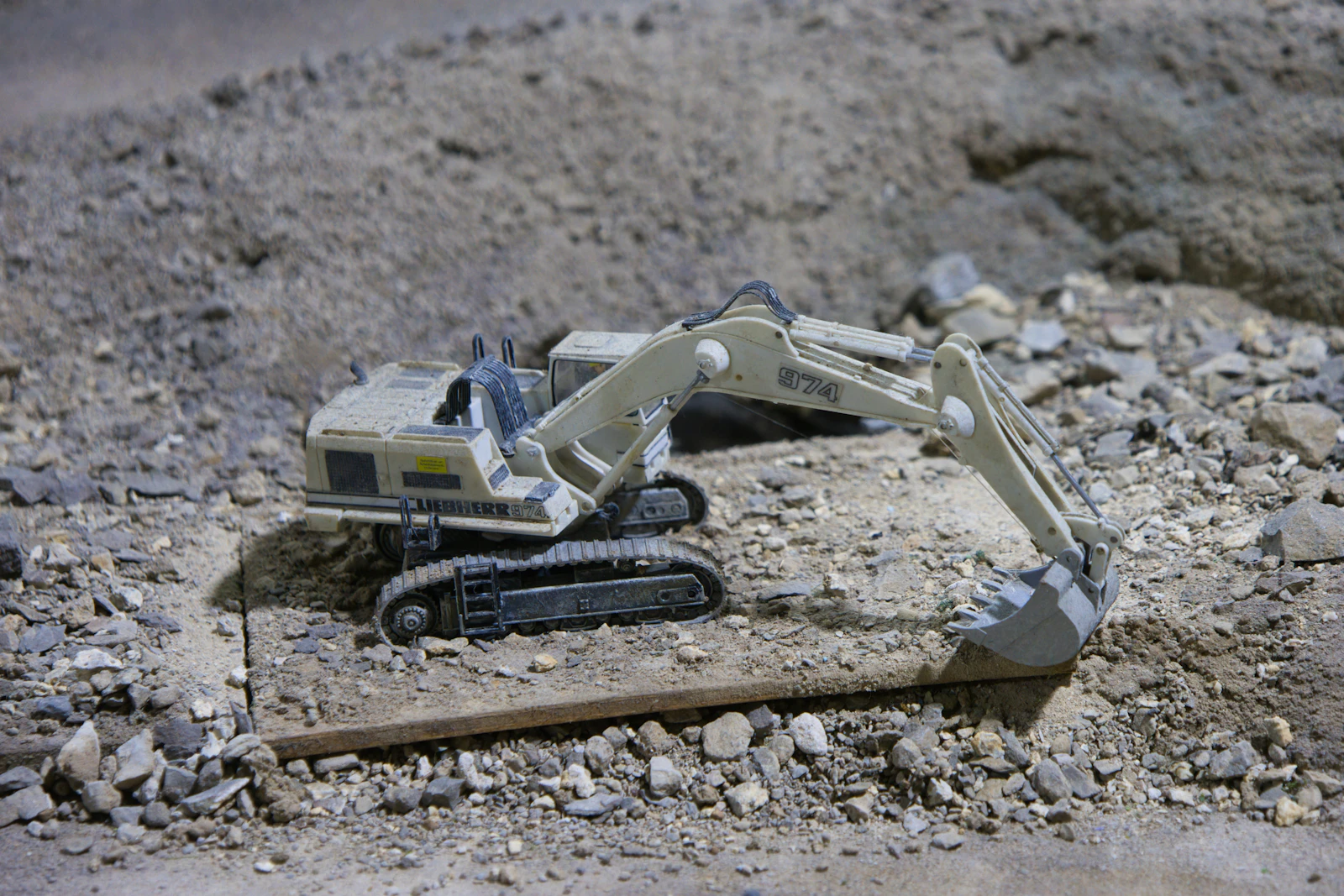
For mini excavator equipment hire costs in Baltimore, the “rate” is only half the story—billing rules often drive the final effective daily cost. Many contracts treat the base rental rate as a standard shift entitlement (commonly 8 hours/day, 40 hours/week, 160 hours/4 weeks). If you run long days to open the foundation wall before rain, meter overages can apply even though the calendar time stayed inside the same week. Put differently: a $1,300 weekly rate can behave like $1,300 + (10 overtime hours × $55/hr) if you exceed the included meter hours.
Off-rent timing. Your cost control hinge is the off-rent call. If your foreman calls off-rent after the vendor’s cutoff, you can get billed an extra day even if the machine is parked and locked. Build a closeout habit: (1) clean and fuel the excavator by noon, (2) take return-condition photos, (3) call off-rent before the cutoff, and (4) confirm the pickup appointment in writing with the dispatcher.
For basement waterproofing, attachments are where estimates most often miss. Carry these as explicit line items so your PM can decide what is truly required versus “nice to have.”
Operational note: If your job requires a breaker, confirm the excavator has the correct auxiliary flow and that the vendor is supplying the correct hoses/couplers. A wrong-hose delivery can burn $85–$125/hour in detention or tech time and still leave you down for the day.
Most rental coordinators treat damage waiver as “just a percentage,” but waterproofing digs have above-average risk drivers: buried brick, tight turning near steps, and frequent track contact with curb edges. If your company carries its own inland marine or equipment floater, compare the cost of waiver versus your internal deductible and claims friction. As a planning range, carry:
If your excavation footprint or staging touches the public way, treat permitting as part of the equipment hire plan (not an afterthought). Baltimore requires permits for excavations in public ways, and published schedules show specific weekly fees for certain occupancy types (for example, sidewalk closure fees listed at $55/week). When a permit is required, the cost impact is usually larger than the fee itself: it’s the schedule risk (waiting), the traffic control plan, and the delivery window constraints that can add billable rental days.
For waterproofing contractors who rent minis frequently, cost improvements typically come from contract structure more than from chasing “the cheapest day rate.” Tactics that actually move total cost:
Closeout is where many mini excavator rental overruns occur. For Baltimore basement waterproofing, the highest-frequency closeout issues are undercarriage mud, membrane/adhesive overspray, and track edge damage from curbs and rubble. Implement a consistent closeout routine:
If you want, share the mini excavator class you typically use (1–2 ton vs 3–4 ton), whether you require a thumb, and your expected rental duration (2 days, 1 week, or 4 weeks). I can tighten the Baltimore equipment hire budget to a single target range with a recommended allowance set for transport, waiver, and attachments.
