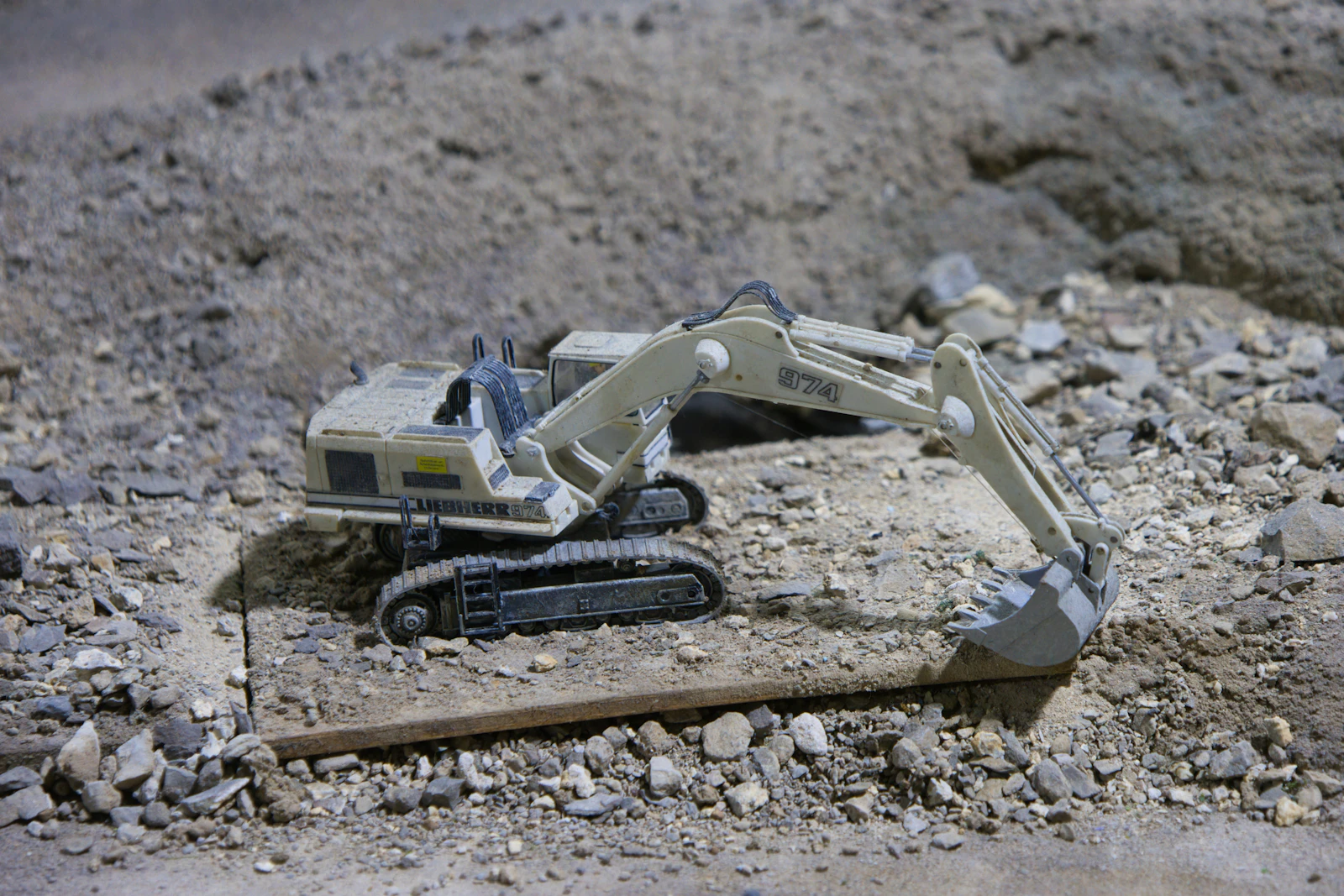
Mini Excavator Hire Costs Columbus 2026
For foundation repair work in Columbus, Ohio, 2026 planning budgets for mini excavator equipment hire typically land in these bare-machine ranges (before delivery, damage waiver, attachments, fuel, taxes, and overtime): $300–$575/day, $995–$1,550/week, and $2,310–$3,600 per 4-week term depending on size class (roughly 10,000–13,000 lb machines pricing lower than 15,000–19,999 lb machines). As local market references, Ohio CAT’s Columbus listings show examples such as a CAT 303 at $425/day, $1,200/week, $2,800/month and CAT 303.5CR at $450/day, $1,250/week, $3,000/month, while a larger CAT 305 example is $565/day, $1,450/week, $3,200/month (availability and branch policies drive the final quote). National providers like United Rentals, Sunbelt Rentals, Herc Rentals, and regional fleets (including dealer rental yards) will generally quote within similar bands for comparable machines when terms, hour limits, and delivery logistics match.
| Vendor |
Daily Rate |
Weekly Rate |
Review Score |
Website |
| United Rentals |
$375 |
$1 450 |
9 |
Visit |
| Sunbelt Rentals |
$360 |
$1 400 |
9 |
Visit |
| Herc Rentals |
$350 |
$1 350 |
8 |
Visit |
| The Home Depot Tool Rental |
$329 |
$1 320 |
8 |
Visit |
| EquipmentShare Rentals |
$340 |
$1 300 |
8 |
Visit |
Rate Bands By Mini Excavator Size For Foundation Repair
Foundation repair scope (exterior excavation at a basement wall, drain tile replacement, waterproofing membrane, window well replacement, helical pier access trenches, or localized footing exposure) usually dictates the smallest machine that still meets production. In Columbus, the hire-cost sweet spot for most foundation contractors is the 3–4 ton class (approx. 10,000–13,000 lb) because it balances reach and stability with residential access constraints.
Micro / 1–2 Ton (Tight Access, Utility-Heavy Perimeters)
Plan on $250–$350/day, $700–$1,000/week, and $1,800–$2,800 per 4-week for micro units in many U.S. markets, with Columbus quotes often clustering toward the mid/high end during peak season. These are used when gate widths, porch stoops, and alley setbacks require a short tail-swing footprint and low ground pressure.
3–4 Ton (Typical Foundation Repair Production Class)
For 2026 Columbus budgeting, pencil $425–$525/day, $1,200–$1,450/week, and $2,800–$3,200 per 4-week for a modern cabbed 3–4 ton mini with auxiliary hydraulics. Ohio CAT’s Columbus examples at $425–$450/day and $1,200–$1,250/week are realistic reference points for this class when you can stay within standard hour limits.
5–6 Ton (Deeper Dig, More Spoil, More Stabilization)
When you need more breakout force (older concrete/brick demolition around a footing, deeper exterior drain runs, or working in wet, heavy clay), 5–6 ton minis commonly budget at $450–$650/day, $1,300–$1,900/week, and $3,200–$5,000 per 4-week range in broader U.S. pricing guidance (Columbus may trend higher in summer).
What Drives Mini Excavator Equipment Hire Costs On Foundation Repair Jobs?
Mini excavator equipment hire costs rarely hinge on the base rate alone. On foundation repair, the biggest “silent” cost drivers are (1) access constraints that force you into specialty configurations, (2) attachment mix, and (3) time on rent created by inspection windows and backfill sequencing.
- Configuration premium: a true zero-tail swing (or ultra-short radius) machine, rubber tracks, or a blade-equipped unit can push quotes up by $25–$75/day versus a standard tail unit in the same weight class (typical market behavior; confirm with the branch quote).
- Hour limits and shift definitions: many fleets treat the “day/week/4-week” rate as a one-shift allowance (commonly 8 hours/day, 40 hours/week, 160 hours/4-weeks). If your foundation repair crew runs long days to hit inspection/backfill, the overtime math matters.
- Soil and spoil handling: Columbus-area clay and wet subgrade conditions increase cycle time and undercarriage cleanup. That can translate into more days on rent and higher end-of-rental cleaning exposure.
- Utility-density work: tighter hand-dig and daylighting requirements reduce excavator productivity, pushing rentals from “a few days” into a full weekly minimum.
Hidden-Fee Breakdown For Columbus Mini Excavator Hire
When estimating mini excavator hire for foundation repair in Columbus, treat the following as mandatory budget lines (even if your chosen vendor rolls them into a package). The goal is to prevent “low daily rate” decisions that get erased by logistics and compliance adders.
Delivery And Pickup (Flat vs. Mileage, Plus Access Constraints)
- Typical market allowance: $150–$600 each way depending on distance and machine size.
- Published contract example (useful for benchmarking): an 11,000 lb mini excavator line item shows $290 mobilization for the first mile plus $4 per additional mile.
- Columbus-specific consideration: downtown core deliveries and dense historic neighborhoods can trigger additional trucking time or smaller truck requirements. If the driver has to wait for alley access or you miss a delivery window, plan a detention/waiting exposure such as $75–$150 per hour (common practice; confirm on the rental agreement).
Damage Waiver / Rental Protection
- Budget 10%–15% of the base rental as an optional damage waiver line if you’re not handling risk via your own inland marine coverage.
- For a $1,250/week mini, that’s typically $125–$188/week in planning dollars.
Overtime And Excess Use (How Long Days Inflate “Cheap” Weekly Rates)
Many rental programs define the base rate as a one-shift entitlement. One published policy states that excess use is payable at 1/8 of the daily charge per hour, 1/40 of the weekly charge per hour, or 1/160 of the 4-week charge per hour. For foundation repair, overtime often happens when you must expose a wall, place waterproofing, and backfill before rain.
- Example overtime math on a $1,250/week rate: $1,250 ÷ 40 = $31.25/hour for excess hours.
- Running 50 hours instead of 40 can add about $312.50 in overtime before tax/surcharges.
Environmental / Preventative Maintenance / Transportation Surcharges
- Preventative maintenance (PM) charges: one major renter discloses a PM charge of $1–$6 per operating hour depending on equipment type/size, typically billed around 160 hours and adjusted to actual meter use.
- Transportation surcharges: published guidance shows a fixed component that can be 9% (or a $9 minimum) plus a variable diesel-linked component applied to transport rates.
Fuel / Recharge And Cleaning Fees (End-Of-Rental Closeout Risk)
- Refuel exposure: if returned short, many branches apply a posted refueling service charge (often materially higher than your bulk diesel cost).
- Planning allowances: $6–$9/gal for refuel billing, and $75–$250 for general wash/cleanup; if the undercarriage is packed with Columbus clay after rain, plan $150–$400 for heavy cleaning (confirm vendor thresholds).
- Concrete contamination: if you track across fresh flatwork or return with hardened concrete/mortar, assume a higher cleaning line and possible damage assessment.
Attachment And Accessory Adders (Common On Foundation Repair)
Foundation repair rarely rents as “bucket only.” The attachment mix is often the difference between a smooth wall exposure and an overrun. Use these published attachment benchmarks to build your equipment hire cost stack.
- Trenching / smooth buckets for mini-ex <19K: published daily rates of $22/day and $55/week appear on a statewide contract schedule (e.g., 18"–36" buckets).
- Thumb attachment: example pricing shows $81/day, $211/week, $385/month for an excavator thumb (useful for handling broken footing chunks, riprap, and drain rock without labor-intensive handwork).
- Auger drive: example pricing shows $141/day, $406/week, $1,066/month for an excavator/backhoe auger attachment (relevant if you’re drilling for posts, drainage structures, or pier-related layout).
- Hydraulic breaker: published breaker benchmarks show $428/day, $1,212/week, $2,485/month for a smaller breaker class, and higher tiers at $741/day / $2,095/week / $4,563/month depending on breaker size.
- Extra delivery exposure for attachments: the same schedule shows an example transportation charge of $250 each way per item within 30 miles (useful as a planning placeholder when attachments mobilize separately from the carrier).
Estimator note: If you need a quick coupler and multiple buckets, confirm whether the branch treats additional buckets as separate line items or includes a standard bucket in the base hire. Treat “bucket included” as a quote-specific assumption, not a default.
Example: Columbus Foundation Repair Mini Excavator Hire Estimate (5-Day Exterior Waterproofing)
Scenario: Exterior wall excavation and drain tile replacement on a 1950s basement in Columbus. Access is through a 10 ft side yard; spoil must be staged tight; work must be completed and backfilled before a forecast rain event. Crew plans 5 consecutive workdays with two extended days.
- Machine: 3–4 ton class mini excavator at a published reference of $450/day, $1,250/week, $3,000/month (use weekly for a 5-day run).
- Base rental (weekly): $1,250
- Delivery/pickup planning: assume 18-mile haul each way using the benchmark $290 first mile + $4/additional mile → ($290 + 17×$4 = $358) each way, $716 round trip.
- Damage waiver: assume 12% of base rental → $150.
- Thumb attachment (weekly): $211
- Trenching bucket add-on (weekly): $55
- Overtime/excess use: crew runs 48 hours total (8 over the 40-hour weekly entitlement). Using the disclosed method 1/40 of weekly charge per hour: $1,250/40 = $31.25/hr; 8×$31.25 = $250.
- PM charge allowance: assume $3/hr average × 48 hours = $144 (planning placeholder).
- Cleaning allowance: $200 (wet clay undercarriage risk)
- Refuel allowance: 10 gal × $7/gal = $70
Planning subtotal (pre-tax): $1,250 + $716 + $150 + $211 + $55 + $250 + $144 + $200 + $70 = $3,046. Add local tax and any vendor-specific surcharges per the rental agreement. The key takeaway for Columbus foundation repair is that a “$1,250/week” mini can realistically budget near $3.0k all-in once trucking, risk, attachments, and overtime are included.
Budget Worksheet
- Mini excavator hire (3–4 ton class): $1,200–$1,550/week allowance (select weekly vs daily)
- Mobilization (delivery + pickup): $300–$600 each way, plus mileage allowance (e.g., $4/mile after first mile)
- Damage waiver / rental protection: 10%–15% of base rent
- Attachments:
- Thumb: $211/week allowance
- Extra bucket(s): $55/week per bucket allowance
- Breaker (if needed): $1,212/week allowance (size-dependent)
- Overtime (excess hours): 5–15 hours at $25–$45/hour equivalent (based on weekly rate ÷ 40)
- PM / meter-based charges: $1–$6/hour × estimated hours
- Fuel / refuel: 8–20 gallons at $6–$9/gal allowance
- Cleaning / wash bay: $150–$400 allowance (mud-packed undercarriage)
- Downtime contingency: 0.5–1.0 extra day for inspection/weather holds
Rental Order Checklist
- PO and billing: PO number, cost code, tax-exempt docs (if applicable), and required billing contact.
- Insurance and compliance: COI on file; many rate sheets specify $1,000,000 general liability minimums—confirm your vendor’s certificate holder and wording.
- Delivery requirements: jobsite address + pin, on-site contact phone, gate width, trailer access, and a delivery cutoff time (many branches require next-day orders by early afternoon).
- Machine specs to confirm: operating weight class, tail swing (ZTS vs conventional), bucket pin-on vs quick coupler, auxiliary hydraulics, and track type (rubber vs steel).
- Attachments: list each bucket width, thumb, breaker, auger, and verify separate mobilization vs bundled transport.
- Off-rent rules: confirm how to call off-rent (email/portal/phone), whether weekends/holidays bill as full days, and what time-of-day stops billing.
- Return condition documentation: photos of undercarriage, bucket teeth, cab glass, and final hour meter reading before pickup; document any pre-existing damage at delivery.
- Fuel expectations: confirm “return full” policy and posted refuel rates.
Columbus-Specific Cost Triggers To Watch
- Historic neighborhood access: In areas with tight lots and narrow drive approaches, you may need a smaller class machine and more handwork—raising days on rent even if the daily rate is slightly lower.
- Wet-season clay and cleanup: Columbus rain events can turn trench spoils into sticky clay that packs tracks; budget higher cleaning and a half-day schedule buffer to avoid late-return charges.
- Inspection and backfill sequencing: Foundation waterproofing often pauses for inspection or cure windows; if your off-rent must be called in before a cutoff, missing it can roll an extra day onto the invoice.
Commercial Terms That Change Your All-In Mini Excavator Equipment Hire Cost
Rental coordinators managing foundation repair crews in Columbus can usually reduce cost variance by locking down the “terms language” early. Two quotes with the same weekly rate can produce materially different invoices due to hour caps, surcharge structures, and what the branch defines as a “month.”
- 4-week vs calendar month: Many programs price “monthly” as 4 weeks (28 days), with a standard use entitlement commonly aligned to 160 hours for that period. One Columbus-area rental service explicitly references a 160 hours per month usage limit with overages billed later, so include a meter-hours line in your estimate even on fixed-term hires.
- Weekend/holiday billing: Confirm whether a Friday delivery with Monday pickup counts as 3–4 billable days or a weekend package. For foundation repair, weather delays on a Friday excavation can inadvertently burn a weekend of rent if you cannot safely backfill.
- Overage mechanism: If you routinely exceed one shift, treat overtime as a predictable cost, not a surprise. Using a published method, excess hours can be billed at weekly rate ÷ 40 (or daily rate ÷ 8).
- Transport surcharge layering: If your provider applies a transportation surcharge (for example, a disclosed 9% fixed component with a minimum of $9 plus a variable component), request the surcharge basis in writing and keep it in your closeout file.
How To Control Mini Excavator Hire Costs On Foundation Repair Without Slowing Production
- Rent for the sequence, not the whole project: If your waterproofing scope includes hand-applied coatings and cure time, schedule the mini excavator to arrive the morning excavation starts and off-rent the same day backfill completes. Avoid “dead days” where the machine sits while other trades work.
- Match bucket strategy to spoils management: Instead of upsizing the excavator class, consider adding a purpose bucket. Published adders show mini-ex buckets as low as $22/day or $55/week, which can be cheaper than jumping to a larger carrier class for marginal productivity.
- Use a thumb to reduce labor: A thumb benchmark of $81/day / $211/week can pay back quickly when handling demolition debris, riprap, and drain rock placement with fewer ground hands.
- Pre-plan trucking: If you’re renting multiple attachments, confirm whether they mobilize with the machine or as separate “items.” A published schedule shows attachment transportation exposure of $250 each way within 30 miles, which can surprise a budget if you add buckets mid-rental.
- Decide waiver vs. self-insure intentionally: With damage waiver commonly budgeted at 10%–15% of the daily rate, the decision is meaningful on multi-week foundation programs—align it to your insurance strategy instead of defaulting.
Closeout Documentation That Prevents Cleaning, Fuel, And Damage Disputes
Because foundation repair jobs put minis in wet soils, tight access, and near structures, closeout discipline is part of controlling equipment hire cost.
- Delivery photos: track condition, bucket pins, hydraulic lines, cab glass, and any existing dents/scrapes.
- Daily meter capture: record hour meter at shift end. This lets you forecast overtime (weekly rate ÷ 40) before the invoice arrives.
- Return-condition photos: undercarriage free of packed clay, cab swept, and bucket free of hardened concrete. Cleaning charges can apply when equipment is returned with excessive dirt/concrete/paint, so the photo record helps if there’s a dispute.
- Fuel level proof: photo of gauge at pickup time; refueling service charges may apply when not returned full.
- Off-rent confirmation: email/portal confirmation with timestamp; if off-rent calls have a cutoff time, this protects you from an extra billable day.
If you want, share the planned dig length/depth and access constraints (gate width, alley access, and whether you need a breaker or thumb). I can tighten the Columbus 2026 mini excavator equipment hire budget into a per-wall or per-linear-foot allowance tailored to foundation repair sequencing.