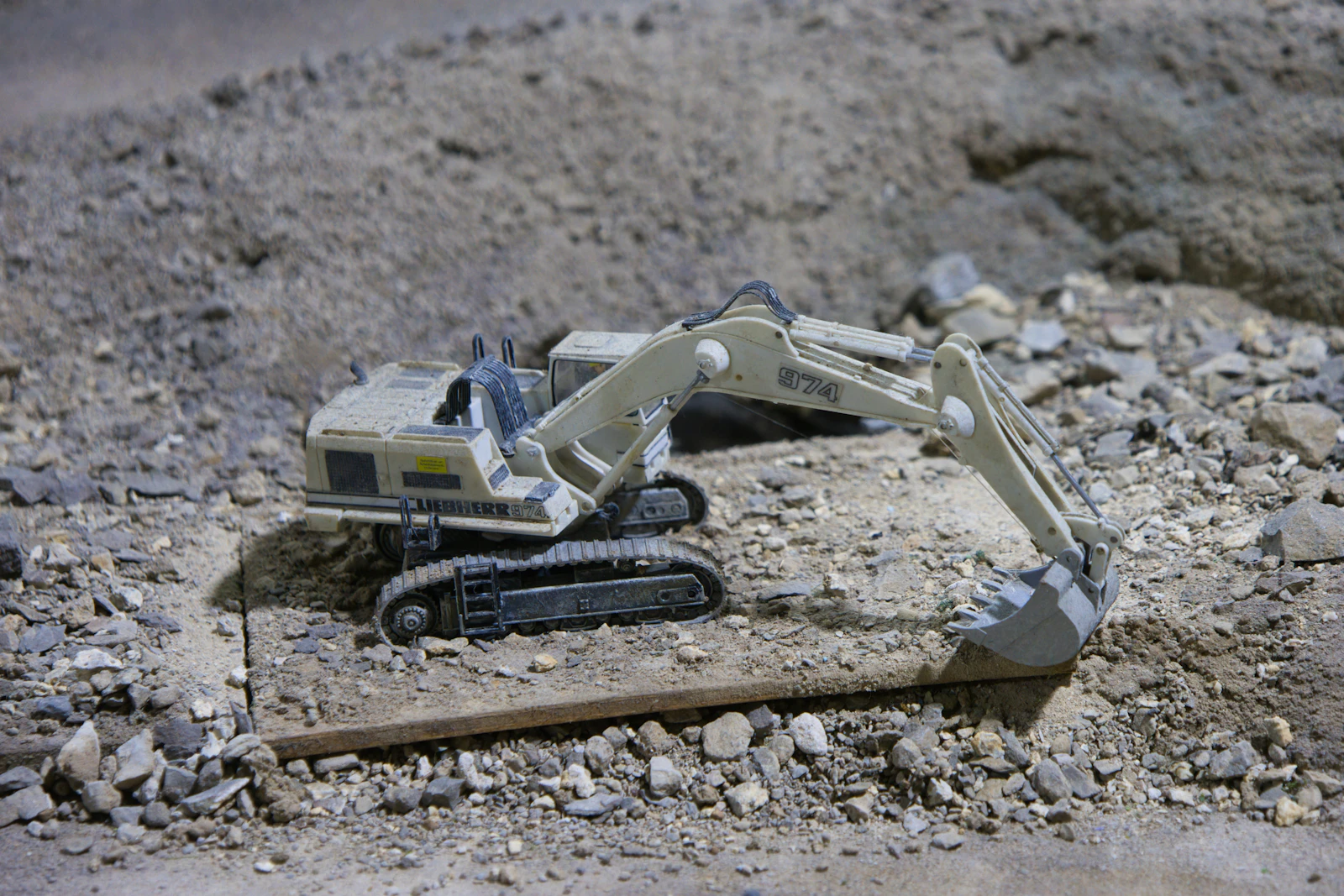
For commercial tenant improvement scopes in Fresno (utility trenching for new restrooms, grease interceptor tie-ins, exterior ADA ramps, landscape/demo, conduit runs, and light grading), mini excavator equipment hire in 2026 typically plans in these bands (dry hire, no operator): $200–$360/day for micro/1–2 ton units, $240–$420/day for 3–4 ton units, $300–$500/day for 5–6 ton units, and $400–$650/day for 7–8 ton units. Weekly is commonly budgeted at ~3.0–3.8× the daily rate and a 28-day “monthly” at ~8–10× the daily rate (assume an 8-hour meter day, 40-hour week, 28-day month, standard bucket included, delivery/taxes/waiver extra). In Fresno you’ll usually be quoting through national branches (United Rentals, Sunbelt Rentals, Herc) and Cat dealers (e.g., Quinn Company) plus regional independents; the rate is only half the story—the total hire cost is driven by delivery windows, meter overages, dust control expectations, and attachment needs.
Mini Excavator Rental Rates Fresno 2026
The most defensible way to set 2026 planning ranges is to triangulate multiple published reference points (local-market guide pricing, dealer rental listings, and regional rental catalogs) and then add Fresno TI-specific allowances for logistics and compliance. For example, published Fresno mini excavator “by weight class” rates show daily/weekly/monthly-style pricing bands (e.g., 4,000 lb at $197/day, $520/week, $1,456/month; 12,000 lb at $312/day, $907/week, $2,466/month; and 16,000 lb at $416/day, $1,278/week, $3,048/month). A Fresno-area dealer listing also shows a 7,000 lb-class unit around $275/day, $950/week, $2,700/month, while a compact 2-ton unit is advertised in another California market at $345/day, $1,050/week, $2,650/four-week. Use these as anchors—your negotiated account rates may land below, but spot rentals during peak season can land above.
Published reference points used for rate anchoring (examples, not quotes): BigRentz Fresno mini excavator guide; a Fresno-area listing for a Cat 303CR; and a California rental catalog listing a 2-ton compact excavator day/week/four-week rate.
- Micro / 1–2 ton (≈3,000–4,000 lb): plan $200–$360/day, $520–$1,050/week, $1,450–$2,650/28-days. These are common for interior courtyard access, working tight behind retail pads, or navigating narrow service corridors.
- 3–4 ton (≈7,000–9,000 lb): plan $240–$420/day, $730–$1,200/week, $1,950–$2,900/28-days. This is the “TI sweet spot” for most plumbing/electrical trenching around buildings where you still need compact swing but want more breakout and stability.
- 5–6 ton (≈11,000–13,000 lb): plan $300–$500/day, $995–$1,500/week, $2,300–$3,600/28-days. Typically chosen when you have longer trench runs, harder native soils, or you’re pairing a breaker/compaction wheel and need more hydraulic capacity.
- 7–8 ton (≈16,000–18,000 lb): plan $400–$650/day, $1,200–$1,900/week, $3,000–$5,200/28-days. These can push beyond “mini” expectations on many TI sites due to transport, laydown, and weight restrictions—verify access and paving protection.
Rate display note: many national providers publish daily/weekly/28-day pricing online, but those numbers often assume pickup, standard configuration, and a clean return—your Fresno commercial TI PO should treat online pricing as a starting point and then explicitly add logistics and job-condition allowances.
Reference note on online rate structures:
What Drives Mini Excavator Hire Pricing on Commercial Tenant Improvement Projects?
In Fresno tenant improvement work, your mini excavator hire cost moves materially based on constraints that don’t show up on the base rate sheet:
- Zero-tail vs. conventional tail swing: zero-tail and reduced-tail units commonly price higher because they’re in higher demand for working next to storefronts, property lines, and existing MEP.
- Cab with A/C vs. open ROPS: Fresno summer heat routinely pushes teams to specify enclosed cab/A/C for productivity and operator safety; budget a premium (and confirm whether the cab unit triggers higher delivery class/weight).
- Tire/track and surface protection: retail pads and medical office campuses often require rubber tracks and ground protection (mats/plywood). If you don’t include them, you’ll “save” on rent but pay later in patch/repair backcharges.
- Meter rules (the silent multiplier): many contracts treat a “day” as an 8-hour meter day and a “week” as a 40-hour meter week. Night work, weekend pushes, or long trench days can trigger meter overages even if the machine never leaves the site.
- Emissions requirements: owners and GCs in California increasingly require Tier 4 Final/low-emission packages on diesel equipment. If a branch is short on compliant units, you may pay to pull from outside the Fresno/Clovis area (higher freight plus higher base rate).
- Seasonality and lead time: if you need a specific weight class plus thumb plus quick coupler “tomorrow,” you’re buying convenience. If you book 7–10 days ahead with flexible pickup/delivery windows, you typically protect the budget.
Hidden-Fee Breakdown for Mini Excavator Equipment Hire
Below are planning allowances that Fresno rental coordinators commonly carry on commercial TI estimates. They are not guaranteed vendor charges—use them to prevent change orders and budget surprises.
- Delivery and pickup (inside Fresno/Clovis): allow $175–$350 each way for a mini excavator on a tilt-bed or small lowboy, assuming standard business hours and easy site access.
- Mileage outside the core trade area: allow $4–$8 per mile after an included radius (commonly 10–20 miles). Longer hauls to Madera, Selma, Sanger, or rural ag-adjacent TI sites can add up quickly.
- Minimum trucking / mobilization: carry a $250 minimum if the vendor’s dispatch treats the move as a dedicated trip.
- After-hours / scheduled delivery windows: if the property requires a 7:00–9:00 a.m. dock slot, or delivery after 6:00 p.m. to avoid customer traffic, carry an added $150–$250 per occurrence.
- Weekend/holiday billing behavior: for “Friday delivery / Monday pickup” schedules, some rental agreements effectively bill 1.5–2.0 days even if the machine isn’t operated—confirm in writing when you request a weekend hold.
- Damage waiver (rental protection plan): budget 10%–15% of the time charges unless your master agreement or insurance program replaces it.
- Deposit / credit hold (spot accounts): allow $500–$2,000 depending on machine class and attachments (often waived/converted to credit terms for established contractors).
- Fuel / refuel surcharge: plan to return full. If not, carry a diesel charge of $6–$9/gal plus a $25–$50 convenience/admin fee. (Even small minis can burn 4–7 gal/day on steady trenching with travel.)
- Cleaning (undercarriage and track cleaning): budget $150–$400 if the machine returns with wet clay, concrete slurry, asphalt grindings, or heavy Valley dust packed into the rollers.
- Late return / off-rent cutoff: many branches require off-rent notification by 10:00 a.m.–12:00 p.m. to stop billing the same day. Miss the cutoff and you can eat another 0.5–1.0 day.
- Meter overage: a common allowance is $35–$75 per hour over the included meter hours (varies by class). This is the #1 surprise on TI schedules with extended workdays.
- Damage backcharges: track damage is expensive—carry a contingency for a torn rubber track or bent blade; replacement events can run $1,200–$2,500 per track depending on size and availability.
Attachments and Accessories That Change the Hire Price
Tenant improvement scopes are rarely “bucket only.” If your estimate doesn’t explicitly call out attachments, the field will add them later and your equipment hire line will creep.
- Hydraulic thumb: allow $75–$150/day or $225–$450/week for demo handling, pipe placement, and spoils management.
- Quick coupler: allow $25–$60/day so you can swap buckets efficiently (often worth it on multi-trade trenching).
- Additional buckets (beyond “standard”): allow $15–$35/day each for a narrow trenching bucket, ditch-cleaning bucket, or grading bucket.
- Hydraulic breaker (hammer): allow $250–$450/day plus a potential wear item (tool bit) charge. Confirm whether the rental includes the correct mounting bracket for your machine class.
- Auger drive: allow $175–$350/day (bits often additional). Useful for sign bases and light pole work on retail pad refreshes.
- Ground protection mats: allow $8–$15 per mat/week (many sites need 20–40 mats to create a travel lane and protect decorative paving).
Example: Fresno Retail TI Trenching Package With Real Constraints
Scenario: 6,000–8,000 lb mini excavator on a retail strip TI near Fresno/Clovis for 120 LF of 24"-deep trenching (new sanitary + electrical), tight storefront setbacks, work restricted to 6:00 p.m.–6:00 a.m. to avoid customer traffic, and property requires a 2-hour delivery window.
- Base machine hire (3–4 ton class): carry $1,000–$1,200/week (or $260–$420/day if you truly will off-rent inside 2–3 days).
- Hydraulic thumb: add $300/week (planning allowance).
- Quick coupler + extra trench bucket: add $150/week combined (planning allowance).
- Delivery + pickup (after-hours + tight window): carry $300–$450 each way (after-hours/wait time risk included).
- Damage waiver: carry 12% of time charges.
- Meter overage contingency: carry 6 overtime hours at $50/hr if the crew runs long on sawcut/demo/spoil loading.
- Cleaning contingency: carry $250 for undercarriage cleaning because Fresno Valley dust plus slurry from sawcut operations can cake into the rollers.
Budget check: a one-week plan with the above constraints often lands in the $2,400–$3,800 all-in range before sales tax, depending on delivery complexity and attachment mix. The same scope can drop below $2,200 all-in if you (a) accept daytime delivery, (b) self-haul pickup/return, and (c) keep meter hours inside the included band.
Budget Worksheet (Estimator-Friendly, No Tables)
- Mini excavator hire (select class): ____ days at $____/day or ____ weeks at $____/week
- Optional upgrade: enclosed cab/A/C premium allowance: +$40–$90/day
- Attachments: thumb +$75–$150/day; breaker +$250–$450/day; quick coupler +$25–$60/day; extra bucket(s) +$15–$35/day each
- Delivery & pickup: base $175–$350 each way + mileage allowance $4–$8/mi beyond included radius
- Delivery window / after-hours allowance: $150–$250 per constrained delivery/pickup event
- Damage waiver: 10%–15% of time charges (or “Included per MSA”)
- Fuel/refuel allowance: $150–$300/week (or return full; refuel surcharge risk at $6–$9/gal + $25–$50 admin)
- Cleaning allowance: $150–$400
- Meter overage allowance: ____ hours at $35–$75/hr
- Surface protection (mats): ____ mats at $8–$15/mat/week
- Contingency for damage/backcharges: 2%–5% of equipment hire subtotal (higher if demolition or hammer work)
- Sales tax: carry 8%–10% on taxable rental lines (confirm current local rate at time of PO)
Rental Order Checklist (PO, Delivery, Return, and Off-Rent Controls)
- PO scope: machine class/weight, zero-tail requirement, cab/open ROPS, rubber tracks, bucket sizes, coupler, thumb, any hydraulic flow requirements (breaker-ready).
- Billing definitions: confirm 8-hour day / 40-hour week / 28-day month and the meter overage rate.
- Damage waiver vs. insurance: specify waiver acceptance/rejection; provide COI and additional insured language if required.
- Delivery details: address, contact, gate codes, dock/laydown plan, escort requirements, and required delivery window (include any cutoff times for next-day delivery requests).
- Site constraints: overhead clearance, slab/paver protection plan, indoor dust-control requirements (poly, negative air), and where spoils will be placed.
- Off-rent procedure: who calls off-rent, by what time (e.g., 10:00 a.m.–12:00 p.m. cutoff), and how you document the call (email ticket number).
- Return condition documentation: photos of tracks/blade/bucket, fuel level, hour meter, and any existing damage at both delivery and pickup.
- Final invoice audit: verify dates, weekend billing, waiver %, attachments, trucking, and any cleaning/fuel charges before approval.
How to Control Mini Excavator Hire Cost on a Multi-Trade TI Schedule
Commercial tenant improvement projects rarely run in a straight line. The biggest savings come from aligning equipment hire to the critical path instead of “keeping it on site just in case.” Practical controls that work in Fresno:
- Plan the dig window around inspections: if underground rough inspections are likely to slip by 24–48 hours, off-rent the excavator and bring it back only when you have a clear trench/backfill plan. Paying an extra $1,000–$1,500/week to “hold” a machine is common but avoidable.
- Use the right class for the constraint, not the habit: a 7–8 ton unit may trench faster, but if you must protect decorative paving with 30–40 mats and pay higher freight, the total cost can exceed a 3–4 ton zero-tail that can work closer and reduce handwork.
- Bundle attachments up front: adding a thumb mid-week can trigger an extra dispatch or a lost shift. If you suspect you’ll need it, carrying $300/week for a thumb is usually cheaper than a work stoppage.
- Control meter hours: if your agreement includes 40 hours/week and you’re operating nights, consider splitting work so the mini excavator is only running for dig/backfill while other crews handle prep and spoils. Meter overage at $35–$75/hr can erase any “cheap” base rate.
Fresno-Specific Jobsite Factors That Change Real Rental Cost
Fresno is not San Francisco or LA, but it has its own cost multipliers that matter for equipment hire:
- Heat management: during high-temperature periods, productivity drops without cab/A/C. If you don’t spec it, you may “save” $40–$90/day but lose more in labor and overtime.
- Valley dust and fine particulates: dust-control plans (watering, sweeping, sawcut slurry management) reduce cleaning backcharges. If the undercarriage comes back packed, the $150–$400 cleaning line shows up fast.
- Soils and hardpan: if you’re cutting through compacted base or hard native soils on older retail pads, you may need a heavier class or a breaker. Breaker hire at $250–$450/day can be cheaper than burning schedule days trying to “muscle it” with a small bucket.
- Delivery radius norms: many deliveries are priced assuming a local branch move; once you’re outside the typical radius, $4–$8/mile plus minimum mobilization (often around $250) becomes the real number.
Contract Terms to Confirm Before Issuing the Equipment Hire PO
Rental invoices become painful when the PO doesn’t match the contract language. For Fresno TI work, confirm these items before the machine shows up:
- Weekend billing rule: is Saturday/Sunday billed if the unit sits? If yes, negotiate a “weekend standby” or confirm your effective charge (often 1.5–2.0 days).
- Off-rent cutoff time: write into your internal process that off-rent must be called by 10:00 a.m.–12:00 p.m. (or the vendor’s stated cutoff) to avoid an extra day.
- Damage waiver percentage and cap: set the waiver at PO time (e.g., 12%) and confirm whether it applies to attachments and delivery as well as time charges.
- Fuel and return condition: clarify “return full” and who is responsible for grease points, daily checks, and track cleaning. Treat the refuel surcharge risk as $6–$9/gal + $25–$50 admin if you return low.
- Surface protection responsibility: if the property requires mats, clarify who supplies them and whether they are billable rentals (often $8–$15/mat/week).
- Attachment compatibility: confirm pin size, coupler type, hydraulic flow, and whether the breaker includes the correct mounting bracket—wrong-fit attachments waste paid time.
Ownership vs. Equipment Hire: A Practical Break-Even View for Fresno
For TI contractors, the break-even is usually not about “buy vs rent” in theory—it’s about utilization and logistics. If you’re consistently paying a 28-day mini excavator hire amount (often $2,000–$5,200/month depending on class) for 4–6 consecutive months, ask whether you’re functionally financing someone else’s asset. That said, ownership brings trailer/transport, maintenance, compliance, and downtime risk—on TI work where you need different sizes week-to-week, equipment hire often stays the better operational fit.
Reference points for published “monthly-style” rates by class and in local listings:
FAQ: Mini Excavator Equipment Hire Costs for Commercial Tenant Improvement in Fresno
- Do I get a better deal weekly vs daily? Usually yes. If your dig window is realistically 3–5 working days, a weekly rate often beats stacking daily rates—but only if you can keep meter hours within the weekly included band.
- Is it cheaper to self-haul? Often. If you have the right trailer and truck capacity, eliminating two moves can save $350–$700. However, confirm tie-down requirements and whether the vendor allows customer transport for that class.
- What’s the most common TI add-on that blows the budget? After-hours delivery constraints plus meter overage. Carry $150–$250 for constrained delivery windows and a meter overage allowance at $35–$75/hr if you’re working extended shifts.
- Should I carry a cleaning allowance even if we’re careful? In Fresno, yes—dust and slurry happen. A modest $150–$250 allowance is cheaper than scrambling to explain an invoice backcharge.
If you want, share your anticipated dig depth, trench length, access width (gate/side yard), and whether you need a thumb or breaker, and I can tighten the recommended weight class and a defensible “all-in” equipment hire allowance for your Fresno TI estimate.