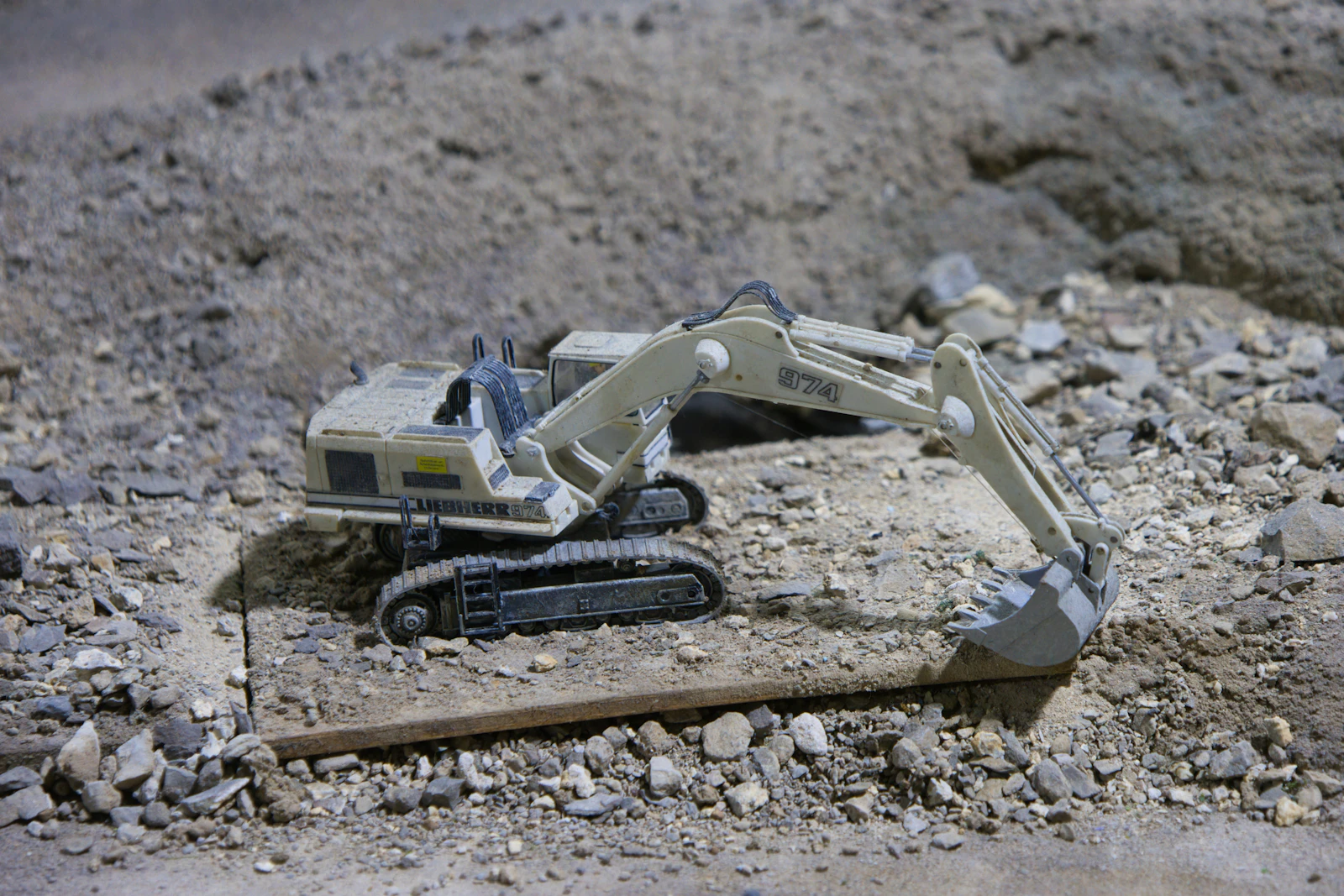
For Los Angeles mini excavator equipment hire supporting foundation repair in 2026, plan base rental ranges (machine only) of $225–$375/day, $750–$1,150/week, and $1,450–$2,450/28-day month for micro-to-small minis (roughly 4,000–8,000 lb class); $325–$525/day, $1,050–$1,600/week, and $2,450–$4,200/28-day month for the common 3–4 ton class used on underpinning and drainage; and $425–$700/day, $1,400–$2,200/week, and $3,200–$5,800/28-day month for 5–6 ton minis when production matters. These planning ranges assume one 8-hour shift billing and a 28-day “month” structure that many national platforms reference. In LA you’ll commonly quote through national providers (e.g., United Rentals, Sunbelt, Herc) or strong local yards; the cost swing is usually driven less by “brand” and more by delivery logistics, emissions requirements, access constraints, and attachments.
| Vendor |
Daily Rate |
Weekly Rate |
Review Score |
Website |
| Sunbelt Rentals (Los Angeles, CA) |
$440 |
$1 550 |
4 |
Visit |
| United Rentals (Canoga Park / Los Angeles Metro) |
$450 |
$1 600 |
4 |
Visit |
| Herc Rentals (Inglewood / Los Angeles Metro) |
$445 |
$1 575 |
9 |
Visit |
| LAX Equipment (Inglewood / Los Angeles Metro) |
$425 |
$1 500 |
8 |
Visit |
| Quick Equip Rentals (Acton / Los Angeles County) |
$395 |
$1 250 |
10 |
Visit |
Mini Excavator Rental Rates Los Angeles 2026
Important estimating assumption (confirm at order): many rental programs define rates around a standard shift/week/month (e.g., 8-hour day, 5 shifts/week, 20 shifts per 28-day month). If your foundation repair scope needs double-shifting, weekend pounding, or extended standby with the machine running, the “cheap day rate” can be misleading.
Micro / 1–2 ton mini excavator hire (tight access, hand-demo support): in Southern California planning, these are often used for narrow side yards, limited spoils, and short drainage runs. For budgeting, carry $225–$375/day, $750–$1,150/week, $1,450–$2,450/28-day month. Published reference points from a California BigRentz guide show $197/day, $520/week, $1,456/month for ~4,000 lb class and $242/day, $728/week, $1,966/month for ~8,000 lb class (location-dependent).
3–4 ton class mini excavator hire (most common for foundation repair): this class is the sweet spot for pier/grade-beam exposure, footing excavation in confined lots, and trenching for perimeter drains while still fitting through many residential gates (with careful planning). In LA, carry $325–$525/day, $1,050–$1,600/week, $2,450–$4,200/28-day month depending on cab vs canopy, zero-tail/reduced-tail demand, and whether a hydraulic auxiliary package is required. For calibration, a published independent rate sheet shows $355/day, $1,050/week, $2,600/4-week for a “3.5k mini excavator,” and $500/day, $1,525/week, $4,200/4-week for an “11k mini excavator.” Another public California procurement packet (United Rentals line item) shows a Bobcat E35 mini excavator at $271.96/day, $727.78/week, and $1,692.81/month—useful as a sanity check, but not a guarantee of LA street pricing.
5–6 ton mini excavator hire (production, hard digging, larger spoils): carry $425–$700/day, $1,400–$2,200/week, $3,200–$5,800/28-day month. If you are pairing the mini with a hydraulic breaker for slab/grade-beam demo or you’re digging in tougher material, the larger class can be cheaper overall even at a higher day rate (fewer labor hours, fewer hand-work constraints).
What Changes Mini Excavator Hire Cost for Los Angeles Foundation Repair?
For mini excavator rental for foundation repair in Los Angeles, the biggest cost drivers typically show up as add-ons and “rules,” not the base rate:
- Access and tail swing: zero-tail/reduced-tail units often price above standard tail because they’re in higher demand for tight LA lots and near-structure digging. (Also expect more scrutiny on existing flatwork protection.)
- Emissions compliance and site restrictions: Tier 4 Final diesel is the norm; some sites (or owners) request low- or zero-emission options, which can change availability and pricing.
- Cab vs canopy and noise expectations: enclosed cab units (often requested near occupied homes) can command a premium and may reduce operator fatigue on longer underpinning runs.
- Hydraulic auxiliary requirements: if your scope includes a breaker, auger, or compaction plate, ensure the unit is spec’d for the attachment (and that the coupler matches).
- Traffic-driven logistics: LA delivery windows, parking control, and street access can add real cost (expedited deliveries, redelivery, waiting time).
Attachments and Configurations That Drive Foundation Repair Equipment Hire Cost
Foundation repair scopes often look “small” on drawings but become attachment-heavy in the field. Budget these adders early so your equipment hire number doesn’t get value-engineered into a field change order.
- Hydraulic breaker (mini excavator hammer): plan $200–$350/day, $500–$900/week, $1,200–$2,100/28-day month depending on size and tool steel. A published pricing schedule example shows a mini excavator breaker at $233/day, $604/week, $1,481/month.
- Auger drive (for pier drilling support / helical assist / post drilling): plan $150–$275/day plus auger bits. A published schedule example shows a mini excavator auger power unit at $184/day, $521/week, $1,809/month.
- Extra buckets (narrow trench, clean-out, grading): common adders are $10–$35/day per bucket depending on width and coupler. A published schedule example shows a 24-inch mini excavator bucket at $10/day, $18/week, $31/month.
- Ground protection / pedestrian mats: if you’re crossing decorative concrete or tight setbacks, plan for mats rather than hoping plywood survives. A published schedule example lists a 3 ft x 5 ft pedestrian mat at $10/day, $29/week, $106/month (you’ll need multiples).
- Reduced-tail 10,000–14,000 lb class upgrade: if you need reduced-tail for near-wall digging, published schedule examples show $483/day, $1,406/week, $3,074/month for that configuration (market-dependent).
Estimator note: for foundation repair, attachment cost is often paired with higher wear risk (teeth, cutting edges, track damage) and higher cleaning expectations (spoils and slurry), which can increase closeout charges if you under-allow return condition.
Hidden-Fee Breakdown (What Commonly Hits the Invoice)
Use this as a pre-award “true equipment hire cost” checklist for Los Angeles scopes where mobilization and closeout are the primary risk.
- Delivery / pickup: LA frequently prices as a flat mobilization inside a radius plus mileage outside, or as a base charge plus loaded-mile rate. A published pricing schedule example shows $160.69 each way + $4.19 per loaded mile. For LA planning, carry $200–$375 each way when traffic and limited staging are expected, plus potential wait time if the driver can’t access the drop zone.
- Shift/overtime billing: many programs include one shift only; overages convert to hourly charges (e.g., 1/8 of daily rate per hour beyond the shift).
- Environmental / service charges: published terms from a national lessor show an Environmental Service Charge of 2.00% (capped at $99) for certain rentals.
- California personal property tax reimbursement: published rental service terms note an estimated charge of up to 0.75% of the rental amount in California.
- Late payment: published terms show a late payment fee of up to 2% per month (i.e., 24% per annum) on amounts outstanding after 30 days, subject to law.
- Credit card surcharge (some accounts/jurisdictions): published terms indicate a potential 2.0% surcharge for certain credit card payments on charge accounts where permitted.
- Refuel / recharge expectations: published terms state a refueling service charge applies if returned not full (rate varies by store/date). For LA planning, treat refuel as $6–$9/gal equivalent effective cost once service charges and time are considered, unless you refuel yourself.
- Cleaning and return-condition: some yards publish explicit cleaning labor. One California rate sheet shows excessive cleaning at $75/hour with thresholds by rental term (e.g., >2 hours for daily, >4 hours for weekly, >6 hours for monthly).
- Damage waiver / rental protection: many firms offer an optional rental protection plan/damage waiver. If you don’t provide adequate COI/property coverage, plan an added 10%–15% of base rental as a rough budgeting allowance (confirm per vendor and equipment class). (g
- Weekend/holiday billing rules: LA branches vary—some count Saturday/Sunday as chargeable days unless you secure a defined “weekend rate.” For planning, assume 1.5–2.0 days of billable time for a Friday PM drop / Monday AM pickup unless the contract states otherwise.
- Standby / redelivery: if the truck can’t drop due to blocked access or no authorized receiver, expect a redelivery charge that can resemble another mobilization (often $150–$350 incremental in the LA basin).
How Shift Rules and Hour Meters Change Equipment Hire Cost
Two common billing frameworks show up in mini excavator hire:
- Shift-based: one day equals one 8-hour shift; one week is typically five 8-hour shifts; one month is typically twenty 8-hour shifts over 28 days.
- One-shift included + overtime conversion: published terms show daily/weekly/4-week rates entitle up to 8 hours/day, 40 hours/week, 160 hours/4 weeks, with excess billed at fractions of the base (e.g., 1/8 of daily per extra hour).
Practical implication for foundation repair: if you’re doing short, high-intensity breaker work (hours rack up fast) or you’re running the mini while crews form/shore, you can exceed the included hours without realizing it. Build an hour-meter expectation into your daily field plan and tie it to off-rent timing.
Example: Westside LA foundation drain + pier exposure (operational constraints included). Scope is a 10-day window (two work weeks) on a tight lot with a single curb cut and a 7:00 AM–3:30 PM neighborhood noise expectation. You hire a 3–4 ton mini excavator at a published reference rate of $355/day ($1,050/week, $2,600/4-week). You add a breaker at $233/day for two days to pop a patio strip. Delivery/pickup is budgeted at $300 each way due to LA traffic windows and a required receiver. You carry a 2.00% environmental service charge (cap $99) plus 0.75% CA property tax reimbursement. You also allow $150 for cleaning (2 hours at a published $75/hour) if spoils cake the undercarriage. The result is that “$1,050/week” becomes a coordinated package cost where logistics, attachments, and closeout condition move the final number more than the base rate.
Los Angeles Logistics That Affect Mini Excavator Equipment Hire Costs
In the LA basin, mini excavator hire cost reliability is heavily dependent on logistics discipline. A foundation repair jobsite may be “small,” but it is often high-friction for delivery trucks and returns.
- Delivery cutoff times: many branches effectively operate with morning and early-afternoon delivery waves to avoid peak congestion. If you miss a cutoff, you may pay for an extra day while the machine sits (especially if the driver cannot access the drop zone).
- Receiver requirements: if a driver arrives and there is no authorized receiver to sign and direct placement, you risk a turn-around and redelivery (budget $150–$350 incremental for LA re-mobilization risk).
- Street use and parking control: for tight residential streets, confirm whether you need cones, a spotter, or short-term parking control to safely unload. If the machine must be placed in a metered/permit-controlled area, build administrative and time allowances into the equipment hire plan.
- Hillside and soft access: many LA foundation repair scopes are on sloped pads. That can force you into a heavier machine class (5–6 ton) or require more mats—both can increase rental but reduce labor exposure and prevent driveway damage claims.
Budget Worksheet
Use the following line items as a non-table budget worksheet for a Los Angeles mini excavator equipment hire package supporting foundation repair (adjust quantities/terms to match your schedule).
- Base mini excavator hire: ___ days or ___ weeks (carry $325–$525/day or $1,050–$1,600/week for 3–4 ton class in LA planning).
- Attachment allowance – hydraulic breaker: ___ days at $200–$350/day (published reference example: $233/day).
- Attachment allowance – auger drive: ___ days at $150–$275/day (published reference example: $184/day).
- Extra bucket allowance: ___ days at $10–$35/day (published reference example: $10/day for a 24-inch bucket).
- Ground protection mats: ___ mats × ___ weeks (published reference example: $10/day / $29/week / $106/month per 3 ft x 5 ft mat).
- Delivery + pickup: allowance $400–$800 total (and add a contingency for access issues). If your contract is mileage-based, validate whether it resembles a base + loaded-mile structure (published example: $160.69 each way + $4.19/loaded mile).
- Environmental/service charge: carry 2.00% of service charge up to $99 where applicable.
- CA personal property tax reimbursement: carry up to 0.75% of rental amount.
- Damage waiver / rental protection plan: if required, carry 10%–15% of base rental as an allowance (confirm per lessor). (g
- Cleaning at return: allowance $75/hour × 2–4 hours depending on spoil conditions and whether you used slurry/wet spoils near the foundation.
- Overtime/extra-hour exposure: if your crew will exceed 8 hours/day, carry extra hourly cost using the vendor’s conversion rule (published example: over-shift billed at fractions such as 1/8 of daily per extra hour).
- Admin/finance risk: if payment terms are uncertain, avoid late fee exposure (published example: up to 2% per month after 30 days) and potential account credit card surcharge 2.0% where permitted.
Rental Order Checklist
- PO and cost coding: include base machine, each attachment (breaker/auger/buckets), delivery, and anticipated fees as separate coded lines.
- Insurance/COI package: confirm property coverage or elect rental protection plan; ensure lessor requirements are met before dispatch (avoid day-1 delays).
- Delivery window + access plan: confirm gate width, overhead clearance, street unloading plan, and whether a spotter is required.
- Authorized receiver: name/phone of person who can sign and direct placement; confirm jobsite hours and any noise limits.
- Condition documentation at drop: photos of bucket teeth, tracks, coupler, cab glass, and hour meter (protects you on damage/cleaning disputes).
- Daily hour-meter log: tie actual hours to the billing framework (e.g., 8-hour shift included; overages billed).
- Fuel/return condition plan: return full tank where required; remove spoils from tracks/undercarriage to reduce cleaning charges.
- Off-rent timing: schedule pickup request before your last production day so you do not pay a “dead day” waiting for a truck (especially around LA traffic patterns).
Cost-Control Tactics for Mini Excavator Hire on Foundation Repair
- Buy the right term, not the lowest day rate: if you’ll use the mini across multiple footing exposures, a weekly rate can be cheaper even if the machine sits one day—provided you avoid over-hour charges and weekend billing surprises. Published definitions show how some programs structure a week (five 8-hour shifts) and month (twenty 8-hour shifts).
- Bundle attachments only for the days you truly need them: keep the breaker on-rent for demo days only; swap to buckets for excavation days.
- Control return condition: the fastest way to lose savings is an avoidable cleaning invoice (published example: $75/hour excessive cleaning).
- Prevent redelivery: a missed delivery or pickup in LA can wipe out a negotiated discount. Assign a receiver, clear the drop zone, and confirm access before dispatch.
2026 Planning Notes Specific to Los Angeles Foundation Repair Equipment Hire
As of July 2026, the LA market continues to reward disciplined coordination: confirm shift-hour rules (8/40/160 structures), validate whether your “month” is a 28-day construct, and treat delivery as a controllable risk item rather than a fixed fee. For foundation repair, also budget realistically for the breaker/aux hydraulics package and mats—because the job is typically constrained by access, protection of existing improvements, and return-condition expectations more than by pure digging capacity.