

Create an itemized estimate for your project, with materials, labor, and quantities you can review and edit.
Create my estimateStart a 7-day free trial. Sign up, then enter your project details.
For Louisville plumbing rough-in work in 2026, mini excavator equipment hire typically budgets in the following planning ranges (machine only, before logistics/fees): $225–$450/day, $795–$1,600/week, and $1,495–$4,500 per 4 weeks (28 days) depending on operating weight class (3,500–7,500 lb vs. 10,000–14,000 lb), bucket/attachment package, and how delivery/off-rent is handled. Published Louisville-area day rates do show single-day pricing around $350/day for a ~6,500 lb class mini excavator, with week pricing around $1,250/week, which is consistent with what many rental coordinators see when demand is normal and delivery is inside the metro footprint.
| Vendor | Daily Rate | Weekly Rate | Review Score | Website |
|---|---|---|---|---|
| United Rentals | $251 | $627 | 9 | Visit |
| Sunbelt Rentals | $316 | $814 | 8 | Visit |
| Herc Rentals | $191 | $732 | 9 | Visit |
| Boyd CAT Rental Store | $332 | $855 | 8 | Visit |
| Skye Equipment Rentals | $242 | $728 | 10 | Visit |
When you build an equipment hire estimate for mini excavator trenching in Louisville (water service, sanitary, storm tie-ins, interior under-slab trenching, or site utility runs), it helps to think in two pricing bands that map to how the work is actually performed:
Band A (3,500–7,500 lb “tight access” minis): Public bid pricing and published rate sheets commonly show $218.50/day, $584.25/week, $1,296.75/4 weeks for a ~3,500 lb mini, and $232.75/day, $622.25/week, $1,344.25/4 weeks for a ~6,000 lb mini (pickup rates; delivery extra). Separate public bid tabs also show a 7,500 lb mini excavator at $225/day, $795/week, $1,495/month, with a listed 15% damage waiver and $150 mobilization line item—useful as a reality-check for “what’s plausible” in a competitive market even if your Louisville contract differs.
Band B (10,000–14,000 lb “production” minis): For deeper trenching, longer runs, or when you need stability for a hydraulic thumb/hammer, public contract pricing shows an 11,000 lb mini excavator at $300/day, $995/week, $2,310/month, with a stated delivery/mobilization structure of $290 for the 1st mile plus $4 per additional mile.
Louisville planning assumption (important): many national lessors quote a “monthly” as a 28-day (4-week) rate rather than a calendar month, and you should align your internal estimate to the vendor’s billing convention before you compare quotes.
Local reality check for Louisville: at least one Louisville equipment yard publishes a ~6,500 lb mini excavator at $350 for 1 day and $1,250 for 1 week. Treat that as an observed datapoint (availability, season, and account status will move the needle), and still carry a range for budgeting.
For plumbing rough-in, the lowest “day rate” is rarely the lowest total cost. The total mini excavator equipment hire cost in Louisville is usually driven by (1) whether the machine class matches trench depth/soil conditions, (2) whether you get hit with delivery waiting time, and (3) whether attachments are packaged up front (rather than added after mobilization). Two examples that commonly cause overruns:
Operationally, most weekly rental structures assume a defined “standard week” (commonly 5 days at 8 hours/day) rather than “any 7 calendar days.” Confirm this in writing so a Friday delivery doesn’t unintentionally become two billable weeks on the meter.
Mini excavator hire costs for Louisville plumbing rough-in typically move with these cost drivers:
Delivery is where mini excavator equipment hire estimates most often break. You will see a few common charge models:
Louisville-specific considerations that change the delivery number: (1) deliveries to congested corridors (I-65/I-264 interchanges, medical campus zones, and downtown core) can create billable wait time; carry a placeholder of $75–$150/hour for truck waiting/standby if you can’t guarantee offload access. (2) Crossing to Southern Indiana can add deadhead miles and scheduling constraints even when the job is “just across the river.” (3) Many yards have a daily dispatch cutoff; missing it can push delivery to the next day—often creating an unplanned “non-productive” rental day if your crew is already committed.
For plumbing rough-in, the base mini excavator is rarely enough. You typically need at least one trenching bucket, and you may need grading/backfill tools to avoid extending the hire:
These are the recurring “fee traps” that change mini excavator equipment hire costs more than the headline day rate:
Kentucky tax note (budget impact): Kentucky sales and use tax is imposed at 6% on gross receipts, and leases/rentals of tangible personal property are taxable in Kentucky. Additionally, Kentucky law allows an equipment rental company to include a 1.5% tangible personal property tax recovery fee on equipment rental inventory (commonly shown as a separate line). Treat both as expected “cost of hire” items in Louisville estimates unless your tax team confirms an exemption for your contract structure.
Scenario: Commercial tenant build-out near downtown Louisville. Trench and backfill 120 LF of sanitary and water inside a fenced laydown with an 8:00–10:00 AM delivery window only (no midday truck access). Soil is wet clay; spoil must be staged on poly and hauled off later. You select a ~6,000 lb mini excavator class.
Planning numbers (illustrative): Using published day rates for a ~6,000 lb mini excavator of $232.75/day (machine only) and delivery at $120 each way plus $3.25 per loaded mile, a 3-day hire with an 18-mile haul each way pencils out as: base hire $698.25, delivery $357.00, DW at 15% of base hire $104.74, KY TPP recovery fee at 1.5% of base hire $10.47, and KY sales tax at 6% (illustrated here on rental + DW only) $48.18, for an equipment-and-fees subtotal of about $1,218.64 before fuel/cleaning/attachments.
Operational constraints that can change this total by hundreds: (1) if the truck misses the morning access window, you may still start rental time but lose a full production day; (2) if rain forces demob and track cleaning, carry a $150–$450 cleaning risk; (3) if limestone is encountered and you need a hammer, the add-on can be $251.75/day plus additional delivery handling.
Use this as a field-ready mini excavator equipment hire cost worksheet for Louisville plumbing rough-in (no tables—just line items and allowances):
Use this checklist to prevent mini excavator hire back-charges and avoid “extra day” billing on Louisville plumbing rough-in jobs:
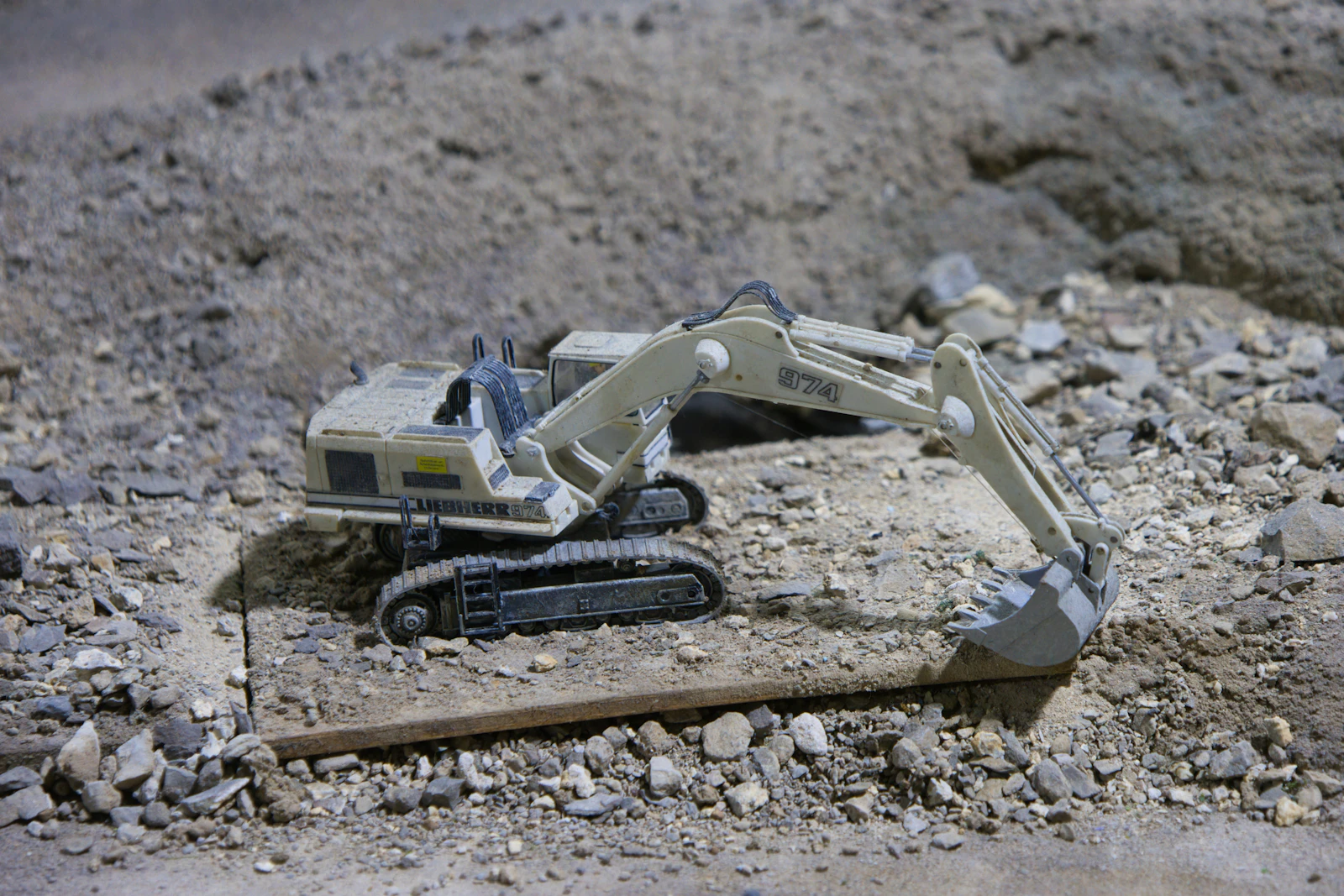
For plumbing rough-in, your biggest lever is not negotiating the day rate—it’s eliminating “dead rental days” caused by coordination gaps. In Louisville, the most common drivers of unproductive mini excavator hire time are: delayed inspections, utility locate delays, weather stoppages that leave the machine idle, and disposal logistics (spoils not hauled, leaving no room to continue trenching). Your internal plan should target one mobilization, one continuous dig window, one demob.
Practical controls:
Mini excavator equipment hire agreements can vary widely on how “time” is counted. Before you release a PO, confirm these deal points in writing:
Back-charges rarely show up as “rental.” They show up as damage, cleaning, or missing accessories—which still hits your equipment hire cost report. For Louisville plumbing rough-in, the documentation that most often prevents disputes is simple:
Mini excavator ownership can be attractive for self-performing contractors who trench weekly, but equipment hire remains financially rational when your utilization is uneven or your work type swings between tight-access interior rough-ins and exterior utility runs. A simple rule-of-thumb many equipment managers use: if you can’t keep a mini excavator productively utilized for at least 10–12 billed weeks/year (net of maintenance downtime and transport), rental often wins after you include internal haul, repairs, storage, and compliance time. Where hire typically wins in Louisville plumbing rough-in is when each job has unique site constraints that force different machine classes and attachment packages.
For 2026 planning, assume mini excavator availability tightens during peak utility and sitework windows. If you need a specific weight class (e.g., ~7,500 lb with a thumb) for a fixed rough-in start, reserve 7–14 days ahead where possible, and align delivery windows to Louisville traffic and site access constraints so you don’t pay standby. If your project sits near the Ohio River floodplain or you expect repeated rain events, your “true cost” is often driven by cleaning and idle time more than the base equipment hire rate—so price contingencies explicitly instead of hiding them in production.
