

For commercial tenant improvement scopes in New York City, 2026 planning budgets for mini excavator equipment hire typically land in three bands, driven mainly by operating weight, tail-swing constraints, and access logistics: $325–$750/day, $825–$1,950/week, and $1,650–$4,250 per 28-day month (USD) for the excavator itself. These are budgetary ranges assuming one shift of use, standard buckets, and normal wear, and they exclude delivery/pick-up, protection plans, fuel/refuel, and cleaning. As a reality check, New York State contract pricing (often referenced in procurement conversations even when you are not purchasing off contract) lists mini excavators in several weight brackets with published daily/weekly/monthly rates and a common delivery allowance structure; use that as a baseline, then apply an NYC access premium (tight windows, tolls, staging) and 2026 escalation to build your internal estimate. National rental houses (United Rentals, Sunbelt, Herc) and NYC-area independents can all supply the class, but your total cost will be dominated by logistics, documentation, and attachments more than by the base day rate on many TI jobs.
| Vendor | Daily Rate | Weekly Rate | Review Score | Website |
|---|---|---|---|---|
| United Rentals | $425 | $1 450 | 9 | Visit |
| Sunbelt Rentals | $410 | $1 400 | 9 | Visit |
| H.O. Penn (The Cat Rental Store) — Bronx | $395 | $1 350 | 9 | Visit |
| The Home Depot Rental | $300 | $1 050 | 9 | Visit |
| Bobcat of New York & Long Island | $365 | $1 250 | 10 | Visit |
2026 planning assumptions used in this guide: (1) a “month” is commonly priced as 28 days (4 weeks) rather than calendar-month billing; (2) base rates include one shift of use unless your agreement specifies otherwise; (3) NYC delivery is frequently dispatched from yards in Long Island, the Bronx, Queens, or North Jersey, which increases transport and access costs vs. upstate.
In a commercial TI environment (retail fit-out, lobby renovation, restaurant buildout, or MEP trenching in a cellar), “mini excavator rental New York” pricing is rarely just a simple day/week/month number. The estimating workflow that performs best is: (a) select the smallest machine that meets production, reach, and breakout needs; (b) lock in the access plan (curb lane, loading dock, alley, freight elevator, cellar hatch, or sidewalk shed constraints); (c) price the attachments and required accessories; and then (d) model the billable time rules (shift limits, weekend billing, off-rent cutoff times, and standby days).
Published baseline (useful for calibration): a New York State price list updated April 11, 2024 shows mini excavators by weight bracket, for example 5,000–6,999 lb at $303/day, $818/week, $1,614/28-days; 9,000–11,999 lb at $358/day (ROPS) to $406/day (cab), $1,001–$1,061/week, and $2,333–$2,680/28-days; and 14,000–19,000 lb at $503–$541/day, $1,337–$1,375/week, and $3,426–$3,513/28-days. It also lists a common delivery allowance of $250 each way per item within 30 miles (where applicable). For 2026 NYC TI planning, many contractors carry a +8% to +20% uplift on the published “outside the boroughs” baseline to cover scarcity, access, tolls, and tight delivery windows, then reconcile against actual quotes during buyout.
1) Operating weight and footprint. In Manhattan and dense Brooklyn/Queens corridors, the cost-effective choice is often a 3–5 ton class excavator (roughly 7,000–12,000 lb) with rubber tracks and a reduced tail swing. “Micro” units (under ~5,000 lb) can reduce access costs if you have strict slab loading limits or narrow gates, but they can increase your schedule risk, which ultimately increases hire days.
2) Cab vs. canopy (ROPS) and indoor requirements. TI work may require better operator comfort for longer shifts or more controls for precision. Cab units can also improve dust/noise separation when paired with jobsite controls, but they typically price above open-canopy.
3) Attachments and buckets (where the money hides). Don’t let the base hire rate distract from adders. Using published attachment pricing as a reference point, a mini-ex bucket can be priced as an accessory line item (e.g., $22/day, $55/week, $152/28-days for certain bucket types on a statewide list). A hydraulic thumb can show up as a meaningful adder (example reference: $81/day, $211/week, $385/28-days). A breaker is often the largest adder on TI demo: example reference pricing shows $428/day, $1,212/week, $2,485/28-days for a mid-size breaker class. Even if your actual quote differs, these numbers illustrate the order of magnitude that can double your equipment hire cost if you miss them in precon.
4) Delivery/pick-up and NYC access premiums. If you can’t self-haul, transport is commonly billed as a flat rate, mileage, or a hybrid. As a planning range for NYC commercial work, carry $350–$750 each way for mini excavator delivery/pick-up inside the five boroughs (often higher than a simple “within 30 miles” baseline), plus potential tolls at cost and administrative components. If your building only allows after-hours deliveries, carry an additional $150–$350 for off-hours dispatch or “time-specific” delivery windows. If the site requires street occupancy coordination or you need a second trip because the first driver is turned away (no dock access, freight elevator down, COI mismatch), the re-delivery can be another $250–$600. Use these as equipment hire cost contingencies, not as optional fluff.
NYC-specific consideration: many TI sites have narrow curb lanes and strict “no staging” rules—your delivery success hinges on a 30–60 minute unload window. If the machine arrives and you do not have labor ready, you can incur detention time; carry a contingency of $125–$250/hour for truck waiting time on constrained streets (varies by carrier and borough).
When stakeholders ask “What’s the mini excavator hire rate in New York?”, the better question is “What is the all-in mini excavator equipment hire cost once we apply billing rules, surcharges, and return-condition requirements?” The fees below are the ones that most often move TI budgets.
For tenant improvement work, your mini excavator hire cost usually increases because you are doing controlled demolition and hauling, not open-site trenching. Common adders to price and logistics include:
Scenario: 12,000 SF retail TI in Midtown Manhattan. You need a mini excavator for controlled slab demo and trenching in a rear area accessed via a loading dock with a 7:00–9:00 AM delivery window and a strict “no staging in lane” rule. You select a 9,000–11,999 lb class mini excavator with cab + breaker + thumb for 10 working days (2 calendar weeks) and anticipate 60 run-hours total.
Planning numbers (illustrative, not a quote):
Operational constraints that change cost: (1) If the breaker forces night work beyond one shift, meter overage can apply; (2) if you miss the building’s pickup window, you may burn an extra day; (3) if the unit returns without full fuel, refueling service charges apply; (4) if you cannot document return condition with photos and meter readings, cleaning and damage disputes become harder to resolve.
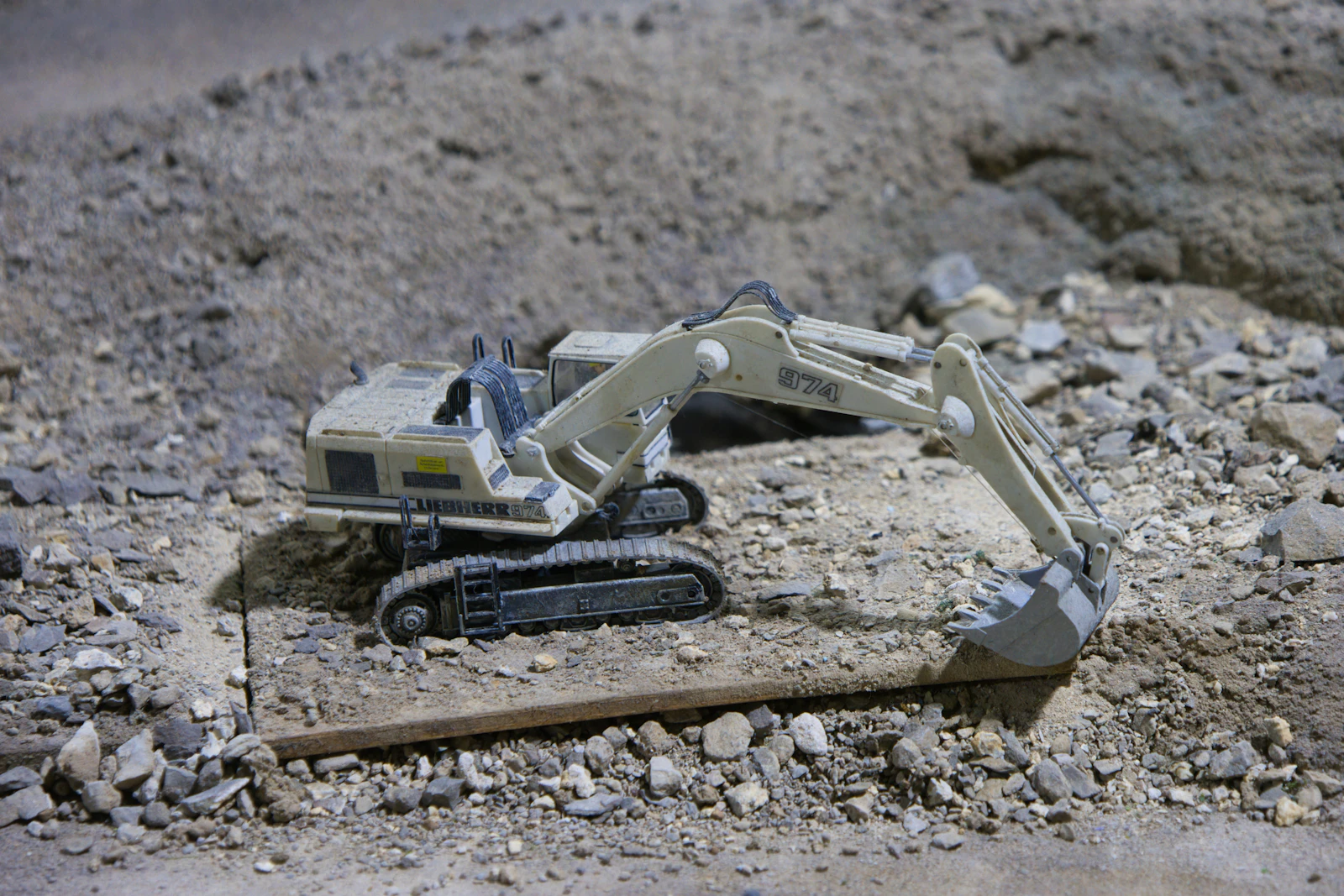
In New York tenant improvement work, the mini excavator itself is often the easiest part of the cost story. The practical drivers of “mini excavator equipment hire cost” variance are building operations, neighborhood constraints, and the sequencing of demolition, hauling, and MEP rough-in.
Manhattan and dense Brooklyn TI deliveries are frequently constrained by building rules (single early-morning window, mandatory COI approval before arrival, and strict dock queuing). If you cannot guarantee labor and access at the moment the truck arrives, your effective cost per productive hour climbs quickly. Consider implementing an internal standard that the receiving crew is staged 30 minutes before the scheduled arrival and that the path of travel is fully protected (mats/ply) before the machine is unloaded.
Off-rent execution is a cost-control lever. Treat off-rent like a critical path activity: call off-rent early enough to meet pickup cutoff, confirm a pickup reference number, and ensure the machine is accessible (not buried behind materials). A “missed pickup” that rolls to the next business day can add 1–2 days of base rent plus additional transport/detention exposure.
A mini excavator on a TI site can sit idle if other trades control the workface: abatement, coring, sawcutting, steel modifications, or dumpster swaps. To avoid paying for idle days, some GCs schedule the excavator rental as a shorter burst (for example, 3–5 days) and stack enabling work ahead of time. If you must keep the unit longer, negotiate weekly pricing once you pass a certain threshold or confirm a “downtime” arrangement in writing (not always available).
Some owners/buildings prefer low-emission equipment for indoor or enclosed work. If you pursue an electric mini excavator (or hybrid where offered), carry a cost premium and make sure you budget the enablement: charging access, cable management, and possibly a temporary power plan. Also confirm whether the supplier’s rental structure includes any special PM/run-time charges for that equipment class.
For tenant improvement projects, building management COI requirements can cause last-minute delivery failures. Operationally, that turns into direct rental cost: redelivery charges, missed windows, and an extra billable day while paperwork is corrected. Mitigation that usually pays back:
For NYC TI, you can often improve outcomes by benchmarking quotes against a “should-cost” model using (1) a published baseline by weight bracket, (2) a 2026 escalation factor, and (3) an access premium for borough-specific logistics. Then reconcile the supplier quote line-by-line:
If you need a single internal rule of thumb for quick screening: on many NYC tenant improvement scopes, the all-in mini excavator equipment hire cost for a 2-week package (base machine + one major attachment + transport + typical fees) frequently ends up around 2.0× to 3.0× the “base rent only” number once logistics and attachments are included. Your goal in buyout is not just to push down day rate; it is to eliminate unproductive days and prevent redelivery/cleaning surprises.
