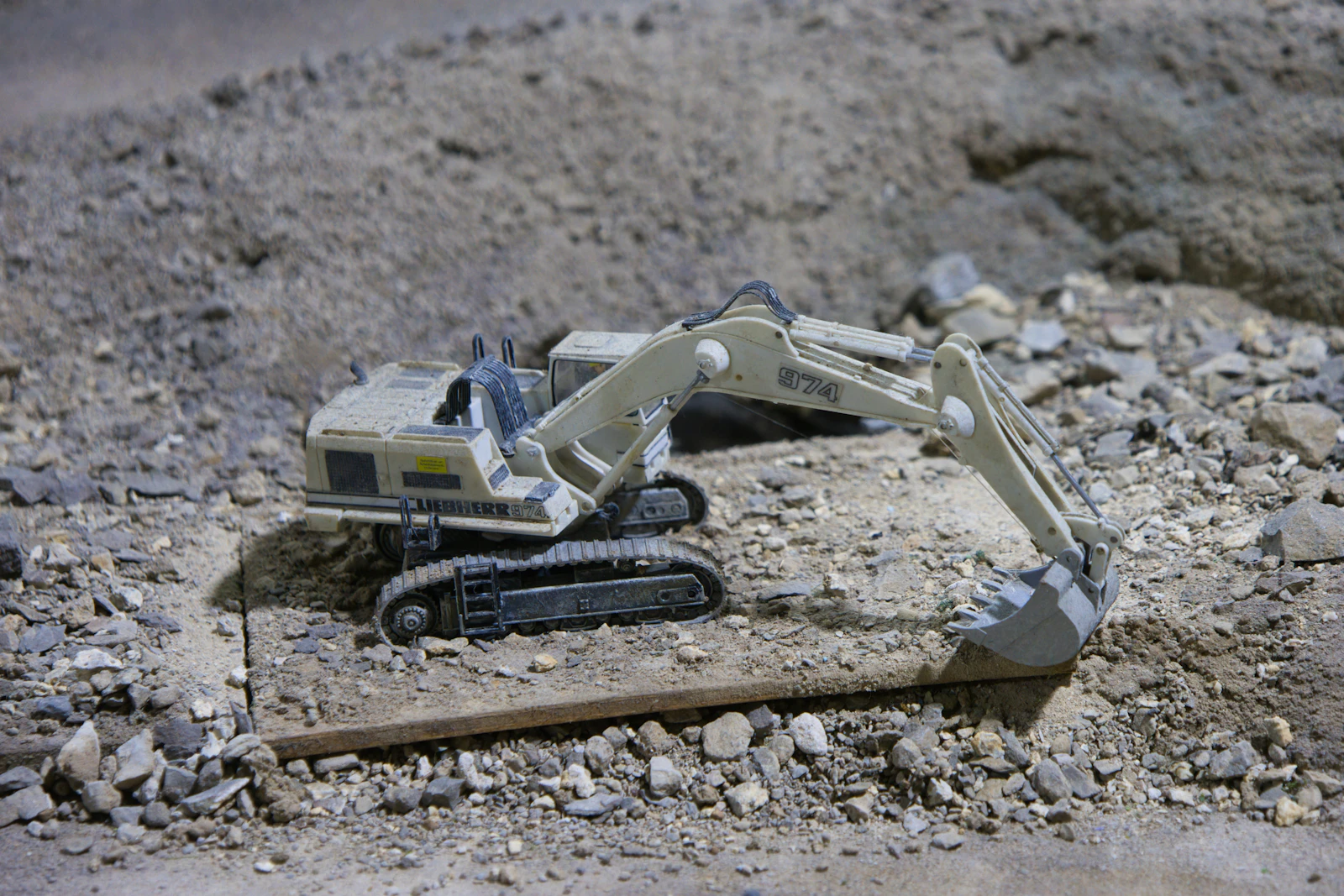
Mini Excavator Hire Costs New York 2026
For mini excavator equipment hire in New York (NYC metro) focused on digging footings, 2026 planning budgets commonly land in these bands (bare machine, before freight/fees/taxes): $325–$525/day, $1,050–$1,650/week, and $3,000–$4,800 per 28-day month. Assumptions: a “month” is typically billed as 28 days in national rental programs, and base rates usually align to one-shift usage (often 8 hours/day, 40 hours/week, 160 hours/4 weeks) before overtime rules apply. Public NYS contract price lists provide a useful benchmark for the region (e.g., published mini-excavator model examples in the $300–$475/day range with weekly/monthly ladders), while NYC job conditions (tolls, tight delivery windows, and higher damage/cleaning risk) often push real “all-in” hire costs above the base number. Major rental houses serving NYC (including United Rentals, Sunbelt Rentals, and Herc Rentals) can typically supply 1.7–8 ton class machines, short/zero-tail swing options, and the attachments commonly needed for footing excavation—expect total cost to be driven as much by logistics and rental terms as by the day rate.
| Vendor |
Daily Rate |
Weekly Rate |
Review Score |
Website |
| United Rentals |
$450 |
$1 350 |
9 |
Visit |
| Sunbelt Rentals |
$425 |
$1 275 |
8 |
Visit |
| H.O. Penn (Cat Rental Store) |
$410 |
$1 230 |
8 |
Visit |
| Bobcat of New York City & Long Island |
$400 |
$1 200 |
9 |
Visit |
| G.T. Rentals |
$395 |
$1 185 |
8 |
Visit |
What You’re Really Hiring for Footing Excavation in NYC
“Mini excavator” pricing in New York is not one number—it’s a stack of choices that affect both the hire rate and the risk of chargebacks at return. For digging footings, rental coordinators typically specify:
- Operating weight class (common bands: ~1.7–2 ton micro, 3–4 ton compact, 5–8 ton heavier minis) to match footing width/depth, spoil handling, and site access constraints.
- Tail swing configuration (zero/short tail reduces strikes on townhouse foundations, scaffold legs, and curb lines, but can price higher).
- Track type (rubber tracks for finished surfaces/sidewalk protection; steel tracks may be restricted on many urban sites and can increase surface restoration costs).
- Bucket package (at minimum: a trenching bucket and a grading/cleanup bucket; many footing scopes also add a hydraulic thumb for handling obstructions and debris).
2026 Planning Ranges: Daily, Weekly, and Monthly Hire in New York
Use these as estimating ranges for mini excavator rental pricing in New York City (equipment-only). Where available, published NYS contract benchmarks show example mini excavator models such as Kubota U17 at $300/day, $975/week, $2,700/month and heavier compact minis like KX080-4 at $475/day, $1,425/week, $4,500/month (plus listed loading/unloading and per-mile transport line items). In private-sector NYC planning for 2026, many teams carry a 10%–25% uplift vs. statewide benchmarks to cover borough delivery complexity, higher utilization, and tighter fleet availability during peak season.
Micro mini (approx. 1.7–2.0 ton) – trenching for small footings / tight access: plan $325–$425/day, $1,050–$1,350/week, $3,000–$3,900/28-day month.
Mid-size mini (approx. 3.0–4.0 ton) – common “footing dig” choice: plan $375–$500/day, $1,200–$1,550/week, $3,500–$4,500/28-day month.
Large mini (approx. 5.0–8.0 ton) – deeper/wider footings and heavier spoil: plan $450–$575/day, $1,450–$1,850/week, $4,200–$5,300/28-day month.
NYC Cost Drivers That Change Mini Excavator Hire Cost Fast
In New York, a mini excavator hire quote can look competitive until you load in the borough-specific constraints that drive real cost:
- Delivery windows and cutoffs: Manhattan and dense parts of Brooklyn/Queens often require early AM or after-hours drops. Budget a $150–$350 after-hours/priority dispatch premium when sites have strict building/curb regulations (planning allowance; confirm per vendor and site).
- Tolls, congestion, and “limited access” surcharges: plan an allowance of $40–$120 per trip for toll/congestion exposure when trucking crosses bridges/tunnels or must stage and wait (often billed as time on site).
- Street permits / DOT coordination: if the machine cannot be staged on private property, you may need a permitted curb lane or coordinated delivery; even when the permit is handled by GC, the rental cost impact shows up as wait time and missed delivery attempts.
- Surface protection and cleanup: footing work is muddy by definition; jobs with finished sidewalks, basements, or interior access usually require mats, poly sheeting, and strict wash-down controls. If you skip this, you’re effectively gambling against a cleaning chargeback.
Attachment and Accessory Adders (Footings Scope)
Footing excavation is attachment-heavy. Even when buckets are “included,” the right configuration avoids rework and helps control overage hours. Planning adders commonly carried by NYC estimators:
- Additional bucket (beyond standard): $25–$60/day or $75–$180/week per bucket (e.g., 12" trenching + 24" trenching + 36" cleanup).
- Hydraulic thumb: $75–$150/day or $225–$450/week (high ROI when obstructions/rocks/debris show up in footing trenches).
- Auger drive for piers/sonotubes: published contract examples show accessory auger pricing in the $150/day, $450/week, $1,350/month range, with bits and extensions separately listed.
- Hydraulic breaker (small class): plan $200–$350/day or $600–$1,050/week for mini-sized hammers; carry higher if rock/demolition is likely (availability drives price).
- Ground protection mats: $15–$35 each/week (NYC sidewalks and finished slabs drive this line item; quantities add up quickly when you need a continuous travel path).
Hidden-Fee Breakdown for Mini Excavator Equipment Hire
These are the line items that most often create variance between the “rate” and the “invoice” on NYC footing jobs:
- Transport (delivery/pickup): some public price lists show explicit freight line items such as $2.50 per mile and $125 loading/unloading for mini excavators. In NYC, vendors may quote flat borough rates or a hybrid (base + mileage + access fees). Practical 2026 planning: $250–$650 each way depending on borough, truck type, and access restrictions.
- Minimum rental term: common minimums are 1 day (outer boroughs) to 2 days (Manhattan tight windows). Budget risk: a “2-day minimum” can convert a $425/day machine into an $850 minimum even if you off-rent same day.
- Damage waiver / rental protection: often 10%–15% of the base rental charges (varies by program and customer profile). Treat this as a cost unless your contract requires you to decline and provide proof of coverage.
- Fuel and fluids: expect “return full” terms; if not, refuel can be billed at a premium. Planning allowance: $6.50–$9.50/gal for diesel service refuel and $25–$75 environmental/admin adders depending on vendor policy (verify per account).
- Cleaning: mud-caked undercarriages and concrete splatter are common on footing scopes. Budget $150–$450 if the machine comes back with packed clay in tracks or slurry on the upper structure.
- Wear items: bucket teeth loss or track damage can be billable; plan contingencies of $35–$90 per tooth (if not covered) and consider photo documentation at delivery and pickup.
- Late return / extra day: if you miss the cutoff for off-rent scheduling, you can be billed another day. A typical operational control is an off-rent call by 2:00–3:00 PM local time to avoid next-day billing (confirm your vendor’s policy on your account).
Example: Manhattan Townhouse Footings With Tight Delivery and Off-Rent Rules
Scenario: You’re digging new footings for a rear extension behind a Manhattan townhouse. Access is through a 36-inch gate to a narrow yard. The machine must be zero-tail and delivered before 7:00 AM to avoid conflicts with sidewalk shed work. You plan a 5-day window but expect to off-rent in 3 working days if inspections stay on schedule.
Planning budget (2026):
- 3–4 ton mini excavator hire: $450/day planning rate × 3 days = $1,350
- Delivery + pickup (tight access / early drop): $550 each way = $1,100
- Thumb attachment: $110/day × 3 days = $330
- Two extra buckets (12" trench + 36" cleanup): $40/day × 3 days × 2 = $240
- Damage waiver (assume 12% of rental lines, not freight): about $229
- Cleaning allowance (mud control risk): $250
- Estimated all-in equipment hire cost: approximately $3,499 (plus applicable taxes/fees and any standby days if inspection slips).
Operational constraint that changes cost: If you miss off-rent cutoff and the vendor bills an extra day, add roughly $450 plus waiver impact—often more than the cost of assigning a coordinator to manage off-rent timing and return photos.
How Shift Limits and Overtime Can Increase Your Effective Rate
Many rental programs define the base daily/weekly/4-week rates as one shift of use—commonly 8 hours/day, 40 hours/week, 160 hours/4 weeks. On NYC footing jobs, overtime spikes when you’re racing inspections, concrete schedules, or utility coordination. Planning controls:
- Overtime billing: a common structure is an additional charge per extra hour or partial-day factor once you exceed the included hours. For estimating, carry an allowance of 10%–25% uplift on base rent if you expect extended shifts.
- Weekend/holiday billing: if the machine stays on rent over the weekend, clarify whether you’re billed for Saturday/Sunday at full day rates or if “weekend standby” applies. If the machine is idle but left on-site, you can still be billed unless you off-rent and the vendor retrieves it.
NYC-Specific Coordination Items That Affect Hire Cost
- Staging and street occupancy: if you can’t accept a tractor-trailer, you may need a smaller rollback or alternate route. Expect higher freight if the vendor must use a smaller truck or split loads.
- Building rules: many NYC sites require a Certificate of Insurance and may require a dedicated delivery contact; missed appointments can trigger a $150–$300 “dry run” attempt charge (planning allowance).
- Dust and slurry control: interior/basement footing work may require a vac, negative air, or washout containment. While not strictly “excavator rental,” it changes how clean you must return the machine to avoid cleaning fees.
Budget Worksheet (Mini Excavator Equipment Hire for Digging Footings)
Use this checklist-style worksheet to build a defensible 2026 budget for mini excavator equipment hire in New York (no labor). Adjust quantities and durations per your footing production plan.
- Base mini excavator hire: $____/day × ____ days (or $____/week × ____ weeks). Carry a 5%–15% contingency for availability-driven rate movement.
- Delivery + pickup: $____ each way (carry $250–$650 each way NYC planning, plus $40–$120 toll/congestion exposure if not bundled).
- Loading/unloading fees: if itemized, carry $125 per move as a benchmark from public schedules.
- Mileage: if billed per mile, carry $2.50/mi as a public benchmark, then adjust for borough routing and truck staging time.
- Attachments: thumb ($75–$150/day), extra buckets ($25–$60/day each), breaker ($200–$350/day), auger ($150/day benchmark) + bits/extensions.
- Ground protection: mats at $15–$35 each/week × ____ mats × ____ weeks; poly/sacrificial plywood for interior access as needed.
- Damage waiver / rental protection: 10%–15% of rental charges (confirm your account rules; treat as non-optional unless you have approved insurance substitution).
- Cleaning / decon allowance: $150–$450 depending on soil conditions, rain days, and concrete adjacency.
- Fuel/chargeback allowance: diesel refuel at $6.50–$9.50/gal if returned short; add $25–$75 admin/environmental line where applicable.
- Weekend standby risk: if you cannot off-rent before weekend, carry 1–2 additional day charges at your day rate.
- Dry-run / failed delivery attempt: carry $150–$300 if site access, COI, or delivery contact coordination is uncertain.
Rental Order Checklist (PO, Delivery, Return, and Off-Rent Controls)
- PO and authorization: confirm rate ladder (daily/weekly/28-day), included hours, and whether the contract automatically caps at weekly/monthly when accumulative days hit the break point.
- Insurance and waiver decision: provide COI if declining waiver; otherwise confirm waiver percentage and what it covers/excludes.
- Site delivery plan: provide exact delivery address (borough matters), delivery window, contact name/phone, curb restrictions, and whether a smaller truck is required.
- Acceptance documentation: require delivery photos of both sides, undercarriage/tracks, bucket condition, and hour meter reading; repeat at pickup.
- Operations requirements: confirm bucket sizes, coupler type (pin-on vs quick-coupler), and any accessories required for footing tolerances.
- Off-rent rule: document the vendor’s off-rent cutoff time (many accounts require notification by mid-afternoon). Set a calendar reminder to avoid accidental extra-day billing.
- Return condition: confirm “return full” fuel terms, cleaning expectation (especially packed tracks), and whether you must stage the machine in a specific pickup zone.
- Missing items control: ensure buckets, pins, hydraulic hoses/caps, and mats are counted back in at pickup to prevent “missing accessory” fees.
Should You Rent Bare or Use Operated Equipment Hire in New York?
For NYC footing work, the decision is often driven by schedule risk and site constraints. Bare equipment hire keeps cost lower, but if production and compliance are critical, an operated option can reduce overrun risk.
- Bare mini excavator hire: best when you have qualified operators and can control off-rent timing, fueling, and return condition.
- Operated mini excavator hire: for planning only, many NYC operated-and-maintained arrangements land around $150–$250/hour with an 8-hour minimum, plus mobilization. (Confirm locally; union rules, access, and scope details dominate the number.)
Practical Notes for Digging Footings: How to Avoid Paying for Extra Days
- Sequence around inspections: if you’re waiting on rebar inspection or utility mark-outs, consider off-renting and re-renting rather than paying weekend standby—unless remobilization freight is higher than the standby cost.
- Weather exposure: NYC rain turns excavations to slurry fast. If you expect wet conditions, budget the higher end of the cleaning allowance ($300–$450) and plan for mats to keep trucks from rutting access paths.
- Bucket strategy: the correct trenching bucket can materially reduce machine hours. A 12-inch trench bucket for tight footings plus a 36-inch cleanup bucket often pays for itself versus “making do” and running overtime.
- Cut and fill logistics: if spoil must be hauled out same day (common in Manhattan), delays in trucking can keep your excavator on rent longer than planned—carry a standby day allowance if disposal is uncertain.
Rental Market Reality Check for 2026 (NYC Metro)
Expect the best pricing when you can offer (1) flexible delivery windows, (2) a longer committed term (weekly or 28-day), and (3) clean return history. National rental programs explicitly present daily/weekly/monthly (often 28-day) ladders, and NYC users should plan around those breakpoints to avoid paying the most expensive rung. Also, ensure your estimator treats “published” statewide benchmarks as a starting point—not a guarantee—because borough logistics, fleet utilization, and access restrictions frequently dominate the actual invoice.