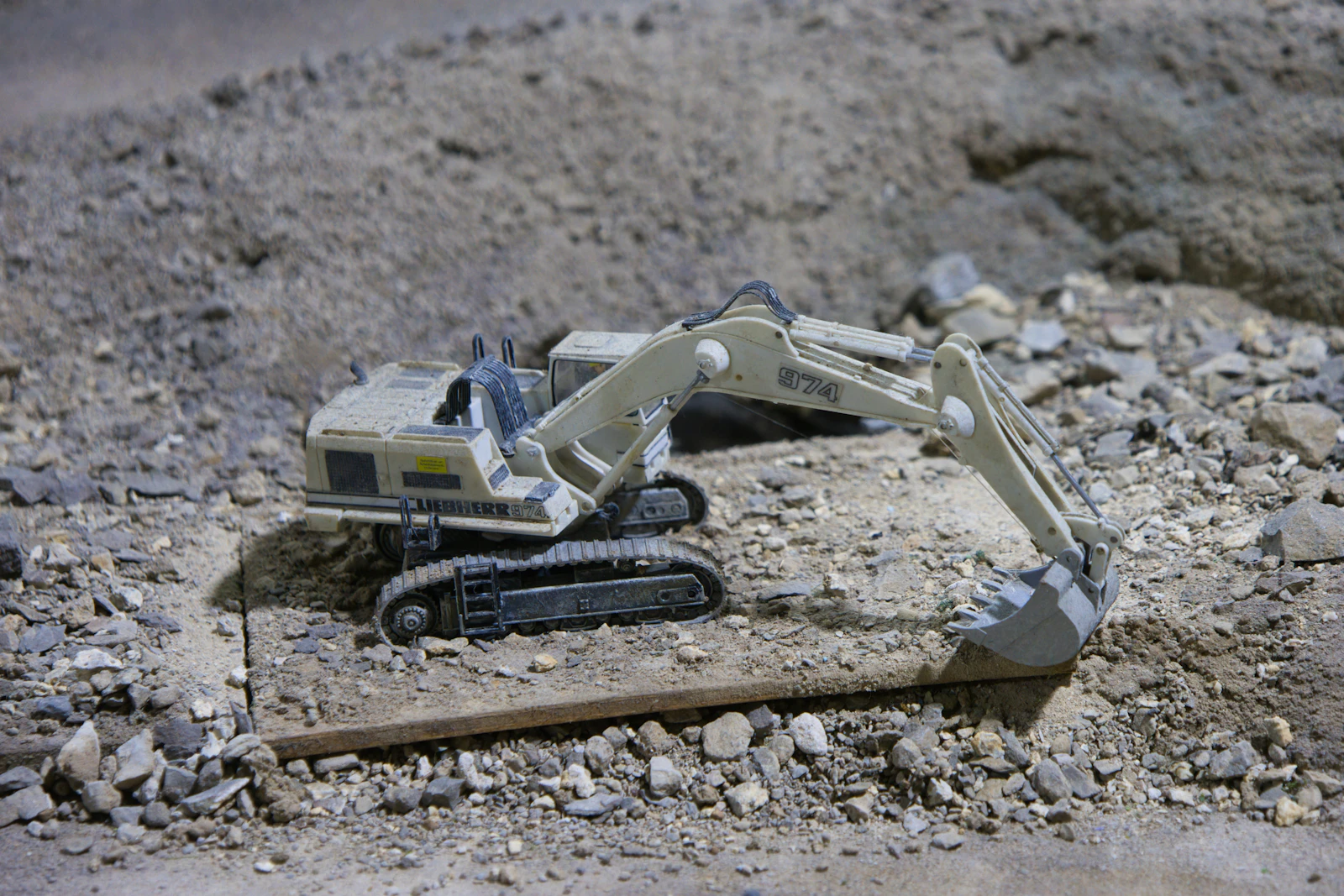
Mini Excavator Hire Costs Omaha 2026
For Omaha-area commercial tenant improvement work in 2026, plan mini excavator equipment hire budgets around $250–$405/day, $775–$1,615/week, and $2,300–$3,745 per 28-day month depending on operating weight class, cab/heat options, and attachment package (thumb, breaker, auger, specialty compaction wheels). Local published rate sheets show smaller units as low as $185/day (micro/1-ton class) and larger compact units reaching $405/day (8–9 ton class), with common 3–6 ton minis typically landing in the high-$200s to low-$300s per day. These are equipment-only rates and typically exclude delivery/pick-up, fuel, cleaning, and rental protection/damage waiver; hourly inclusions and overtime rules can materially change the all-in effective cost for high-utilization TI schedules. In Omaha you’ll commonly see national fleets alongside local yards and dealer-rental operations, so your final hire price is usually a mix of published “book” rates plus account pricing and availability-driven substitutions.
| Vendor |
Daily Rate |
Weekly Rate |
Review Score |
Website |
| Bobcat of Omaha |
$300 |
$950 |
10 |
Visit |
| United Rentals |
$280 |
$750 |
8 |
Visit |
| Sunbelt Rentals |
$225 |
$795 |
8 |
Visit |
| Herc Rentals |
$435 |
$1 150 |
9 |
Visit |
| NMC Cat Rental — The Cat Rental Store (Omaha) |
$450 |
$1 450 |
8 |
Visit |
What Drives Mini Excavator Rental Pricing on Omaha Tenant Improvement Projects?
Mini excavator rental pricing for commercial tenant improvement is primarily driven by machine size, hydraulic capability, and risk/administration items that rental coordinators sometimes underestimate during fast-track TI mobilizations:
- Operating weight class: Micro and 2-ton class units can fit tight courtyards and service alleys, but may underperform on clay soils, utility bedding, or backfill compaction support. Larger 5–9 ton units cost more per day but often reduce total days (and labor standby).
- Cab vs canopy (and heat/AC expectations): Omaha winter and shoulder-season work can push crews toward cab units, which can increase the daily rate and may influence availability.
- Zero-tail swing and variable-width undercarriage: These features can carry a premium but reduce wall/door/curb strike risk in constrained TI staging areas.
- Attachment package: Thumb, breaker, auger, packer wheels, and specialty buckets frequently add more to the invoice than expected—especially if billed on the same day/week/month cadence as the excavator.
- Contract terms: One-day minimums, time-out/time-in billing, overtime-hour proration, and off-rent procedures will change your effective rate if you’re trying to “squeeze” work into partial days.
For cost control, treat the mini excavator as a system (excavator + attachments + delivery + waiver/insurance + fuel/cleaning + schedule rules), not as a single line item.
Daily vs Weekly vs Monthly: How Mini Excavator Hire Is Commonly Billed
Most professional equipment hire programs in this category are built around included utilization hours. For example, published terms in the Omaha market include caps such as 8 hours per 24-hour day, 40 hours per 7-day week, and 160 hours per 28-day (4-week) period, with overtime hours prorated. That means “keeping it longer” can be cheap (weekly/monthly conversion), but “running it harder” can trigger over-hour charges and/or accelerated wear discussions at return.
Operationally, your TI schedule drives which rate is actually cheapest:
- 1–2 day exterior scope: daily rate is fine, but confirm whether there’s a one-day minimum (common) and whether the yard has any “weekend courtesy” practices (not universal).
- 3–10 day utility/trenching window: weekly rate usually wins. As a sanity check, published examples in the area show a 1-week rate for a 3–4 ton class mini around $875/week to $1,050/week.
- 2–8 week TI with phased trenching/backfill: 28-day monthly pricing can reduce the effective day rate, but only if you manage off-rent rules tightly and avoid paying for idle weekends.
Practical estimator note: when TI work pauses for inspections, utility locates, or concrete cure, you may be better off off-renting the mini and re-renting later—even if that means a second delivery charge—rather than paying for idle days at a monthly rate.
Published 2026 Omaha-Area Mini Excavator Hire Rate Benchmarks (By Size)
Use the following as planning benchmarks for Omaha-area hire (verify with your account pricing and availability). A local dealer-rental rate sheet shows these example equipment-only rates by compact excavator model class:
- 1-ton class (example E10): $185/day, $600/week, $1,800/28-days.
- 2-ton class (example E20): $250/day, $775/week, $2,300/28-days.
- 3-ton class (example E26): $260/day, $800/week, $2,400/28-days.
- 3–4 ton class (example E35): $280/day, $875/week, $2,500/28-days.
- 4–5 ton class (example E42/E50): about $290–$300/day, $900–$950/week, $2,600–$2,700/28-days.
- 6 ton class (example E60): $320/day, $1,050/week, $3,000/28-days.
- 8–9 ton class (example E85/E88): $405/day, $1,615/week, $3,745/28-days.
Another Omaha-area rental yard (serving Omaha from nearby Greenwood, NE) publishes an example rate for a mini excavator with thumb at $350/day, $1,050/week, and $3,150/month, which is a useful check when you’re budgeting for a thumb-equipped unit for handling spoils, concrete debris, or light demolition.
For broader 2026 planning beyond Omaha, marketplace data indicates mini excavators (roughly 1.5–4 ton class) can run about $150–$400/day in typical North American transactions, reinforcing that Omaha published rate sheets sit within a normal band but will move with seasonality and availability.
Hidden-Fee Breakdown for Mini Excavator Equipment Hire
To prevent change-order conversations with PMs and superintendents, pre-load these common “non-rate” items into your equipment hire estimate. The examples below reflect common industry practice; confirm your supplier’s exact policies.
- Delivery / pick-up: In Omaha, budget $150–$275 each way for local delivery inside a typical metro radius (often ~10–20 miles from the branch), and $4–$7 per loaded mile beyond that. Add a $75–$150 after-hours or tight-window surcharge if the TI site has restricted dock/drive access (downtown alleys, retail centers with delivery curfews).
- Rental protection / damage waiver: Damage waivers are commonly expressed as a percentage of rent. Industry guidance shows a typical damage waiver in the 10%–15% range, often with deductibles around $500–$2,500 depending on machine size.
- If you don’t provide proof of insurance: Local published terms show an example rental protection plan fee of 15% applied to the total equipment rental charge when liability insurance is not provided.
- Fuel / refuel charges: Expect “return full” requirements. Budget $6.50–$9.00/gal as a planning placeholder for vendor refuel (posted rates vary), and assume 10–25 gallons depending on machine size and idling time.
- Cleaning: Published Omaha terms indicate cleaning fees apply for excessive concrete/asphalt contamination; for budgeting, carry $150–$450 depending on severity, plus potential pressure-wash subcharges if the site requires reclaim/containment.
- Overtime / over-hours: If your rental includes 8/40/160 hours, budget $35–$65 per excess hour as a planning allowance for heavy utilization weeks, especially if the mini is also used for loading out dumpsters and not just trenching.
- Weekend / holiday billing rules: Some suppliers treat Friday-out/Monday-in as multiple days unless prearranged. For marketplace rentals, one published example warns that extending a rental on Monday for an extra day can trigger charges for additional rental days, so align extensions with the supplier’s cutoff times.
Estimator’s control point: ask the branch to state (in writing) the off-rent cutoff time (e.g., “call by 3:00 p.m.”) and the delivery cutoff (e.g., “orders by 2:00 p.m. for next-day delivery”). A single missed cutoff commonly costs one extra day of rent plus an extra mobilization leg.
Attachment Adders That Often Exceed the Base Mini Excavator Hire Line
Commercial tenant improvement scopes frequently require specialty attachments. If you don’t explicitly carry these, they tend to appear later as “needed in the field” charges. Published Omaha attachment examples include:
- Packer wheel (for certain mini classes): about $60/day, $180/week, $540/28-days (useful for trench backfill compaction support where allowed by spec).
- Auger power head with bit (typical package): $120/day, $350/week, $1,050/28-days.
- Auger bits: $30/day for 6"/9"/12"/18" sizes, and $40/day for 24"/30"/36" sizes (carry the correct diameter(s) for bollards, sign bases, and fence posts).
- Auger extension: $20/day to hit deeper bell holes when the TI plan calls for deeper footings near existing slabs.
- Hydraulic breaker (hammer): around $210/day, $700/week, $2,100/28-days for certain breaker classes; verify coupler compatibility and whether a return-line kit is required.
Thumb note: A thumb (hydraulic or mechanical) is one of the highest ROI adders in TI work when you’re handling spoils, pulling roots, sorting demo debris, or placing riprap—yet “mini excavator hire with thumb” is often quoted as a different SKU than a standard bucket machine, so confirm it’s on the order (not just mentioned in notes).
Transportation Strategy: Delivery vs Self-Haul (And Trailer Costs)
If you self-haul to control schedule, include trailer costs and yard rules. A local Omaha published rate sheet shows example trailer pricing such as $160/day, $640/week, $1,920/28-days for a skid loader trailer and $120/day, $480/week, $1,440/28-days for a single-axle tilt trailer. Even when the excavator “fits,” confirm tie-down points, bucket/stick securement requirements, and whether the supplier requires a specific trailer capacity class.
Omaha-Specific Cost Considerations for Commercial Tenant Improvement
Omaha TI projects have a few recurring local constraints that translate directly into equipment hire cost:
- Downtown and dense retail corridors: Delivery windows may be constrained (alley access, dock scheduling, pedestrian control). Carry a $75–$150 “tight window” allowance and plan for a potentially longer on-rent period if the first delivery attempt fails.
- Freeze/thaw seasonality: Winter trenching may require staging longer (or stepping up to a larger mini) to keep production. If frost or frozen aggregate is expected, pre-carry breaker days (e.g., $210/day) rather than assuming a clean bucket-only scope.
- Missouri River valley soils and wet subgrades: Wet conditions can increase track wear and cleanup time; budget cleaning risk ($150–$450) and consider track mats if you must protect finished pavements or tight service yards.
Bottom line: for Omaha commercial tenant improvement, the best cost outcome usually comes from right-sizing (often 3–6 ton class), locking attachments at dispatch, and aligning off-rent timing with inspections and utility work so you don’t pay idle rent.
Example: 5-Day Utility Trench for a Retail TI in West Omaha
Scenario: You need a 3–4 ton mini excavator for exterior trenching and backfill support behind a strip retail TI. The scope is 180 LF of trench at 36 in. depth with spoils management, plus a short breakout of an existing sidewalk panel. Site constraints include a 7:00 a.m.–9:00 a.m. delivery restriction (retail deliveries), and the GC requires photo documentation at off-rent/return.
Planning numbers (2026 Omaha budgeting):
- Base excavator weekly rate: budget $875/week for a common 3–4 ton class benchmark.
- Delivery + pick-up: $225 + $225 (metro delivery with tight-window surcharge built in).
- Breaker for 1 day: $210/day to handle the sidewalk breakout.
- Rental protection plan/damage coverage: carry 15% of rent if you are not providing acceptable insurance documentation, or carry 10%–15% as a damage waiver placeholder if your vendor structures it that way.
- Fuel/refuel allowance: 15 gal at $7.50/gal = $112.50 if you expect vendor refuel rather than returning full.
- Cleaning risk allowance: $250 if trench spoils contaminate the cab/undercarriage or you track onto fresh asphalt.
- Over-hours contingency: if utilization is high, carry 6 extra hours at $50/hr = $300 (overtime is commonly prorated beyond included hour caps).
Operational constraint to manage: If utility inspection slips to Monday, confirm whether the machine can be off-rented Friday without being billed through the weekend. If not, it may be cheaper to keep the machine on rent through Monday and sequence work to avoid idle days—your equipment hire economics will be driven by billing rules as much as by the posted rate.
Budget Worksheet
Use this as a no-surprises checklist for a mini excavator equipment hire cost build-up on Omaha TI projects (edit to match your vendor quote and contract terms):
- Mini excavator hire (daily/weekly/28-day): allowance $250–$405/day or $775–$1,615/week depending on size class.
- Attachment adders (choose what’s actually needed):
- Hydraulic breaker: $210/day ($700/week).
- Auger power head with bit: $120/day ($350/week).
- Auger bits: $30/day (6"–18") or $40/day (24"–36"); extension $20/day.
- Packer wheel: $60/day ($180/week).
- Delivery and pick-up: allowance $150–$275 each way + $4–$7/mi beyond local radius
- Insurance / rental protection: allowance 10%–15% of rent; carry deductible exposure $500–$2,500 per incident depending on waiver terms
- Fuel: allowance $75–$175 per week (scale by size and idle time); placeholder $6.50–$9.00/gal
- Cleaning/return condition: allowance $150–$450 (mud/concrete/asphalt contamination)
- Over-hours / overtime: allowance $35–$65/hr beyond included hour caps
- Traffic control / protection (if required for TI access): allowance $150–$500 for cones/barricades and labor to maintain safe egress during delivery
- Documentation: allowance 0.5–1.0 labor hour for intake photos, hour meter capture, and return sign-off
Rental Order Checklist
- PO and billing: PO number, job number, cost code, authorized users, and agreed rate structure (daily/weekly/28-day) confirmed in writing.
- Machine spec lock: operating weight class, cab/canopy, zero-tail requirement, bucket size(s), coupler type, and whether a thumb is included (don’t assume).
- Included hours: confirm the included utilization (commonly 8/40/160) and the over-hours method (prorated vs fixed hourly).
- Protection/insurance: provide COI for full value if required; if not provided, confirm whether a 15% rental protection plan applies.
- Delivery requirements: delivery address, contact name/phone, gate code, delivery window, staging location, and ground protection requirements (mats, plywood) if crossing finished surfaces.
- Time-out/time-in rules: confirm billing start/stop definitions and the off-rent cutoff time; document who is authorized to call equipment off-rent.
- Fuel expectations: diesel “return full” requirements and vendor refuel rate policy; confirm whether DEF is required (if applicable to the unit class).
- Return condition documentation: intake/return photos (all sides, undercarriage, attachments), hour meter reading, and note any existing damage at delivery before the operator starts work.
Ways to Reduce Mini Excavator Equipment Hire Cost Without Cutting Production
- Right-size the bucket and attachments: A properly sized trenching bucket can reduce cycle time enough to eliminate 1–2 rental days—more impactful than negotiating $10/day off the base rate.
- Bundle the attachment days to match utilization: If the breaker is only needed for one panel, order it for a single day and schedule that work tightly (carry the $210/day but avoid a full week).
- Manage off-rent proactively: Set internal reminders for inspection dates and utility locate confirmations so you can off-rent before weekends if the machine will sit idle.
- Control cleaning exposure: Require spoils management (tarps, designated spoils area) and avoid tracking wet clay onto fresh asphalt; this is often cheaper than paying post-return cleaning and downtime.
2026 Rate Validation Notes for Omaha Estimators
Published Omaha rate sheets provide solid benchmarks for mini excavator hire, but availability and seasonality can push actual quotes outside the mid-band—especially during peak utility season. As a second reference point, broader 2026 marketplace data indicates mini excavators can fall in a $150–$400/day band depending on size and market conditions, and damage waiver structures commonly run 10%–15% with deductibles around $500–$2,500. Use those benchmarks to sanity-check quotes before you lock a TI equipment budget, and document all assumptions (hours, delivery window, attachments, protection plan, and return condition) on the PO.