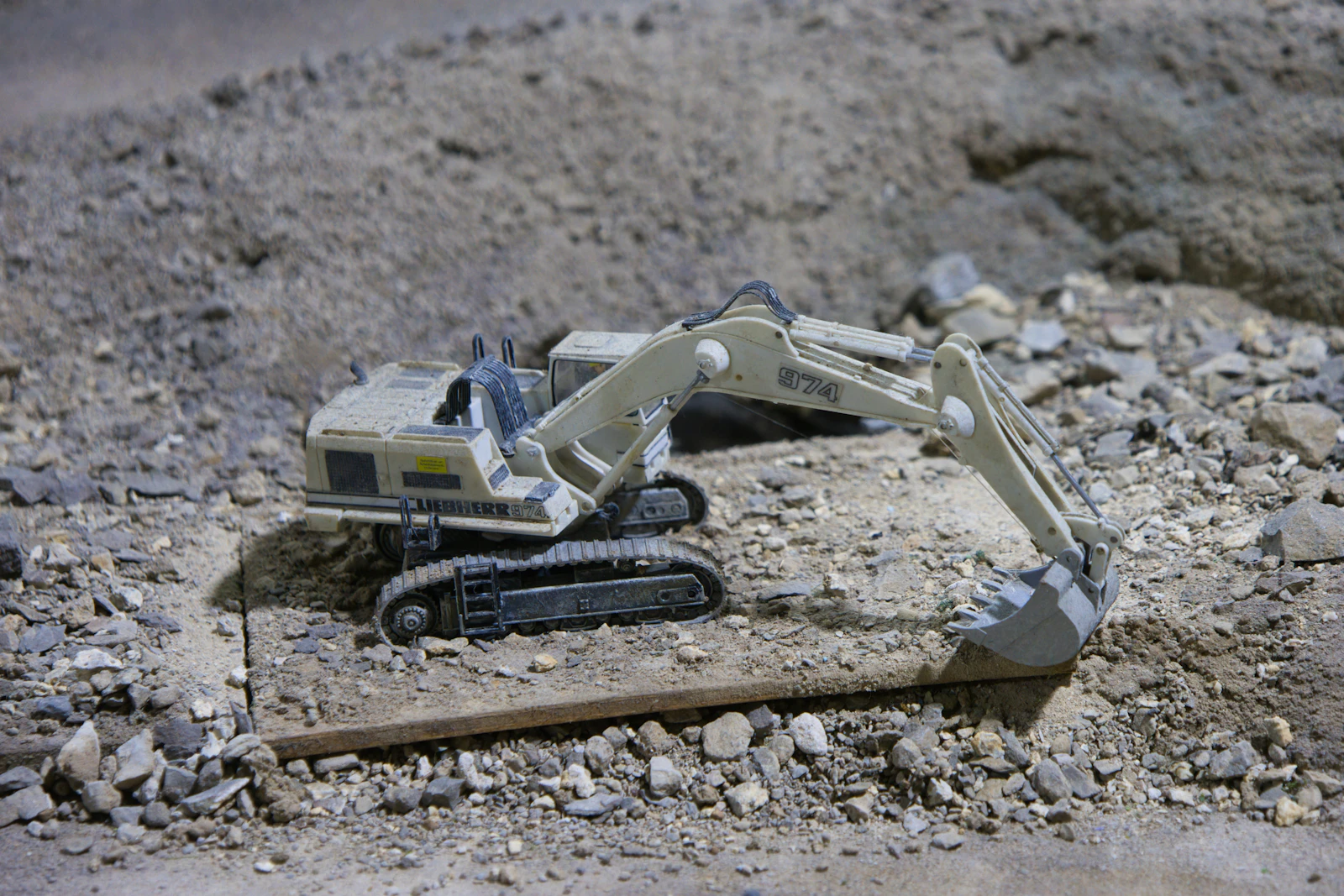
Mini Excavator Equipment Hire Costs Philadelphia 2026
For digging footings in Philadelphia in 2026, plan mini excavator equipment hire budgets around $280–$700/day, $900–$1,600/week, and $2,300–$4,500 per 4-week period, with the machine size (2,500 lb vs. 18,000 lb class), tail-swing configuration, and attachments driving the spread. Marketplace aggregators publishing Philadelphia averages show roughly $571/day, $1,388/week, and $3,606/month as a blended benchmark, while other published examples by operating weight commonly land in the low $300s/day for ~12k lb units and the low $400s/day for ~16k lb units. In the Delaware Valley you’ll typically quote through national lessors (United Rentals, Sunbelt, Herc) and regional independents; the operational cost swing usually comes from transport, run-time overages, and return-condition charges—not the base rate.
| Vendor |
Daily Rate |
Weekly Rate |
Review Score |
Website |
| United Rentals |
$704 |
$1 810 |
9 |
Visit |
| Sunbelt Rentals |
$320 |
$880 |
9 |
Visit |
| Herc Rentals |
$837 |
$1 837 |
8 |
Visit |
| Action Rental |
$315 |
$889 |
9 |
Visit |
How Mini Excavator Size And Configuration Change Footing-Dig Hire Pricing
“Mini excavator” spans several weight classes, and for footing work you’ll normally choose based on access, spoil handling, and depth rather than just hourly production. Published rate cards and regional rental listings show clear price steps by weight class; even within Pennsylvania, an ~8,000 lb machine may publish around $275/day and $1,000/week, while a ~10k–12k class commonly publishes around $325–$375/day and $980–$1,130/week, and an ~18k class can publish around $495/day and $1,490/week. Those are “yard rates” before delivery, waiver, and add-ons.
- 1–2 ton (2,500–4,000 lb) for ultra-tight access: Often chosen for rear-yard or interior/basement access constraints (e.g., 36 in. gates). Typical 2026 planning: $280–$500/day, but you may pay more per unit of production because the cycle time and lift capacity are lower.
- 3–4 ton (7,000–10,000 lb) for most residential/commercial footing trenches: Typical 2026 planning: $350–$650/day, with better breakout force and faster trenching/backfill support.
- 5–6 ton (12,000–18,000+ lb) when depth/reach or production dominates: Typical 2026 planning: $450–$800/day. Expect more stringent delivery constraints in Philadelphia streetscapes (truck size, curb space, permits) and higher mobilization costs.
Configuration adders that routinely show up on the quote: reduced-tail-swing/zero-tail units (higher demand), enclosed cab/heat (winter schedules), hydraulic thumb (material handling and demo), and rubber tracks (finished surfaces). For digging footings, a hydraulic thumb adder of $35–$90/day is a common planning allowance if it’s not bundled; if you’re handling rubble, old brick, or boulders, it is usually worth it to avoid labor stacking time.
Philadelphia-Specific Mobilization, Access, And Street-Time Costs
Philadelphia is a delivery-and-access market. Even when the base rental looks competitive, the jobsite logistics can add a material percentage to the mini excavator hire cost, especially for short-duration footing digs.
- Delivery / pickup inside the city: Budget $175–$350 each way for a typical mini excavator drop within a common metro radius, with a higher band ($350–$550 each way) when a heavier unit requires a bigger truck, a tighter delivery window, or special handling. For planning, some published 2026 government/municipal schedules show delivery/mobilization structured as a first-mile charge (~$290) plus per-mile adders (~$4/mile) thereafter, which mirrors how many lessors treat mobilization math even when they quote lump-sum.
- Street occupancy and staging constraints: If you can’t accept delivery between typical yard routes (often early morning), expect $125–$200/hr standby/wait time after a grace period (commonly 15–30 minutes) to cover driver and truck time.
- Bridge/tunnel toll exposure: If your supplying yard is coming across the Delaware, add a $20–$60 allowance for toll pass-through on a single mobilization (confirm per vendor policy).
- Surface protection in tight rowhome streets or alleys: Track mats are frequently required by GC/site rules; budget $25–$60/day or $150–$300/week if rented as a line item.
Hidden-Fee Breakdown For Mini Excavator Equipment Hire
When you’re pricing mini excavator equipment hire for digging footings, these are the items that most often push actual cost above the “day/week/4-week” headline number.
- Minimum rental charge: Commonly 1 day minimum even if the machine is used for a partial shift; some local listings also publish “half-day” windows (e.g., 4–5 hours) but confirm whether that applies to excavators or only small tools.
- Run-time included vs. overage: Many rentals are effectively “one shift” (commonly 8 hours/day, 40 hours/week, 160 hours/4-week). If you run long or double-shift, budget overage at 10%–20% of the daily rate for moderate overages, or per contract formula if specified.
- Damage waiver / rental protection: Plan 10%–15% of the rental charges if you take the lessor’s protection plan (example programs publish 15% for an RPP-style offering). If you provide your own insurance, confirm waiver-of-subrogation and additional insured requirements early to avoid release delays.
- Environmental / shop / admin charges: Many national contracts add an environmental services-style fee; budget 2%–5% of rental (or a small fixed charge) depending on contract language.
- Fuel / refuel: Most mini excavators go out full and must return full. If returned short, budget a refuel service of $35–$85 plus diesel at $6–$9/gal (your contract may define the per-gallon rate).
- Cleaning: Mud-packed undercarriage or clay spoil baked into tracks is a frequent back-charge. Budget $150–$450 for cleaning, and up to $500+ when the undercarriage is heavily impacted and requires extra labor/time.
- Weekend/holiday billing: If you need Saturday delivery or Monday pickup, plan a $100–$250 weekend handling surcharge, or confirm whether weekend days count as billable days on your agreement.
- Late return: A common outcome is a full extra day if the machine misses the pickup cutoff; budget 1 additional day at the prevailing daily rate when you cannot meet off-rent timing.
Attachments And Accessories That Commonly Add Cost For Digging Footings
Footing work looks straightforward, but productivity and finish quality often depend on the right attachments. If the rental package doesn’t include what you need, plan these 2026 adders:
- Trenching bucket swap/additional bucket: $15–$35/day per extra bucket (planning range; varies by coupler type).
- Quick coupler (if not standard): $20–$45/day.
- Hydraulic thumb: $35–$90/day (or bundled on some listings).
- Auger drive + bit (for pier/sonotube tie-ins near footings): $140–$350/day depending on torque class and bit size.
- Hydraulic breaker (demo of existing stoop/ledge/old concrete before footing dig): $180–$450/day for mini-ex sized breakers, with heavier breakers materially more.
- Compaction wheel (backfill lifts where spec allows): $200–$650/week class-dependent.
Example: Rowhome Rear-Yard Footing Dig With Tight Access
Scenario: Rear-yard addition in South Philadelphia, access through a 36 in. gate, spoil must be stockpiled neatly to preserve egress, and deliveries are restricted to a 7:00–9:00 a.m. window. Footing trenching is scheduled for 2 working days, but the GC cannot accept pickup until Day 3 due to concrete pour sequencing.
- Machine: 2-ton class mini excavator (narrow configuration). Budget $425/day × 3 billable days = $1,275.
- Delivery/pickup: $275 each way = $550 (city access + time window).
- Track mats: $40/day × 3 = $120 (protect pavers/sidewalk).
- Damage waiver: 12% planning allowance on rental = $153.
- Fuel true-up: Allow $60 (partial refill risk at $7.50/gal equivalent plus service component).
- Cleaning contingency: Allow $250 due to wet clay and tight alley tracking.
Order-of-magnitude total: $2,408 before tax and any overage hours. The main avoidable cost in this scenario is the extra billable day—tight pickup windows and “off-rent” timing are the first place coordinators win or lose money on mini excavator equipment hire in Philadelphia.
Budget Worksheet
- Mini excavator hire (select weight class): allowance $280–$700/day or $2,300–$4,500/4-week depending on duration.
- Mobilization (delivery + pickup): allowance $350–$1,100 per round trip (site access dependent).
- Damage waiver / RPP: allowance 10%–15% of rental charges.
- Environmental/admin fees: allowance 2%–5% of rental charges.
- Attachments: bucket set $25–$70/day; thumb $35–$90/day; breaker $180–$450/day; auger package $140–$350/day.
- Surface protection: track mats $25–$60/day.
- Fuel true-up: allowance $35–$85 service plus $6–$9/gal fuel if returned short.
- Cleaning contingency: allowance $150–$450 (increase for mud-packed undercarriage).
- Weekend/after-hours handling: allowance $100–$250.
- Standby/wait time (delivery/pickup delays): allowance $125–$200/hr.
- Documentation/closeout (photos, condition report admin): allowance $25–$60 (varies by internal process).
Rental Order Checklist
- PO number, job name, and cost code structure for tracking mini excavator equipment hire costs by phase (excavation vs. backfill).
- Confirm billing basis: day/week/4-week, and included run-time (e.g., 8 hrs/day, 40 hrs/week, 160 hrs/4-week) plus overage rules.
- Delivery address with cross-streets, curb-space plan, and preferred truck type (tilt-deck vs. trailer) for Philadelphia access.
- Delivery window, cutoff time, and on-site contact who can sign (avoid driver wait at $125–$200/hr).
- Insurance path: provide COI or approve damage waiver line (10%–15% planning).
- Attachment list: bucket widths, coupler type, thumb requirement, breaker/auger needs, track mats.
- Return condition requirements: “full fuel,” clean undercarriage, and photo documentation at pickup and off-rent.
- Off-rent procedure: who calls off rent, required notice, and what constitutes “available for pickup” (gate access, keys location, egress clear).
Rate Structure Details: Hours, Shifts, And Overage
Rental coordinators should treat mini excavator hire as a shift-based entitlement, not unlimited run-time. Published lessor guidance commonly defines base rates as “one shift,” frequently described as 8 hours/day, 40 hours/week, and 160 hours per 4-week period, with excess use billed proportionally (e.g., a fraction of the daily/weekly/4-week rate as an hourly charge). This matters for footing work when you extend into evenings to hit concrete inspection windows or when multiple trades share the machine. If you expect double-shift utilization for even a few days, price it intentionally (either negotiate a 2-shift rate up front or carry an overage allowance such as $60–$140/day on a $400–$700/day machine).
What Prevents Return-Condition Back-Charges On Mini Excavator Hire
Most disputed charges are preventable if you manage closeout like a controlled equipment return rather than a casual pickup:
- Photo your undercarriage and tracks at delivery and at off-rent (mud/clay is the most common cleaning trigger). A $150–$450 cleaning bill is usually about labor time, not just pressure washing.
- Fuel discipline: Decide whether the crew will refuel on-site or you will accept back-charge. A typical allowance is $35–$85 service + $6–$9/gal diesel; if your jobsite is downtown and fueling is inconvenient, it may be cheaper to accept the charge intentionally than to burn labor hours and risk traffic delays.
- Wear items and damage waiver boundaries: Even with a waiver, contracts may exclude tires/tracks or damage caused by misuse. Keep a short incident log and report damage same-day to avoid “pre-existing vs. new damage” disputes.
- Keys and access: A missed pickup because the operator left keys in a locked conex can cost a full extra day (often $280–$800 depending on class).
Philadelphia Operational Constraints That Change The True Hire Cost
For digging footings in Philadelphia, plan around these real-world constraints that frequently add billable time:
- Delivery cutoffs and reroutes: If your site can’t take a truck after 2:00–3:00 p.m. due to lane restrictions or school congestion, you can lose a day on both ends of the rental (delivery and pickup). Carry a 1-day schedule float or negotiate flexible pickup terms.
- Weekend billing exposure: If you go off rent on a Friday but the vendor can’t pick up until Monday, confirm whether Saturday/Sunday are charged. If they are, the “cost of doing nothing” can be $560–$1,600 across a weekend on a mid-class machine.
- Indoor/basement dust-control expectations: If the mini excavator is supporting interior underpinning or slab removal adjacent to footing work, the GC may require dust control. Even if you don’t rent the dust-control equipment through the same PO, the constraints can slow run-time and drive overage. (If you do add rentals, a typical planning allowance for an air scrubber/negative air unit is $80–$140/day.)
- Heat and hydraulic performance: During July/August peak heat, machines may derate or require more idle time for cooling; that pushes you toward extra days more often than it increases the daily rate.
Ways To Reduce Mini Excavator Equipment Hire Costs Without Losing Production
- Match the machine to the spoil plan: If you must load out spoil into small containers or a narrow alley, a smaller unit may avoid surface repairs and access delays—even if its daily rate is lower only by $75–$150.
- Bundle the right bucket set at order time: Paying $15–$35/day for a trenching bucket is usually cheaper than burning labor shaping footings with the wrong bucket.
- Control “dead days”: The fastest savings often come from avoiding one extra billed day. On a $500/day excavator, one avoidable day can exceed the entire damage waiver line.
- Pre-clear delivery: Confirm curb space, overhead clearance, and gate locks. Avoiding even 1 hour of driver wait at $125–$200/hr is meaningful on short rentals.
Ownership Vs. Hire (Focused On Footing Work)
For crews that dig footings intermittently, hire is often the cleaner cost position because transport, maintenance, and undercarriage wear stay externalized. As a practical rule, if your utilization is below roughly 6–8 days/month on a consistent size class, the all-in cost (including your internal transport, maintenance time, and downtime risk) can exceed a well-managed rental program. If you are consistently above that threshold and you have predictable storage and hauling, ownership may pencil—especially for standardized attachments. Either way, you still need a rental plan for peak overlap, specialty attachments (breaker/auger), and backup coverage.
2026 Planning Assumptions For Philadelphia Mini Excavator Hire
- Monthly term: Assume “month” means a 4-week (28-day) billing period unless your vendor defines calendar-month billing.
- Rates shown are planning ranges: Actual quotes move with availability, seasonality, and branch utilization.
- Use allowances for uncertainty: Carry at least $250 cleaning contingency and 1 extra billable day contingency on dense urban footing scopes where pickup windows are uncertain.