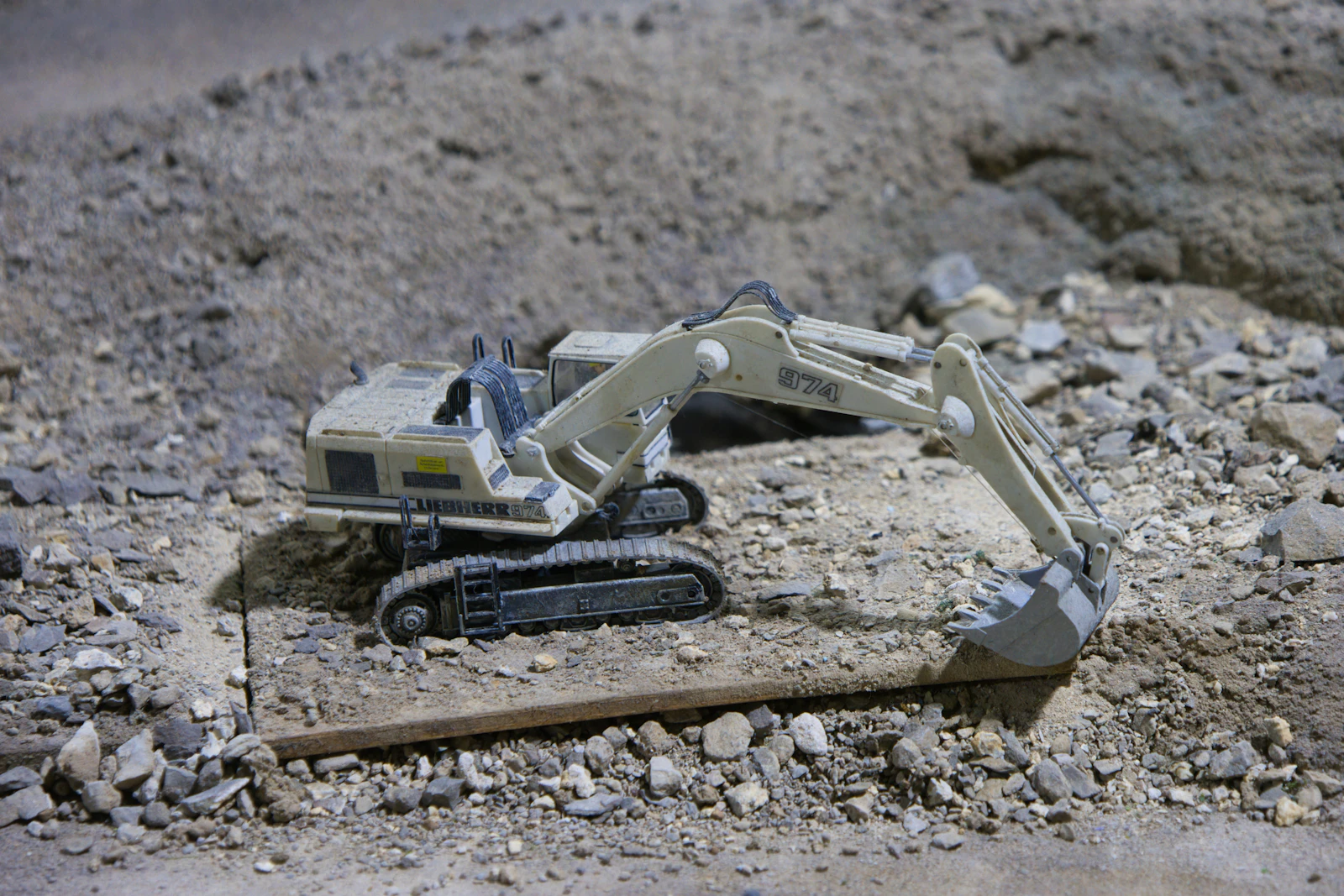
Mini Excavator Equipment Hire Costs Philadelphia 2026
For Philadelphia foundation repair scopes in 2026, budget mini excavator equipment hire (bare machine, no operator) in these planning ranges: micro/1–2 ton units (roughly 2,300–4,000 lb operating weight) at about $190–$300/day, $520–$900/week, and $1,450–$2,700 per 28-day month; mid-size 3–4 ton minis (roughly 8,000–10,000 lb) at about $240–$425/day, $725–$1,270/week, and $1,950–$3,800 per 28-day month; and larger 5–8 ton minis (roughly 12,000–18,600 lb) at about $310–$660/day, $900–$1,980/week, and $2,450–$5,950 per 28-day month, driven by tail-swing class, cab vs canopy, hydraulic options, and delivery complexity in dense neighborhoods. Philadelphia buyers typically source from national fleets (e.g., United Rentals, Sunbelt Rentals, Herc Rentals) plus independent yards; the best cost control usually comes from locking the right size class, clarifying hour/meter limits, and pre-approving delivery windows and street access logistics.
| Vendor |
Daily Rate |
Weekly Rate |
Review Score |
Website |
| United Rentals |
$375 |
$1 450 |
9 |
Visit |
| Sunbelt Rentals |
$365 |
$1 425 |
9 |
Visit |
| Herc Rentals |
$345 |
$1 350 |
8 |
Visit |
| Foley Rents (Cat Rental Store) |
$395 |
$1 525 |
10 |
Visit |
| The Home Depot Rental |
$325 |
$1 250 |
9 |
Visit |
Mini Excavator Hire Pricing By Size Class For Foundation Repair
Foundation repair excavation is often “tight-access, high-risk” digging: working close to existing footings, utilities, and masonry walls. That pushes many Philadelphia projects toward zero tail swing, rubber tracks, and narrower machines that can stage in a driveway, alley, or curb lane without triggering excessive street occupancy costs.
- Micro mini excavator (1–2 ton; ~2,300–4,000 lb): Budget $190–$300/day, $520–$900/week, $1,450–$2,700/28-days. Common for interior/basement access (through bulkhead doors) and rowhome side-yard runs where gate width is constrained to ~36–42 in. Expect slower cycle times in clay backfill and limited reach when you need to daylight a foundation drain line.
- Standard mini excavator (3–4 ton; ~7,500–10,000 lb): Budget $240–$425/day, $725–$1,270/week, $1,950–$3,800/28-days. Often the “best value” class for exterior foundation trenching because it balances reach/dig depth with manageable logistics (still typically deliverable on a tag trailer or small lowboy depending on yard and attachments).
- Large mini excavator (5–6 ton; ~12,000–14,000 lb): Budget $310–$520/day, $900–$1,420/week, $2,450–$4,260/28-days. Better breakout force and stick reach for deeper underpin work, but it is more likely to require a larger delivery truck and more staging room—both of which can increase total hire cost in Center City corridors.
- Heavy mini excavator (7–8 ton; ~15,000–18,600 lb): Budget $415–$660/day, $1,005–$1,980/week, $3,000–$5,950/28-days. Use when production matters (long runs, deep excavation, harder materials) and when you can secure clean access for delivery and loading—otherwise trucking and traffic delays can erase any productivity gain.
Estimator assumption note: “Monthly” in equipment hire is frequently quoted as a 28-day period (not a calendar month), and many rental agreements price around a standard shift (commonly 8 hours/day, 40 hours/week) with additional-hour rules. Confirm these definitions before you compare bids apples-to-apples.
What Drives Mini Excavator Equipment Hire Cost In Philadelphia?
Mini excavator hire pricing in Philadelphia is less about “citywide averages” and more about job constraints that push you into a specialty configuration or add billable logistics. For foundation repair, the following cost drivers tend to matter most:
- Tail swing and footprint: Zero tail swing and reduced tail swing units frequently price at a premium (plan +5% to +12% on base hire) because they’re in higher demand for tight sites and alley work.
- Track type and surface protection requirements: Rubber tracks are common, but if you must protect pavers/sidewalk slabs you may need track mats. Plan track mat hire at roughly $15–$35 per mat per day (or $45–$95 per mat per week) and confirm whether the yard requires plywood under mats on decorative surfaces to avoid scuff claims.
- Cab vs canopy: Enclosed cab (heat/AC) can add roughly $25–$60/day versus an open canopy in comparable class—often worth it if your foundation scope spans wet weeks or winter months when operator fatigue drives downtime.
- Hydraulic auxiliary flow: If your foundation repair includes breaking stoops, slab edges, or small mass concrete, you may need the correct auxiliary hydraulics. Units that are breaker-ready or high-flow capable can price higher and may have stricter wear-and-tear rules.
- Bucket package and coupler: A single “standard” bucket may be included, but foundation excavation typically needs at least one narrow trenching bucket plus a cleanup/grading bucket. Extra buckets commonly run $15–$55/day each depending on style and width. A quick coupler can run $35–$75/day but can pay for itself by reducing on-rent time when you need to swap frequently.
- Tier/engine/emissions configuration: Certain project sites (institutional, indoor-adjacent, or emission-controlled areas) may restrict older engines; newer units can carry higher hire rates but may reduce breakdown risk and improve cycle time.
Hidden-Fee Breakdown For Mini Excavator Hire (Philadelphia)
When coordinators get surprised on mini excavator invoices, it’s usually not the base day/week rate—it’s the “small” line items that are predictable if you plan for them. Use these as Philadelphia-ready allowances (confirm your vendor’s policy in writing):
- Delivery and pickup: Common local charges are $175–$350 each way inside a typical metro radius (often ~10–15 miles), with over-radius mileage frequently $7–$12 per loaded mile. If you require a narrow delivery window (e.g., a 2-hour window to coordinate with a street closure), plan a window premium of $75–$150.
- Traffic/wait time and failed delivery: If the driver cannot access the drop point (blocked curb lane, cars in the cone-off, locked gate), expect wait time around $95–$125/hour and possible redelivery fees of $150–$300. In dense rowhome blocks, also plan for a “can’t access” administrative/dispatch fee of $125–$250 when the truck is turned away.
- Transportation surcharge policies: Some national providers apply a transportation surcharge percentage (with a stated fixed component currently referenced as 9% (minimum $9) in published charge explanations) on top of base transportation charges, which can move your delivered cost even if the base delivery rate looks competitive.
- Shift limits and overtime hours: Many agreements define the base day/week/4-week rate as a single shift (8 hours/day, 40 hours/week, 160 hours/4 weeks) with excess-hours billed by formula (e.g., 1/8 of the daily rate per additional hour on a daily rental). If your foundation dig is “bursty” (short intense pushes to meet an inspection), overtime can outpace the base hire quickly.
- PM/meter and usage charges: In addition to base rent, some providers apply a per-hour “PM charge” (published as roughly $1–$6 per operating hour depending on equipment and hours) and then true-up based on actual usage. If you’re staging the machine but not running it, you still want the most favorable meter policy for idle time.
- Damage waiver / rental protection: Budget 10%–15% of base rent as a planning allowance if you add a damage waiver or rental protection plan; confirm exclusions (undercarriage, glass, theft, misuse) because foundation work increases contact risk near masonry and utilities.
- Cleaning fees: If the mini excavator returns with wet clay packed in the undercarriage or concrete slurry splashed on the boom, plan cleaning at $75–$250 and “heavy concrete” cleaning at $150–$400. Photos at pickup and return materially reduce disputes.
- Fuel/DEF and refuel service: Return-full policies vary, but a common allowance is $5–$8 per gallon equivalent for refuel plus a service fee of $25–$60. If the unit requires DEF and comes back empty, plan an additional $20–$40 convenience charge.
- Weekend/holiday billing: If pickup cannot occur until Monday, some yards bill Saturday/Sunday as on-rent days (or add a weekend handling fee). A practical allowance is 1–2 extra day charges per event unless you pre-negotiate off-rent cutoffs and Monday pickup without weekend billing.
Attachments And Accessories That Change Foundation Repair Rental Cost
For foundation repair, attachments determine not only production but also risk. A “cheap” base hire can become expensive if you add the tools you actually need after mobilization.
- Narrow trenching bucket (9–12 in.): Plan $15–$35/day or $45–$110/week. Often used to daylight existing footing drains, expose utility crossings, and reduce backfill volume.
- Cleanup/grading bucket (30–36 in.): Plan $25–$55/day or $75–$165/week for better trench shaping and backfill control along foundation walls.
- Hydraulic thumb: Plan $45–$95/day or $135–$285/week if you’re handling riprap, demo debris, or large stone commonly encountered near older Philadelphia basements.
- Hydraulic breaker/hammer (if allowed on the selected class): Plan $225–$450/day or $900–$1,700/week plus grease/bit wear. Confirm required auxiliary flow and whether the vendor bills extra hours as the breaker increases meter time.
- Quick coupler: Plan $35–$75/day to keep the operator from spending billable time driving pins and troubleshooting bucket fitment.
- Ground protection / street plates interface: If you’re staging on sidewalk/curb lane, plan protection consumables and documentation: $50–$150 for plywood/cribbing allowance plus 30–60 minutes of labor time at delivery/return to document conditions (avoid back-charges for pre-existing spalls).
Philadelphia Logistics: Delivery Windows, Access, And Street Constraints
Philadelphia foundation repair often happens on tight blocks with limited staging—especially rowhomes in South Philly, Fishtown, and West Philly corridors—so logistics are a true equipment hire cost driver (not just an operational nuisance).
- Delivery radius norms: Many yards price “standard” delivery within a metro ring; once you push beyond typical yard coverage, you’ll see the $7–$12/mile adders and a higher chance of a two-trip mobilization if attachments ship separately.
- Cutoff times and off-rent rules: A common operational reality is an off-rent cutoff around 2:00–4:00 PM for next-day pickup routing. Missing cutoff can create an extra billable day even if your crew is done.
- Rowhome access width: If you must bring the mini excavator through a gate under 42 in., that constraint can force a smaller class with a higher cost-per-production-hour. In that scenario, budget additional days rather than assume a larger unit’s productivity.
- Dust-control and indoor adjacency: When digging adjacent to occupied basements, many GCs require additional dust control (poly walls, negative air). Even if those controls aren’t part of the mini excavator contract, they can limit operating windows and increase on-rent days—so confirm your allowed run hours up front.
- Heat and storm impacts: Summer storms and heat can compress workable windows; if your plan assumes a 1-week rental but you only get 3 productive days, you’ll overpay unless you can off-rent quickly and avoid weekend billing.
Example: Rowhome Foundation Repair Mini Excavator Hire (5-Day Window)
Example scenario: A contractor needs to excavate a perimeter trench at a Philadelphia rowhome for foundation crack repair and new drain line tie-in. Access is via a narrow alley; the team selects a ~8,000 lb zero tail swing mini excavator with a trenching bucket and cleanup bucket. Work is planned for 5 working days (Mon–Fri), with pickup requested Friday afternoon.
Planning cost build (equipment hire only):
- Base weekly hire (3–4 ton class): $900–$1,270 (choose week pricing vs 5 individual day rates to reduce exposure if the job runs long).
- Delivery + pickup (urban access): $250 each way allowance = $500 (plus a window premium $100 if the block requires a tight drop/pick time).
- Attachments: trenching bucket $125/week + cleanup bucket $150/week allowance = $275.
- Damage waiver / protection: assume 12% of base rent (e.g., $108–$152 on a $900–$1,270 base).
- Cleaning contingency: $150 (Philadelphia clay + rain risk = packed tracks).
- Fuel/refuel allowance: $80 (avoid refuel service by topping off, but carry the contingency).
- Admin/dispatch risk allowance: $125 for failed delivery risk if the curb lane is not properly controlled at arrival.
Resulting 5-day planning total: approximately $2,235 to $3,152 for the mini excavator equipment hire package in a constrained Philadelphia street environment, before taxes and any overtime/meter true-ups.
Budget Worksheet (Mini Excavator Hire Allowances)
Use this bullet worksheet as a bid-day or pre-mobilization allowance set for Philadelphia foundation repair when the mini excavator is the primary excavation tool.
- Mini excavator base hire (select size class): $900–$1,980/week or $1,950–$5,950/28-days depending on operating weight class.
- Delivery charge (each way): $175–$350 (add mileage $7–$12/mile over radius)
- Delivery window premium (if required): $75–$150
- Wait time / site not ready: $95–$125/hour (carry 1 hour)
- Damage waiver / protection: 10%–15% of base rent
- Trenching bucket: $45–$110/week
- Cleanup bucket: $75–$165/week
- Hydraulic thumb (if needed): $135–$285/week
- Quick coupler (if needed): $175–$375/week
- Breaker (if needed for stoop/slab edges): $900–$1,700/week
- Cleaning allowance: $75–$250 (heavy clean $150–$400)
- Refuel/DEF allowance: $25–$60 service fee + $5–$8/gal equivalent if returned below full
- Weekend billing contingency (if pickup slips): 1 extra day at the daily rate
- Photo/documentation time: allow 30 minutes at delivery and 30 minutes at return for condition documentation
Rental Order Checklist (Foundation Repair Mini Excavator)
- Confirm equipment class and configuration: operating weight range, zero tail swing requirement, track width, cab vs canopy, auxiliary hydraulic spec.
- Confirm included items: 1 bucket included or not, bucket pin size/brand compatibility, whether a thumb is integrated or an add-on line item.
- Confirm rate basis: day/week/28-day month, and the defined shift hours (8/40/160 rule) plus overtime formula.
- Confirm meter/PM policy (if any): per-hour charge ranges and when it is billed/true-upped.
- Provide delivery details: exact drop point, alley width, overhead constraints, gate codes, contact name/phone, and preferred delivery window.
- Street/sidewalk protection plan: mats/plywood required, “no steel track on sidewalk” rules, curb-lane cone plan, and photo documentation expectations.
- Off-rent and pickup: off-rent cutoff time (plan around 2:00–4:00 PM), weekend billing rules, and required notice window (often 24 hours).
- Return condition: fuel level target (typically full), wash expectations, and documentation (photos of undercarriage, boom, cab, buckets, and any damage).
- Commercial requirements: COI wording, additional insured requirements, and damage waiver election (approve 10%–15% allowance or decline with proof of coverage).
How To Control Mini Excavator Hire Spend On Foundation Repair Projects
On Philadelphia foundation repair, the best “equipment hire savings” usually come from scheduling discipline more than rate negotiation. If your crew finishes on Thursday but the pickup is scheduled Monday, you can easily donate 2 extra days of rent (and possibly 2 extra days of damage waiver percentage) just due to weekend handling. Build your dig plan so the mini excavator is delivered the morning after demolition and layout are complete, and off-rent it immediately after inspection-ready backfill is placed.
- Use weekly pricing as the default: If your expected duration is 4–6 days, quote weekly. It typically caps downside if weather pushes you from 5 to 7 days.
- Pre-stage spoils handling so the machine stays productive: If spoils can’t be stored, the mini excavator may sit idle while trucks cycle—yet you still pay rent. Even a 2-hour/day idle pattern over a week can create overtime/meter exposure depending on contract terms.
- Right-size to access, not optimism: Choosing a bigger mini excavator to “go faster” can backfire if it triggers a more expensive delivery class, needs more street space, or can’t physically reach the dig zone without additional handwork.
Contract Terms That Affect Final Equipment Hire Cost
For professional equipment managers, the invoice risk is concentrated in a few terms. Treat these as bid qualifiers for mini excavator equipment hire costs in Philadelphia:
- Shift/overtime clause: Many rental agreements define base rent as one shift (e.g., 8 hours/day) and then bill additional hours at a defined fraction of the base rate (such as 1/8 of daily per extra hour on a daily rental). If your foundation stabilization requires long days to meet a concrete placement window, price overtime into your hire estimate up front.
- Transportation surcharge and variable fees: Some providers apply a transportation surcharge (including a stated fixed component referenced as 9% with a minimum). If you are comparing two quotes and one seems “high trucking,” check whether a surcharge is included or added later.
- Meter/PM charges: If a per-hour PM charge applies (published as $1–$6/hour in some charge explanations), high-utilization weeks can carry a noticeable add-on. For example, at $4/hour and 45 hours of run time, the add-on is $180 for the week—before taxes.
- Return condition definitions: “Excessive dirt” is subjective. For foundation repair, control your exposure by requiring your foreman to take 10–15 photos (undercarriage close-ups, both sides of the boom, bucket cutting edges/teeth, cab glass) at pickup and at return, and store them with the PO.
When A Smaller Or Larger Mini Excavator Is Cheaper Overall
Philadelphia cost outcomes hinge on whether the mini excavator is production-limited by access or by horsepower. Two quick heuristics help:
- If access is the constraint: A micro unit may be unavoidable. In that case, it is often cheaper overall to plan 2–3 extra on-rent days (and avoid change orders) than to attempt to force a larger unit into place with costly site modifications.
- If production is the constraint: Up-sizing from an 8,000 lb to a 12,300 lb class can reduce total days, but verify whether trucking changes. Some regional rate sheets show that trucking for larger units can be billed as an extra service (examples include statements such as trucking “extra” at $200/hour on certain equipment categories). If your job is in a traffic-heavy corridor near I-95 or the Schuylkill, that hourly trucking exposure can matter as much as the base hire rate.
Return-Condition Standards That Commonly Trigger Charges On Foundation Repair Jobs
Foundation repair is notorious for creating “chargeable condition” issues on rental returns. To keep mini excavator hire costs predictable in Philadelphia, set these rules internally:
- Undercarriage clean-out: If the job is wet, assign 30 minutes at end of day 2 and end of day final to knock out packed clay. That effort routinely avoids $150–$400 heavy-clean invoices.
- Bucket wear documentation: Photograph bucket edges and teeth on delivery. Replacing a few teeth can run $20–$45 each plus labor, and disputes usually happen when “before” photos are missing.
- Glass and body damage near masonry: When trenching close to brick, minor contact can crack a window or dent a panel. Treat tight-adjacent trenching as a higher-risk activity and either add the damage waiver (10%–15%) or ensure your own policy coverage is validated and documented.
- Fuel/DEF confirmation: Top off before return and take a gauge photo. A typical refuel back-charge can include a $25–$60 service fee plus $5–$8/gal equivalent for the shortfall.
2026 Planning Notes For Philadelphia Mini Excavator Equipment Hire Budgets
For 2026 budgeting, the most reliable approach is to carry a clear “base rent + delivered + risk” structure rather than a single blended rate. For Philadelphia foundation repair, a practical contingency is 5%–10% on the equipment hire package when (a) you have narrow delivery windows, (b) the dig is adjacent to occupied space (dust-control constraints), or (c) weather and inspection sequencing can force weekend on-rent exposure. As a final control, require the rental coordinator to confirm in writing: the 28-day month definition, shift hours/overtime, off-rent cutoff, and return condition standards before the PO is released.