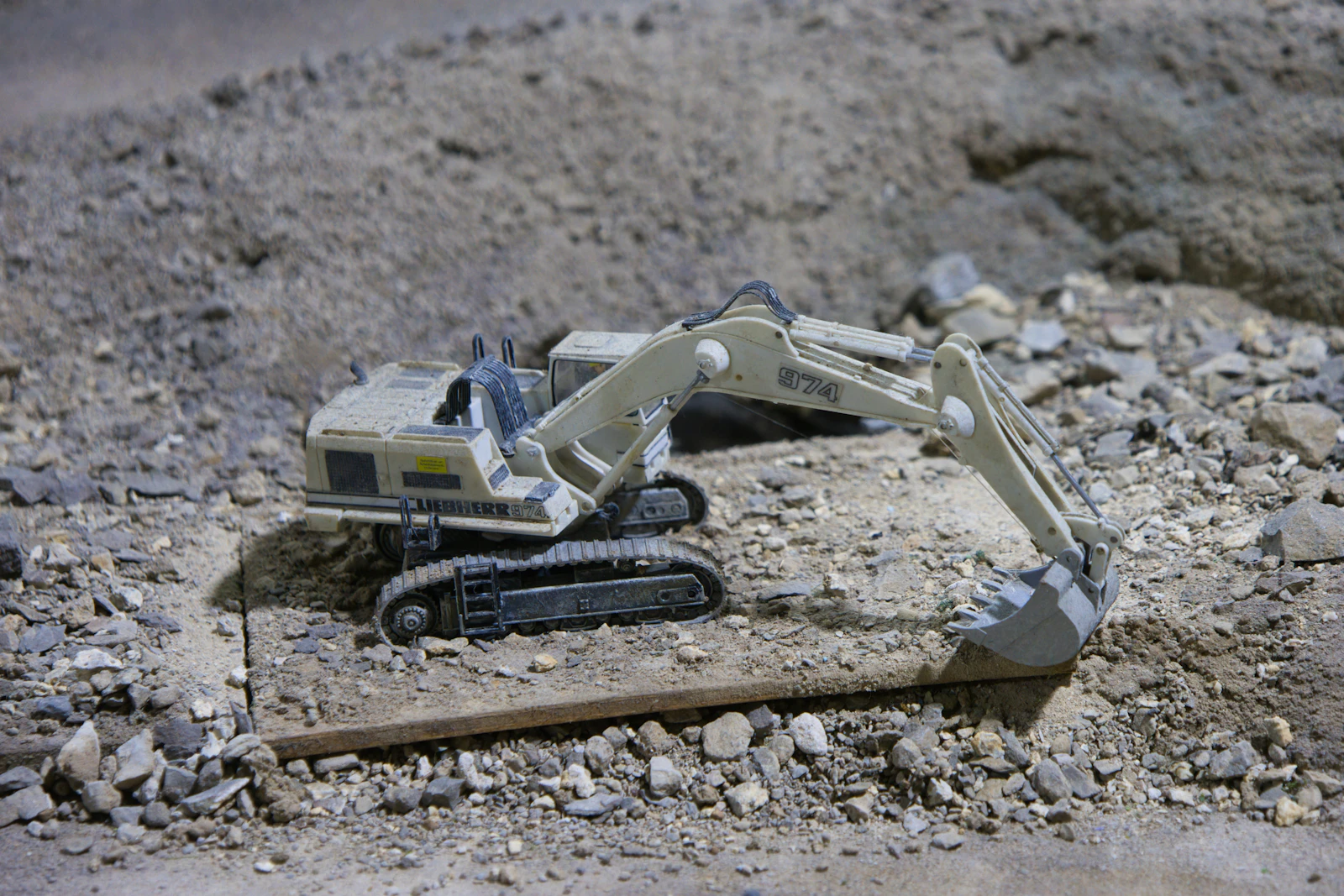
Mini Excavator Rental Rates Phoenix 2026
For Phoenix foundation repair scopes (perimeter trenching, daylighting footings, grade beam access, drainage tie-ins), 2026 mini excavator equipment hire budgets typically plan in the $200–$500/day, $640–$1,800/week, and $1,700–$4,800/month (4-week) bands for mini/compact excavators depending on size class, tail-swing geometry, cab configuration, and attachment package. As a cross-check, marketplaces report Phoenix averages around $431/day and $1,219/week, while local published examples include $242/day, $755/week, $1,700/month for a 17G-class unit and $250/day, $1,000/week, $2,800/month for 3–4 ton class units. Use these as planning ranges (not a quote) assuming single-shift utilization and normal wear; delivery, fuel, waiver/insurance, and return-condition costs often move the invoice materially on short-duration foundation repair work.
| Vendor |
Daily Rate |
Weekly Rate |
Review Score |
Website |
| United Rentals |
$320 |
$1 050 |
9 |
Visit |
| Sunbelt Rentals |
$265 |
$825 |
9 |
Visit |
| Ridgeline Equipment Rentals & Excavation (Phoenix Metro) |
$250 |
$1 100 |
10 |
Visit |
| T&T Equipment Rentals (serving Phoenix / Maricopa County) |
$250 |
$1 000 |
10 |
Visit |
| Summit Rentals (Phoenix) |
$242 |
$755 |
10 |
Visit |
What Drives Mini Excavator Equipment Hire Cost on Phoenix Foundation Repair Jobs?
For estimating mini excavator hire cost in Phoenix, the biggest rate-driver is operating weight / size class, because it correlates with breakout force, stick reach, and trailer/rollback logistics. Phoenix pricing commonly ladders by class (useful for foundation repair where access is constrained): (1) 1–2 ton micro/mini units often plan around $180–$220/day and $1,500–$2,100/month; (2) 2–4 ton compact excavators often budget around $260–$340/day and $2,200–$3,200/month; and (3) 4–6 ton units frequently land around $350–$450/day and $3,000–$4,300/month. For foundation repair, the 2–4 ton class is frequently the cost-performance “center,” but the right class depends on gate width, hardscape protection requirements, and whether you must lift spoils into bins or haul trailers staged on the street.
Secondary rate-drivers that matter specifically to foundation repair include: zero tail swing (reduces strikes near walls), rubber tracks (hardscape/driveway preservation), auxiliary hydraulics for breakers/compaction wheels, and whether the unit comes with hydraulic thumb (often a productivity multiplier for demo debris, riprap, and caliche chunks). When you need a breaker for caliche or slab demo at grade beam exposures, the attachment package can add more cost than the base day rate, so your equipment hire budget should carry explicit adders rather than “misc. attachments.”
Foundation Repair Scope: Match the Mini Excavator to the Dig
In Phoenix, many foundation repair packages involve a mix of tight-access excavation and controlled spoil handling. That means the lowest mini excavator rental rate is not always the lowest equipment hire cost for the task.
- Interior courtyard / side-yard access (tight gates): a retractable undercarriage unit (example published at 39 in retracted) can avoid wall/demo costs and reduce restoration scope; however, micro units can increase labor hours if you are moving spoils further or need repeated repositioning.
- Perimeter footing daylighting (typ. 18–36 in working trench widths): a 2–4 ton machine often balances reach and spoil placement without becoming a delivery/mobilization headache.
- Caliche or localized concrete demo: plan for a hydraulic breaker and higher fuel burn; in Phoenix, this is a common “surprise adder” when repair work uncovers hard layers and you need production to meet a same-week underpin schedule.
Estimator note: if your foundation repair plan has multiple short mobilizations (different residences, or phased dig/repair/closeback), negotiate a weekly or 4-week structure and manage off-rent tightly. Short, repeated one-day hires are where delivery windows, minimums, and cleaning fees compound.
Delivery, Pick-Up, And Metro Mileage: Phoenix-Specific Budgeting
Phoenix is a large, spread metro; delivery brackets and cutoff times are often as important as the posted daily rate for a mini excavator hire. Local published delivery examples in the Phoenix metro show:
- 0–20 miles: $75 each way for “small equipment” class deliveries; $95 each way for “mid-size equipment” (the class many 3–4 ton minis fall into).
- 21–30 miles: stepping to $95 each way (small equipment) and $125 each way (mid-size equipment).
- Large/heavy brackets can reach $125–$195 each way depending on class and distance band.
Plan operational constraints into the equipment hire cost: one published Phoenix policy notes delivery windows of 4:00 am–10:00 am and requires equipment to be ready for pick-up before 7:00 am on the scheduled return date. If your foundation repair crew cannot meet early pickup readiness (e.g., concrete cure time, patch inspections, or homeowner access restrictions), your “one more day” charge can erase any discount you negotiated.
Also watch how delivery is expressed. A local mini excavator listing explicitly references $2 per mile delivery language (conditions may apply). Treat this as a separate pricing model from flat “0–20 mile” brackets; it can be cheaper on close-in work and materially higher on far East Valley / far West Valley sites if you do not cap miles in the PO.
Hidden-Fee Breakdown
Below are common “real invoice” adders that rental coordinators should carry in Phoenix mini excavator equipment hire budgets for foundation repair. Some are published examples; others are prudent 2026 allowances when the quote is silent.
- Fuel / refuel: one Phoenix provider publishes fuel as pre-paid at $6.00/gal. If your mini excavator returns short and you cannot document fuel-on/ fuel-off, you lose the ability to dispute.
- Damage waiver / rental protection: national programs may price a waiver at 15% of rental charges. This is not insurance, but it can cap exposure; one published term set references a cap as the lesser of 10% of replacement value, 10% of repair cost, or $500 (plus tax), subject to exclusions.
- Minimum billable period: if you are doing a short foundation probe or one pier access dig, expect half-day/4-hour structures. A published Phoenix-area example shows $200 / 4 hr for an E20-class unit (delivery model varies).
- Cleaning / undercarriage de-mud (allowance): plan $75–$250 if the unit comes back with concrete slurry, caliche packed in the tracks, or wet monsoon-season soils; document “as received” condition with photos.
- Late return / after-hours (allowance): plan an extra $50–$150 if your return misses the vendor’s yard cutoff and they push the off-rent timestamp to the next business day.
- Weekend/holiday billing rules (allowance): some accounts bill Saturday/Sunday as full days if the machine is out; others offer “Friday-to-Monday” weekend programs. Confirm in writing for foundation repair work that spans inspections or homeowner access windows.
Attachments And Accessories That Change The Hire Cost
Foundation repair often needs more than a standard bucket. To keep your Phoenix mini excavator hire cost predictable, price the attachment stack explicitly in the estimate and PO notes (and confirm coupler style and pin size).
- Hydraulic thumb: planning references show thumb adders around $105/day, $315/week, or $945/4-week. Even if your operator “can work without it,” a thumb usually reduces hand labor and speeds debris handling around stem walls.
- Hydraulic breaker (hammer): published planning ladders show compact breakers (by energy class) from about $190/day up to $315/day, and up to $945/week or $2,835/4-week. Breaker time is common in Phoenix caliche and for slab edge demo at grade beam exposures—budget it early to avoid schedule-driven “whatever is available” pricing.
- Extra buckets / trenching buckets (allowance): if your vendor includes one general-purpose bucket, carry $25–$60/day per additional bucket (e.g., 12 in trenching and 24 in cleanout). A published example outside Phoenix shows $25 per extra bucket per day, which is a reasonable starting allowance if your quote does not specify.
- Track mats / driveway protection (allowance): for occupied residential foundation repair, carry $25–$75/day to protect pavers, asphalt, and decorative concrete, especially in HOA-controlled neighborhoods where restoration back-charges exceed the rental fee.
Example: Phoenix Slab Edge Exposure For Underpinning (4-Day Window)
Example: A foundation repair crew in Phoenix needs a mini excavator for a four-day slab edge exposure and pier access dig, with spoil stockpiled on a driveway protected by mats. Constraints: early-morning delivery required (occupied home), caliche pockets anticipated, and pickup must occur before a scheduled inspection.
- Base equipment hire selection: Instead of paying four separate day rates, the coordinator chooses a weekly structure comparable to published Phoenix rates of $1,000/week for a 3–4 ton class unit.
- Delivery: assume a mid-size delivery bracket at $95 each way inside 0–20 miles ($190 round trip), with jobsite confirmed to avoid a 21–30 mile step-up.
- Damage waiver: add 15% of rental charges (here, $150 on a $1,000 weekly base) if you are not furnishing hired-in equipment coverage.
- Fuel: carry an allowance of 20 gallons at $6.00/gal for refuel ($120) if your contract uses pre-paid fuel.
- Breaker: plan 2 days of breaker time at $300/day (allowance $600) for caliche pockets so the crew does not lose a day waiting on attachment availability.
- Return readiness: schedule closeback so the machine is clean, loaded, and accessible for before 7:00 am pickup on the off-rent date; otherwise, carry a contingency of +$250 for an extra day or failed pickup attempt.
Resulting “equipment-only” budget (before tax) is often driven more by delivery + waiver + attachments than by the posted weekly base. On small foundation repair jobs, that is why equipment hire cost control is mostly about logistics discipline: delivery bracket management, off-rent timing, and return condition documentation.
Budget Worksheet
Use this bullet worksheet (no tables) as a practical estimator/rental coordinator artifact for Phoenix mini excavator equipment hire on foundation repair scopes:
- Mini excavator base hire (2–4 ton class): $1,000/week allowance (or $250/day if truly one-day use).
- Mobilization (delivery + pickup): $190 allowance within 0–20 miles at $95 each way (mid-size) or $150 within 0–20 miles at $75 each way (small equipment), adjust for 21–30 miles.
- Damage waiver / rental protection (if taken): 15% of rental charges (allow $150 per $1,000).
- Fuel/consumption allowance: 20–40 gallons at $6.00/gal (allow $120–$240) depending on idle time and breaker use.
- Hydraulic thumb adder (if not included): $105/day or $315/week.
- Hydraulic breaker adder (foundation demo/caliche): $190–$315/day depending on size class; carry $600 for two days at $300/day.
- Track mats / surface protection: $150–$300/week allowance (or $25–$75/day).
- Cleaning/undercarriage: $150 allowance (increase to $250 in monsoon season or for slurry/concrete exposure).
- After-hours/late off-rent contingency: $100 allowance.
- Documentation/admin: 0.5–1.0 hr coordinator time for delivery scheduling, COI exchange, and return photos.
Rental Order Checklist
Use this checklist to keep Phoenix mini excavator equipment hire cost aligned with the estimate:
- PO includes: equipment class (e.g., 3–4 ton), tail-swing requirement (zero/reduced), canopy vs enclosed cab, and bucket package (12 in trenching + 24 in GP + grading bucket if needed).
- Attachment confirmation: hydraulic thumb included or separate line item; breaker size class and coupler compatibility confirmed in writing.
- Insurance decision documented: provide hired-in equipment coverage/COI or accept rental protection plan; confirm waiver percentage and exclusions if taken (e.g., tires/tracks).
- Delivery logistics: confirm distance band (0–20 vs 21–30 miles), delivery/pickup fees each way, and earliest delivery window.
- Site readiness: access width, gate locks, overhead clearance, and hardscape protection plan (mats) communicated to driver.
- Off-rent timing: pickup scheduled with the vendor’s cutoff in mind (carry that before 7:00 am readiness requirement into your look-ahead plan).
- Fuel expectations: fuel-on delivery documented; refuel responsibility agreed; take photos of gauge and hour meter at delivery and return.
- Return condition photos: tracks, bucket teeth, quick coupler, glass/cab, and any existing dents captured to prevent post-return disputes.
How Phoenix Jobsite Conditions Affect Equipment Hire Productivity (And Cost)
Phoenix foundation repair excavation is not “generic dirt work,” and the operational environment changes real equipment hire cost even when the day rate is fixed.
- Heat management: In peak summer, crews often work earlier, and published delivery windows that start as early as 4:00 am can become the practical norm. If your crew is not staged and ready, the vendor may burn the morning window and reschedule—creating a paid day with low production.
- Dust control: Desert dust around occupied homes increases the likelihood of cleaning back-charges. Budget a cleaning allowance (commonly $75–$250) and specify in your internal plan who is responsible for track/undercarriage cleanout before pickup.
- Caliche lenses: When caliche shows up, you either slow down drastically or you add a breaker. Planning ladders for compact breakers of $190–$315/day help you avoid a mid-job scramble that can stall underpinning progress.
Off-Rent Rules, Weekend Billing, And Meter Overage
Rental contracts vary, but foundation repair is especially sensitive to off-rent mechanics because work is often gated by inspections, epoxy/patch cure windows, and homeowner access. Practical rules for controlling mini excavator hire cost in Phoenix:
- Confirm the “meter day” definition: some rate guides price on a 10-hour day, 50-hour week, and 200-hour 4-week basis; if you run double shifts, budget a multiplier (some guides note 3-shift operation = 2× single-shift rate). If your job has long idle time (waiting on sawcutting, plumbers, or pier crews), pay for the smallest machine that can do the lift/reach to reduce fuel and risk.
- Meter overage allowance (planning): carry $20–$75/hour for over-hours if your vendor enforces hour caps (especially on weekend holds).
- Weekend strategy: if you must keep the excavator on site through a weekend due to open trench safety, confirm whether you will be billed Saturday/Sunday as full rental days. If they do bill weekend days, consider switching to a weekly structure (e.g., $1,000/week published locally) rather than stacking day rates.
Insurance, Damage Waiver, And Deposits For Mini Excavator Hire
From a rental coordinator perspective, the decision is not “waiver yes/no,” but “what is the maximum credible exposure on this foundation repair site?”
- Damage waiver price point: plan for waiver products around 15% of rental charges when taken.
- Residual exposure: published terms may cap certain losses to the lesser of 10% of replacement value, 10% of repair costs, or $500 (plus tax), but exclusions apply (e.g., intentional misuse; sometimes tires/tracks). You still need disciplined operator controls near utilities and stem walls.
- Deposits/authorization holds (planning): if you are not on account terms, carry a $500–$2,000 card authorization hold in your internal workflow so the field does not get delayed at dispatch.
Negotiation Levers That Actually Reduce Phoenix Mini Excavator Equipment Hire Cost
Rather than pushing only on the day rate, use levers that reduce total ownership-of-the-week for the rental period:
- Bundle deliveries: if you have two foundation repair sites in the same corridor (e.g., Central Phoenix to Arcadia), schedule sequential off-rent and delivery to stay inside the same distance band and avoid the 21–30 mile step-up from $95 to $125 each way for mid-size equipment.
- Attachment duration control: keep the breaker on hire only for the days you are actually demoing caliche/concrete. Even a compact breaker at $300/day can outspend a low day rate if it sits idle for cure/inspection days.
- Clarify fuel model: when fuel is pre-paid (example $6.00/gal), set an internal rule to photograph the gauge at delivery and return to prevent disputes and to reconcile usage against expected engine hours.
- Swap day-to-week early: if your schedule risk suggests the machine may go to day 4 or 5, move to a weekly structure immediately (published examples show Phoenix weekly pricing such as $755/week for small minis and $1,000/week for 3–4 ton class units).
Return-Condition Documentation To Prevent Back-Charges
Foundation repair sites generate conditions that rental houses frequently back-charge: concrete splatter, caliche packed in tracks, and curb/hardscape scarring. To keep equipment hire cost controlled:
- Take “four corners” photos at drop-off and pick-up, plus close-ups of tracks, bucket teeth, coupler, and cab glass.
- Log hour meter at delivery and return; reconcile against your internal equipment log so unexpected utilization does not slip into overtime billing.
- Clean before pickup when possible so the vendor’s driver is not waiting (waiting time can trigger rescheduling). Carry a cleaning allowance of $150 (increase to $250 for slurry or post-rain conditions).
- Meet pickup readiness cutoffs: if your vendor requires the unit ready before 7:00 am, make that a hard milestone in the superintendent’s look-ahead plan to avoid an unintended extra day.
If you want, I can tighten these ranges into a bid-ready internal equipment hire allowance for your specific foundation repair method (helical piers vs push piers vs grade beam access), the excavator class you typically run (1–2 ton vs 3–4 ton), and where in the Phoenix metro the work is clustered (to model delivery brackets and off-rent timing).