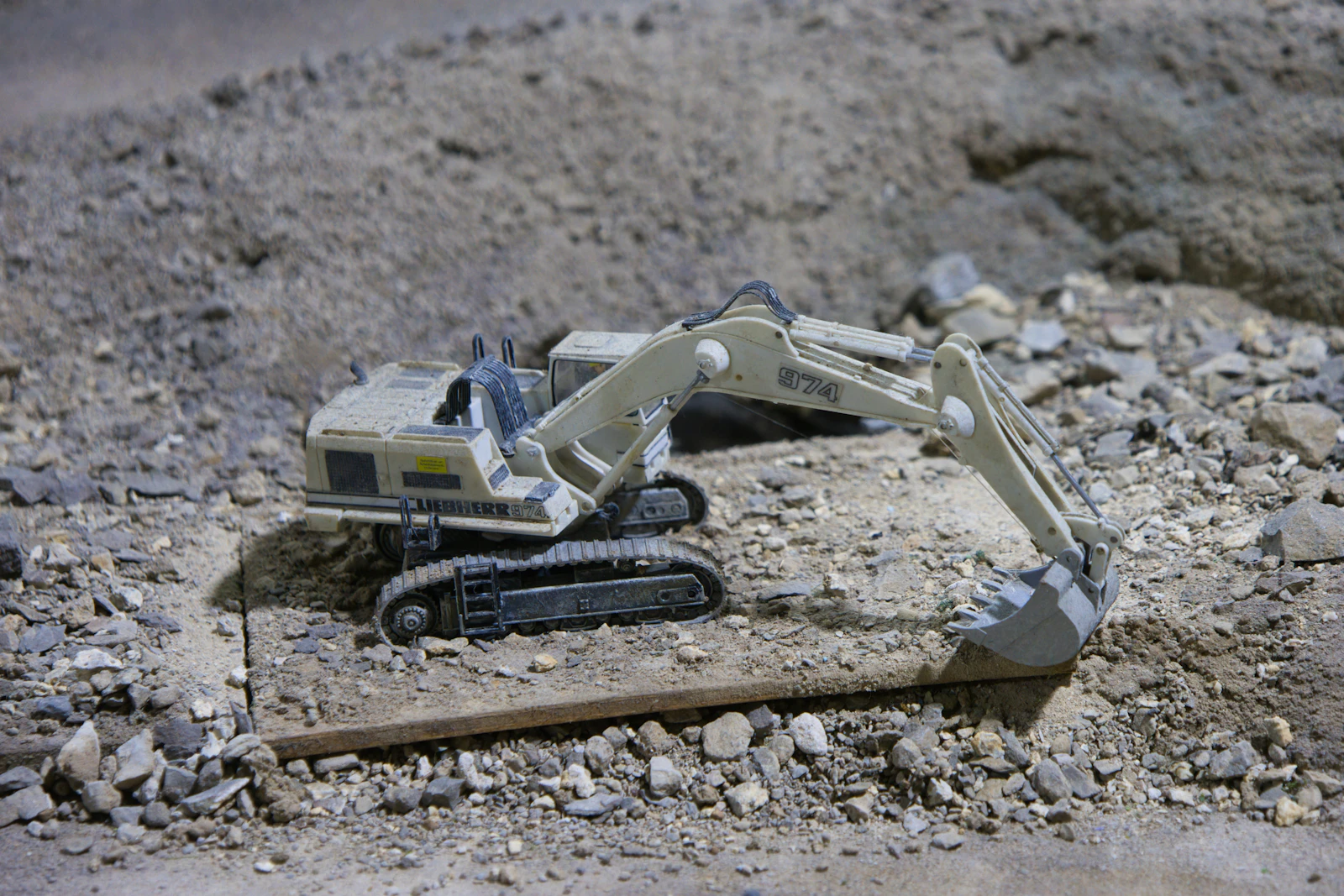
For Raleigh foundation repair scopes in 2026, budgeting mini excavator equipment hire typically lands in the following equipment-only planning ranges (before tax, delivery, fuel, and attachments): $300–$450/day, $850–$1,450/week, and $1,950–$3,900 per 4-week period (many national lessors price “monthly” as a 28-day/4-week rate). The tighter the access (gates, side yards, crawlspace exterior trenches), and the more “must-have” options you add (hydraulic thumb, multiple buckets, breaker, vacuum excavation coordination), the more your all-in hire cost shifts from “rate card” to “job cost.” In Raleigh, national fleets (e.g., United Rentals, Sunbelt, Herc) and strong regional independents can all quote competitively, but dispatch rules, delivery windows, and off-rent cutoffs often drive the final invoice as much as the machine rate.
| Vendor |
Daily Rate |
Weekly Rate |
Review Score |
Website |
| United Rentals |
$395 |
$1 580 |
8 |
Visit |
| Sunbelt Rentals |
$385 |
$1 540 |
8 |
Visit |
| Herc Rentals |
$375 |
$1 500 |
7 |
Visit |
| The Cat Rental Store (Carolina Cat) |
$425 |
$1 700 |
9 |
Visit |
| The Home Depot Tool Rental |
$369 |
$1 395 |
8 |
Visit |
Mini Excavator Rental Rates Raleigh 2026
2026 planning ranges (Raleigh/Wake County market, equipment-only):
- 1–2 ton micro/mini excavator (track unit, standard bucket): $300–$375/day; $850–$1,150/week; $1,950–$2,900 per 4 weeks.
- 3–4 ton compact mini excavator (common foundation repair class): $325–$450/day; $950–$1,450/week; $2,200–$3,900 per 4 weeks.
- 5–6 ton mini excavator (more reach/weight, still residential-access capable): $400–$575/day; $1,250–$1,900/week; $3,200–$5,500 per 4 weeks.
These bands align with publicly available contract/guide pricing that shows (a) 1-day/1-week/4-week pricing structures for compact/mini excavators and (b) common adders like delivery/mobilization and damage waiver percentages. For example, a 2026 bid schedule shows an 11,000 lb mini excavator at $300/day, $995/week, $2,310/month (pickup pricing), with delivery/mobilization shown separately.
How Foundation Repair Scope Changes Mini Excavator Hire Cost In Raleigh
Foundation repair work is rarely “just digging,” and that’s why mini excavator hire cost for foundation repair in Raleigh is most sensitive to access, production windows, and attachment needs:
- Access limitations: Side-yard access often forces a smaller class machine (and sometimes narrow track width), which can push you into higher-demand units and higher day rates.
- Dig precision near structures: You may need a grading bucket plus a narrow trenching bucket to control overbreak near footings; extra buckets are usually billed as separate line items.
- Drain tile / waterproofing coordination: If your foundation repair includes perimeter drainage, expect more “on/off” machine time. Off-rent rules (see below) matter.
- Soil conditions: Raleigh’s clay-heavy soils can stick to tracks and buckets; plan for cleaning time/cost and a realistic spoil handling plan.
What’s Included In The Rate (And What Is Not)
For equipment managers and rental coordinators, the first pricing clarification is “rate includes what usage?” Many national lessors define base day/week/4-week rates as one-shift usage (commonly 8 hours/day, 40 hours/week, 160 hours/4 weeks). Overages are billed using a defined hourly fraction of the base rate (for example, 1/8 of the daily, 1/40 of the weekly, and 1/160 of the 4-week rate).
Typically included (confirm per quote/contract): standard bucket, standard teeth, basic machine inspections, and normal wear.
Typically not included: delivery/pickup, fuel/diesel, cleaning, damage waiver/LDW, attachments beyond “one standard bucket,” traffic control, trench shoring, and ground protection mats.
Hidden-Fee Breakdown For Mini Excavator Equipment Hire
Use this section to keep your Raleigh mini excavator equipment hire cost estimate aligned to how invoices actually land.
- Delivery / pickup: Common budgeting is $250–$450 each way inside a typical metro radius, or mileage-based pricing such as $3–$6 per loaded mile after an initial charge. Some public schedules show delivery/mobilization structures like $290 for the first mile and $4 per additional mile on a mini excavator class.
- Mobilization charge line: Even when “delivery” is a line item, you may also see a separate mobilization fee; public bid tabs commonly show mobilization around $175–$250 depending on vendor and market.
- Damage waiver / LDW: Plan 10%–17% of time-and-material rental charges. Bid schedules commonly show 14%–15% for large lessors.
- Environmental/administrative fees: Budget 3%–5% if your vendor applies these (varies widely; confirm in terms).
- Cleaning fees: If returned muddy (common in clay soils), budget $95–$250. If there’s concrete slurry or adhesive contamination, cleaning can exceed $300 depending on severity (confirm vendor policy).
- Fuel / refuel: Most mini excavators are returned “full-to-full.” If vendor refuels, budget $6–$8/gal equivalent plus a service charge (market-dependent; confirm).
- Weekend/holiday billing: If you take delivery Friday PM and return Monday AM, many branches bill a 2-day minimum unless pre-negotiated.
- Late return / standby: After a cutoff (often around 2:00–4:00 PM for dispatch routing), a “same-day pickup” may miss and trigger another day.
Attachments And Accessories That Commonly Get Missed In Foundation Repair Quotes
Foundation repair mini excavator hire cost in Raleigh often climbs because “one standard bucket” isn’t sufficient for controlled excavation and backfill. Budget these common adders:
- Extra buckets: Planning adders of $20–$40/day per bucket are common; public rate sheets show mini-excavator bucket attachments in the ballpark of $22/day (smaller) and $33/day (larger) with weekly/monthly breakpoints.
- Hydraulic thumb: Useful for handling riprap, demo debris, or tight placement; public schedules show an excavator thumb attachment around $81/day, $211/week, $385/month (confirm compatibility and whether it’s “dedicated to class”).
- Hydraulic hammer/breaker (if footing/demo tie-ins exist): For mini excavator-class breakers, published schedules show daily pricing around $250/day, $636/week, and $1,448/month on certain rate sheets.
- Quick coupler: If not standard on the unit, budget $40–$85/day for faster bucket changes and reduced labor exposure.
- Ground protection mats: In Raleigh neighborhoods with tight setbacks and landscaping expectations, budget $15–$35/mat/day (or weekly caps) to protect turf/irrigation and reduce restoration costs.
Raleigh-Specific Cost Drivers (Operational Reality)
- Metro delivery radius norms: Many Raleigh branches price “standard metro” delivery inside roughly 20–30 miles; outside Wake County (e.g., Johnston/Franklin/Chatham edges), mileage adders are more likely.
- Red clay + rainfall patterns: After storm events, track cleaning and site restoration effort increases. Plan for a half-day productivity hit on wet clay if you’re trying to maintain a strict off-rent cutoff.
- Subdivisions and limited staging: If the excavator cannot be left on-site overnight due to HOA/security constraints, you may incur additional mobilizations or need a smaller deliverable unit that fits tighter driveways (sometimes higher day rate despite smaller size).
Example: 10-Working-Day Mini Excavator Hire For Foundation Repair (Raleigh)
Scenario: Exterior foundation waterproofing + drain tile on one elevation (approx. 60 linear ft), trench depth 6 ft, spoil staged on driveway protection mats. Access is a 42-inch gate, so you select a 3–4 ton mini excavator with a narrow configuration and add a trenching bucket. Work is 10 working days but spans 14 calendar days due to inspections and weather.
- Mini excavator (3–4 ton): $1,150/week × 2 weeks = $2,300 (planning figure)
- Trenching bucket adder: $30/day × 10 days = $300
- Delivery + pickup: $350 each way = $700
- Damage waiver (LDW): 15% of rental charges (equipment + attachments) ≈ $390 (if applied like bid schedules)
- Fuel/refuel allowance: $120 (top-off and idling variance)
- Cleaning allowance (clay soil): $150
- Late pickup risk allowance: 1 extra day at $375/day = $375 (if you miss the dispatch cutoff after rain)
Planning subtotal: approximately $4,335 before tax and any permit/traffic control items. Key constraint: to avoid the extra day, you would pre-schedule pickup for the morning after final backfill and ensure off-rent is called in before the branch’s daily cutoff (often mid-afternoon).
Ownership Vs. Equipment Hire (When Hire Still Wins For Foundation Repair)
Even if your organization runs ongoing foundation repair crews, short-cycle mobilizations, attachment variability (thumb/breaker/buckets), and the value of not carrying maintenance downtime often keep equipment hire competitive—especially when your schedule has weather-driven gaps. Where ownership tends to win is steady utilization with predictable logistics and in-house hauling capacity (which reduces third-party delivery exposure).
Estimator Notes (Assumptions To State On Every Raleigh Quote)
- State whether “month” means 28 days (4 weeks) or calendar month.
- State included usage: 8 hrs/day, 40 hrs/week, 160 hrs/4 weeks and your expected hour meter return.
- State delivery window requirement (e.g., 7:00–9:00 AM or 12:00–2:00 PM)—tight windows can increase delivery charges.
- State return condition: tracks/bucket free of excessive clay; full fuel; photographed condition at off-rent call.
How To Compare Quotes Without A Vendor Table
When you’re managing mini excavator equipment hire cost for Raleigh foundation repair, quote comparison should be done by normalizing a few items that are frequently “apples to oranges.” Focus on effective cost per production day and invoice risk (late pickup, overtime, cleaning, and attachment mismatches), not just the posted day rate.
- Normalize time basis: Convert everything to an 8-hour production day and confirm overage rules. A typical structure bills overtime at 1/8 of the daily rate per hour (daily rental), 1/40 of the weekly (weekly rental), and 1/160 of the 4-week (4-week rental).
- Normalize “week” vs “7 days”: Some branches treat week as 7 consecutive calendar days; others are closer to a 5-day production assumption with weekend billing rules. Put the weekend rule in writing.
- Normalize delivery: Ensure your quote clearly states each-way delivery and any mileage. If you’re outside the standard metro radius, budget a mileage adder like $3–$6/loaded mile or a structured schedule like $290 first mile + $4/additional mile where applicable.
- Normalize damage waiver: Use a consistent assumption (e.g., 14%–15%) when comparing base rates.
Dispatch, Off-Rent, And Billing Rules That Move The Final Invoice
In foundation repair, the machine is frequently “done digging” before the job is truly complete (inspection hold, membrane cure time, rain delay). That’s where rental terms create cost surprises:
- Off-rent call timing: If you call off-rent after dispatch cutoff (often 2:00–4:00 PM), pickup may slide and trigger another day. Build a $300–$450 contingency day into high-variance scopes.
- Standby on site: If the excavator must stay staged because you may need it “just in case,” compare a full day versus negotiating a weekly cap or planned 4-week rate.
- Minimum charges: Some deliveries effectively carry a 1-day minimum even if you only dig for 3–4 hours. If your work is truly short duration, negotiate pickup timing and minimums up front.
Insurance, Damage Waiver, And Deposit Planning
From an equipment hire cost control perspective, you need to decide early whether you’re using your own inland marine/general liability, the vendor’s damage waiver, or both. Many lessors provide an optional waiver often priced as a percentage of rental charges; published bid tabs commonly show ~14%–15%.
- Planning deposit / authorization: Budget $500–$2,000 depending on account status, machine class, and whether you’re walk-up versus house account (confirm with vendor).
- Track and undercarriage exposure: In tight residential work, curbs/steps can cause track damage—budget a risk allowance of $150–$600 if your jobsite protection plan is weak.
- Utility strike exposure: Not a “rental fee,” but a major cost driver. For foundation repair digs, schedule 811 locates 48–72 hours ahead and consider vacuum excavation coordination for crossings to reduce exposure.
Attachments: When Renting Separately Is Cheaper Than Upsizing The Machine
For Raleigh foundation repair, it’s often cheaper to keep a 3–4 ton mini excavator and add the right tools than to jump to a 5–6 ton unit “for power.” Examples:
- Add a thumb (planning: $81/day / $211/week / $385/month on certain published schedules) to handle debris and place stone more safely.
- Add a mini-ex breaker (planning: $251.75/day, $636.50/week, $1,448.75/month on certain rate sheets) if you expect small concrete/demo tie-ins.
- Add extra buckets (planning: $22–$33/day on certain schedules) rather than running one bucket for everything.
Budget Worksheet (Raleigh Mini Excavator Equipment Hire Cost)
- Mini excavator rental (select class): allowance $300–$450/day or $950–$1,450/week
- 4-week rate option (if schedule risk): allowance $2,200–$3,900/4 weeks
- Delivery to site: allowance $250–$450 each way (or mileage adders)
- Mobilization/admin fee: allowance $175–$250
- Damage waiver (LDW): allowance 14%–15% of rental charges
- Fuel/refuel: allowance $80–$200 per week depending on idle time
- Cleaning: allowance $95–$250 (clay soil return condition)
- Attachments:
- Extra bucket(s): $22–$33/day each (planning)
- Hydraulic thumb: $81/day or $211/week (planning)
- Breaker: $251.75/day or $636.50/week (planning)
- Ground protection mats: allowance $15–$35/mat/day
- Overtime/overuse allowance: 2–6 hours at hourly overage per contract terms
- Weather/dispatch slippage: allowance 1 extra day at $325–$450/day
Rental Order Checklist (For A Clean Invoice And Fast Off-Rent)
- PO number and job name: include “foundation repair” + address + onsite contact mobile
- Confirm machine class and constraints: gate width, working reach, max allowable ground pressure
- Confirm attachments: bucket sizes, thumb, quick coupler, breaker (and pin/grab type compatibility)
- Delivery requirements: requested window, site access instructions, overhead clearance, laydown spot
- Acceptance process: arrival photos (all sides + hour meter), note pre-existing dents/track wear
- Usage terms: included hours (8/40/160) and overtime billing method
- Damage waiver/insurance: select LDW % or provide COI before dispatch
- Fuel/return condition: full-to-full, remove excessive clay from tracks/bucket
- Off-rent procedure: who calls, cutoff time, and required return documentation/photos
- Pickup: confirm earliest pickup time and whether weekend pickup is available or Monday-only
Practical Guidance For Raleigh Foundation Repair Teams
If your scope includes perimeter trenching plus immediate backfill, you can often minimize hire cost by scheduling delivery early in the week, pushing production to finish before the weekend, and calling off-rent before dispatch cutoff on the final day. If your scope has inspection holds or rain sensitivity, a 4-week rate can be cheaper than “two weeks plus slippage” even when the machine is idle—because idle calendar days still exist in most billing models unless you physically off-rent and return the unit.