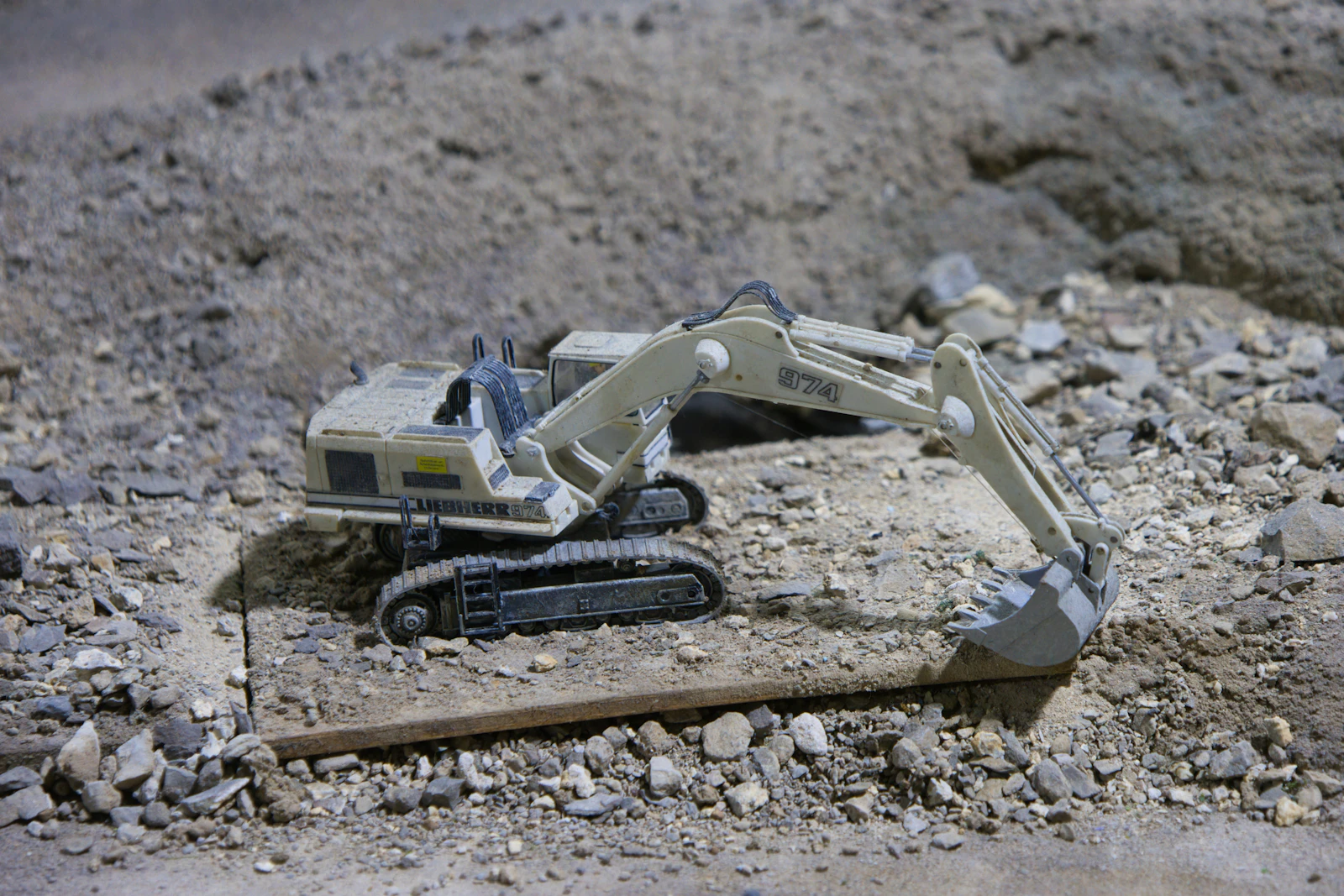
Mini Excavator Rental Rates Raleigh 2026
For retaining wall construction in Raleigh, NC, 2026 budgeting for mini excavator equipment hire typically lands in the $285–$575/day, $875–$1,900/week, and $2,250–$4,450 per 4-week (28-day) period range for the common 1.5–6 ton classes—before delivery, fuel, attachments, damage waiver/RPP, cleaning, and taxes. Recent Raleigh-area online rate snapshots (availability-based) show examples such as a 1.5 ton unit around $286/day, $888/week, $2,298/4 weeks and a 4 ton unit around $393/day, $1,181/week, $2,790/4 weeks, while heavier minis (5–6 ton) trend higher depending on cab and aux hydraulics. For professional crews, most quotes you’ll see in Raleigh will come from national providers and regional yards (including suppliers accessible via state cooperative/term-contract channels), but final hire pricing still hinges on meter limits, delivery radius, and attachment needs.
| Vendor |
Daily Rate |
Weekly Rate |
Review Score |
Website |
| United Rentals |
$353 |
$943 |
9 |
Visit |
| Sunbelt Rentals |
$371 |
$977 |
9 |
Visit |
| Herc Rentals |
$330 |
$851 |
8 |
Visit |
| BigRentz |
$312 |
$907 |
8 |
Visit |
2026 planning bands by mini excavator class (equipment-only, Raleigh metro):
- 1.5–2 ton (tight-access, backyard gates): $285–$340/day; $875–$1,100/week; $2,250–$3,000/4 weeks (use when access drives the decision more than cycle time).
- 3.5–4 ton (common retaining wall class): $375–$475/day; $1,150–$1,450/week; $2,700–$3,350/4 weeks (often the best balance of production vs. access).
- 5–6 ton (higher production, heavier material handling): $450–$625/day; $1,350–$1,950/week; $3,300–$4,700/4 weeks (watch transport weight/permits and driveway loading).
- 8–9 ton “large mini” (limited access, but near full-size capability): $625–$725/day; $1,850–$2,050/week; $4,400–$5,100/4 weeks (often overkill unless you’re moving big block/stone and have room).
Rate-period assumption (confirm on the quote): many national systems treat “monthly” as a 28-day / 4-week period with defined shift hours, not a calendar month. United Rentals explicitly references daily/weekly/monthly rates as 28 days when renting online. BigRentz similarly defines one month as 20 eight-hour shifts over 28 days.
What Drives Mini Excavator Equipment Hire Cost For Retaining Walls In Raleigh?
In retaining wall construction, mini excavator hire cost is less about “dig a trench” and more about the sequence: cut/bench excavation, base prep, drainage/aggregate placement, handling block/pavers/boulders, and backfill/compaction coordination. Your rental invoice moves the most when (1) the machine is too small and the job takes extra days, (2) the machine is right-sized but you didn’t budget for the attachments and handling tools that keep the crew moving, or (3) logistics (delivery timing, weekend hold, off-rent rules) force you into extra billable days.
Raleigh-specific considerations that routinely change the true equipment hire number:
- Soil and moisture: Wake County clay plus summer storm cycles often mean muddy tracks and undercarriage packing. That increases the odds of a cleaning fee at return (plan $75–$250; higher if concrete/mortar is involved) and can also trigger recovery costs if the unit gets stuck (common planning allowance $300–$900 for a “mud recovery” dispatch, depending on access).
- Residential access and hardscape protection: Many Raleigh infill lots and subdivisions have tight access plus finished driveways. If you need rubber tracks and ground protection, plan for ground mat hire adders (often $10–$25 per mat per day or bundled weekly pricing) and potential damage deposit/pre-auth exposure (commonly $500–$2,000 on new accounts without established credit).
- Delivery windows and HOA/noise expectations: Subdivision delivery cutoffs and restricted work hours can force Friday deliveries and Monday pickups—creating weekend hold days. If your off-rent requires next-business-day notice, you can accidentally buy 1–2 extra days even when the wall is complete.
Rate Class, Machine Configuration, And Attachments That Change Hire Price
Retaining wall work is attachment-driven. Two 4-ton minis can quote very differently based on cab, tail swing, and hydraulic capability.
- Cab vs. canopy: Enclosed cabs typically add cost (common adder $25–$75/day) but may reduce downtime in rain/heat and help justify higher utilization.
- Zero tail swing / reduced tail swing: Often a premium configuration on tighter Raleigh residential sites (common adder $15–$50/day)—but it can prevent a productivity hit from constant repositioning.
- Aux hydraulics and quick coupler: If you’re swapping buckets frequently, a quick coupler (or dedicated ditching bucket) pays for itself in labor savings, but you’ll see adders.
- Must-have retaining wall attachments (typical 2026 adders):
- Hydraulic thumb: $75–$150/day or $250–$450/week (critical for boulders, demo debris, and placing larger units).
- Trenching bucket (12–18 in.): $25–$60/day (drainage pipe zone and key trench).
- Grading/ditching bucket (48–60 in.): $40–$90/day (benching and final shaping behind the wall).
- Compaction wheel / trench compactor attachment: $150–$300/day when specified (common when you must compact in narrow lifts behind the wall).
- Hydraulic breaker: $350–$750/day if you hit rock/old concrete; confirm minimum rental and damage waiver coverage.
Hidden-Fee Breakdown For Mini Excavator Hire (Delivery, Fuel, Damage Waiver, Cleaning)
For equipment managers, the “hidden fees” aren’t truly hidden—they’re just often excluded from the base day/week/4-week number.
- Delivery and pickup: In Raleigh metro, plan $150–$350 each way for a mini excavator depending on distance, traffic windows, and whether the vendor treats your site as “inside radius.” For longer runs, some providers shift to mileage-style billing (planning allowance $6–$12/mile beyond an included radius) and can also add a wait time charge if the driver can’t access the drop zone (common $75–$150/hour after a free window).
- Minimum charges: Many yards effectively have a 1-day minimum and may enforce a minimum haul even if you’re only using the machine for a partial shift.
- Damage waiver / rental protection plan: Plan 10%–20% of the rental rate as a budgeting placeholder. A published example from one rental yard shows a 15% mandatory damage waiver (nonrefundable) on a compact excavator listing, which is a useful planning reference even when your Raleigh supplier structures it differently.
- Shift limits and overtime: A “day” is usually a single shift (commonly 8 hours). Herc Rentals describes basic daily/weekly/4-week rates as including up to 8 hours/day, 40 hours/week, 160 hours/4 weeks, with excess use billed using fractions of the base rate (e.g., 1/8 of the daily for extra hours on a daily rental). If your retaining wall crew runs long days to beat rain, overtime billing can meaningfully change your cost.
- Meter-based or program charges: Some agreements include an hourly program/PM-style charge. Herc describes a PM charge range of $1–$6 per operating hour depending on equipment type/size, typically reconciled against actual hours. For a 40-hour week, even a $3/hour program charge is another $120.
- Fuel/refuel and fluids: Plan to return diesel units full. If refueling is vendor-performed, budgeting $6–$10/gal as an effective service charge placeholder is prudent (actual charge varies and may be posted at the branch).
- Cleaning: Plan $75–$250 for heavy clay and spoil; $250–$500 is not unusual if concrete/mortar contamination is present or tracks are packed and require labor.
- Dry run / failed delivery: If a truck is dispatched and cannot deliver due to site access, missing contact, or unsafe drop zone, plan a “dry run” fee in the $125–$250 range plus potential re-delivery.
- Late return / extra day: Many vendors use a branch cutoff. Missing cutoff by even 30–60 minutes can convert to a full additional day. Build schedule float for demob.
Raleigh Logistics That Affect Your Invoice More Than The Base Rate
When you’re managing mini excavator equipment hire for retaining wall construction in Raleigh, two operational realities tend to move the final number more than a $25/day rate swing:
- Off-rent rules: Clarify whether off-rent is effective the moment you call/email or whether it is “next business day.” If the vendor requires off-rent by 2:00 PM for next-day pickup scheduling, a late call can create 1 extra billed day.
- Weekend billing vs. weekend possession: If you take delivery on Friday but don’t work Saturday, you may still be billed. Negotiate a weekend structure (e.g., Saturday billed at 50% standby when the unit is parked and secured) when you know the site cannot support a full Saturday shift.
- Drop location readiness: If your retaining wall excavation is staged in a backyard or side yard, confirm gate width, overhead clearance, and turning radius before dispatch. A re-delivery is usually more expensive than upsizing to the correct class or choosing a zero-tail-swing model.
Example: 4-Ton Mini Excavator Hire Budget For A 45 LF Retaining Wall
Scenario: 45 linear feet of segmental wall, average 4 ft tall, residential Raleigh lot. Access allows a 4-ton rubber-track mini, but only one delivery window (8:00–10:00 AM). Crew wants machine for five working days and expects ~35–40 engine hours total. You will excavate the trench/key, bench cut, handle drain rock placement, and backfill in lifts.
Equipment selection: 4-ton mini excavator on a weekly rate (Raleigh availability-based examples show around $1,181/week). Add a hydraulic thumb and a grading bucket to keep production up.
Budget build (planning allowances):
- Base hire (1 week): $1,150–$1,450 (reference example: $1,181/week).
- Hydraulic thumb (1 week): $250–$450
- Grading bucket (1 week equivalent): $150–$300
- Delivery + pickup: $300–$700 total (two-way)
- Damage waiver/RPP: 12% placeholder × base hire (e.g., $1,250 × 0.12 = $150)
- Program/PM charge (if applicable): $1–$6/hr × 40 hrs (e.g., $120 at $3/hr)
- Fuel (diesel): $80–$180 (assumes 4–6 gal/day at $4.00–$5.00/gal; adjust to your fleet fuel policy)
- Cleaning allowance: $150 (clay-packed tracks risk)
Planning total (equipment-related): roughly $2,330–$3,480 before tax, depending on attachment structure and freight. The key operational constraint here is the single delivery window—if the truck misses access and you incur a dry run plus re-delivery, add $125–$250 immediately and you can also lose a production day.
Budget Worksheet
Use this as a no-surprises worksheet for mini excavator hire cost in Raleigh for retaining wall construction (edit quantities/rates to your supplier quote):
- Mini excavator hire (class: ___ ton): ___ days / ___ week / ___ 4-week @ $___
- Hydraulic thumb add-on: ___ days @ $___ (or weekly add-on $___)
- Bucket package (trench + grading): allowance $40–$150/day combined
- Delivery charge (inbound): allowance $150–$350
- Pickup charge (outbound): allowance $150–$350
- Wait-time/window risk: allowance $75–$150/hour after free time
- Damage waiver/RPP: allowance 10%–20% of base hire
- Program/PM or environmental charges: allowance $1–$6/hour × expected hours
- Fuel/def/fluids: allowance $80–$250 (job-dependent)
- Cleaning at return (clay/mud): allowance $75–$250
- Dry run / failed delivery contingency: allowance $125–$250
- Weekend hold/standby: allowance 0.5 day at negotiated standby rate (often 30%–50% of daily)
Rental Order Checklist
Before you release the PO for mini excavator equipment hire in Raleigh, ensure the following is captured (this is where most preventable extra charges originate):
- PO includes: equipment class (tonnage), cab/canopy, rubber tracks requirement, aux hydraulics, coupler type, and requested buckets/thumb
- Rate structure confirmed: daily vs. weekly vs. 4-week; definition of “month” (typically 28 days)
- Shift/meter terms: included hours (8/40/160 one-shift structure) and overtime billing method
- Delivery address + drop zone pin + contact name + phone; gate codes; HOA delivery restrictions; truck turnaround notes
- Delivery window and cutoffs: confirm latest time to call off-rent to avoid another billable day
- Insurance/COI submitted (if required) and any deposit or credit terms confirmed (avoid day-of-delivery delays)
- Condition documentation: photos on delivery and pickup; record hour-meter reading at off-rent call
- Return condition expectations: refuel level, track cleaning expectations, attachment inventory, and any required washout documentation
How To Reduce Mini Excavator Hire Cost Without Increasing Risk
For retaining wall work, the lowest day rate rarely produces the lowest final equipment hire cost. The most reliable savings come from managing days on rent, freight events, and attachment efficiency.
- Match rate period to the real schedule: If you’re at 3–4 days of expected usage, compare weekly vs. daily. A common pattern is “3 days turns into 5” due to rain or inspection timing; moving to a weekly rate can avoid two extra daily charges.
- Negotiate “possession vs. billing” for weekends: If the wall sequence forces a Friday delivery and Monday pickup, request a standby structure (e.g., Saturday billed at 50% and Sunday no-charge if the unit is parked, secured, and not operated). Even a single reduced weekend day can save $150–$300.
- Bundle the attachments up front: Thumb + grading bucket + trench bucket as a package can reduce per-item freight and “minimum attachment day” exposure. Avoid same-week attachment swaps that require additional trips (another $150–$350 each way is common in practice).
- Control overtime and meter exposure: If your agreement is built around 8 hours/day and you run 10-hour days, you are effectively buying overtime. Herc’s published guidance highlights overtime calculations as fractions of base rates (e.g., 1/8 of daily for extra hours on a daily rental). If you know you’ll run long, negotiate a weekly/4-week structure and confirm the hourly add method before mobilizing.
- Prevent cleaning charges with simple controls: Keep wet concrete/mortar away from the machine; stage a small wash area; require track knockdown before loading. A single avoidable cleaning invoice of $250–$500 erases most “rate shopping” savings.
Ownership Vs. Equipment Hire For Recurring Retaining Wall Crews
If you build retaining walls continuously, ownership can pencil out—but only if you keep utilization high and can manage transport, storage, and maintenance without disrupting the crew. For many Raleigh contractors, the “break” point is not purely financial; it’s operational:
- Hire wins when your wall work fluctuates seasonally, job access varies (sometimes 1.5-ton tight access, sometimes 6-ton production), or you need specialty attachments occasionally (breaker, compaction wheel) without carrying the capital.
- Ownership wins when you consistently run 40+ hours/week on the same class machine and can self-haul, self-fuel, and control idle time. However, if you still need rented attachments frequently, the attachment hire line can remain material even with owned iron.
Commercial Terms To Confirm Before You Release A PO
For equipment managers and rental coordinators, these are the line items that most often create unplanned deltas on a mini excavator equipment hire invoice in Raleigh:
- What counts as “monthly”: Confirm if your supplier bills a 28-day / 4-week month and whether the rate includes 20 shifts of 8 hours (a common industry definition).
- Damage waiver/RPP scope: Confirm the percentage (budget 10%–20%) and exclusions (glass, tracks, misuse, theft conditions). A published example of a mandatory 15% damage waiver on a compact excavator listing is a useful reference point when you’re comparing offers.
- Program/PM and related hourly charges: If present, apply an allowance such as $1–$6 per operating hour and reconcile it against expected engine hours for the wall sequence.
- Delivery scope: Clarify included radius vs. mileage, liftgate/rollback requirements, and whether the quote includes both legs. If your site requires a tighter window, confirm whether “rush” or “priority” dispatch adds $75–$200.
- Dry run and cancellation terms: Many providers assess meaningful fees if you cancel with less than 1 business day notice or if the truck cannot complete the delivery due to access/contact issues (budget $125–$250 for a dry run exposure).
- Lost keys, damage, and admin fees: Ensure your crew understands return documentation requirements; missing items can create replacement cost plus admin and re-delivery/recovery charges.
Site Controls That Often Add Real Equipment Hire Cost On Retaining Walls
These aren’t “extra scope” line items on the rental contract, but they change how long the unit stays on rent and whether you incur preventable charges:
- Utility locates and waiting time: If locates slip by 24–48 hours, your machine can sit on rent. Where possible, align delivery to the confirmed locate/inspection date rather than a planned start date.
- Material staging and access lanes: If block/stone and drain rock are staged in the wrong area, you add repositioning time and engine hours. That can push you into overtime/meter exposure and raise fuel burn.
- Document return condition: Take off-rent photos of tracks, bucket pins, coupler, and hour meter. That reduces disputes on cleaning and damage charges and speeds closeout for the equipment hire file.
Bottom line for Raleigh 2026 planning: treat mini excavator hire as a package cost (base rate + freight + attachments + waiver + hour limits). For retaining wall construction, a well-scoped 4-ton weekly package frequently beats a cheaper daily rate once you account for the real-world constraints of weather, access, and off-rent timing.