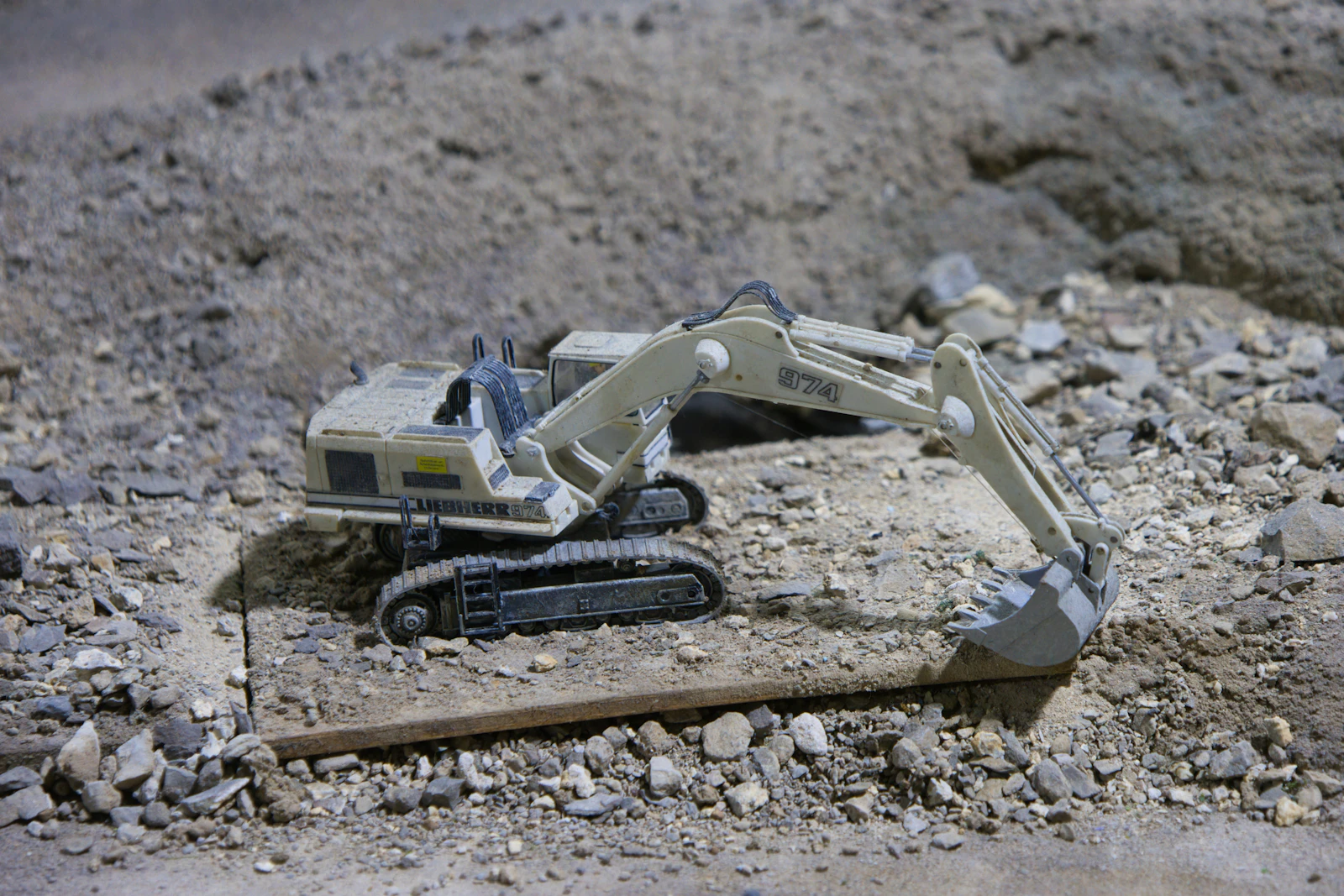
Mini Excavator Equipment Hire Costs Sacramento
2026 Sacramento planning range (equipment-only, before delivery, taxes/fees, fuel, and attachments): budget $300–$550/day, $900–$1,800/week, and $2,200–$4,250 per 4-week “month” for a mini excavator, with the biggest swing driven by weight class (roughly 3,000 lb to 13,000 lb), zero-tail vs. conventional, and whether a thumb is included. As a local benchmark for footing excavation, a Sacramento-area listing for a compact 6,000–6,500 lb unit shows $420/day, $1,300/week, and $2,900 per 4-week period (thumb equipped) and explicitly notes that monthly rates are 4 weeks and taxes/other fees are not included. A separate Sacramento market aggregator reports averages around $505/day, $1,458/week, and $3,625/month, with a stated low starting point of $314 depending on availability. For contractors budgeting multiple footing pours across phases, treat the above as a “rate band” and confirm the billing calendar (28-day vs. calendar month), included hours, and off-rent cutoffs before issuing the PO.
| Vendor |
Daily Rate |
Weekly Rate |
Review Score |
Website |
| United Rentals |
$320 |
$915 |
8 |
Visit |
| Sunbelt Rentals |
$300 |
$995 |
9 |
Visit |
| All Star Rents (Sacramento/North Highlands) |
$420 |
$1 300 |
9 |
Visit |
| Nor-Cal Rentals & Sales (Nor-Cal Equipment Rentals) |
$350 |
$1 200 |
10 |
Visit |
For mini excavator equipment hire costs in Sacramento, rental coordinators typically quote at least one national provider (for fleet depth and service coverage) plus at least one Northern California yard (for faster freight and more predictable swaps). In practice, the published “book rate” is only part of the real cost: freight exposure, included hours (most contracts assume an 8-hour workday), and return condition often decide whether the mini-ex line item lands on budget for footing excavation. One posted example in-market shows 8 work hours included per 24-hour day and a transport formula of $100 + $4/mile (delivery and pickup), which can be cost-effective for short-radius jobs but can climb quickly for outlying sites. Use this guide to set a 2026 cost baseline for compact excavator hire for digging footings, then lock in the true “all-in” with written assumptions on freight, attachments, and clean return requirements.
How Mini Excavator Size And Configuration Change Footing-Digging Hire Rates
Footing excavation is usually a production-and-access problem, not a maximum-dig-depth problem. The mini excavator rate you pay in Sacramento will generally track these spec choices:
- Weight class: published day/week/4-week schedules show a clear step-up as you move from 3,000 lb class to 6,000–10,000 lb class to 13,000 lb class. For example, one posted rate schedule lists 3K excavator $300/day, $900/week, $2,200/month; 6K $350/day, $950/week, $2,400/month; 8K $400/day, $1,200/week, $2,850/month; 10K $450/day, $1,350/week, $3,000/month; and 13K $500/day, $1,500/week, $3,250/month. For trench footings on tight residential infill, the 6K–10K range is often the sweet spot (enough stability for a thumb and bucket changes, still towable by many rental yards on smaller trailers).
- Thumb included vs. add-on: some Sacramento listings call out thumb equipped in the base rate, which matters when you’re cleaning footing bottoms, handling form boards, or managing cobble. If the thumb is not included, expect either a higher machine class quote or an attachment adder.
- Bucket package: footing work often needs at least a trenching bucket and a cleanup bucket. If the yard only includes one bucket “in the iron,” additional buckets can trigger separate day/week charges or cleaning expectations (especially with clay or slurry).
- Tail swing and width: zero-tail swing and retractable undercarriage units can price above similar-weight conventional models because they enable access and reduce damage risk near existing structures.
Sacramento estimator note: if the work is “digging footings” for a slab-on-grade addition, confirm whether the GC expects spoil management (load-out) to be included in your scope. If you need to load trucks continuously, an excavator that’s perfect for trenching may still be under-sized for production unless you add a skid steer or compact wheel loader (which changes your equipment hire stack).
Sacramento-Specific Cost Drivers That Commonly Move The Final Hire Total
Mini excavator rental pricing for footing excavation in Sacramento is often decided by local operating constraints that don’t show up on the day rate:
- Freight geography and traffic windows: Sacramento deliveries can be delayed by AM congestion and bridge chokepoints. If your pour schedule depends on a same-day swap, request an early delivery window and clarify the yard’s cutoff to stop billing (many branches require off-rent notice during business hours; weekends can complicate this).
- Heat and idle time: in peak summer, extended idling for grade checks, inspections, or waiting on spoil trucks can reduce production and indirectly increase your “cost per linear foot of footing.” Plan for more frequent breaks and dust-control watering (which can also increase wash/clean requirements at return).
- Dust-control and cleanup expectations: dry-season dust (and wet-season mud) can be the difference between “normal wear” and billable cleaning. Some published rate sheets explicitly call out excessive cleaning at $75/hour, with thresholds such as more than 2 hours of cleaning on daily rentals, 4 hours on weekly, and 6 hours on monthly triggering charges.
Hidden-Fee Breakdown For Mini Excavator Equipment Hire (What To Carry In 2026 Budgets)
To keep mini excavator equipment hire costs in Sacramento predictable, carry explicit allowances for common “not-in-the-day-rate” items:
- Delivery / pickup: confirm whether freight is (a) a flat rate within a radius, (b) mileage-based, or (c) both. One posted example uses $100 + $4 per mile and includes both delivery and pickup. For planning, many coordinators carry a Sacramento metro allowance of $175–$325 each way for a mini excavator on a rollback/tilt-deck move, then adjust once the yard confirms distance, gate time, and access constraints.
- Included hours / overtime: verify whether you’re buying a 24-hour “possession day” with only 8 work hours included (a common structure). If your footing dig runs double-shift or weekend catch-up, ask for the pro-rated excess-hour charge (and get it written on the quote).
- Fuel and refuel service: many yards send equipment out full and charge make-up fuel on return. A published rate sheet notes that units are rented with a full tank and make-up fuel is charged to the renter. In 2026 budgets, it’s common to carry a $6.00–$8.00/gal “service fuel” allowance for rental-yard refuel pricing if you can’t return full (actual posted fuel rates vary by branch and day).
- Damage waiver / rental protection plan: if you don’t provide a COI meeting the rental agreement requirements, many yards apply a waiver as a percentage of gross rent. As a planning band, carry 8%–15% of equipment rent for waiver/protection (examples in the market include an 8% damage waiver and other RPP structures that are percentage-based).
- Environmental / shop / admin fees: some contracts add an environmental recovery or similar line item. Carry 2%–5% as a placeholder until the quote confirms actual percentage and cap.
- Cleaning and undercarriage: beyond the $75/hour cleaning callout, track wear-and-tear exclusions (concrete, paint, track damage). If you’re trenching in cobble, ask about track shoe policy and whether the yard expects documented “before/after” condition photos.
- Weekend and holiday billing rules: confirm whether Saturday/Sunday are billed days if the unit is on site (even if idle), and what time a Monday return must be checked-in to stop billing.
Attachments And Accessories: Typical Adders That Matter For Footing Excavation
When the scope is digging footings, the attachments can move total hire cost as much as the base machine class—especially if you need to change buckets multiple times per day.
- Mini auger: one posted schedule shows Mini 9” Auger $200/day, $450/week, $850/month.
- Mini hydraulic hammer: the same schedule shows Mini Hydraulic Hammer $250/day, $750/week, $1,750/month (useful if you hit old concrete or rubble in a footing line).
- Tilt grading head / tilt bucket: published adders include Tilt Grade 8K–10K $200/day, $450/week, $1,000/month and Tilt Rotating Bucket $300/day, $900/week, $1,900/month for certain classes—valuable when you need consistent footing bottom without over-excavation.
Coordination tip: if the yard’s base package includes only one bucket, request a “footing package” quote (two buckets + thumb + quick coupler). Even if the adder looks high, it can reduce cleaning and damage exposure from repeated pin-on swaps in the trench.
Example: Sacramento Mini Excavator Hire For Digging Footings (Realistic Operational Constraints)
Scenario: 1-week footing dig for a small commercial addition near the Sacramento metro area. Continuous footing perimeter plus 4 pads; expected on-site dig time is 4 days, but inspection pacing and spoil haul-off will likely stretch possession to a full week.
- Machine: compact mini excavator ~6,000–6,500 lb class (thumb-equipped).
- Base rent (planning): carry $1,300/week based on a posted Sacramento-area benchmark, with a day-rate fallback of $420/day if the schedule slips into daily billing.
- Freight: assume $250 each way within the metro (confirm actual). If using a mileage formula similar to $100 + $4/mile, a 20-mile move would price around $180 all-in freight, but longer distances can exceed the flat allowance quickly.
- Attachments: add a mini hydraulic hammer standby allowance of 1 day at $250 in case of buried concrete; add a mini auger 1 day at $200 for a few isolated pier holes.
- Damage waiver / protection: carry 10% of base rent if COI is pending (adjust to the yard’s actual percentage).
- Cleaning: carry 2 hours at $75/hour as contingency if the jobsite is wet/muddy or if slurry sticks to tracks/undercarriage.
Operational constraints that change the invoice: (1) keep usage within an 8-hour/day working assumption unless you have written approval for extended use; (2) request the yard’s off-rent cutoff in writing so Friday off-rent doesn’t bill through Monday; and (3) document return condition with time-stamped photos (bucket, coupler, tracks, and cab) to reduce post-return disputes.
Budget Worksheet (No Tables)
Use the following as a quick estimating checklist for mini excavator equipment hire pricing in Sacramento for footing excavation. Convert to your internal cost code structure as needed.
- Mini excavator (6K–10K class) base rent: $________ / day or $________ / week (carry $300–$550/day or $900–$1,800/week planning band).
- 4-week month factor: confirm whether “monthly” is 28 days (common) and budget accordingly.
- Delivery + pickup: $________ (carry $350–$650 total as a Sacramento metro placeholder, or confirm mileage formula like $100 + $4/mile).
- Attachments: trenching bucket / cleanup bucket / thumb / quick coupler / auger / hammer (e.g., $200/day auger; $250/day mini hammer).
- Damage waiver / RPP: ________% of rent (carry 8%–15% until quoted).
- Environmental/admin fees: ________% of rent (carry 2%–5% until quoted).
- Fuel / refuel: $________ (carry a service refuel allowance if you can’t return full; note some rate sheets specify full-tank out and make-up fuel billed).
- Cleaning contingency: $________ (e.g., $75/hour x 2–4 hours depending on mud/dust exposure).
- Utilization overages: excess hour charges if exceeding an 8-hour/day usage basis.
Rental Order Checklist (PO, Delivery, Off-Rent, Return Requirements)
For mini excavator equipment hire tied to footing excavation, most cost overruns come from coordination gaps rather than the day rate. Use this checklist to reduce re-bills and unplanned days.
- PO and quote alignment: attach the written quote to the PO and confirm the rate basis (day/week/4-week) and included configuration (bucket count, thumb, coupler). For Sacramento-area listings, verify whether the machine is thumb equipped and whether “monthly” is a 4-week period.
- COI / waiver decision: provide COI meeting the rental agreement requirements or confirm the damage waiver/RPP percentage and any caps (carry 8%–15% as a planning band until confirmed).
- Delivery window: specify a hard delivery window and site contact; confirm if redelivery/wait time is billable and at what hourly rate.
- Site access: gate codes, laydown zone, trailer turnaround, overhead obstructions, and soil conditions. If the footprint is tight, request a narrower undercarriage unit up front to avoid a costly swap day.
- Utility locates and dig plan: confirm 811 completion and whether you need a smaller bucket to daylight utilities; this can change attachment needs and production hours.
- Billing clock: confirm whether the rental day is “24 hours possession” with 8 work hours included, and how excess hours are priced.
- Off-rent and return: get the off-rent cutoff time in writing, and document the pickup request (date/time, person who accepted it). Weekend/holiday rules should be clarified before the unit lands.
- Return condition documentation: photograph tracks/undercarriage, bucket teeth, coupler, cab, and hour meter at pickup and at off-rent. If the rate sheet includes $75/hour cleaning language, ensure you can demonstrate “broom clean”/washed condition at return.
Understanding “Day,” “Week,” And “Month” For Mini Excavator Hire (So Your Footing Schedule Matches The Invoice)
Two details routinely create disputes on compact excavator hire invoices:
- “Month” is often 4 weeks (28 days), not a calendar month. At least one Sacramento-area listing states this explicitly, and it also notes that taxes and other fees are not included.
- Rates are typically tied to an hours-of-use assumption. Examples in published materials include (a) 8 work hours per 24-hour day and (b) rate structures such as 8-hour day / 44-hour week / 176-hour month in heavy equipment rate sheets.
Practical takeaway for footing excavation: If your plan is “dig in two long days and return,” but inspections and concrete scheduling push you into a third possession day (or a weekend), your “cheap” daily plan can exceed a weekly. Align the rental term to the critical path (locates → dig → inspection → forms/rebar → pour) and ask the yard whether they will convert to a weekly automatically when it benefits you (some do; many require you to request it).
Where Sacramento Mini Excavator Hire Costs Typically Land By Use Case (Footings)
Below are planning bands you can use when scoping mini excavator rental pricing for digging footings in Sacramento. These are not guaranteed vendor prices; they’re budgeting ranges informed by posted schedules and local listings.
- Short-duration footing trench (1–2 days possession): often lands near $300–$550/day plus freight. A Sacramento listing shows $420/day for a compact unit.
- Weekly footing dig (4–6 days possession): often $900–$1,800/week. A Sacramento compact unit listing shows $1,300/week.
- 4-week foundation phase: often $2,200–$4,250 per 4-week period, depending on class. A Sacramento compact unit listing shows $2,900 per 4-week period, while an aggregator reports a Sacramento average around $3,625/month.
Rate-Reduction Levers Rental Coordinators Actually Use (Without Sacrificing Uptime)
- Reduce freight risk first: choose the closest servicing branch to the jobsite. A $50/day cheaper rate can be wiped out by one extra round-trip freight or a delayed swap.
- Bundle attachment needs up front: if you’ll need an auger or hammer even for one day, quote it with the base rent so the rental yard can reserve the correct coupler and hydraulics. Published attachment schedules show meaningful adders (e.g., $200/day mini auger; $250/day mini hammer).
- Ask for “weekend stop” rules in writing: if your footing inspection is Monday morning, you may be forced to hold equipment over the weekend. Some yards will offer a weekend structure; others bill full days. If a weekend special exists, get the exact billing language on the quote.
- Control cleaning exposure: set jobsite rules—no track travel through wet concrete washout, no slurry parking, and end-of-day knockdown/pressure wash if allowed. With published cleaning language at $75/hour, even 3–4 hours of shop wash can erase rate negotiations.
Estimator Reference: Caltrans Ownership Rates Vs. Market Hire
For public-works change order support or internal reasonableness checks, California DOT publishes an annually updated Labor Surcharge and Equipment Rental Rates book (effective April 1, 2026 through March 31, 2027) that is framed as cost of equipment ownership. These figures are not the same as your commercial rental invoice (which includes fleet utilization, risk, service, and market availability), but they can help validate whether a quoted rate is in a plausible band when negotiating extended footing-phase rentals.
Closeout Notes For Footing Projects (Avoiding Disputes After Return)
- Confirm the check-in timestamp: billing often stops when the unit is checked in, not when it leaves your site. If you return late in the day, ask whether it will be processed same-day or next-day.
- Photograph before pickup: tracks, undercarriage, cab glass, bucket, and coupler. Include the hour meter and fuel level.
- Return “full” when required: some rate sheets specify full-tank out and charge make-up fuel.
- Document pre-existing wear: bucket teeth, track condition, and any side panel dents before you accept the unit to reduce chargebacks.