

2026 planning ranges for mini excavator equipment hire in San Antonio (bare machine, no operator): $200–$650/day, $750–$2,450/week, and $2,000–$7,200 per 4-week rental period, with the widest spread driven by operating weight class (roughly 1–2 ton vs 3–4 ton), cab/AC, hydraulic auxiliary flow, and how tight your off-rent and transport plan is. Use the low end for 1–2 ton open canopy units and the high end for 3–4 ton cab units with auxiliary hydraulics that are better suited to hard caliche/limestone conditions and production footing excavation.
| Vendor | Daily Rate | Weekly Rate | Review Score | Website |
|---|---|---|---|---|
| Sunbelt Rentals (San Antonio, Branch #347) | $225 | $795 | 9 | Visit |
| United Rentals (San Antonio, Branch #532) | $280 | $750 | 9 | Visit |
| Herc Rentals (San Antonio) | $321 | $837 | 8 | Visit |
| Tejas Equipment Rental (San Antonio metro) | $400 | $1 175 | 9 | Visit |
| M2 Land Solutions, LLC (San Antonio) | $350 | $1 600 | 10 | Visit |
For footing work in San Antonio, total mini excavator hire cost is usually won or lost on “non-rate” items: delivery/pickup timing, overtime/extra-shift billing, attachment adders (thumb/auger/breaker), and return-condition charges. The big rental networks (for example, United Rentals, Sunbelt Rentals, Herc Rentals) and strong local independents can all land within the same broad rate band, but your invoice will move materially based on shift limits (commonly one-shift use), how your team manages off-rent cutoffs, and whether you need specialty tooling to deal with rocky subgrade. Plan your 2026 budget as a package: base rate + transport + protection plan/waiver + attachments + cleaning/fuel + schedule risk (weekends/holidays), and you’ll get a far more reliable “all-in” equipment hire number than shopping day-rate alone.
1) Size class and configuration (the biggest driver). A 1–2 ton mini excavator is often adequate for shallow perimeter grade beams and small residential pads, but production drops quickly when you hit caliche/rock or need reach to place spoils away from forms. A 3–4 ton class unit (often with a blade and stronger auxiliary hydraulics) typically costs more per day, but can reduce total hire days (and trucking cycles) if your footings are numerous, deep, or tight to access.
2) Duration and billing basis (daily vs weekly vs 4-week). Most rental houses price around a “daily / weekly / 4-week” structure. If you expect more than ~3–4 billable days, push hard for the weekly. If you expect ongoing sitework, the 4-week rate can outperform stacked weekly rates—provided you can off-rent cleanly at the end of the term and avoid rolling into an additional billing period.
3) Shift limits and overtime hours. Many suppliers define a “standard rental shift” as one-shift use—commonly 8 hours/day, 40 hours/week, 160 hours per 4-week period—and charge additional hours if you exceed that utilization. A common structure is prorating extra hours as a fraction of the day/week/4-week rate (for example, 1/8 of the daily rate per extra hour). If your footing crew wants to run early/late to beat heat or concrete deliveries, set expectations in the PO so you don’t buy a second shift by accident.
4) San Antonio-specific production constraints. In summer, heat management can reduce productive hours and increase idle time; if you’re still billed by the day but only get partial production, your “cost per footing” rises. Traffic windows also matter: deliveries routed through I-35, Loop 410, or Loop 1604 congestion can push drop/pick outside standard windows and trigger after-hours handling. Finally, if you’re working near restricted-access facilities (for example, certain federal/military-controlled areas) the site access process can add standby time—build schedule buffers so your delivery doesn’t turn into billable “wait time” or a missed window.
Separating line items is the fastest way to control equipment hire cost during footing excavation. Use the mini excavator day/week/4-week rate as only one line item, then explicitly carry allowances for the cost-movers below (and reconcile them at closeout).
Planning note: 2026 San Antonio mini excavator rental rates commonly land in the $200–$650/day band, but the same job can invoice very differently depending on whether you rent a 1–2 ton unit at the low end or a 3–4 ton cab unit at the high end.
Carry mobilization as its own allowance, because it’s frequently the “surprise” line item on short-term hires. For 2026 planning in San Antonio, a workable estimator’s allowance is $150–$300 each way for standard metro drops (often priced by zone/radius), with $4–$7 per loaded mile beyond a defined radius, and a $175–$250 minimum transport charge even if the site is close. If your jobsite has tight gate times, include a $75–$125 standby/reshow allowance for missed windows. (Confirm the supplier’s cutoffs; many require next-day pickup requests before mid-afternoon to stop billing.)
For national accounts and many local rental houses, you either (a) provide acceptable proof of property insurance naming the rental company’s interest, or (b) buy a rental protection plan. As a 2026 budgeting rule for mini excavator hire cost, carry RPP at 15% of rental charges when required/selected, and understand the typical customer responsibility cap mechanics (often the lesser of 10% of repair cost, 10% of replacement value, or $500, subject to terms/exclusions).
Many rental agreements include environmental service charges and administrative fees on applicable rentals. If you don’t have contract language that fixes these, carry an allowance of 2%–5% of rental charges as a placeholder and reconcile at invoice review (the exact basis varies by supplier and item class).
Footing excavation is messy, and “return condition” can swing your total equipment hire cost. For 2026 planning, carry: $6–$9/gal for diesel refuel service if returned low, a $95–$295 cleaning fee if the unit comes back with caked clay/caliche, and an extra $175 pressure-wash allowance if the machine is returned with concrete splatter or cement-treated base residue. If the rental house requires a “broom clean” standard, it’s often cheaper to wash on-site before pickup than to pay shop labor.
Footings often require more than a standard bucket. Two points matter for rental coordinators: (1) attachment availability can be tighter than the base unit, and (2) attachments can add enough daily spend that a larger base machine with the right bucket may be cheaper than a smaller machine plus multiple add-ons.
Bucket adders: If you need an additional bucket (for example, swapping between trenching and grading), carry $20–$45/day, $55–$110/week, and $150–$300 per 4-week for an extra bucket as a planning allowance.
Hydraulic thumb: For handling spoil, rocks, and form materials, a thumb can reduce labor but adds cost. Carry $60–$110/day (or similar) as a planning number; published contract schedules commonly show thumb pricing in this general band.
Auger drive (for piers/sonotubes): If “digging footings” includes pier footings, you may need an auger drive. Carry $140–$260/day plus $20–$45/day per bit depending on diameter and tooth wear.
Hydraulic breaker (if caliche/limestone is present): Breakers can turn a low-cost mini excavator hire into a premium package quickly. Carry $400–$950/day as a planning allowance depending on breaker size class, plus tool wear expectations.
Trailer (if you self-haul): If you have a suitable tow vehicle and the supplier allows it, you may avoid delivery/pick. Carry $50–$150/day for a tilt trailer as a planning range, plus tie-down compliance (chains/straps) and yard loading time.
Use this section as a “pre-invoice audit checklist” for mini excavator equipment hire costs in San Antonio—especially on short-duration footing scopes where fees can rival base rent.
Scenario assumptions: 24 perimeter footing runs plus 8 isolated pier footings on a tight residential site near Loop 1604. Work is scheduled as two long days to stay ahead of concrete, but neighborhood restrictions limit start time and require keeping dust down. You select a 3–4 ton class cab mini excavator for productivity and operator comfort.
Planned total (without off-rent slip): $900 + $450 + $135 + $255 + $125 = $1,865. With a missed cutoff that rolls billing one more day, the same “2-day job” can land closer to $2,315. This is why equipment hire cost control for digging footings is as much logistics discipline as it is rate negotiation.
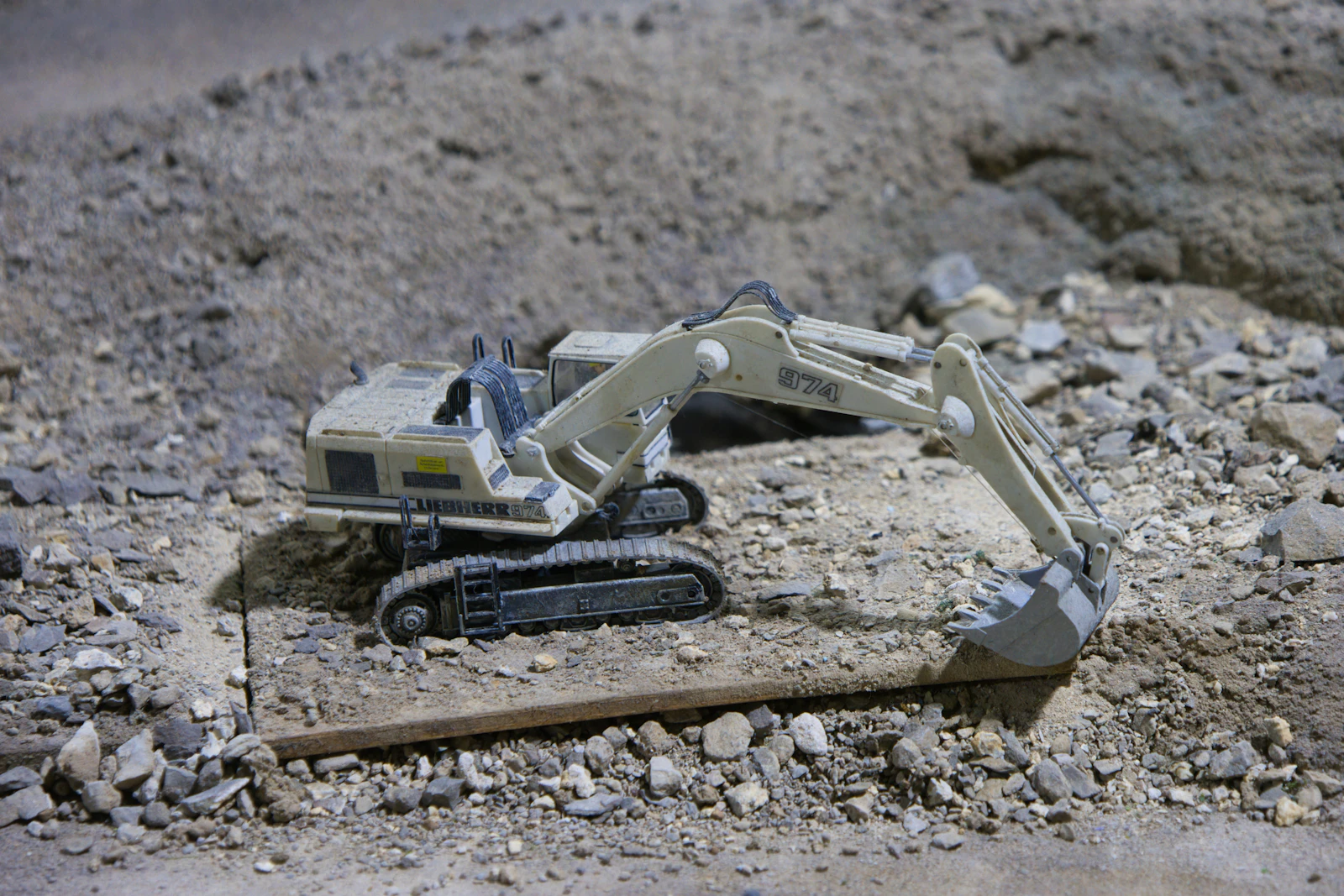
San Antonio footing work routinely includes conditions that influence which mini excavator you should hire and what it will really cost. If caliche/limestone is likely, the cheapest day-rate often becomes the most expensive choice once you add a breaker or lose time to refusal. Conversely, on tight infill lots, a smaller machine can reduce collateral damage risk (fences, curbs) and help you avoid chargebacks that fall outside protection-plan coverage. Treat “fit-for-purpose” selection as a cost control tool, not a comfort preference.
If the scope is truly short (1–2 days): focus on transport discipline and return-condition control. On a 2-day mini excavator hire, a $450/day rate difference is meaningful, but so is a $225 reattempt charge or a rolled billing day if you miss off-rent cutoff.
If the scope is 4–9 days: push to weekly. Many rental houses price weekly so that 3–4 days equals a week; if your footing excavation will span inspections, rebar placement, and multiple concrete placements, a weekly rate can protect you from schedule slip converting to extra day charges.
If the scope is rolling (sitework + utilities + flatwork): use 4-week with clear off-rent authority. A 4-week mini excavator equipment hire can be a strong value, but only if your superintendent and rental coordinator agree on the exact “off-rent trigger” (e.g., last trench backfilled and compaction signed off) and you have a pickup plan that doesn’t drift into a new billing period.
For rental coordinators, the key is to pre-decide whether you will provide a certificate of insurance (COI) that meets the supplier’s requirements or purchase RPP. If you purchase RPP, carry 15% of rental charges as the fee and document what it changes about your liability (often a cap such as the lesser of 10% of repair, 10% of replacement value, or $500, subject to exclusions). This is not the same as liability coverage for third-party property damage; it is primarily about the rented equipment itself.
Footings often compress into long days to meet rebar, inspection, and concrete schedules. If your rental agreement is based on one-shift use (commonly 8 hours/day), you should assume extra hour charges if you run beyond that threshold. A common overtime method is billing extra hours as a fraction of the base rate (for example, 1/8 of the daily charge per hour on a daily rental). Put the expected operating window (e.g., 7:30 a.m.–4:30 p.m.) into the rental notes and hold the crew to it unless you have approval for overtime.
To keep mini excavator hire costs clean at closeout, require (1) delivery ticket with time stamp, (2) pickup ticket with time stamp, (3) photos at drop and pickup (all four sides, hour meter, and undercarriage), and (4) fuel level documentation. These items help you dispute billing-day overlaps, late return claims, and cleaning/fuel charges that don’t match condition. If your supplier requires notice to witness certain end-of-rental procedures under their service terms, schedule it early enough to avoid last-minute billing extensions.
Bottom line for 2026 planning: For digging footings in San Antonio, a realistic “all-in” mini excavator equipment hire budget often lands at 1.6× to 2.4× the bare rental rate once you include delivery/pickup, RPP/waiver, attachments, and return-condition discipline. If you treat those items as explicit estimate lines and manage off-rent and cleaning aggressively, you can keep actuals close to plan instead of learning your true costs only after the invoice arrives.
