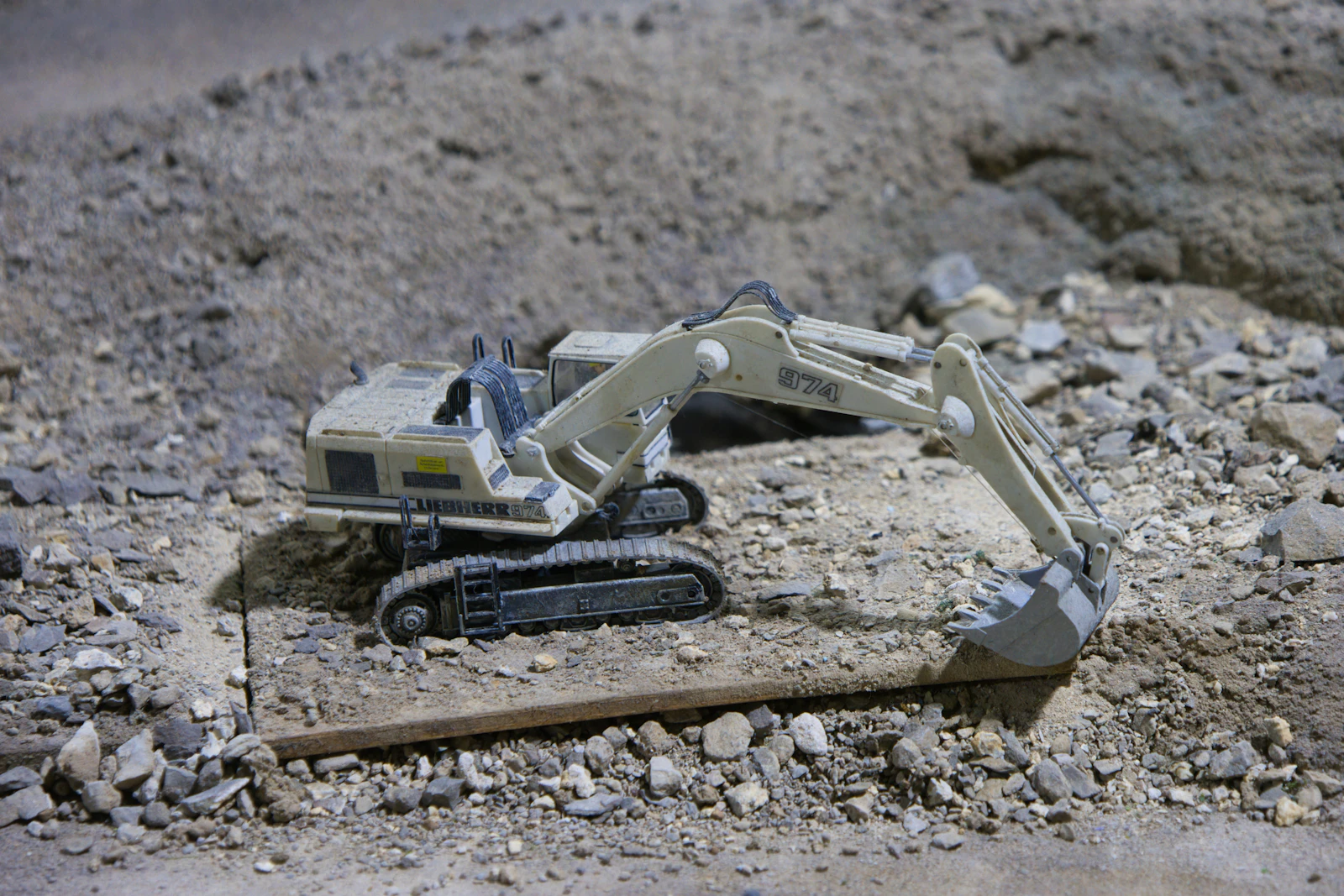
Mini Excavator Equipment Hire Costs San Diego 2026
For 2026 planning in San Diego, bare-machine mini excavator equipment hire typically budgets in the following ranges (excluding operator, tax, delivery/pickup, damage waiver, fuel/DEF, and cleaning): $300–$525/day, $1,000–$1,650/week, and $2,400–$4,300 per 28-day “month”. A number of San Diego-area rental channels publish indicative price points that land inside those bands (e.g., posted local yard rates by weight class and marketplace/aggregator averages), but your executed rate will still swing based on machine class (3.5k vs 8k vs 11k), availability, and whether you need a zero-tail-swing configuration for tight foundation lines. Most national providers also quote a 28-day month and show day/week/month structures after ZIP-based availability is applied.
| Vendor |
Daily Rate |
Weekly Rate |
Review Score |
Website |
| United Rentals (San Diego Branch #543) |
$297 |
$735 |
8 |
Visit |
| Sunbelt Rentals (San Diego Branch #1328) |
$310 |
$820 |
9 |
Visit |
| Herc Rentals (San Diego, CA) |
$685 |
$1 445 |
7 |
Visit |
| DOZR (San Diego marketplace supply via partners) |
$476 |
$1 452 |
8 |
Visit |
What Mini Excavator Size Is Typical For Basement Waterproofing In San Diego?
Basement waterproofing is less common in San Diego than in colder markets, but below-grade waterproofing still shows up on hillside properties, older construction, and any scope that requires an exterior perimeter trench for membranes, drain board, or footing drains. For this kind of work term, the rental coordinator’s goal is usually to match dig depth, swing clearance, and spoil management to a narrow access path alongside the structure.
Practical sizing bands (hire-cost-driven):
- 3.5k class mini excavator (approx. 1.5–2 ton): commonly selected when access is extremely tight (gates, side yards) and your trench is shallow-to-moderate. A San Diego-area rate card example shows about $355/day, $1,050/week, and $2,600/4-week for this class.
- 8k class mini excavator (approx. 3–4 ton): often the “production sweet spot” for waterproofing trenches because you gain stability and breakout force while staying compact enough for urban lots. One local posted schedule shows about $375/day, $1,150/week, and $2,800/4-week.
- 11k class mini excavator (approx. 5 ton): used when you need more reach, faster cycle time, or you’re cutting through tougher material and want fewer passes. A published local example lists about $500/day, $1,525/week, and $4,200/4-week.
San Diego-specific planning notes that change the hire package: (1) coastal neighborhoods often mean tight access + protected landscaping, so budget for track protection or mats to prevent hardscape damage; (2) inland summer heat can push crews toward early starts, so confirm delivery cutoffs and whether “will-call” pickup is realistic; (3) many lots have limited spoil staging, which can force more frequent export and drive up standby time if the mini excavator is waiting on trucks or a skid steer. (Those constraints don’t change the published day rate, but they change your effective cost per linear foot.)
What Drives Mini Excavator Hire Pricing Beyond The Day Rate?
For compact excavator hire pricing, the “headline” day rate is usually the smallest line item once you add delivery, protection, and utilization rules. When you’re estimating mini excavator rental for basement waterproofing in San Diego, confirm these cost drivers on the quote and in the rental agreement:
- Billing structure and utilization caps: Many rental agreements define a day/week/4-week as a one-shift allowance (commonly 8 hours/day, 40 hours/week, 160 hours/4 weeks). Overages are often billed proportionally (for example, hourly at 1/8 of the daily, 1/40 of the weekly, and 1/160 of the 4-week).
- Machine class and configuration: zero-tail swing and enclosed cab configurations can price above standard open-ROPS units; for waterproofing near a structure, contractors frequently pay more to reduce strike risk and rework.
- “Month” definition: many national rental portals price “monthly” as a 28-day rate, not a calendar month. This matters when waterproofing scopes slip across weekends and inspection windows.
- Project duration realism: waterproofing is sequencing-heavy (demo, excavation, cleaning, patching, membrane, drainage, backfill, restoration). If you keep the excavator on rent during cure times or inspection holds, the rental cost balloons even when meter hours do not.
Market anchors for San Diego: aggregator snapshots for mini excavator rental in San Diego show both low advertised “starting” points by weight class and higher cross-supplier averages. Use them as a sense-check, then set your estimate using a conservative mid-band rate that you can defend during procurement.
Hidden-Fee Breakdown For Mini Excavator Equipment Hire
Below is a field-oriented hidden-fee breakdown that typically explains why a “$375/day” mini excavator equipment hire turns into a materially higher invoice once mobilized to a waterproofing site. Treat the numbers as San Diego budgeting allowances unless your supplier has provided a written schedule.
- Delivery and pickup: commonly $175–$325 each way inside a normal local radius; if your site is outside the standard delivery zone, budget $6–$9 per loaded mile beyond the included radius. If you have narrow streets or staged access, add a $90–$140/hr wait-time exposure after the first 30 minutes on site (traffic + gate coordination drives this in coastal neighborhoods).
- Minimum transport charge: plan a $250 minimum even for “close” jobs when dispatch is constrained.
- Environmental / emissions / shop fees: many suppliers apply a percentage surcharge (often 2%–5%) to cover environmental handling, inspections, and disposal; confirm whether it is applied to rental only or to rental + transport.
- Transportation surcharge: some national contracts apply a fuel-linked transportation surcharge on top of delivery/pickup, and it can be a double-digit percentage depending on published diesel indices.
- Damage waiver / rental protection: budget 10%–17% of the rental line as a planning range (coverage limits and exclusions vary; waterproofing work near foundations is higher risk for hose/boom/undercarriage damage).
- Cleaning fees: allow $95–$350 if the unit returns with heavy mud, wet spoils, mastic, or concrete. Some agreements explicitly reserve cleaning charges for excessive dirt/concrete/paint conditions.
- Fuel and DEF expectations: assume “return full” unless negotiated otherwise. If returned short, budget a refuel service line such as $6–$9/gal diesel equivalent plus a $25–$60 service/admin (supplier schedules differ).
- After-hours / weekend handling: if the machine stays on site over a weekend because waterproofing needs cure time, assume either (a) billing continues daily, or (b) a weekend structure (often 1.5–2.0 days) depending on the yard’s terms. Confirm before you schedule Friday delivery.
- Security / theft exposure: if your insurance requires additional security, budget $45–$90/day for a basic equipment GPS/telematics add-on or $60–$140/week for additional fencing/signage coordination (varies by GC/site conditions).
- Deposit / credit card hold: for non-account rentals, plan for a $500–$2,000 hold depending on class and attachments.
Attachments And Accessories That Change Waterproofing Production
For basement waterproofing excavation, the attachment selection is often the difference between a one-day dig and a two-day dig (and therefore the difference between one delivery cycle and two). If you’re budgeting a compact excavator hire package in San Diego, cost these adders explicitly:
- Bucket strategy: many rentals include one bucket; additional trenching or grading buckets often price as add-ons. A published example from a San Diego-area supplier shows additional buckets at $25/day each as an attachment adder.
- Hydraulic breaker: if you anticipate demo of old concrete flatwork, thick plaster parge, or buried rubble, a breaker attachment can be decisive. A local rate card example shows a breaker attachment at $250/day, $775/week, and $2,000/4-week.
- Auger: for pier points, drain line bore starts, or posts, allow about $150/day, $400/week, $900/4-week for a standard auger attachment in one published schedule.
- Compaction wheel: useful when your backfill spec is tight and you’re compacting in lifts; one published schedule shows $125/day, $500/week, $1,250/4-week.
- Rammer/compactor: if your trench backfill needs consistent density, a separate rammer can be cheaper than trying to “track-pack” in a tight corridor; a published schedule shows $105/day, $420/week, $960/4-week.
- Track protection and dust control: for San Diego’s dry periods and close neighbors, budget $35–$85/day for water hose management, wetting, or surface protection consumables (and align with any local dust-control requirements on-site).
Estimator note: When attachments are required, treat them as “must-have” line items, not contingencies. If you omit the breaker and end up needing it on day two, you often pay another delivery/pickup cycle (or a mid-rental swap fee) that can easily exceed the attachment’s day rate.
Example: Mini Excavator Hire Package For A San Diego Basement Waterproofing Trench
Scenario: Waterproofing crew needs an exterior trench along 40 linear feet of foundation wall, averaging 6 feet deep and 24 inches wide. Access is through a side yard with a 42-inch gate, and spoils must be staged in a driveway without damaging pavers. The crew will excavate, allow wall cleaning and membrane install, then backfill next day.
Equipment hire selection: choose an 8k class mini excavator due to reach and stability while maintaining compact access; a published local schedule shows about $375/day for this class, with a $1,150/week option if the schedule slips.
Budgeted 2-day hire package (illustrative):
- Mini excavator rental: 2 days × $375/day = $750 (or plan a defensive cap: $300–$525/day depending on supplier and availability)
- Delivery + pickup: $250 each way = $500 (confirm local radius and any wait-time rules)
- Damage waiver: 12% allowance on rental line: $90
- Environmental/shop fee: 3% allowance on rental + transport: about $38
- Track protection mats allowance: $120 (to reduce hardscape damage claims)
- Cleaning exposure allowance: $150 (wet spoils + waterproofing coatings risk)
Estimated invoice planning total: approximately $1,648 before tax. That number is often more realistic for procurement than quoting “$375/day” in isolation, especially when the trench must remain open overnight for membrane cure and inspection.
Operational constraints to call out on the PO: require a morning delivery window (e.g., 7:00–10:00 AM) and specify that off-rent notice must be accepted in writing to avoid a “holdover” day if the yard’s cutoff is missed (many dispatches treat late off-rent as billable through the next day). Also confirm whether the supplier’s day rate assumes a one-shift cap; if your crew runs long, some agreements bill overages proportionally.
Budget Worksheet (Allowances For A Mini Excavator Hire Package)
Use this bullet worksheet (no tables) to build a defensible mini excavator equipment hire cost for San Diego waterproofing scopes.
- Base Mini Excavator Hire: $____/day × ____ days (planning range: $300–$525/day)
- Weekly Contingency: if schedule risk is high, carry an alternate: $____/week (planning range: $1,000–$1,650/week)
- 28-Day Month Option: $____/28 days (planning range: $2,400–$4,300; confirm “month” definition)
- Delivery Charge: $____ (allow $175–$325)
- Pickup Charge: $____ (allow $175–$325)
- Mileage Beyond Radius: ____ miles × $____/mile (allow $6–$9)
- Wait Time Risk: ____ hours × $____/hr (allow $90–$140/hr after first 30 minutes)
- Damage Waiver / RPP: ____% × (rental subtotal) (allow 10%–17%)
- Environmental/Shop Fees: ____% × (rental + transport) (allow 2%–5%)
- Fuel/DEF Return Allowance: $____ (allow $60–$180 if you expect the unit will not be topped off)
- Cleaning Allowance: $____ (allow $95–$350)
- Attachments: breaker $____/day; compaction wheel $____/day; extra bucket(s) $____/day; thumb $____/day
- Surface Protection / Dust Control: $____ (allow $35–$85/day for consumables and site protection)
- Contingency For Schedule Slip: 10%–15% of equipment-hire subtotal when inspection/cure windows are uncertain
Sanity check reference points (not a quote): published San Diego mini excavator snapshots show advertised weight-class costs (e.g., around $197/day for a smaller unit and higher for heavier units) and an aggregator average around $476/day / $1,452/week / $3,094/month. Use these as a reasonableness check against your supplier’s written quote and your project risk.
Rental Order Checklist For Mini Excavator Equipment Hire
Use this checklist to reduce schedule surprises and prevent avoidable rental charges on San Diego waterproofing scopes.
- PO Setup: correct jobsite address, on-site contact, after-hours contact, and requested delivery window (e.g., 2-hour window); specify whether delivery requires liftgate/tilt-bed and if street permits or flaggers are needed.
- Machine Spec: operating weight class (3.5k/8k/11k), zero-tail-swing requirement, enclosed cab vs open, bucket(s) required (e.g., 12-inch trench + 24-inch cleanup), and whether a hydraulic thumb is required for debris handling.
- Attachments: breaker/auger/compaction wheel/rammer; confirm each attachment’s day/week/4-week rate and whether it rides on the same delivery ticket.
- Insurance / Damage Waiver: confirm COI requirements and whether you are accepting a damage waiver percentage; document any exclusions for underground hazards, tilt/rollover, or theft.
- Delivery Conditions: confirm gate width, turning radius, and where the truck can stage; note any HOA restrictions and quiet hours that could force delivery before 8:00 AM or after 5:00 PM (and trigger after-hours fees).
- Return Requirements: “return full” fuel/DEF expectation, acceptable level of dirt, and photo documentation required at off-rent; confirm whether you must pressure-wash tracks or remove waterproofing residue to avoid cleaning charges.
- Off-Rent Procedure: confirm the cutoff time (many dispatches require notice by afternoon for next-day pickup); require written confirmation to prevent an extra billable day if pickup slips.
Delivery, Off-Rent, And Weekend Billing Rules To Confirm Upfront
Waterproofing work often creates unavoidable dead time (membrane cure, drain inspection, restoration sequencing). The rental coordinator should lock down these rules before mobilization:
- One-shift definition: confirm whether your day/week/4-week includes a one-shift utilization cap (commonly 8/40/160) and how overtime is calculated. Some national terms price excess use at proportional fractions of the base rates (e.g., 1/8 of daily).
- Weekend possession: clarify whether keeping the mini excavator on site from Friday to Monday bills as 3 days, a weekend bundle, or a 1-week conversion. Put this in writing when cure time is expected.
- Holiday impacts: if your schedule crosses a holiday, confirm whether pickup/delivery is available and whether billing pauses; do not assume non-billing days unless written.
- Site access and truck detention: if the driver cannot access the drop zone due to parked vehicles or gates, you can incur detention. Budgeted exposure is typically $90–$140/hr after an initial grace period (often 30 minutes).
Risk Controls: Damage Waiver, Insurance, And Return-Condition Documentation
Basement waterproofing excavation creates concentrated risk: work is adjacent to a structure, utilities are often in the corridor, and spoils may be wet and abrasive. Practical controls that reduce cost volatility:
- Pre- and post-rental photos: take time-stamped photos of undercarriage, tracks, boom lines, bucket teeth, and counterweight; repeat at off-rent to reduce disputes on “damage vs wear.”
- Utility locate and potholing plan: in San Diego, tight lots often mean shallow services; confirm the GC has a locate plan and use hand digging or vacuum where required. A single strike can turn a 2-day hire into a multi-week stoppage.
- Cleaning plan: if you’re excavating in wet spoils or near waterproofing compounds, plan for end-of-rental cleanup to avoid a cleaning line item; many national terms reserve the right to charge for excessive dirt/concrete/paint.
2026 San Diego Market Notes For Compact Excavator Hire
For 2026 estimating, it helps to separate “rental market pricing” from public-agency ownership-cost schedules. California publishes an equipment rental rates book used for force-account/ownership-cost calculations effective April 1, 2026 through March 31, 2027; while it is not a supplier quote, it can support internal discussions about cost reasonableness and shift/overtime assumptions when you’re comparing rent vs own.
Also, San Diego municipal T&M exhibits sometimes show historic hourly bare and operated equipment rates for mini excavators (useful only as an archival reference, not a current quote). For example, an older City of San Diego exhibit lists mini excavator bare/operated hourly figures in the $60–$70 bare and $141–$151 operated range for specific units in a T&M schedule (dated in the document). Use this only as contextual backup if you are reconciling subcontractor T&M proposals—not as 2026 rental pricing.
Ownership Versus Hire For Repeated Waterproofing Work
If your firm performs recurring trenching for waterproofing, you’ll eventually compare owning a compact excavator against continued mini excavator equipment hire. As a rule of thumb, hire stays attractive when your annual utilization is low or highly variable (seasonal demand, inspection delays, tight urban lots that need different sizes). Ownership starts to win when you can keep a unit consistently deployed and you have the internal maintenance, transport, and storage capacity—because many of the biggest cost surprises in hire come from transport cycles, weekend possession, and cleaning/damage disputes, not the base rent line itself.
Procurement takeaway: for basement waterproofing in San Diego, the best cost control is usually not chasing the lowest day rate—it’s planning the full hire package (machine class + attachments + delivery windows + off-rent rules) so the excavator is on rent only when the site is truly ready to dig and backfill.