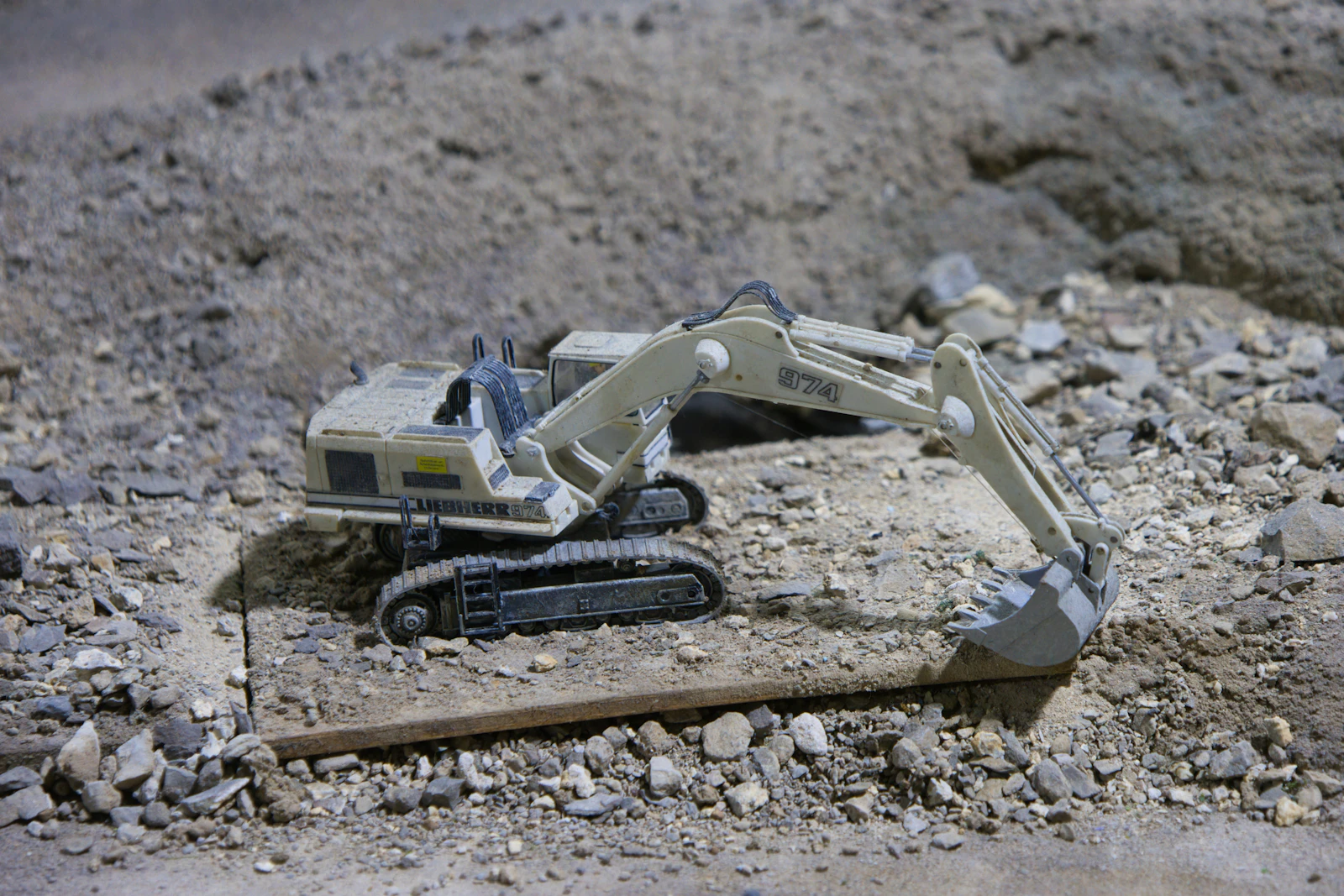
For 2026 planning in San Diego, mini excavator equipment hire for foundation repair typically budgets in the following bare-machine ranges (rubber-track compact excavator, operator excluded): about $197–$416/day, $520–$1,278/week, and $1,456–$3,048/month, with higher rates generally tracking heavier operating weight and higher breakout force. These ranges align with published “by weight class” examples for 4,000 lb through ~18,000 lb minis, and they usually exclude delivery/pickup, fuel/refuel service, damage waiver/RPP, environmental/transport surcharges, and cleaning. Most San Diego contractors source inventory through the big nationals (United Rentals, Sunbelt, Herc) as well as regional independents, then negotiate around delivery windows and attachments (trenching buckets, hydraulic breaker) that are common on underpinning and drainage scopes.
| Vendor |
Daily Rate |
Weekly Rate |
Review Score |
Website |
| United Rentals |
$425 |
$1 275 |
9 |
Visit |
| Sunbelt Rentals |
$410 |
$1 230 |
9 |
Visit |
| Herc Rentals |
$420 |
$1 260 |
8 |
Visit |
| Hawthorne Cat Rentals (Cat Rental Store) |
$440 |
$1 320 |
9 |
Visit |
| The Home Depot Rental (Tool & Truck Rental) |
$330 |
$990 |
7 |
Visit |
Mini Excavator Rental Rates San Diego 2026
Use these ranges as estimating placeholders until you have branch quotes tied to your exact machine class (tail swing, track width, auxiliary flow) and your foundation repair method (perimeter trenching, pier/underpinning, grade beam exposure). Published examples by machine weight are a practical baseline for San Diego budgeting:
- ~4,000 lb (tight-access / gate work): plan $190–$250/day, $500–$700/week, $1,400–$1,900/month.
- ~8,000 lb (common residential foundation repair size): plan $230–$320/day, $650–$900/week, $1,900–$2,400/month.
- ~12,000 lb (more reach/stability; better production in spoils): plan $300–$420/day, $850–$1,100/week, $2,400–$2,900/month.
- ~16,000–18,000 lb (mini on the large end; often pricier delivery): plan $400–$550/day, $1,000–$1,350/week, $3,000–$3,900/month.
Rental interval assumptions matter. Many national/enterprise programs define a “month” as 28 days (4 weeks), a “week” as 5 days, and a “day” as 8 hours (one shift). That matters when your foundation repair work spans weekends or when you’re trying to decide whether to roll from daily to weekly to 4-week pricing.
San Diego note (foundation repair): If you’re working in older coastal neighborhoods (Point Loma, Ocean Beach, La Jolla) or on canyon/hillside lots, access and staging often drive you toward a smaller, zero/near-zero tail-swing mini even when production would justify a heavier unit. That choice can reduce soft-cost risk (property protection, spotter labor, driveway/sidewalk restrictions) even if the base day rate is slightly higher for a specialty configuration.
What Drives Mini Excavator Hire Costs on Foundation Repair Jobs?
Foundation repair scopes tend to have higher “all-in” rental cost than general trenching because the excavator is rarely working continuously in open cuts. You will see more starts/stops for shoring checks, concrete sawcutting, spoils handling, and inspections. The key cost drivers rental coordinators should model up-front are:
- Right-sizing vs. access: an 8,000 lb class mini may be the best “default” for many San Diego residential foundation repair packages, but it can become a loss if you can’t physically stage spoils or swing the house-side trench line without a spotter.
- Zero-tail-swing premium: when trenching tight along stemwalls, the “safe swing envelope” can force a zero-tail-swing unit—often an upcharge vs. a conventional tail swing in the same weight class (branch-dependent).
- Aux hydraulics requirements: if you plan to use a breaker (demo of flatwork, stoops, grade beam caps) or an auger, verify auxiliary flow/pressure; otherwise you end up rebooking mid-rental, paying an extra mobilization.
- Underground risk controls: potholing requirements, utility locates, and hand-dig zones reduce machine productivity but not the rental meter.
Delivery, Pickup, and San Diego Access Constraints That Move the Invoice
For compact excavator equipment hire in San Diego, delivery/pickup is frequently the swing factor—especially on short (1–3 day) foundation repair mobilizations where the transport can rival the machine rent. In national contract pricing examples, standard delivery/pickup is shown as $160.69 each way plus $4.19 per mile, with after-hours/weekend/holiday call-out noted as an additional cost item.
Other published rental sheets show delivery structured as a flat mobilization plus loaded miles, e.g., $200.00 + $3.00 per loaded mile (semi) or $50.00 + $2.00 per loaded mile for smaller deliveries, depending on dispatch method.
San Diego-specific operational considerations to budget:
- Traffic windows:
- Residential protection:
- Salt air and wash requirements:
Shift Limits, Overtime, and Off-Rent Rules (Where Costs Commonly Surprise)
Most professional rental contracts assume one-shift use. For example, Herc defines the basic daily/weekly/4-week rental rate as a maximum of 8 hours/day, 40 hours/week, 160 hours/4 weeks, with overtime calculated by fractions of the base rate (e.g., 1/8 of the daily per extra hour on a daily rental).
Other rental documentation shows the common “multiple shift” multipliers: 1.0x for 8 hrs/day, 1.5x for 9–16 hrs/day, and 2.0x for 17+ hrs/day (and corresponding weekly hour bands).
Off-rent control is equally important. In Sunbelt contract language, the rental period can run until the equipment is returned or picked up during normal business hours, and a pick-up number is explicitly defined as evidence of the customer’s call to pick up equipment. Treat that pick-up call (and the confirmation number) as a required closeout deliverable on every mini excavator hire in San Diego.
Attachments and Accessories: The Fastest Way to Add 25%–150% to Spend
Foundation repair almost always benefits from at least one “production attachment” (breaker, thumb, compaction wheel, auger) plus at least one “risk-reduction” accessory (trench bucket sizing, hydraulic coupler compatibility, lifting point, or specialty narrow tracks). Plan adders explicitly so they don’t get field-added after the PO is cut.
As a reality check on attachment pricing, public rental schedules show add-on day rates such as $81/day for an excavator thumb, $141/day for an auger attachment, and $428/day for a breaker (with higher breaker classes priced higher), plus example transport like $250 each way within a mileage band.
Separate published rental sheets also show “weekend packages” and short-term tiers that can help on foundation repair punch work—e.g., a mini excavator weekend price around $804 and a month price around $3,600 on certain rate sheets (market- and machine-dependent).
Estimator tip for San Diego foundation repair: if your engineer expects intermittent breaker use (only for stoops and localized hardscape), consider whether you can schedule breaker work into a single-day attachment rental window rather than carrying the breaker all week. The delivery/pickup economics still matter, but on tight urban sites you may avoid storing the breaker where theft exposure is higher.
Hidden-Fee Breakdown (How “$300/Day” Becomes a $1,000/Day Cost)
For mini excavator equipment hire cost control, the “hidden fees” are rarely hidden—they’re just easy to omit from the estimate. Build these into your internal rate card and require the field team to sign off on them before dispatch:
- Transportation surcharge on delivery/pickup: Herc documents a transportation surcharge with a fixed component currently described as 9% (or a $9.00 minimum) plus a variable component tied to published diesel averages; their example shows a combined 16% surcharge (or $16 minimum) under certain conditions.
- Environmental fee: Sunbelt describes an environmental fee assessed as a percentage charged against the total rental amount (plus note that excessive cleaning may be invoiced separately).
- Preventative maintenance (PM) / run-hour fees: Herc describes a PM charge of $1–$6 per hour depending on equipment type/size, billed based on hours used.
- RPP / damage waiver structure (not the fee, the liability): Sunbelt’s RPP terms describe customer responsibility limits such as 10% of repair cost up to $500, and theft responsibility of 10% of list price up to $500 with a police report required within 48 hours of discovery.
- Cleaning and return condition: contract documents show cleaning language and minimum charges can be material; one national contract example calls out a $250 minimum charge for excess cleaning/odor removal on vehicles (and rental houses frequently have similar “excessive dirt/concrete” provisions for equipment).
- Refuel / recharge service: United Rentals contract language states a refueling service charge applies if equipment is returned less than full and that the exact cost varies by branch.
Example: San Diego Foundation Repair Mobilization (Real Constraints and Numbers)
Scenario: perimeter trenching and localized pier work on a tight residential lot near Mission Hills. The site has a narrow drive, work hours limited to 7:00–3:30, and spoils must be staged in a single 10' x 20' area. You decide on an ~8,000 lb rubber-track mini excavator with a trenching bucket and a 1-day breaker add-on.
- Base hire (planning): budget $650–$900/week for the machine for a 5-day foundation repair window, or roll to a 28-day month if scope expands.
- Delivery + pickup allowance: carry $160.69 each way plus mileage as a placeholder if using national-contract style pricing, or confirm branch mobilization pricing before you lock the schedule.
- Overtime exposure: if the crew pushes to 10–12 hour days to hit an inspection, plan for 1.5x shift rates (or equivalent hourly overtime per contract).
- Breaker day: carry a one-day breaker allowance (public schedules show examples starting around $428/day for certain breaker classes; actual branch pricing will vary).
- RPP decision: if you take RPP, you’re buying a liability cap structure (e.g., 10% up to $500 for certain damage categories under Sunbelt’s described RPP framework), which can be worth it on congested residential work where track damage and vandalism risk is non-trivial.
Operational takeaway: on San Diego foundation repair, the cheapest day rate is rarely the cheapest outcome. The lowest-cost plan is usually the one that avoids an extra mobilization, avoids overtime, and cleanly stops the clock with an off-rent call and pickup number as soon as the engineer signs off.
Owned vs. Hired: When Mini Excavator Equipment Hire Still Wins in 2026
For foundation repair contractors in San Diego, mini excavator ownership can look attractive on utilization alone—but hire still wins in many real schedules because the rental house absorbs maintenance variability, provides fast swaps, and lets you scale machine class to access constraints. Enterprise rental programs also formalize how rate tiers roll (daily to weekly to 28-day month) and how shift limits apply, which makes internal cost forecasting more defensible—provided your PM/risk/transport line items are included and your field team understands how to stop billing.
Operated Mini Excavator Hire as a Pricing Benchmark (San Diego)
Even if your default is bare-machine hire, it’s useful to benchmark against operated options for short, high-risk foundation repair scopes (tight access, utility congestion, or where production speed matters more than crew utilization). San Diego County operated listings can show rates like $150/hr for a mini excavator or skid steer with a 2-hour show-up fee (minimum). That creates an immediate “break-even” comparison when you’re deciding between (a) renting a mini excavator for a day plus delivery or (b) buying a half-day of operated time to hit a specific trenching/potholing task.
Budget Worksheet
Use this as a no-table budgeting template for mini excavator equipment hire cost (San Diego foundation repair). Replace allowances with quote-backed numbers once you have the dispatch date and branch:
- Mini excavator base rent: allowance based on chosen weight class (e.g., ~8,000 lb vs. ~12,000 lb).
- Delivery charge: allowance for delivery + pickup (example contract structure: $160.69 each way + $4.19/mile; verify local branch pricing).
- After-hours/weekend call-out: allowance for any non-standard delivery/pickup window (confirm before you promise the homeowner).
- Attachments: trench bucket(s), grading bucket, thumb, breaker (public schedules show examples such as $81/day thumb, $141/day auger, $428/day breaker class—validate fitment and local rates).
- Wear items / protection: track protection mats, plywood, fencing (often sourced separately but driven by the mini excavator mobilization).
- Damage waiver / RPP: include if required by policy or chosen for liability cap; document the selection on the PO and rental agreement.
- Environmental fee: allowance as a percentage-based charge against rental amount where applicable.
- Transportation surcharge: allowance as a percentage applied to delivery/pickup in some programs (example fixed component 9% with a $9 minimum, plus variable component).
- PM/run-hour charges: allowance for any per-hour PM charges (example range $1–$6/hr depending on equipment).
- Fuel/refuel: allowance for diesel + a contingency for refueling service if returned not full (branch rate varies).
- Cleaning contingency: allowance for pressure-wash time and/or a minimum cleaning charge exposure (carry at least a $250 contingency on muddy/slurry work).
- Overtime/multiple shift: allowance if schedule risk exists (e.g., 1.5x for extended daily use bands).
Rental Order Checklist
Use this checklist to reduce cost leakage on mini excavator equipment hire for San Diego foundation repair:
- PO scope match: list machine class (operating weight), tail swing requirement (zero vs. conventional), track width, auxiliary hydraulics, and coupler type.
- Rate tier confirmation: confirm whether “month” is 28 days, “week” is 5 days, and “day” is 8 hours; confirm rate-roll rules and whether partial days are billed as full days.
- Delivery window and site constraints: confirm acceptable delivery/pickup times, gate codes, HOA rules, alley access, and whether a tilt-bed can stage the unit safely.
- Delivery pricing: confirm delivery/pickup charge structure (flat + mileage) and any after-hours call-out exposure.
- Attachments on the same PO: trench bucket size(s), breaker, thumb; confirm “delivered with” vs. “field swapped” so you don’t pay a second mobilization.
- Protection plan decision documented: accept/decline RPP/damage waiver explicitly (avoid accidental add-ons).
- Return condition requirements: photograph the machine at delivery and at pickup/return; document existing dings, track wear, and bucket teeth condition; note any excessive dirt expectations and cleaning thresholds.
- Fuel policy: confirm “return full” expectations and branch refuel charges if not full.
- Off-rent procedure: identify who is authorized to call off-rent, require a pickup number, and require email confirmation to close the billing clock.
Ways to Reduce Mini Excavator Equipment Hire Cost Without Losing Production
- Plan the trench path to minimize repositioning: on foundation repair, a large share of time is micro-repositioning in tight corridors. Reducing repositioning reduces overtime risk more than it reduces base rent, but overtime is where invoices spike.
- Split attachments by task day: carry the breaker for the specific demo day instead of the full week when feasible (verify delivery/mobilization economics first).
- Control delivery windows: avoid after-hours/weekend delivery when you can; many programs explicitly flag after-hours call-out as an extra cost line item.
- Stop the clock correctly: the best savings is procedural—off-rent call with pickup number + documented equipment readiness and accessibility.
San Diego-Specific Cost Risks to Flag Before You Dispatch
Include these items in your pre-rental planning notes because they routinely change mini excavator hire cost on San Diego foundation repair:
- Dust control and cleanup near occupied homes: if you’re trenching dry soils in summer heat, expect higher cleanup effort; align with return-condition expectations to avoid cleaning disputes.
- Hillside stability and spoil handling: canyon/hillside lots may require a smaller machine and more labor handling spoils to maintain a safe working platform—raising “per linear foot” cost even if the day rate is lower.
- Coastal corrosion/cleaning expectations: coastal sand + moisture increases wash needs; plan wash time and photo documentation at return.
If you want, share your expected duration (days), approximate access width (gate/sideyard), trench depth, and whether you need a breaker. I can tighten the 2026 San Diego mini excavator equipment hire budget into a quote-ready allowance set (still no vendor tables) with a realistic transport and hidden-fee contingency.