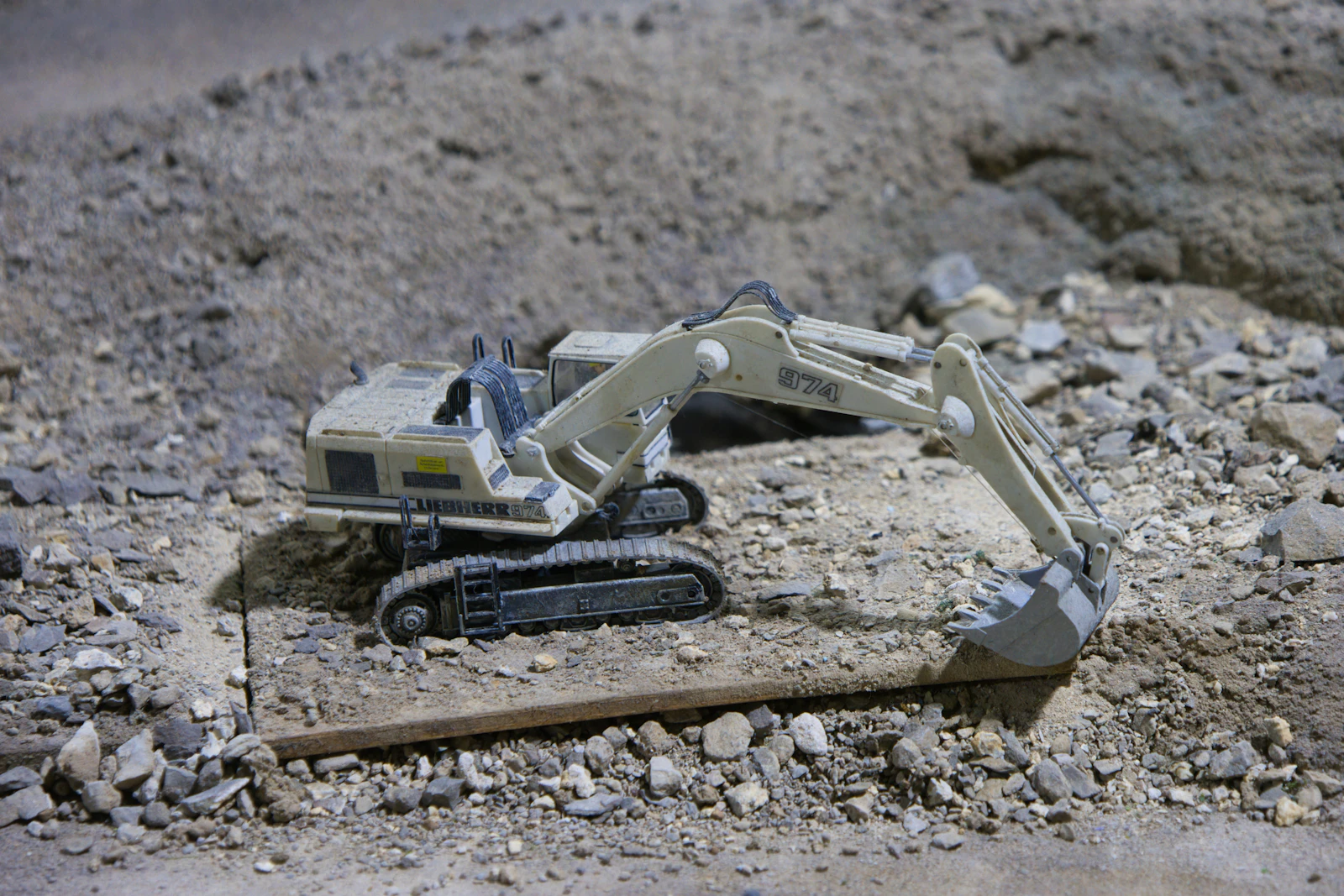
Mini Excavator Rental Rates San Francisco 2026
For retaining wall construction in San Francisco, 2026 mini excavator equipment hire budgets typically land in these planning ranges (machine only, no operator): $325–$525/day, $1,150–$1,950/week, and $3,200–$5,600 per 28-day month, with the low end representing a 1–2 ton rubber-track unit and the high end representing a 4–6 ton cab unit with higher hydraulics and tighter tail-swing requirements. In the Bay Area, rental coordinators commonly source compact excavator hire through a mix of national networks (e.g., United Rentals, Sunbelt Rentals, Herc Rentals) and local independents; however, the cost outcome is usually driven less by “base rate” and more by delivery constraints, attachments, waiver/insurance elections, and off-rent timing around San Francisco’s tight streets and limited staging. Assumptions for the ranges above: one-shift utilization (8 hours/day), standard digging bucket included, normal wear-and-tear, delivery within the core metro area, and return full of fuel/clean to the yard’s standard.
| Vendor |
Daily Rate |
Weekly Rate |
Review Score |
Website |
| United Rentals |
$420 |
$1 680 |
8 |
Visit |
| Sunbelt Rentals |
$410 |
$1 640 |
8 |
Visit |
| Herc Rentals |
$400 |
$1 600 |
7 |
Visit |
| H&E Equipment Services |
$395 |
$1 580 |
7 |
Visit |
| A Tool Shed |
$375 |
$1 450 |
9 |
Visit |
Sanity-check benchmarks (not San Francisco-specific): published rental rate sheets from other U.S. markets show mini excavator day rates in the high-$200s to low-$300s and weekly rates around the $900–$1,160 band for smaller units, supporting the reasonableness of a higher San Francisco metro premium when you add delivery friction and utilization caps. For example, a 2026 rate sheet shows a mini excavator at $285/day and $995/week, and a larger mini excavator at $325/day and $1,160/week. Another published 2024 rate sheet lists 1–3 ton minis at $250–$300/day and $750–$900/week, with 5–6 ton minis reaching $350–$400/day and $1,100–$1,200/week. Use these as external reference points only; your actual Bay Area quote will typically float above these numbers once freight, surcharges, and attachments are included.
What Actually Changes Mini Excavator Hire Cost on San Francisco Retaining Wall Work
Retaining wall construction tends to “stress” a mini excavator rental in ways that show up on the invoice: frequent repositioning in tight corridors, spoils management on steep grades, trenching for drainage, and a higher probability of track contamination (mud/concrete slurry) that triggers cleaning charges at return. In San Francisco specifically, three jobsite realities routinely add cost compared to suburban Bay Area work:
- Access and staging: narrow streets, limited laydown, and tow-away enforcement can force time-window deliveries and smaller delivery trucks—often increasing freight and the risk of standby time. Budget $175–$350 for delivery and $175–$350 for pickup inside typical metro delivery zones, plus after-hours or “inside jobsite” spotting allowances of $95–$175/hr if the truck/driver must wait for a spotter or an opening. (Planning allowances; confirm with your branch.)
- Grade and soil variability: hillside lots and cut/fill conditions can push you from a 2–3 ton machine into a 4–6 ton class for stability and breakout force. That class jump commonly adds $60–$125/day or $200–$450/week in base hire before attachments.
- Neighborhood constraints: dust and slurry control expectations are higher near occupied structures. It’s common to add ground protection and cleanup tools: track mats at $8–$15 per mat/day (or $35–$70 per mat/week), a small HEPA air scrubber for interior-adjacent work at $85/day, and additional labor time for wash-down to avoid a return cleaning fee. (Rates shown for the scrubber are from a published rate sheet; other items are planning allowances.)
2026 Planning Ranges by Mini Excavator Size (Machine-Only Hire)
For retaining wall construction, most crews fall into the 3–5 ton band because it balances trenching performance with access. Use these San Francisco 2026 planning ranges to build your initial equipment hire budget, then reconcile to a branch quote once you lock the work window and delivery plan:
- 1–2 ton micro/mini (tight access, light trenching): $325–$400/day, $1,150–$1,450/week, $3,200–$4,200/28-day.
- 3–4 ton mini (most retaining wall footing + drain trenching): $385–$465/day, $1,350–$1,750/week, $3,900–$5,000/28-day.
- 5–6 ton mini (higher lift, stability, deeper reach, often cab): $450–$525/day, $1,650–$1,950/week, $4,800–$5,600/28-day.
Utilization caps matter: many large rental agreements price a “day” as one shift, commonly 8 hours/day, 40 hours/week, 160 hours per 4 weeks. If your retaining wall scope requires extended hours (e.g., concrete placement windows, traffic control windows), budget overtime at the agreement’s overtime formula (often an hourly fraction of the base rate) rather than assuming “all-you-can-run.”
Attachments and Options That Commonly Add Cost on Retaining Wall Construction
Attachment selection is one of the fastest ways to move mini excavator hire cost up or down—especially on retaining walls where you alternate between trenching, setting rock, and finish grading. Build attachment costs as separate line items so you can remove them if your crew is supplying their own.
- Hydraulic thumb (recommended for rock and block handling): add $35–$90/day or $120–$300/week. If you skip the thumb, expect slower handling and potentially higher labor and standby time during material placement.
- Quick coupler: add $25–$60/day. Often justified if you will swap between a trenching bucket and a cleanup bucket multiple times per day.
- Trenching bucket (12"–18"): add $10–$30/day if not included; confirm what “standard bucket” means on the quote.
- Grading/ditching bucket (tilt or fixed): add $40–$95/day. For wall backfill shaping and drainage swales, this can reduce rework and compaction issues.
- Hydraulic breaker/hammer (if demo or keyway in rock is likely): add $225–$400/day plus wear tooling. Breakers are also the most common trigger for higher damage waiver charges and stricter return inspections.
- Trailer (only if you are self-hauling and authorized): add $65–$145/day, but validate towing capacity, tie-down requirements, and whether your rental agreement permits customer haul. (Many San Francisco projects still choose branch delivery due to street logistics.)
Hidden-Fee Breakdown
These items are where San Francisco mini excavator equipment hire cost gets missed in early estimates. Treat them as predictable allowances and track them against the final invoice.
- Delivery / pickup and freight surcharges: beyond the base $175–$350 each-way planning allowance, some agreements add a transportation surcharge as a percentage of transport charges. One published policy describes a fixed component of 9% (minimum $9) plus a variable fuel component; an example shows a combined transport surcharge of 16% (or minimum $16) under certain fuel conditions. (Policy examples vary by company/branch.)
- Preventative maintenance / environmental charges: some programs apply a per-hour maintenance charge, published in the range of $1–$6 per hour depending on equipment class. Budget this if your agreement specifies it or if your corporate account historically sees it on invoices.
- Rental protection / damage waiver: in the market, damage waiver/RPP often prices as 10%–15% of rental charges. Separate from the fee, pay attention to what you still owe if there is damage: published terms in one program cap customer responsibility for certain damage categories at 10% (with maximums like $500 per occurrence for some items), while other providers disclose waiver rates such as 14% or 15%. Always reconcile the waiver rate and the residual exposure.
- Fuel and return condition: if not returned full, expect a refueling service charge and higher “effective fuel price” than retail. Without branch-posted numbers, a conservative planning allowance is $6–$9 per gallon equivalent plus a service/admin charge of $25–$75. (Confirm locally; policies vary.)
- Cleaning fees (tracks, undercarriage, cab): retaining wall work often involves wet spoils and slurry. Budget $95–$250 for washout/cleaning if return condition is questionable, and an additional $75–$175 if the cab/interior is dirty or debris-laden.
- Wear items and minor damage: bucket teeth are commonly bill-back items when excessively worn or missing; budget $10–$25 per tooth. Missing pins/clips/hardware can be $15–$60 each. Track damage is the big one: a conservative contingency is $250–$900 depending on severity and whether it’s rubber track replacement vs. idler/roller issues.
- Late return / extra day exposure: if your agreement bills by the day and you miss the cutoff, you can unintentionally add 1 full day. Many branches also have off-rent cutoffs (commonly mid-afternoon) for next-day pickups; if you off-rent after cutoff on a Friday, you may carry charges through Monday depending on weekend service in your area. Build an extra 1–2 days contingency when the retaining wall schedule is weather- or inspection-dependent.
Example: San Francisco Retaining Wall Mini Excavator Hire Takeoff (With Real Constraints)
Scenario: 30 LF segmental retaining wall replacement on a hillside lot near a narrow street. Limited staging means the mini excavator must be delivered in a 2-hour window and cannot remain on the street overnight. Work plan is 8 working days of excavation/backfill plus 2 float days for inspection and rain delays (Bay Area micro-weather), for a total time-on-rent of 10 days.
- Machine: 4-ton mini excavator (rubber tracks), plan $435/day × 10 days = $4,350.
- Attachments: hydraulic thumb $65/day × 10 = $650; grading bucket $75/day × 10 = $750.
- Delivery/pickup: $295 delivery + $295 pickup = $590 (metro zone allowance), plus $125 standby/spotting contingency for tight access.
- Damage waiver/RPP: assume 12% of rental charges (machine + attachments) ≈ $690.
- Cleaning/return condition contingency: $175 (tracks/undercarriage washout).
Planning total (equipment hire only): approximately $7,195 before tax and any account-specific fees. The estimator lever here is usually not negotiating $10/day off the base rate; it’s preventing an extra billed day, minimizing standby on delivery, and returning the machine clean and fueled.
San Francisco-Specific Cost Controls for Mini Excavator Hire
- Lock delivery logistics before you reserve the unit: if your site requires a smaller truck, liftgate, or special placement, note it on the PO. A “standard delivery” assumption is a common cause of re-delivery charges in dense neighborhoods.
- Document condition at drop and pickup: require time-stamped photos of tracks, bucket edges/teeth, cab glass, and hour meter at both events. This is the most practical defense against disputed cleaning or damage bill-backs on compact excavator hire.
- Plan spoils handling to avoid track contamination: a few hundred dollars of plywood/ground protection can be cheaper than a cleaning fee + schedule slip at return.
- Schedule off-rent aggressively: off-rent when you place the last lift/backfill pass, not when the retaining wall is “fully complete.” If the machine is idle for 2–3 days waiting on inspection, you are paying for it—either at a day rate or by drifting into a weekly minimum.
Note on published rate structures: many rental catalogs define a “month” as 28 days and may require an account setup to view the exact daily/weekly/monthly rates by ZIP code. Align your internal job cost coding to “28-day month” to avoid underbudgeting when a wall job runs into a second billing cycle.
How Rental Agreements Translate Into Real Job Cost in 2026
Mini excavator equipment hire cost for retaining wall construction is rarely just a single rate multiplied by days. The effective rate is the outcome of (1) utilization rules, (2) conversion logic (daily-to-weekly-to-monthly), and (3) add-on fee policies. Two reference frameworks are useful in California estimating:
- Rental agreement “shift” logic: one published rental policy states that daily, weekly, and 4-week rates typically entitle the customer to one shift (often defined as 8 hours/day, 40 hours/week, 160 hours/4 weeks), with excess use payable at an hourly fraction of the base charge. If your retaining wall scope includes extended hours (or you will run the machine during concrete placement windows), validate the overtime billing formula before you assume the weekly cap is “unlimited run time.”
- Public-works ownership-cost benchmark (not a rental yard quote): Caltrans publishes an annual “Labor Surcharge and Equipment Rental Rates (Cost of Equipment Ownership)” book effective April 1, 2026 through March 31, 2027. The publication explicitly notes the calculated rate represents ownership/operating cost and is “likely to be lower than the rate charged by a rental yard,” and it describes a force-account markup of 15% for overhead not included as direct costs. This is not a substitute for your rental quote, but it is a credible cross-check when you are pressure-testing whether a rental number is directionally reasonable for change order work.
Budget Worksheet (Mini Excavator Equipment Hire Allowances)
Use this checklist-style worksheet to build a defensible mini excavator hire cost budget for San Francisco retaining wall construction. Adjust allowances to your corporate account terms and known job constraints (access, staging, shift hours).
- Base machine hire: ____ days at $____/day (or ____ weeks at $____/week). Include a +1 to +2 day float if inspections/weather can hold you.
- Attachments: thumb ($35–$90/day); grading/ditch bucket ($40–$95/day); trenching bucket ($10–$30/day); quick coupler ($25–$60/day); breaker ($225–$400/day).
- Delivery and pickup: $175–$350 each way (metro zone planning), plus $95–$175/hr standby/spotting if access is uncertain.
- Transportation/fuel surcharge allowance: +9% to +16% on freight charges if your supplier agreement applies a transportation surcharge structure (confirm by account).
- Damage waiver / RPP: 10%–15% of rental charges, depending on provider and account settings. (Separate this from liability caps/deductibles; do not assume “no exposure.”)
- Maintenance program charges (if applicable): $1–$6 per operating hour for certain programs/equipment classes (verify on your agreement history).
- Fuel/return condition: refuel allowance $6–$9/gal equivalent + $25–$75 service (only if you cannot return full); cleaning allowance $95–$250.
- Wear/damage contingency: bucket teeth $10–$25 each; minor missing hardware $15–$60; track/undercarriage contingency $250–$900 where access is rocky or demolition debris is present.
- Permitting/traffic control support (job-dependent): allow $50–$250 for curb/parking admin or delivery coordination if your job requires curb reservation/flagging (planning allowance; jurisdictional fees vary).
Rental Order Checklist (What Your Coordinator Should Put on the PO)
- Equipment spec: mini excavator operating class (e.g., 3–4 ton), tail swing requirement (zero/reduced), cab vs canopy, track type (rubber), and bucket(s) required.
- Attachments: thumb, quick coupler, trenching bucket width, grading bucket (tilt vs fixed), breaker if required (and confirm it is approved for the carrier).
- Utilization assumptions: confirm one-shift definition (8 hours/day) and overtime billing method if you anticipate extended hours.
- Delivery instructions: exact jobsite address, contact name/phone, required delivery window, street access notes (narrow lane, steep grade), and whether the truck must call ahead 60–90 minutes.
- Site requirements: specify if a spotter is required, if ground protection is needed for sidewalks/finished surfaces, and if the unit must be low-marking or fitted with certain accessories.
- Off-rent and pickup rules: ask the branch for the off-rent cutoff time (often mid-afternoon) and weekend/holiday pickup limitations so you don’t carry an unintended extra day.
- Return condition expectations: “return full of fuel,” clean tracks/undercarriage, remove debris from cab, and provide photos at pickup.
- Documentation: require the delivery ticket to record hour meter at drop; require pickup ticket to record hour meter at return; keep time-stamped photos in the job folder.
- Insurance/waiver election: provide certificate of insurance if you are waiving RPP; otherwise state approved RPP percentage and cost code for billing.
When to Upsize (and When Not to) for Retaining Wall Construction
Upsizing from a 3–4 ton to a 5–6 ton mini excavator can be justified in San Francisco when you have steep grades and need stability while handling heavier block/rock, or when deeper reach reduces repositioning time. However, the upsized machine can also increase delivery complexity and curb-space risk. As a rule of thumb for equipment hire cost control:
- Upsize if: you are lifting near capacity repeatedly, you need more reach to keep the machine off compromised soil, or you have rocky excavation that risks stalling the smaller machine (which can trigger longer time-on-rent).
- Stay smaller if: access is the primary constraint (tight gates, narrow drive), or if delivery logistics will create standby/re-delivery costs that exceed the productivity gains.
If you want, share (1) access width, (2) estimated excavation volume, (3) wall type (segmental vs poured), and (4) expected time-on-rent window, and I can tighten the 2026 San Francisco mini excavator equipment hire budget bands and allowances for your retaining wall construction scope.