

For 2026 planning in San Jose, mini excavator equipment hire (dry hire, machine only) commonly budgets in the $325–$525/day, $1,000–$1,500/week, and $2,400–$3,700 per 28-day “month” range for the 1–3 ton classes typically used on basement waterproofing scopes (perimeter trenching, drain line placement, and limited access foundation exposure). Current Bay Area-adjacent posted rates illustrate the spread by size: a 1-ton unit shows $340/day, $1,009/week, $2,520/28-days; a 1.5-ton unit shows $370/day, $1,109/week, $2,421/28-days; and a 3-ton unit shows $430/day, $1,110/week, $2,922/28-days. “Monthly” is frequently a 28-day/160-hour construct with overtime billed by meter usage, so the lowest calendar price is not always the lowest effective cost on a high-utilization waterproofing trench package.
| Vendor | Daily Rate | Weekly Rate | Review Score | Website |
|---|---|---|---|---|
| United Rentals | $520 | $1 450 | 9 | Visit |
| Sunbelt Rentals | $500 | $1 395 | 3 | Visit |
| Herc Rentals | $510 | $1 420 | 7 | Visit |
| The Home Depot Tool Rental | $505 | $1 396 | 8 | Visit |
Basement waterproofing work in San Jose tends to force equipment decisions around access, surface protection, and schedule certainty—each of which directly impacts mini excavator hire cost. If you have a tight side-yard (common in older neighborhoods) and need to pass through a narrow gate, you may be pushed into a 1-ton class machine with a minimum width around 2 ft 4 in to 2 ft 10 in, even if production would be better with a heavier unit; that selection changes both the base rate and the risk of overtime charges if the job runs long.
From a rental-coordinator perspective, the biggest cost drivers to model up front are:
Below are practical 2026 budgeting bands using currently posted local-regional rates as anchors. Treat these as planning ranges—final pricing varies with account discounts, fleet availability, delivery distance, and seasonality (spring/summer demand spikes).
When waterproofing requires interior courtyard access, narrow side yards, or door-width constraints, the 1-ton class is often the only workable option. Posted figures show $255 for 4 hours and $340/day, scaling to $1,009/week and $2,520 per 28-days. In 2026 estimating, a realistic band for San Jose micro excavator equipment hire is $300–$425/day once you account for high-demand weeks and short-notice scheduling.
The 1.5-ton class is a common “sweet spot” for basement waterproofing where access is still constrained, but you need more reach and stability than a micro. Posted rates show $280 (4-hour), $370/day, $1,109/week, and $2,421/28-days. For 2026 planning in San Jose, budget $340–$475/day depending on included bucket set, whether a zero-tail-swing configuration is required, and whether delivery is needed vs. customer pickup.
If side-yard access allows, moving to a 3-ton class machine can reduce total days on the job (often the largest lever on total hire cost). Posted figures show $325 (4-hour), $430/day, $1,110/week, and $2,922/28-days. A reasonable 2026 equipment-hire range for a 3-ton compact excavator in San Jose is $400–$550/day and $2,700–$3,800 per 28-days, before delivery, waiver, and taxes.
Most basement waterproofing scopes do not require a 6-ton class excavator; however, you may step up if you’re handling heavier spoils, need improved stability near deeper foundation exposures (subject to engineering/means-and-methods), or have to maintain production under tighter schedule constraints. A nearby posted reference shows $330 (4-hour), $440/day, $1,412/week, and $3,328/28-days. For San Jose budgeting, it’s prudent to model $425–$650/day and $3,200–$5,000 per 28-days depending on configuration and hauling logistics.
Two items routinely surprise teams new to equipment hire cost control: (1) minimum charges (4-hour, day, or “1-day minimum on delivery”), and (2) metered overtime. Local postings commonly show explicit 4-hour rates (for example $255 on a 1-ton and $325 on a 3-ton), which are useful when you only need the machine for a controlled excavation window and have spoils handling staged.
For longer rentals, the key is understanding what your vendor considers “standard” utilization. One local listing explicitly notes rates based on 8 hours per day, 40 hours per week, and 160 hours per 4 weeks, with overtime charged by usage. Basement waterproofing is prone to overtime because trench work frequently stacks with: limited dig windows (neighbor access), inspections, and same-day spoil removal. If you plan to run 10-hour days to finish before a rain event, carry an overtime allowance (e.g., $55–$75 per excess hour as a planning placeholder derived from prorating typical day rates).
Mini excavator hire cost in San Jose rarely equals the published “day/week/month” number. To keep your purchase order clean and avoid change-order noise, pre-carry these common adders as explicit allowances (adjust to your master agreement terms):
San Jose job sites amplify delivery sensitivity because a missed delivery window can burn a full crew day and extend the rental. When coordinating compact excavator equipment hire for basement waterproofing, confirm: (a) whether your branch delivers 6 days per week, (b) the latest time to place next-day delivery, and (c) whether “will call” pickup requires specific towing capacity and tie-down standards.
San Jose-specific cost impacts to carry (not vendor quotes—planning norms):
Basement waterproofing is frequently where attachment selection makes or breaks total equipment hire costs—especially when access constraints force a smaller machine and you need productivity help. Confirm what’s included with the base excavator (bucket set, quick coupler, auxiliary hydraulics) and price the rest as separate lines.
Example: A perimeter trench for a basement waterproofing scope in San Jose with limited access but enough clearance for a 3-ton unit, planned as a 1-week rental to avoid daily billing volatility. The crew expects one concrete section removal (walkway strip) and wants a breaker for two days.
Expected equipment hire subtotal (pre-tax): approximately $2,518. If the crew runs long and meters 12 overtime hours, carrying $65/hr as an internal exposure adds another $780—which is why matching size class to production is usually more valuable than negotiating $10/day off the base rate.
Use this as a line-by-line budgeting artifact for a mini excavator hire cost PO tied to a basement waterproofing trench package in San Jose (edit quantities and remove what your MSA already includes):
Use this checklist to reduce avoidable extra-day and damage charges on mini excavator equipment hire in San Jose:
If you’re sourcing through a national provider, note that some marketplaces indicate you can view daily, weekly, and monthly (28-day) rates online—useful for fast budget checks, but still validate delivery cost and overtime rules before releasing a field PO.
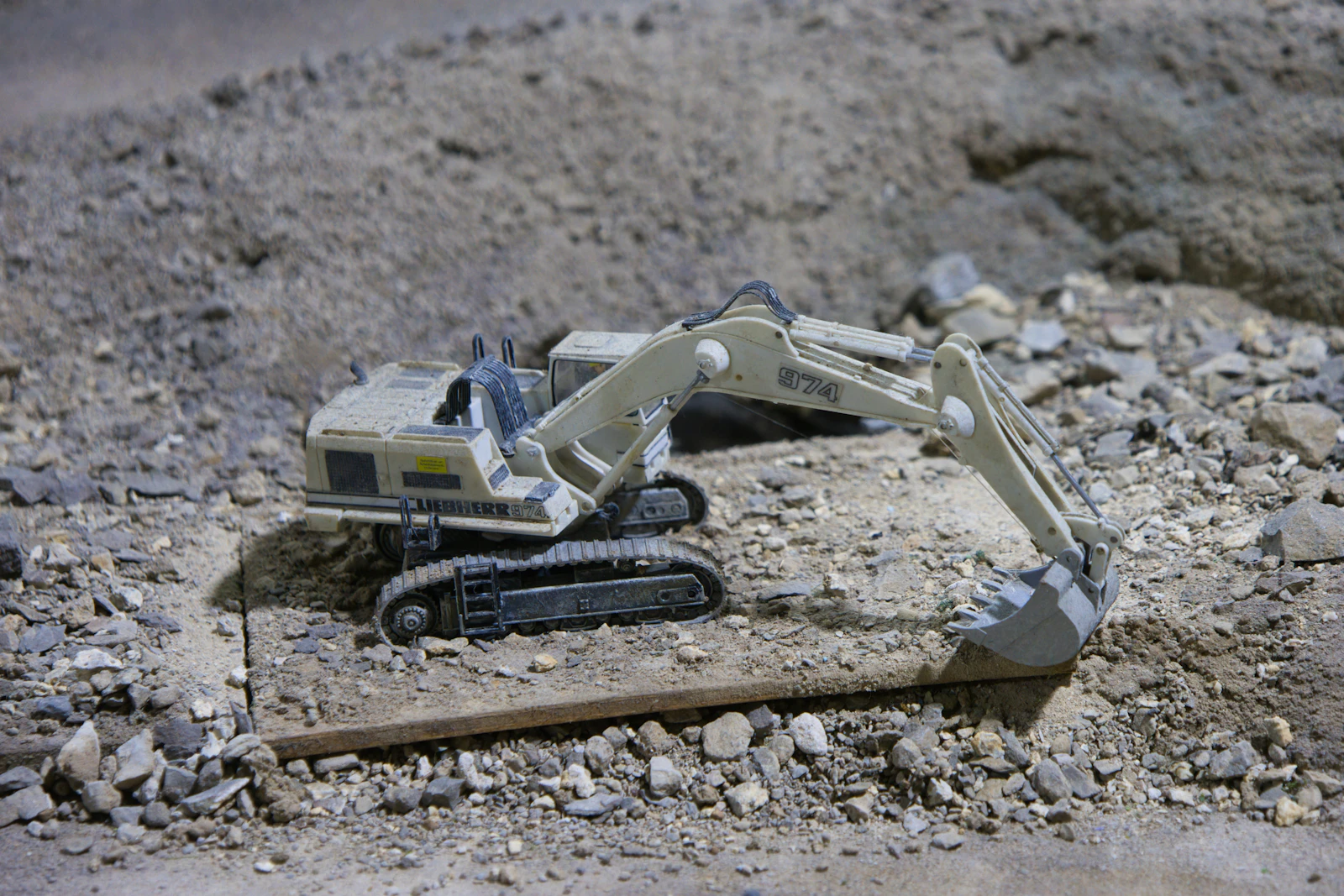
In San Jose basement waterproofing, total hire cost is usually driven by days on rent and avoidable adders, not by the nominal day rate. Cost control is therefore mostly operational: selecting the smallest excavator that still finishes in the planned window, controlling off-rent timing, and preventing return-condition back-charges.
If you can physically fit a 3-ton unit, it may reduce the rental duration enough to offset the higher day rate. As an anchor, posted pricing shows the jump from $340/day (1-ton) to $430/day (3-ton). If the bigger unit saves even 2 days on rent, that’s a net improvement before you even account for crew labor and schedule risk.
Weekly rates can be very efficient if your scope truly fits in one workweek and you can off-rent before the branch cutoff. Posted references show a 3-ton unit at $1,110/week; two separate daily charges at $430/day are already $860, so the incremental cost to hold the machine through the rest of the week can be minor compared to the operational flexibility it provides (inspection delays, rain covers, or restoration scheduling).
Where teams get burned is weekend billing and off-rent delays. If the machine is not called off-rent until Monday, many vendors will treat the weekend as billable time in some form. Use a firm internal process: superintendent submits off-rent notice by 2:00–4:00 PM (confirm your contract’s cutoff), and the rental coordinator verifies the off-rent confirmation is received.
These three mechanics frequently create hidden cost on mini excavator hire:
Basement waterproofing excavations generate wet clay, slurry, and adhesive soils that pack into tracks and undercarriages. If you return a machine in that condition, cleaning is often billable labor. A published rate card example shows $75/hour for excessive cleaning; even 2 hours becomes a meaningful adder. Build a field closeout step: scrape tracks, rinse where allowed, and photograph the undercarriage and bucket before pickup.
Also document attachment condition. Hydraulic tools are easy to damage during concrete demo and can create replacement-value claims. If you rented a breaker at $242/day, protect that line by confirming greasing requirements, tool bit wear expectations, and return condition documentation.
For waterproofing scopes with hardscape demo or post-rebuild requirements, attachments can be the lowest-cost way to keep the rental duration down:
Without turning this into a vendor list, the practical levers most equipment managers use with the major rental houses (national and regional) in the San Jose market are:
If your basement waterproofing crews run compact excavators most weeks of the year, ownership can look attractive—until you price transport, maintenance, undercarriage wear, storage, insurance, and downtime. A simple rental-based break-even method many contractors use is to compare the 28-day rate to expected utilization. For reference, posted “monthly” pricing examples show $2,520 (1-ton), $2,421 (1.5-ton), and $2,922 (3-ton) per 28 days. If you need the excavator fewer than roughly 6–8 months per year (varies by internal cost of capital and transport setup), hire often remains the lower-risk option—especially in San Jose where parking/storage and theft risk can be non-trivial.
If you want, share your expected trench length (linear feet), maximum dig depth, access width, and whether delivery is required; then the same framework above can be tightened into a not-to-exceed equipment hire budget for your exact San Jose waterproofing package.
