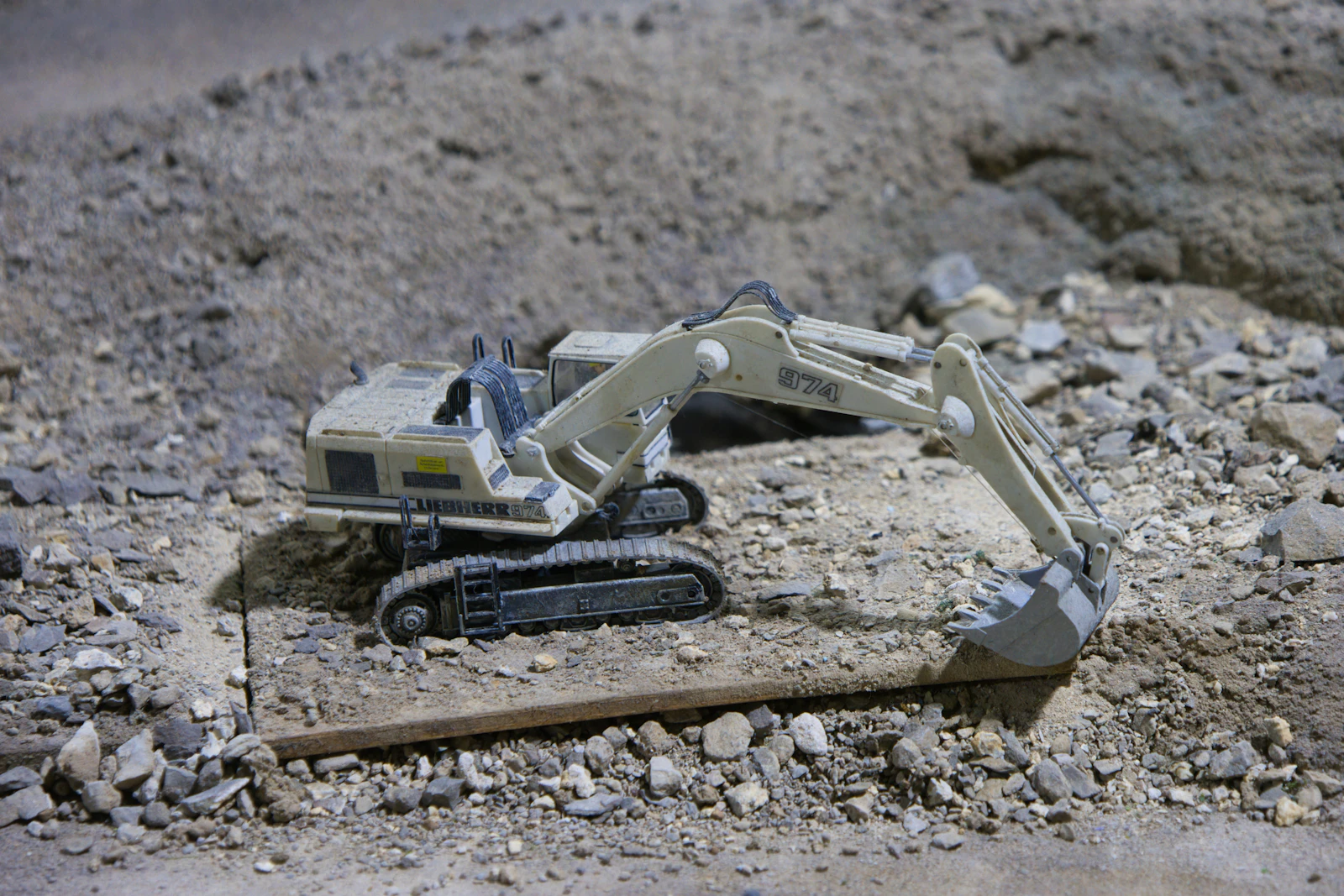
Mini Excavator Hire Costs Washington 2026
For Washington, DC commercial tenant improvement work in 2026, plan mini excavator equipment hire budgets (machine only, no operator) in these working ranges: $275–$650/day, $850–$1,950/week, and $2,600–$5,400 per 4-week month. Rates swing mainly by operating weight class (1–2 ton vs 3–6 ton vs 8–10 ton “compact excavator”), tail-swing configuration, cab/heat/AC, and whether you’re packaging attachments and ground protection. National rental houses that commonly service the DC metro (plus local independents in the DMV) generally quote on 8-hour days, 40-hour weeks, and 28-day billing months, with adders for delivery windows, damage waiver, and compliance requirements. Published rate cards in the broader Mid-Atlantic market show similar order-of-magnitude pricing (e.g., $290/day and $870/week for a 2-ton class unit; $525/day and $1,575/week for a ~6-ton class unit), which helps validate these 2026 planning ranges even though branch-level quotes will vary.
| Vendor |
Daily Rate |
Weekly Rate |
Review Score |
Website |
| United Rentals |
$305 |
$840 |
8 |
Visit |
| Sunbelt Rentals |
$314 |
$707 |
7 |
Visit |
| Herc Rentals |
$341 |
$925 |
8 |
Visit |
| D&B Rental Sales & Service |
$258 |
$754 |
9 |
Visit |
What Drives Mini Excavator Hire Pricing On Commercial Tenant Improvement Jobs?
Commercial TI scopes in Washington, DC often use a mini excavator for exterior utility tie-ins, small trenching in courtyards, grease interceptor work, dumpster pad rework, landscape restoration after MEP trenching, and selective concrete removal where access is restricted. In these environments, the rental price you see on a quote is typically only one line item in the total cost of equipment hire. Expect your final “all-in” mini excavator hire cost to be shaped by (1) the size class you truly need, (2) delivery and access constraints (alleys, loading docks, curb permits), (3) attachments (thumb, breaker, specialty buckets), and (4) commercial admin requirements (COIs, PO controls, off-rent procedures, and return condition documentation).
Washington, DC-specific cost reality for TI: the machine frequently sits “ready” while other trades work in sequence. That means your cost risk is less about the day rate and more about billing rules (weekend/holiday, off-rent cutoffs, and overtime hours) and how quickly you can off-hire and back-haul when the dig scope is done.
Size Class And Spec Selection (The Fastest Way To Overpay Or Under-Order)
For equipment managers pricing mini excavator hire in Washington, DC, break planning into weight classes rather than a generic “mini-ex” line item:
- 1–2 ton (micro/mini): best for ultra-tight access (doors, narrow corridors, gates) and light trenching. Typical 2026 planning: $275–$375/day plus delivery. A published example rate card shows $290/day and $2,610 per 4-week month for a 2-ton class unit.
- 3–6 ton (common TI “sweet spot”): enough breakout force for small utility work, manageable transport, and can run a thumb and mid-size breaker effectively. Example published pricing includes $370/day for ~4-ton and $525/day for ~6-ton class units, highlighting why this band frequently lands in the $375–$650/day planning range in 2026.
- 8–10 ton compact excavator: where projects start calling it a “mini” in conversation but it behaves like small heavy equipment. Often chosen when you must hit production in a short street-closure window. Example published pricing shows $690/day and $2,070/week for a 10-ton class unit, plus a stated $1,000 damage deposit requirement on that rate card.
Spec adders that impact hire cost: enclosed cab (comfort + seasonal demand), zero-tail/short-radius swing (premium in tight DC sites), and auxiliary hydraulics (required for breakers/augers). If you don’t need them, don’t pay for them—especially on TI jobs where the machine may be present “just in case.”
Delivery, Mobilization, And Tight-Site Logistics In Washington, DC
Delivery is where Washington, DC TI jobs often surprise first-time estimators. Tight streets, curbside staging limits, and building loading dock rules can turn a standard mobilization into a premium service. For 2026 planning, budget delivery/pickup as a separate cost line with realistic constraints:
- Flat mobilization + mileage is common. One public bid schedule example shows an $290 delivery/mobilization charge plus $4 per additional mile for an 11,000 lb mini excavator (pickup rates shown separately). Use this structure as a reference model when you’re building allowances for DC metro hauls.
- Timed delivery windows can carry a premium. In the DC area, timed/short-window delivery structures in other rental logistics contexts show an upcharge compared with standard 3-hour windows (e.g., $135 standard vs $185 timed for delivery with pickup as an illustrative benchmark), and after-hours delivery/pickup can be priced as a discrete surcharge (e.g., $225 after-hours). Treat these as planning references for how “window tightening” impacts cost.
- Security screening/admin is not theoretical in DC. Budget a per-trip screening/escort allowance when working at federal or high-security sites; a published delivery fee schedule in the region lists a $75 security screening surcharge as an example of how this may show up on invoices.
DC operational constraint that changes cost: if your site cannot accept deliveries after a building cutoff (common: last truck in by 2:00–3:00 PM), missing the window can trigger a re-run (example published re-run fee: $100) or a next-day minimum.
Attachments And Accessories (Budget These Or Expect Change Orders)
For commercial tenant improvement, the mini excavator often needs attachments to safely meet schedule (and avoid hand work). Attachment hire can be daily-rated just like the machine. Use these planning adders when estimating mini excavator equipment hire cost for TI:
- Hydraulic thumb: budget $75–$125/day as a planning allowance. A public contract example shows a thumb priced at $81/day, $211/week, and $385/month (contract geography varies, but it’s a useful benchmark for attachment economics).
- Hydraulic breaker/hammer: for slab edge demo, footing removal, or trench obstructions. Budget $250–$450/day for a mini-ex sized breaker in 2026 planning. A public contract example shows breaker pricing starting around $428/day and $1,212/week for one breaker size category, illustrating why breaker usage is a major cost driver.
- Specialty buckets: trenching bucket, smooth bucket, wider grading bucket. Contract examples show bucket adders such as $22/day ($55/week) for certain mini-ex bucket categories; this supports budgeting buckets as explicit line items rather than assuming “included.”
- Ground protection / track mats: in DC, protecting sidewalks, historic pavers, and interior loading zones can be mandatory. Plan $8–$20 per mat per week (allowance) plus handling time; the key is that mats can also change delivery: you may need a second truck turn, which doubles mobilization exposure.
Required accessories that can quietly add cost: lifting chains/rigging, trench plates (if crossing pedestrian paths), and a designated “spill kit” if required by GC or facility policy. These can be low-dollar individually but high-impact if they cause an extra mobilization.
Hidden-Fee Breakdown
When reconciling invoices, watch for these common mini excavator hire cost add-ons that hit commercial TI projects:
- Damage waiver / rental protection: commonly priced as a % of rental charges (see “Insurance & Damage Waiver” in Post Body 2 for a sourced example).
- Environmental/service charges: often a percentage of the rental amount for certain equipment categories; treat as 2%–6% planning unless you have the branch schedule in hand.
- Cleaning: budget $150–$350 for wash/undercarriage cleaning on muddy jobs; if you’re cutting concrete, add a $200–$500 allowance for caked slurry, especially if the machine ran a breaker and tracked through wet spoils.
- Fuel / refuel: “return full” is cheapest if you control it; if the rental house fuels, plan $8–$12/gal as a conservative all-in refuel service allowance (posted fuel prices vary by branch and date).
- Weekend/holiday billing: some contracts and operated-equipment rate cards explicitly treat Saturday/Sunday/holidays as overtime or premium time; make sure your TI schedule doesn’t strand the machine on rent over a long weekend.
- Late return penalties: plan for at least a 1/6-day or 1/4-day minimum increment if your return misses cutoff (policy varies; confirm on the rental agreement).
Off-Rent Rules, Weekend Billing, And Overage Hours (Where TI Jobs Bleed Money)
Commercial tenant improvement work is sequence-driven. If your excavator is on standby for inspections, coring, sawcutting, or utility mark-outs, the meter isn’t moving but the rental clock is. Control cost by enforcing three rules:
- Know the off-rent cutoff time (often early afternoon) and the branch’s pickup lead time. If you call off-rent after cutoff, you may pay an extra day.
- Confirm weekend billing behavior before you schedule Friday delivery. If you take delivery Friday and start work Monday, you can unintentionally pay for Saturday and Sunday depending on contract structure.
- Control overage hours if your agreement is hour-based. Some rate cards are explicit: rentals can be based on an 8-hour minimum day, and overtime may apply after 8 hours/day and on Saturdays, Sundays, and holidays (example language shown on a DC-region operated equipment rate card). Even for “machine-only” rentals, this illustrates how quickly premium time can appear if you’re on a staffed delivery/pickup or operated basis.
Example: Downtown Washington, DC TI Utility Trench With Limited Curb Space
Scenario: 6 business days of exterior utility trenching behind an active retail TI. Constraints: delivery must hit a 2-hour dock window, spoils cannot be stockpiled on public sidewalk, and the GC requires sidewalk protection mats. You select a 4–6 ton class mini excavator with auxiliary hydraulics and a thumb.
2026 planning numbers (illustrative):
- Mini excavator hire (6 days @ $495/day allowance): $2,970
- Hydraulic thumb (6 days @ $95/day allowance): $570 (benchmark thumb pricing exists around $81/day on some public schedules)
- Delivery/pickup mobilization: $320 each way allowance = $640 (reference model: a published schedule shows $290 mobilization + $4/additional mile on a mini excavator line item)
- Timed-window premium: $125 allowance (timed delivery structures can be priced above standard windows)
- Security/screening/admin allowance: $100 (regional fee schedules show screening surcharges such as $75)
- Track mats: 20 mats @ $12/mat/week allowance = $240
- Cleaning allowance at return: $250
- Environmental/service charge allowance (assume 4% of rental lines): ~$142
Planned equipment hire subtotal (illustrative): about $4,987 before tax. The cost control lever is not negotiating $20/day; it’s avoiding a re-run ($100 example), an after-hours surcharge ($225 example), and extra days due to missed off-rent cutoffs.
Budget Worksheet
Use this field-ready worksheet (no tables) to build a defensible mini excavator equipment hire cost budget for Washington, DC TI jobs:
- Mini excavator rental (machine only): ____ days @ $____/day or ____ weeks @ $____/week
- Attachments (allowances): hydraulic thumb $75–$125/day; breaker $250–$450/day; buckets $15–$40/day
- Mobilization: delivery $250–$450 each way (plus mileage beyond base radius)
- Timed delivery window premium: $75–$200 per occurrence
- After-hours / restricted-site premium: $200–$350 per occurrence
- Security screening/escort allowance: $75–$200 per truck turn
- Ground protection: track mats/plywood allowances + handling labor
- Fuel plan: return full (preferred) or refuel service allowance $8–$12/gal
- Cleaning / return condition: $150–$350 standard; $200–$500 heavy concrete slurry
- Damage waiver / RPP (if elected): ____% of rental charges (see Post Body 2)
- Environmental/service charge: 2%–6% allowance of applicable rental lines
- Contingency (TI unknowns): 1–2 extra days + one “re-run” allowance
Rental Order Checklist
For rental coordinators issuing POs for Washington, DC mini excavator hire on tenant improvement projects:
- PO must state: rental start date/time, estimated off-rent date/time, rate basis (8-hour day / 40-hour week / 28-day month), and any negotiated minimums
- Delivery details: exact address, site contact, dock/curb access plan, delivery cutoff time, and whether driver needs COI/escort/security screening
- Equipment spec confirmation: operating weight class, tail swing requirement, cab/open station, auxiliary hydraulics, bucket sizes, thumb yes/no
- Attachments & accessories: list each attachment as its own line item to prevent “extra” charges later
- Condition at delivery: require photos of buckets, pins, cylinders, tracks, and hour meter
- During rent controls: daily pre-op checklist, refuel/recharge policy, and indoor dust-control requirements if moving through finished spaces
- Off-rent procedure: who calls off-rent, cutoff time, and required written confirmation/off-rent number
- Return requirements: “return full,” cleaning expectation, and documentation (photos) to close out damage claims
How To Reduce Mini Excavator Equipment Hire Cost Without Cutting Production
For Washington, DC commercial TI work, cost reduction is usually operational rather than purely rate-based. The biggest wins come from: (1) shrinking the paid rental window, (2) preventing chargeable damage/cleaning, and (3) eliminating invoice noise (unapproved attachments, extra days, re-runs).
- Stage the machine “just-in-time”: don’t deliver on Friday if your sawcut and utility mark-outs are Monday. A 2-day mis-staging can erase negotiated discounts.
- Bundle the right attachments up front: an unplanned breaker day can add $250–$450 to the daily cost profile (or more depending on breaker class), and you may pay another delivery if it’s not on the truck.
- Protect finished surfaces: track mats are cheaper than backcharges for sidewalk/paver damage.
- Assign one accountable operator: fewer people on the controls reduces track damage, bucket tooth loss, and accidental contact with storefront glazing or MEP stubs.
Insurance, Damage Waiver, And Risk Controls (Budget The Percentage, Not Just The Machine)
On equipment-only rentals, you typically either provide proof of insurance that meets the rental agreement requirements or buy the rental house’s damage waiver / rental protection product. A sourced example: United Rentals’ Rental Protection Plan (RPP) terms state that the RPP fee is 15% of the rental charges (plus applicable taxes) for equipment (non-passenger vehicles).
Why this matters for TI: 15% on a $4,000 rental package is $600 before tax, which is often larger than your entire attachment budget for a small trench. If you elect damage waiver, bake it into the estimate as a separate line item so your PM doesn’t “discover” it mid-job.
Also note how damage waiver changes the risk profile. Sunbelt’s published explanation of its Rental Protection Plan describes responsibility limitations such as 10% of repair cost up to $500 for damage and 10% of list price up to $500 for theft (with procedural requirements like a police report within 48 hours of discovery for theft), and $50 tire puncture repair coverage per occurrence. Even if your branch paperwork differs, this illustrates the practical reason contractors buy protection on dense urban TI sites.
Return Condition, Cleaning, And Fuel Expectations (Where Closeout Costs Hide)
Commercial tenant improvement sites in Washington, DC commonly have strict stormwater/cleanliness expectations, and that flows downstream into your rental closeout. To keep equipment hire costs predictable:
- Concrete slurry control: if you used a breaker around slab edges, plan a dedicated end-of-job rinse/clean step. Otherwise, budget a $200–$500 cleaning exposure (allowance) if the machine returns with hardened slurry on tracks and undercarriage.
- Document “as-returned” condition: take photos of tracks, bucket, thumb, coupler, cylinders, and hour meter at pickup. This is your best defense against disputed wear/damage line items.
- Fuel discipline: return full whenever possible. If the rental house fuels, a conservative planning allowance is $8–$12/gal (varies by branch and date). If your TI job is short-duration but high-idle (waiting on traffic control), fuel can be disproportionate.
- Idle hours matter: even when “machine-only” rental is calendar-based, heavy idling increases regen events and can contribute to performance complaints or service calls that disrupt the sequence-driven TI schedule.
Washington, DC Operational Constraints That Commonly Change The Final Invoice
- Delivery cutoffs and traffic: in DC, missing a building cutoff may trigger an additional truck turn. In regional delivery fee structures, discrete adders like $100 re-runs and $250 emergency same-day illustrate how quickly logistics can add cost when schedules shift late in the day.
- After-hours work windows: if your TI schedule forces night work, plan a premium for after-hours delivery/pickup (illustrative regional schedule: $225 after-hours surcharge).
- Sidewalk and curb restrictions: DC neighborhoods with heavy pedestrian flow often require additional protection and faster cleanup. This is a production constraint that translates into more attachments (grading bucket, clean-out bucket) and more labor to avoid chargeable cleaning.
- Off-rent coordination: schedule pickup when a responsible party is on site to sign out equipment and confirm condition; otherwise the rental period can extend simply because nobody can release the machine.
2026 Planning Notes For Mini Excavator Hire In DC (Practical Estimating Assumptions)
For 2026 budgeting, use these assumptions unless you have a negotiated MSA with fixed terms:
- Billing basis: 8-hour day / 40-hour week / 28-day month (confirm on the agreement).
- Minimums: allow for a 2-day minimum on delivered equipment when demand is high (policy varies by branch and season).
- Mobilization allowance: $250–$450 each way within the DC metro, with mileage beyond a base radius; a public schedule example for a mini excavator line shows $290 mobilization + $4/additional mile, which is a good “sanity check” structure when you’re building internal estimates.
- Attachment adders: thumb about $80–$125/day (benchmark $81/day exists on a public schedule); breaker $250–$450/day (benchmark $428/day exists for one breaker category).
- Risk & fees: damage waiver potentially 15% of rental charges if elected (example from United RPP terms).
When A Different Machine Lowers The Total Equipment Hire Cost
Mini excavators are often specified by habit. On TI work in Washington, DC, you can lower total cost by switching equipment to match constraints:
- Compact track loader + trencher attachment can outperform a mini excavator for long, consistent shallow trenching, depending on spoils and restoration requirements.
- Electric mini excavator may reduce building complaints and ventilation needs when working near occupied spaces, but expect a 20%–35% rate premium (planning allowance) and budget charging logistics. If you can’t reliably recharge, you risk downtime that negates the premium.
- Walk-behind or vacuum excavation may be cheaper overall for short, high-risk utility daylighting—especially when the cost of a utility strike dwarfs the rental rate.
Closeout Guidance For Rental Coordinators (Prevent Invoice Drift)
- Match the invoice to the PO: verify dates, off-rent time, and that all attachments listed were actually received/returned.
- Confirm environmental/service and protection fees align with the agreement; these are commonly percentage-based and can be misapplied to non-applicable lines.
- Dispute within the vendor’s window: many rental terms require prompt notice for billing errors—build an internal workflow so invoices are reviewed weekly, not at job close.
If you want, share the expected dig depth, access width (gate/door), and whether you need a breaker or thumb. With those three inputs, you can tighten the Washington, DC mini excavator equipment hire cost range to a more procurement-ready budget for your specific commercial TI scope.