

2026 planning ranges for miter saw equipment hire in Jacksonville, FL (gutter installation cut-station): for a jobsite-ready 10 in. compound miter saw, budget $25–$55/day, $85–$165/week, or $255–$495/month (pickup rates tend to land on the lower end). For a 12 in. compound unit, plan $40–$85/day, $125–$260/week, or $375–$780/month. For a 12 in. sliding compound miter saw (common when you need capacity + speed for miters and returns), plan $60–$120/day, $190–$360/week, or $570–$1,080/month. Larger 15 in. miter saw classes (less common for gutter work) typically budget $80–$150/day, $250–$450/week, or $750–$1,350/month. Assumptions: 1 day is typically a 24-hour charge, weekly/monthly discounts require continuous possession, and Jacksonville-area taxes/fees/waivers are additional unless your local contract states otherwise.
| Vendor | Daily Rate | Weekly Rate | Review Score | Website |
|---|---|---|---|---|
| The Home Depot Tool Rental (Compact Power) | $45 | $180 | 9 | Visit |
| Sunbelt Rentals | $60 | $210 | 9 | Visit |
| United Rentals | $65 | $250 | 9 | Visit |
| Herc Rentals | $40 | $140 | 9 | Visit |
For Jacksonville gutter installation crews, the true “miter saw hire cost” is rarely just the advertised day rate. Your all-in spend is driven by (1) saw class (10 in. vs 12 in. sliding), (2) whether the branch expects pickup or you require delivery to a jobsite with access controls, and (3) the accessory package required for aluminum gutter cuts (non-ferrous blade selection, stable stand, dust/metal-chip containment, and power distribution). In practice, rental coordinators commonly source miter saws through national providers (e.g., United Rentals / Sunbelt / Herc) or big-box tool rental channels, plus Jacksonville-area independent yards that can be more flexible on weekend returns and damage waiver handling. United Rentals specifically calls out delivery/pickup coordination needs like access hours, gate/entry codes, special instructions, and safety requirements—details that can directly change transport and “day count” billing if not captured on the order.
Gutter installation looks “light” compared to concrete or earthmoving scopes, but miter saw rentals still swing significantly based on production expectations and finish risk. If you are cutting aluminum gutters, fascia wrap, downspout sections, or trim to tight reveal tolerances, the equipment hire rate you should plan for is the rate of a jobsite-grade saw that holds calibration and accepts the correct blade type. Lower-cost bench units can be false economy if you lose time re-squaring fences or re-cutting miters at every corner.
Use case that typically pushes you up a price band: multi-building apartment/condo gutter replacement, where you run a dedicated cut station and need consistent 45°/90° repeatability all day. That’s when a 12 in. sliding compound miter saw plus a stable stand/rollers tends to pencil out, even at higher daily or weekly rates.
When you need a defensible planning baseline (not a guaranteed quote), it helps to anchor to published rate sheets and then apply a 2026 uplift for your local branch, availability, and contract terms. For example, a Sunbelt price list (legacy reference) shows a compound miter saw at $45/day, $134/week, $408/month and a 15 in. miter saw at $60/day, $136/week, $312/month (rates shown on the document; actual Jacksonville contract pricing may differ). (g
Another published “rental rates and deposit requirements” sheet lists a DeWalt 12 in. miter saw at $40 (1/2 day), $69/day, $275/week, $990/month, along with a $100 security deposit, a 15% damage waiver, and a $25 cleaning fee line item framework—useful for modeling add-ons even if your Jacksonville supplier’s exact figures differ.
Smaller independent shops can price significantly below large national schedules for 10 in. saws (one example published online shows $20/day for a 10 in. compound miter saw), which is why many Jacksonville contractors will mix sources: daily pickups from a local yard for short scopes, and national accounts for larger projects that require standardized billing, COIs, and jobsite delivery.
1) Saw type and capacity: A 10 in. compound saw is often enough for small-volume gutter corner work, but a 12 in. sliding saw is the common upgrade when you’re staging long fascia pieces or you need faster, repeatable miters with fewer resets. Expect the sliding mechanism to push both the base rate and the deposit/waiver exposure.
2) Corded vs. cordless package: Corded saws are typically simpler for rental houses (and often cheaper), but on remodel sites with limited 120V access you may end up renting a generator or power distribution. Budget a generator at $90–$150/day if required, plus fuel handling and return-condition expectations.
3) Blade and consumables policy: Many rental suppliers expect the saw returned with the same blade condition as issued, or they apply a blade wear charge. For planning, carry $10–$25 per blade wear event, and assume a non-ferrous carbide blade (if you need it and it’s not provided) can cost $60–$120 if you choose to purchase rather than rent/charge-through. If you’re cutting aluminum gutter stock, confirm in writing which blade type is approved to avoid a damage claim.
4) Stand, rollers, clamps (accessory adders): If the saw does not come mounted on a stand, add a stand rental allowance of $10–$20/day (or $35–$70/week). Add $8–$15/day per roller stand if you’re supporting long gutter sections to prevent chatter and rework. Add $5–$12/day for clamps/hold-downs if they are billed separately.
5) Dust/metal-chip containment for occupied sites: Even though aluminum cutting is not silica-generating like masonry, occupied commercial properties often require housekeeping controls. Plan for a jobsite vacuum at $40–$75/day, plus a potential $25–$75 cleaning fee if the tool is returned with metal chips embedded in guards or packed into rails. A published rate sheet example explicitly lists a $25 cleaning fee framework.
6) Delivery, pickup, and access constraints (Jacksonville-specific): Jacksonville’s footprint is wide; delivery mileage can matter if your job is out toward the Beaches, the Westside, or south toward St. Johns. If you require delivery, budget either a flat charge or a “each way + loaded mile” model. One Sunbelt price sheet example uses $120 each way plus $3.25 per loaded mile as a transport basis (shown on the sheet), which is a useful planning anchor even if your local branch terms differ.
The fastest way to blow a gutter installation tool budget is to treat the miter saw as a standalone daily rate. Use allowances for the common fee categories below (adjust to your vendor contract):
Scenario: 5-day commercial gutter replacement on an occupied retail strip near Jacksonville’s Southside. You’re installing 900 LF of 6 in. K-style aluminum gutter with multiple outside/inside corners, and the GC requires daily cleanup in customer areas. The crew wants a dedicated cut station so installers aren’t walking back to the truck for every corner miter.
Equipment hire plan (one saw station):
Operational constraint that changes cost: The retail strip allows deliveries only between 7:00–9:00 AM. If you miss the window, your supplier may redeliver next day (another day of rental in possession plus a potential extra trip charge). Capture access hours, contact name, and drop location on the PO to prevent avoidable “extra day” charges.
Coastal humidity and salt exposure: If your staging area is near the Beaches, tools left uncovered can corrode quickly. Suppliers may bill cleaning if rails and guards collect salty grit—so require your foreman to cover the saw at end of shift and document condition with photos at pickup and off-rent.
Storm-driven schedule volatility: Afternoon thunderstorms can delay pickup and push you into an extra billing day. Mitigation: set your off-rent notice earlier than the branch cutoff (plan for 24 hours notice unless your contract states otherwise), and target morning returns.
Wide metro delivery distances: Jacksonville’s sprawl means “local” deliveries can still rack up mileage. If your supplier uses a per-loaded-mile model, the difference between an Arlington branch pickup and a job in Jax Beach can be material—carry a mileage allowance rather than assuming a flat $0 delivery.
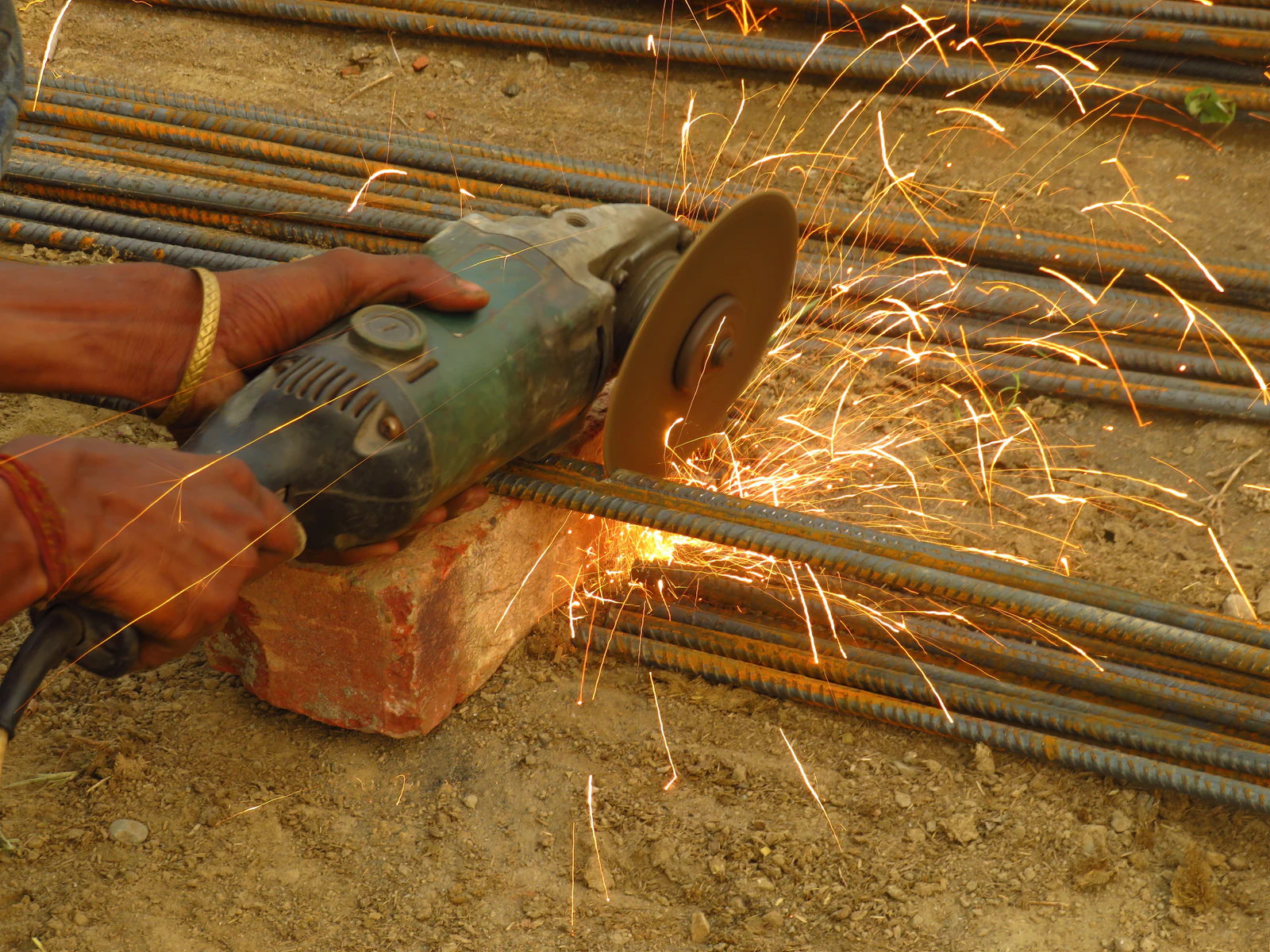
For gutter installation, the best cost-control lever is usually reducing non-productive days in possession—not squeezing the day rate. If your crew only cuts corners and short returns intermittently, a higher-quality 12 in. saw on a tightly managed 2-day window can cost less than a cheaper saw held for 5 days because no one coordinated off-rent, pickup, or weekend return.
Practical controls that work on Jacksonville job sites:
Most national providers can deliver/pick up, but delivery is not “automatic”—it’s a managed scope. United Rentals’ own guidance for delivery/pickup emphasizes capturing access hours, gate/entry codes, special instructions, and safety requirements. If you omit those, the truck can be turned away, and your rental remains on-hire while a reattempt is scheduled.
Planning allowances for Jacksonville gutter scopes (non-binding):
On small tools, many suppliers either (a) require a refundable deposit/authorization, and/or (b) apply a damage waiver percentage to the base rental. One published rate sheet example shows a $100 security deposit and a 15% damage waiver. Your Jacksonville terms could differ, but the estimator should still carry both items as line-level allowances unless your MSA explicitly eliminates them.
Invoice-management tips:
For gutter installation, return-condition issues are usually avoidable. Most cleaning charges stem from simple site habits: leaving aluminum chips packed into the blade guard, wrapping the cord with sharp kinks, or storing the saw uncovered in wet weather.
Set these field rules on Day 1:
For contractors who run gutter installs weekly, buying can be attractive—miter saws are not high-cost compared to larger equipment. The rental coordinator’s decision typically hinges on utilization and risk: if you keep renting a 12 in. sliding saw for 8–12 weeks/year, you may be in the range where ownership (plus maintenance and storage) becomes cost-competitive. Conversely, if your workload is uneven and you mainly need the saw for occasional corner batches, equipment hire keeps capital free and shifts repair risk back to the supplier.
Ownership still has “hidden costs”: calibration time, blade management, storage/security, and downtime when the saw fails mid-job. Hiring can be cheaper when the schedule risk of downtime is higher than the rate difference.
