

Mixing Station Rental Rates in Omaha (Daily/Weekly) — 2026 Costs

Price source: Costs shown are derived from our proprietary U.S. construction cost database (updated continuously from contractor/bid/pricing inputs and normalization rules).
Profile image of author
Eva Steinmetzer-Shaw
Head of Marketing

Mixing Station Rental Rates Omaha 2026

For epoxy flooring work in Omaha, a “mixing station” is typically hired as either (1) a manual mixing station kit (low-speed/high-torque mixing drill, stand or pail cradle, paddles, splash ring, and basic containment), or (2) a higher-output mixer (forced-action/pan mixer for aggregate-heavy or urethane-cement style mixes). For 2026 planning, budget $85–$220/day, $320–$780/week, and $900–$2,150/month for a manual epoxy mixing station kit, depending on whether the rental is a bare drill/paddle package or a full stand + containment + spare paddles kit. If your scope requires a forced-action or high-capacity mixer, plan $60–$160/day, $180–$560/week, and $540–$1,650/month (rates swing based on capacity, towable vs. wheeled, and cleaning risk). Omaha branches of the national rental houses plus regional tool suppliers can usually support these packages on short lead times, but availability tightens on weekend pours and end-of-month project pushes.

Vendor Daily Rate Weekly Rate Review Score Website
United Rentals (Omaha, NE) $140 $350 9 Visit
Sunbelt Rentals (Omaha, NE) $125 $375 8 Visit
Herc Rentals (Omaha, NE) $335 $698 9 Visit
Rental City Tool & Equipment (Omaha, NE) $45 $135 9 Visit
Avery Rents (Bellevue/Omaha Metro, NE) $70 $210 9 Visit

Assumptions behind the ranges: 120V single-phase power available; typical 5–15 gallon batch sizes for epoxy base/primer; no hazardous-location (explosion-proof) requirement; and “monthly” priced as a 4-week billing cycle (common in rental) rather than a calendar month. If you need a plural-component proportioning/meter-mix station (more common in coatings spray than squeegee-applied epoxy floors), rates move into a different class entirely—often $500–$1,800/day plus hoses/accessories—so confirm the equipment definition before issuing the PO.

What Omaha Rental Coordinators Mean by “Mixing Station” for Epoxy Flooring

On epoxy flooring jobs, “mixing station equipment hire” is less about a single machine and more about controlling ratio compliance, mix quality, and housekeeping so your placement crew stays productive. In Omaha, rental coordinators most commonly build a mixing station around:

  • Low-speed, high-torque mixing drill (to reduce air entrainment/pinholes).
  • Pail stand/cradle or rolling cart (keeps the pail stable and reduces spill risk on busy slabs).
  • One primary paddle + one spare (spares are a cost-control item when crews bend paddles in broadcast aggregate or urethane-cement mixes).
  • Containment (poly sheeting, drip trays, or a small berm) to reduce cleanup exposure.
  • Optional scale for partial kits / non-standard ratios.
  • Optional dust control (HEPA vac) when mixing in occupied or sensitive facilities.

Many rental catalogs won’t literally list “epoxy mixing station” as a line item. Instead, you’ll be hiring a combination of mixing drill, mortar mixer / pan mixer (if needed), and accessories that together function as your epoxy flooring mixing station.

How These Omaha-Area Published Rates Translate to 2026 Planning

Mixing-station components often price similarly to other specialty stands and small powered tools. For example, one U.S. rental house publishes a core drill stand at $100/day, $300/week, and $825/month, with a $175 weekend rate. That’s not an epoxy mixer, but it is a comparable “stand + controlled operation” rental class—and it’s a useful sanity check when a quote comes back unexpectedly high for a mixing stand or specialty cradle.

For higher-output mixing (common when epoxy systems include heavy aggregate packs or when your scope blends into urethane-cement style material handling), Midwest rental schedules for towable mixers routinely land in the $60–$90/day and $180–$360/week range. A Des Moines-area schedule lists towable mortar/concrete mixers at $60/day, $180/week, and $540/month, and explicitly notes an $85/hour cleanup fee if the unit is not returned clean. Other published rate cards show similar bands (e.g., as low as $44/day for a tow-behind mortar mixer). Use these as anchors, then apply Omaha-specific adders (delivery, weekend billing, and cleaning exposure) to arrive at a realistic 2026 equipment hire budget.

If you are only renting a paddle (not the drill), published rental rates can be very low; one rental listing shows a drill paddle at $8 per 24 hours and $32 per 7 days. In practice, epoxy flooring mixing station hire costs are driven less by the paddle and more by the drill class, stand/cart, cleanup expectations, and jobsite logistics.

Key Cost Drivers That Change Mixing Station Equipment Hire Costs in Omaha

1) Mix design and batch volume (labor risk becomes “equipment cost” quickly). A 5-gallon epoxy kit is manageable with a quality low-speed drill. Once you’re mixing aggregate-heavy blends, grout coats, or fast-setting materials, you may need more robust mixing, spare paddles, or a different mixer type. That pushes hire costs via higher rental class and higher cleanup exposure.

2) Indoor/occupied-facility dust-control expectations. If your mixing station must be inside an operating food, pharma, or high-traffic warehouse, you may be required to add HEPA dust control and containment. Typical adders you should carry in Omaha budgets:

  • HEPA vacuum add-on: $65–$125/day; $240–$420/week.
  • Poly containment/berm materials allowance: $35–$120 per mobilization (often contractor-supplied, but it belongs in the mixing station cost bucket).
  • Anti-slip floor protection (ram board / hardboard): $25–$90 allowance for short-duration interior moves.

3) Delivery radius and access constraints around the Omaha metro. Even “small” equipment can incur delivery cost when your crew can’t justify a pickup run. In Omaha, many rental houses assume a practical service radius that includes Council Bluffs and the I-80 corridor, but charges step up beyond the core metro. Typical planning allowances:

  • Delivery/pickup (each way): $95–$165 within the metro, depending on time window and dock access.
  • Mileage beyond included radius: $2.75–$4.25 per mile after a set threshold (commonly 15–30 miles).
  • Jobsite access surcharge: $45–$110 for limited-access downtown deliveries (tight dock times, badge-in requirements, or staged lift access).

4) Weekend and cut-off rules (billing exposure). Many branches enforce off-rent cutoffs (commonly around 2:00–3:00 PM) and treat Saturday/Sunday as full billable days if the equipment is not checked in. For epoxy flooring pours that run long, plan a weekend billing exposure of 1.5–2.0 day-equivalents unless you have a documented after-hours return agreement.

5) Power constraints and generator adders. If you’re mixing at a shell building before temp power is live, budget a generator. Planning numbers commonly used by rental coordinators:

  • 3–5 kW generator: $90–$145/day; $320–$520/week.
  • Heavy-gauge extension cords (50–100 ft): $8–$18/day each or $25–$60/week each (or supply-owned—either way, cost belongs in the mixing station plan).

Hidden-Fee Breakdown

Mixing station equipment hire costs for epoxy flooring rarely fail because the daily rate is wrong; they fail because of small, contract-driven fees. Carry these Omaha-friendly allowances (and confirm in the rental agreement):

  • Damage waiver / rental protection plan: typically 10%–17% of the time-and-material rental charges (often excludes theft, misuse, and consumables).
  • Deposit or credit-card authorization: commonly $250–$1,000 for small tool packages when a house account isn’t set up.
  • Cleanup/cleaning: published examples include $85/hour if not returned clean for towable mixers. For epoxy mixing kits, many branches treat cured resin as “excessive cleaning,” so plan $45–$150 if containment fails.
  • Minimum charge: some mixer rentals publish a minimum (example: $93.50 minimum on a mortar mixer listing). For mixing station kits, you may see a 1-day minimum even if you only need a half shift.
  • Late return penalty: common structure is an added 1/4-day after a grace period (often 30–60 minutes) or a full extra day if returned the next morning without prior arrangement.
  • Missing/damaged accessories: plan $60–$140 per paddle, $25–$75 for splash rings/guards, and $150–$350 exposure for burned-out drill motors (pricing varies widely by drill class and whether the unit is considered repairable).

Example: 10,000 SF Auto Service Facility in Omaha (3-Day Epoxy Flooring Window)

Operational constraint: Facility stays partially open; mixing must occur indoors behind containment with a strict housekeeping requirement. Crew can only receive deliveries 7:00–9:00 AM, and the GC requires the slab area to be clear by Sunday 6:00 PM.

Equipment hire plan (mixing station):

  • (2) Manual mixing station kits so the squeegee team isn’t waiting on batches: plan $140–$200/day each for a full kit class (drill + stand/cradle + spare paddle).
  • HEPA vacuum add-on for dust control at the mixing zone: plan $85/day.
  • Containment allowance (poly, tape, drip trays): plan $75.

Budget math (illustrative): If you carry $170/day per kit × 2 kits × 3 days = $1,020, plus HEPA vac $255, plus containment $75, your pre-fee subtotal is $1,350. Add a 12% damage waiver allowance ($162) and a conservative $125 each-way delivery assumption (delivery + pickup = $250), and you’re at roughly $1,762 before tax. Now apply the real-world rule: if return can’t be processed until Monday morning, you may get billed an extra day-equivalent unless you pre-negotiate an off-rent/after-hours return—so carry a contingency of $340 (two kits at $170/day) for weekend billing exposure.

Budget Worksheet (Line Items + Allowances)

  • Mixing station equipment hire (manual kit): $85–$220/day each (quantity: ___)
  • Forced-action / towable mixer (if mix requires): $60–$160/day (quantity: ___)
  • Weekly conversion check: if rental exceeds ~3 days, validate whether the weekly rate is cheaper than staying on daily
  • Delivery + pickup: $190–$330 round-trip (plus mileage beyond radius)
  • Downtown / limited-access delivery allowance: $45–$110
  • Damage waiver: 10%–17% of rental charges
  • Cleaning exposure: $45–$150 (kits) or $85/hour (towable mixer class)
  • Accessory loss/damage reserve: $100–$300 (paddles, guards, cords)
  • Generator (if no temp power): $90–$145/day
  • HEPA vac / dust control (if required): $65–$125/day
  • Weekend billing contingency: 1–2 extra days unless guaranteed off-rent processing

Rental Order Checklist (PO + Delivery + Return Requirements)

  • PO scope definition: confirm whether “mixing station” means drill+stand kit, forced-action mixer, or both; list included accessories (primary paddle + spare, splash ring, pail cradle).
  • Electrical requirements: 120V/20A confirmed; identify GFCI needs; cord length requirements (50 ft vs 100 ft).
  • Delivery window: specify a 2-hour window; include dock height/door width and whether a liftgate is required.
  • Site contact: name + phone for driver check-in; include badge-in or escort rules (common on secured industrial sites around the metro).
  • Off-rent procedure: confirm branch cutoff (often 2:00–3:00 PM); document who is authorized to call off-rent.
  • Return condition documentation: require photos at pickup/return (serial number, cord condition, chuck/drive, paddles, and any cured material evidence) to avoid disputes.
  • Cleanup responsibility: confirm whether “broom clean” is sufficient or whether cured resin triggers a cleaning charge.
  • Weekend/holiday billing rule: get it in writing if you expect a Sunday off-rent without Monday billing.

Omaha-specific note: winter work (late fall through early spring) can increase true equipment hire costs if equipment must be delivered early to acclimate in heated space, or if the GC restricts door openings to maintain building temperature. That can convert a 1-day need into a 2-day billable window if you’re not careful with delivery timing.
Our AI app can generate costed estimates in seconds.

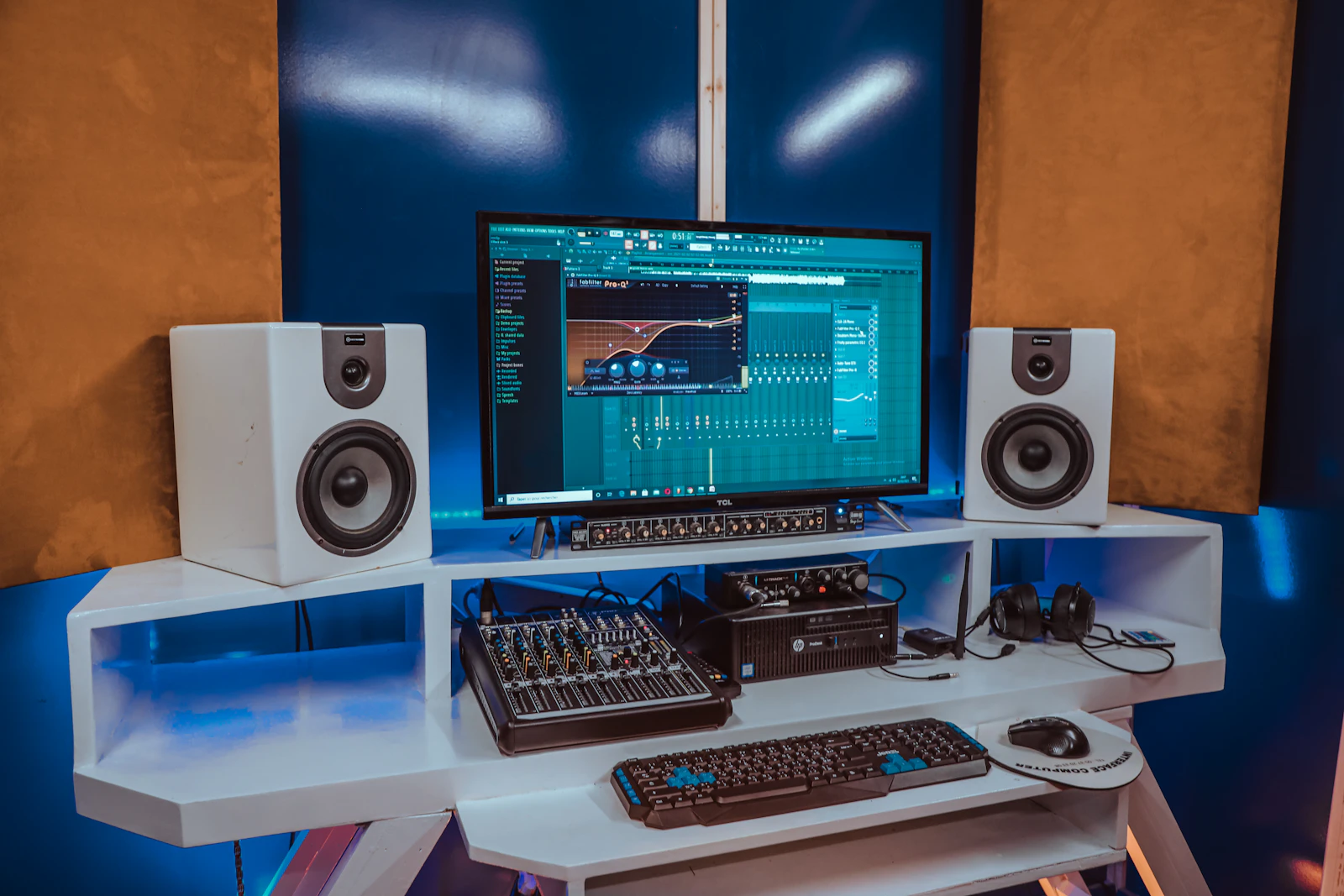
mixing and station in construction work

Ways to Reduce Mixing Station Equipment Hire Costs Without Slowing the Epoxy Crew

On epoxy flooring scopes, the mixing station is a throughput constraint. Cutting one kit can cost more in crew idle time than the saved rental dollars. Instead of under-hiring, reduce cost with control points that rental coordinators can enforce:

  • Rate optimization: if your pour window is 4–6 days, ask for the weekly rate up front instead of stacking daily charges. Many branches will convert automatically, but not all do unless requested.
  • Standardize accessories: specify “include 2 paddles per drill” so you don’t pay emergency courier/delivery fees when a paddle bends mid-shift.
  • Control cured-resin exposure: require a drip tray under every pail and a “wipe-down at lunch” rule; that $45–$150 cleaning charge is preventable most of the time.
  • Pre-negotiate weekend returns: if your crew demobilizes Sunday, request an after-hours return code or secure drop process (if the branch supports it) to avoid an extra bill day.

Omaha Logistics That Commonly Add Cost to Epoxy Flooring Mixing Station Hire

Even though a mixing station is “small equipment,” Omaha projects can see meaningful logistics adders:

  • Service radius realities: projects in Fremont, Blair, Papillion/La Vista, and Council Bluffs can be treated differently by different branches (some include them in standard delivery zones; others price mileage). Carry $2.75–$4.25/mile beyond the included radius as a planning allowance.
  • Heat and humidity seasonality: summer humidity can drive faster staging and larger batch counts; winter requires heated staging. Either condition can push you to rent two mixing stations instead of one to keep placement continuous—often the correct call operationally.
  • Dock scheduling: distribution facilities commonly enforce strict receiving hours. If you miss the window, rescheduling or waiting time can show up as a $50–$125 redelivery/attempt fee (policy varies; confirm before ordering).

Accessory Adders You Should Price With the Mixing Station (Common for Omaha Epoxy Scopes)

To keep your estimate realistic, price the “mixing station” as a package. Common adders with planning allowances:

  • Digital scale (for partial mixes): $20–$55/day.
  • Extra pail dolly / rolling cart: $12–$35/day.
  • Spare mixing paddle(s): $8–$20/day each (or purchase; but still a cost line).
  • Spill kit consumables allowance: $25–$60 per mobilization.
  • Additional extension cords / splitter: $8–$18/day each.

Published rental listings for mixers in other markets help validate your bands. For example, one published listing shows a 6 cu ft electric mortar mixer at $71/day and $249/week. Another published listing shows a mortar mixer with a $126.50/day rate and a $379.50/week rate, plus a stated $93.50 minimum. These examples are not Omaha quotes, but they support the 2026 planning assumption that higher-output mixing equipment generally rents in the double-digit to low triple-digit per-day range before delivery, waiver, and cleanup exposure.

Contract Terms That Change the True “Monthly” Mixing Station Hire Cost

When you budget monthly equipment hire costs for an epoxy flooring mixing station, validate these contract details because they drive real dollars:

  • 4-week vs calendar month billing: a “month” is often 28 days. If your project runs 30–35 days and you miss the return cutoff, you can accidentally roll into additional day charges.
  • Standby vs active use: some accounts allow a lower standby rate for equipment that remains onsite but is not in use; others do not. If you have a phased epoxy scope (areas A/B/C), ask.
  • Off-rent must be called in: returning gear without a documented off-rent call can lead to billing through the next business day.
  • Consumables excluded: paddles, buckets, liners, and containment are frequently treated as non-returnable or billable if damaged—budget accordingly.

When Ownership Beats Hire for Epoxy Flooring Mixing Stations (and When It Doesn’t)

For Omaha epoxy contractors running consistent production, ownership can beat rental quickly on the manual kit class. But hire often remains the better commercial choice when you need:

  • Short-term surge capacity (e.g., adding a second mixing station for a weekend pour).
  • Special mixer types for unusual blends (aggregate-heavy mixes that destroy paddles and strain motors).
  • Risk transfer (rental protection plan may be worth it when multiple crews rotate through equipment and accountability is harder).

If you do choose to own, rental coordinators still commonly hire backup units during critical pours. The cost of a backup kit at $85–$220/day is often cheaper than a failed batch sequence that forces rework or shifts a recoat window.

Practical Controls to Avoid Disputes and Back-Charges

  • Check-in checklist at delivery: confirm drill operation (low-speed range), cord condition, paddle included, and any stand hardware present.
  • Photo documentation: take start/end photos of serial number and accessory set. This is especially important for multi-day projects where tools move between areas.
  • Return condition: wipe uncured material immediately; cured epoxy on tools is what triggers most “excess cleaning” charges.
  • Label the kit by crew/zone: prevents accessory loss (missing paddles/guards) that typically cost $60–$140 per item to replace.

Bottom line for Omaha estimating: build your epoxy flooring mixing station equipment hire cost from the daily/weekly/monthly band, then add delivery + waiver + cleaning exposure + weekend billing. On many Omaha jobs, those adders represent 25%–60% of the “headline” rental rate—so treat them as first-class estimate items, not contingency.
