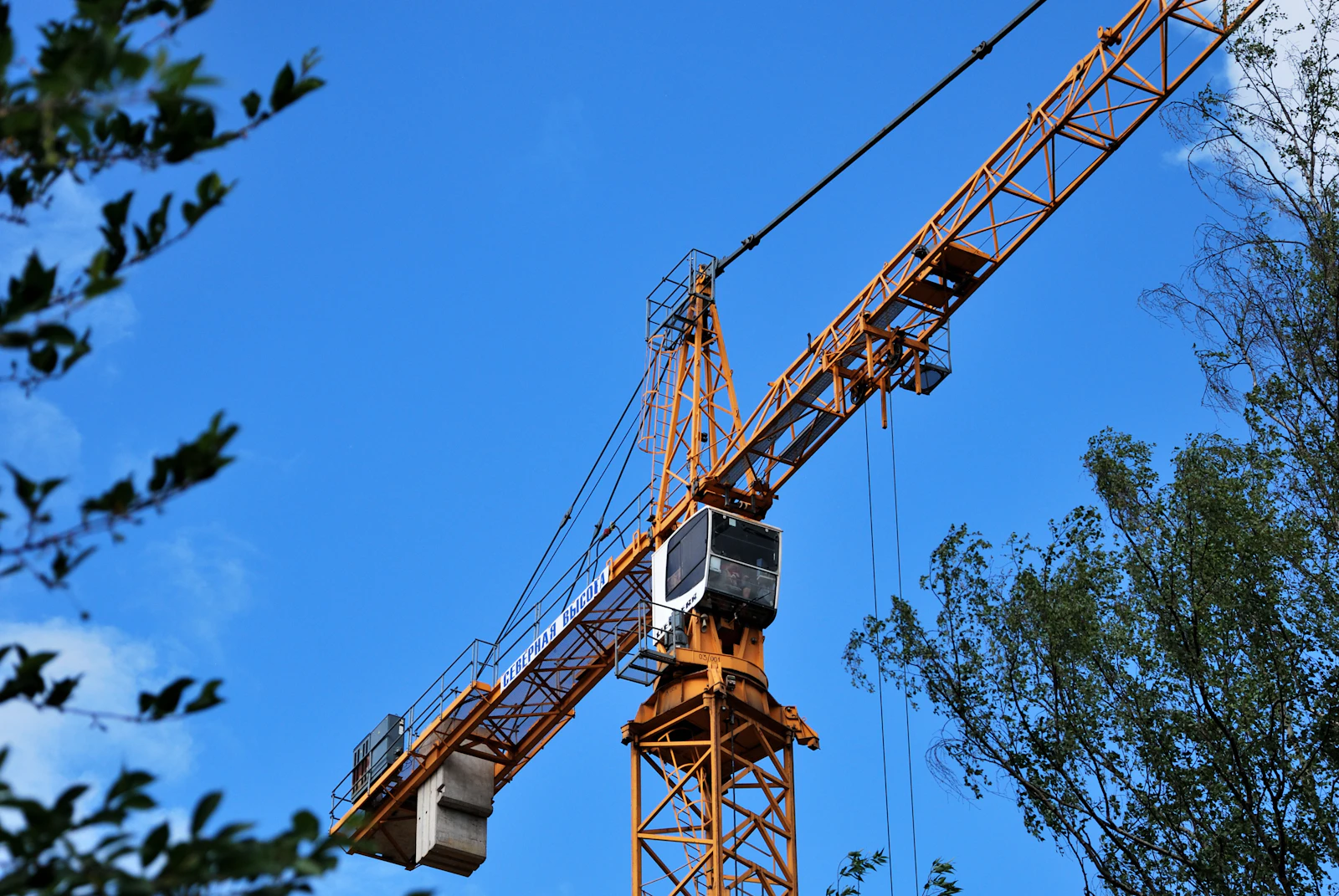
Mobile Crane Hire Costs Atlanta 2026
For structural steel erection in Atlanta, 2026 budgeting for mobile crane equipment hire typically lands in three buckets: (1) smaller hydraulic truck cranes for quick set-and-swing picks, (2) rough-terrain cranes for tighter sites with clay subgrade and limited laydown, and (3) all-terrain cranes when reach, radius, and counterweight are the controlling factors. For planning (not a quote), expect operated mobile crane hire in Atlanta to range from roughly $225–$475/hr for common 40–90 ton classes and $425–$900/hr for 100–200 ton all-terrain classes, with most suppliers billing minimum hours and portal-to-portal travel. Daily/weekly/4-week (28-day) rates below assume a standard single-shift steel package, normal availability, and 2026 escalation of roughly 3%–8% versus published 2025 sheets where available. Regional and national crane fleets with Atlanta coverage will quote to your pick plan, street occupancy, and rigging scope.
| Vendor |
Daily Rate |
Weekly Rate |
Review Score |
Website |
| Maxim Crane Works |
$2,300 |
$6,900 |
9 |
Visit |
| ALL Crane Rental & Sales |
$2,250 |
$6,750 |
9 |
Visit |
| Barnhart Crane & Rigging |
$2,450 |
$7,350 |
9 |
Visit |
| United Rentals (Boom trucks / carry-deck & industrial cranes) |
$1,950 |
$5,850 |
8 |
Visit |
| Sunbelt Rentals (Crane & hoist / boom truck solutions) |
$1,900 |
$5,700 |
8 |
Visit |
2026 planning rate ranges (Atlanta) for mobile crane rental by duration (equipment portion only):
- 50-ton rough-terrain mobile crane hire: budget $1,250–$1,600/day, $3,100–$4,000/week, and $8,000–$10,500/4-week based on published 50-ton rough-terrain daily/weekly/monthly pricing and a modest 2026 uplift.
- 65-ton rough-terrain mobile crane hire: budget $1,450–$1,850/day, $3,600–$4,600/week, and $9,000–$12,000/4-week (scope-dependent, especially if a separate hauling move is required for the RT).
- 85-ton rough-terrain mobile crane hire: budget $2,100–$2,700/day, $5,200–$6,500/week, and $13,000–$17,000/4-week for steel erection picks where radius stays inside chart with normal outrigger setup.
- 100-ton rough-terrain mobile crane hire: budget $2,350–$3,100/day, $5,900–$7,500/week, and $15,000–$20,000/4-week, with additional trucking and counterweight handling frequently becoming the cost driver in Atlanta traffic windows.
- Hydraulic truck crane (typical 40–110 ton) on hourly hire: budget $240–$520/hr operated, with common minimums that can jump from 4 hours to 6–8 hours as tonnage increases and as overtime windows apply. Regional rate sheets show 4-hour minimums for many classes and higher minimums on larger truck cranes.
- All-terrain mobile crane (typical 130–250 ton) on hourly hire: budget $475–$950/hr operated in 2026 planning, but expect the quote to be dominated by mobilization, counterweight transport, route surveys, escorts, and set/strip time when you are inside I-285 or near tight downtown curb lanes.
What You Are Actually Buying With Operated Mobile Crane Equipment Hire
For structural steel erection, most Atlanta crane quotes are effectively a crew-and-logistics package even when the line item is labeled “crane rental.” Many crane providers rent with operator only, bill from portal-to-portal (yard-to-yard), and differentiate regular shift versus overtime. For a steel package, you should expect the invoice to include (or to require adders for) travel time, setup/tear-down time, and sometimes a dedicated rigging truck if the lift plan requires specialty hardware.
Key 2026 hire assumptions to state in your RFQ (so quotes compare apples-to-apples):
- Billing basis: portal-to-portal vs on-site only; clarify whether travel is billed at crane rate or a reduced travel rate.
- Minimum time: many operated cranes carry a 4-hour minimum, while larger classes may carry 6-, 8-, or 10-hour minimums.
- Shift definition: define your “straight time” window; anything outside often prices as overtime with higher hourly and/or minimums.
- Cancellation: plan for a 24-hour cancellation notice expectation to avoid a dry run or minimum-charge hit when weather/wind cancels steel picks.
Cost Drivers for Atlanta Structural Steel Erection Mobile Crane Hire
Structural steel erection pushes a mobile crane differently than “set one unit and leave.” Your hire cost is most sensitive to radius, hook time, relocation frequency, and traffic/permit constraints around the site.
1) Pick geometry and chart risk (the silent budget killer)
A 15% increase in radius can force a 1–2 crane-size jump, which cascades into counterweight trucks, escorts, and additional setup time. Budget contingency when your steel detail is still evolving: a 10%–20% cost swing is common between “fits the 90-ton truck crane” and “needs the 175-ton AT.”
2) Ground bearing pressure and matting in Atlanta’s red clay
If you are erecting off backfilled utility corridors or on wet red clay, assume you will need mats. Typical mat rental adders in 2026 planning: $35–$75 per mat per day (plus delivery), and a steel package may consume 12–24 mats depending on outrigger footprint and swing radius. If the crane supplier provides mats, confirm whether they are billed as rental, consumable, or included.
3) Set-and-strip, counterweight handling, and support trucks
Many larger mobile cranes require set/strip labor and additional trucking. Even if the base crane is billed hourly, expect a separate mobilization line for a counterweight truck, lowboy, or tractor/flatbed. As a reference point from a published rate sheet, support equipment can be priced separately (for example, a tractor/lowboy billed hourly) and will carry its own minimums. In Atlanta, those support moves are often constrained by delivery windows and curb-lane availability.
4) Crew composition: operator, oiler, riggers, and signal
Steel erection commonly needs at least one qualified signal person whenever the operator’s view is obstructed (multi-bay frames, decking bundles, blind picks). Training providers emphasize when a qualified signal person is required based on visibility and site conditions. If you are asking the crane supplier for riggers, published sheets show riggers billed hourly with separate overtime rates (example reference: $88/hr straight time and $132/hr overtime, with a 4-hour minimum). For 2026 Atlanta planning, many contractors carry allowances of $85–$140/hr per rigger depending on credentialing, union conditions, and foreman requirements.
Delivery, Permitting, And Downtown Atlanta Logistics That Change Hire Cost
Atlanta is not just “a city delivery fee.” Permitting and access rules can directly change how many billable hours you eat before the first pick.
- Georgia oversize/overweight routing and restricted travel windows: GDOT notes restrictions on permitted loads inside/through the I-285 bounded area unless the move is making a pickup/delivery within the area, plus time-of-day restrictions that can block morning and afternoon peaks. Build contingency if your crane or counterweight trucks require permitted movement and you are setting near downtown or inside the perimeter.
- Right-of-way occupancy in the City of Atlanta: if your steel erection plan needs a crane in the public right-of-way (lane closure, sidewalk staging, curb occupancy), the City requires a right-of-way permit. That permit cycle can drive premium delivery timing, flagging, and police detail costs.
- Congestion-driven staging: for tight sites near Midtown/Downtown, plan for a nearby laydown/staging lot. Typical 2026 allowance: $600–$2,000/week for a small fenced laydown area (market-driven), plus shuttling steel to the hook.
Hidden-Fee Breakdown
To keep your mobile crane equipment hire cost predictable on a steel package, pre-negotiate these common adders in the PO:
- Mobilization/demobilization: budget $450–$1,200 per truck movement locally (crane, counterweight, boom/jib, rigging truck), or $4–$7 per loaded mile when billed by mileage.
- Fuel surcharge: many providers apply a percentage (published example: 8% fuel surcharge). For planning, carry 6%–18% depending on diesel volatility and contract terms.
- Permits/administration: published examples include a flat $20 permit charge for certain crane sizes. For Atlanta planning, carry $25–$250 per move for administrative permitting (not including city ROW occupancy packages).
- Rigging “shop” charges: some suppliers include a daily rigging charge (published example: $35/day).
- Standby time: budget $125–$275/hr when steel deliveries slip, bolting runs long, or deck crews aren’t ready at hook time.
- Overtime and weekend premiums: common planning is 1.5x the base hourly or a fixed add-on (published example: +$35/hr outside regular shift, with a 4-hour minimum). Also carry a 15%–25% weekend/holiday premium if you must pick on Sunday to recover schedule.
- Cleaning/return condition: budget $200–$600 if mud/clay packs outrigger floats, mats come back caked, or rigging returns oily/dirty without documentation.
- Damage waiver vs insurance: if offered, damage waiver often prices at 10%–15% of rental; confirm whether it excludes boom damage, glass, tires, and consequential loss.
Budget Worksheet (No Tables)
Use the following line items as a practical estimator worksheet for a mid-rise steel package using a mobile crane in Atlanta (adjust quantities to your pick plan):
- Base mobile crane hire (operated): ___ days at $___/day (or ___ hours at $___/hr), include minimum hours assumption.
- Mobilization/demobilization: ___ moves at $450–$1,200 each (crane + support trucks as applicable).
- Counterweight/rigging truck: allowance $175–$325/hr with a 4–6 hour minimum (if billed separately).
- Riggers and signal: ___ riggers at $85–$140/hr; include 2 hours/day of expected standby due to steel sequencing.
- Mats/cribbing: ___ mats at $35–$75 per mat per day; include delivery/pickup $250–$750.
- Lift plan/engineering: allowance $500–$2,500 depending on critical picks and third-party requirements.
- Permits/traffic control: allowance $300–$2,500 (ROW permit package, cones, flaggers, police detail if required).
- Fuel surcharge: apply 6%–18% to operated crane and truck charges if not already included.
- Weather/wind contingency: carry 0.5–1.0 day of minimum charges during peak thunderstorm months.
- Closeout and documentation: allowance $150–$400 for return photos, rigging inventory reconciliation, and damage-free signoff.
Example: Two-Day Mobile Crane Hire for Steel Erection in Atlanta (With Real Constraints)
Scenario: 6-story office frame inside I-285, tight curb lane, steel deliveries staged off-site. You select an 85-ton rough-terrain mobile crane for 2 days to set columns, beams, and deck bundles. The crane supplier bills portal-to-portal with a 6-hour minimum because of travel/setup complexity. You request 2 riggers from the crane company and rent mats.
- Crane hire: 2 days at $2,250/day (within the 85-ton planning band).
- Portal-to-portal minimum exposure: 6 hours/day minimum means a short first day still bills like a near-full shift.
- Support trucking: 2 truck moves at $850 each (mobilize/demob plus counterweight handling).
- Riggers: 2 riggers x 8 hours/day x $110/hr = $1,760/day; include $250/day standby allowance for bolt-up delays.
- Mats: 16 mats x $55/day x 2 days = $1,760, plus $400 delivery/pickup.
- Permitting/traffic control: allowance $1,200 for ROW occupancy coordination and flagging.
- Fuel surcharge: apply 10% to crane + trucking subtotal if contract requires (published examples show fuel surcharges applied as a percentage).
Operational constraint callouts: (1) If GDOT-permitted movements can’t travel during peak weekday windows, your crane may have to arrive pre-dawn or after peak, increasing overtime exposure. (2) If you need to occupy the City right-of-way, permit processing can force you into premium delivery windows and add standby.
How To Reduce Mobile Crane Equipment Hire Cost Without Taking Chart Risk
Atlanta structural steel erection schedules fail when “saving money” creates a crane bottleneck. The better approach is to protect capacity and reduce non-productive hours.
1) Lock the pick plan early enough to avoid re-mobilizing
Every re-mobilization can add $450–$1,200 per truck (and sometimes more if escorts/permits are re-filed). If your steel sequence is still moving, negotiate a not-to-exceed mobilization cap or a fixed number of included moves.
2) Control hook time with site flow
A steel crane is most cost-effective when the hook never waits. If your bolt-up crew is the constraint, you may pay standby at $125–$275/hr while the crane sits. Operationally, a dedicated “hook prep” area and pre-rigging standard bundles can reduce billed hours more than negotiating $25/hr off the rate.
3) Pre-stage mats and cribbing
If matting arrives after the crane, you burn minimum hours with no picks. Many Atlanta projects add an explicit requirement: mats on site by 2:00 PM the prior business day (typical yard cutoff practice), or you accept standby and rescheduling exposure.
Billing Rules That Commonly Surprise Steel Erection Teams
Most crane disputes come down to billing rules, not the base rate. Put these in the subcontract exhibit and PO notes:
- Weekend and holiday billing: many providers treat Saturday/Sunday as overtime and may enforce an 8-hour minimum even if weekday minimums are lower. Carry a 15%–25% premium if you plan recovery picks on weekends.
- Off-rent timing: define off-rent as “crane released and ready to depart” and include realistic demob time (steel sites often forget the last hour is teardown and travel).
- Weather calls: define who calls wind-out and when the minimum starts; carry at least 0.5 day of minimums on multi-day steel packages.
- Re-fuel expectations: if the supplier expects return/full tank, budget a refuel service charge exposure or set a fuel reimbursement rule (common planning: $75–$200 service fee plus fuel).
- Documentation requirements: require daily signed tickets, start/stop times, and a brief “delay code” (steel not ready, truck late, safety stand-down) to keep standby charges defensible.
Rigging And Accessories: Common Adders in 2026 Atlanta Mobile Crane Hire
For structural steel erection, the accessory list can be as important as the crane. In 2026 planning, include these typical adders (confirm whether your supplier includes them):
- Spreader bars / beam clamps / shackles: allowance $125–$450/day depending on tonnage and certification requirements.
- Man basket: allowance $250–$650/day when required for connector access; some published sheets show much lower day rates on specific baskets, but don’t assume availability for your site conditions.
- Tag lines and consumables: allowance $25–$75/day (small dollars, but they avoid big safety delays).
- Lift plan and stamping: allowance $500–$2,500 (higher if you have critical picks over occupied areas, utilities, or active roads).
- Police detail / flagging: allowance $90–$175/hr per officer/flagger with minimum callouts (Atlanta right-of-way work often drives this more than the crane itself).
Atlanta-Specific Considerations That Change Your 2026 Hire Budget
Permitted load timing inside the perimeter: Because permitted movements can be restricted during weekday peak periods and may have additional routing constraints, your mobilization plan can create overtime even if the picks are straight time. Build a clear arrival window in the PO (example: “arrive on site between 5:30 AM and 6:00 AM”) and define what happens if the jobsite cannot receive the crane (standby vs reschedule).
Heat and storm season production loss: Atlanta summer heat and pop-up thunderstorms can cut productive hook time. On steel packages that rely on a mobile crane day after day, add 5%–12% schedule contingency or budget an extra 4–8 hours of standby across a two-week erection run.
Dust-control and indoor picks: If you are setting steel inside a partially enclosed structure, budget dust-control measures and floor protection. Common allowances: $150–$500 for floor protection consumables and $200–$600 cleaning exposure depending on finish requirements.
Rental Order Checklist (No Tables)
Use this checklist to keep mobile crane equipment hire aligned with steel erection field reality in Atlanta:
- PO scope: crane class/tonnage, boom/jib configuration assumptions, max radius assumption, and whether counterweight is included.
- Billing terms: portal-to-portal vs on-site, minimum hours (weekday vs weekend), overtime definition, and standby rates.
- Mobilization plan: number of support trucks, delivery window, staging location, and who provides mats/cribbing.
- Permits and traffic control: confirm GDOT routing needs for permitted moves and City of Atlanta right-of-way permit requirements if occupying public space.
- Safety and lift planning: lift plan responsibility, critical pick criteria, exclusion zones, and signal/rigger qualifications.
- Site readiness: verified outrigger pad locations, ground bearing confirmation, overhead/utility conflicts cleared, and a dedicated assembly area.
- Tickets and documentation: daily signed time tickets, delay notes, and photos of rigging returned (to avoid cleaning/damage claims).
- Off-rent/return: who releases the crane, when demob starts, required notice, and final walk-down signoff.
2026 Market Notes for Mobile Crane Hire in Atlanta (For Planners)
For 2026, treat your Atlanta mobile crane rental budget as a function of (1) project congestion inside the perimeter, (2) larger-crane availability during peak commercial cycles, and (3) the number of “extra moves” your steel sequence forces. If you can reduce one crane re-mobilization and eliminate one weekend pick, it can be worth more than negotiating the base hourly rate. As a general planning practice, many steel contractors carry a 10%–15% contingency on the crane-and-rigging package until the steel sequence, delivery plan, and right-of-way impacts are frozen.